Launched in May with a fine performance by noted fortepianist and academic John Irving, the first tranche of Kingston Chamber Concerts (KCC) closed last night with a recital by the Armorel Piano Trio, who performed works by Beethoven, Schumann and Dvorak.

The KCC formula is quite simple: quality chamber music performed by young professional artists and local musicians in the convivial setting of the East End Café at All Saints’ Church, right in the heart of Kingston-upon-Thames and its historic market place. Tables are set out salon style and the bar serves good wine at a fraction of the cost of a glass of house white at the Wigmore Hall. You can take your drinks to your table and share a bottle with friends, as I did last night.

OLYMPUS DIGITAL CAMERA

The Armorel Piano Trio comprises Kathy Chow (piano), Lucia Veintimilla (violin) and Sebastian Kolin (cello). Their programme, opening with Beethoven’s ‘Ghost’ Trio, Op 70/1 and closing with Dvorak’s ‘Dumky’ Trio, Op 90, B 166, with Schumann’s Op 80/2 the middle of the triptych, demonstrated the development of the piano trio genre, from the strictly classical three-movement structure of Beethoven, though already showing the forward-pull of Beethoven’s vision in its eerily dramatic middle movement which connected it, in this concert, to Schumann’s sweeping romanticism, to the freedom of Dvorak’s six-movement ‘Dumky’ which feels more like a suite than a trio in its organisation highly  contrasting moods and textures.

This was a very committed performance by all three musicians, and extra credit must go to the young players who had had their final recitals for their post-graduate studies at conservatoire the same day: they must have been shattered but they hardly betrayed this, and their playing really came alive in the Dvorak which was replete with folk idioms and fine solos from cello and violin, with vivid colouration from the piano, in particular in the third and final movements. The Schumann was genial, laced with a bitter-sweet poignancy (the work was written in 1847, the year of the deaths of the Schumanns’ son Emil and Felix and Fanny Mendelssohn), and Armorel really caught the fleeting mercurial moods of this music.

The Beethoven, meanwhile, provided drama of a different kind, with much boisterous dialogue between violin and cello in the first and final movements, and colourful interplay between the piano and the other instruments. The slow movement was freighted with Gothic gloom, with its fragmented themes, uncertain harmonies and eerie tremolos in the bass of the piano. This was a movement of great tension, rich in quasi-orchestral textures.

This was a fine end to the first three concerts in KCC’s six-concert first season and the sizeable audience prove the series is already off to a very good start. The series resumes on Saturday 16 September with Ceruleo, an early music ensemble, whose concert entitled ‘Love and Betryal in the music of Handel and Barbara Strozzi’ includes performances on harpsichord, theorbo and Viola de Gamba.

For further information about Kingston Chamber Concerts/join their mailing list, please contact kingstonchamberconcerts@gmail.com, or telephone 020 8549 1960

e83e8f6a68779efc07fa56c52687a24f
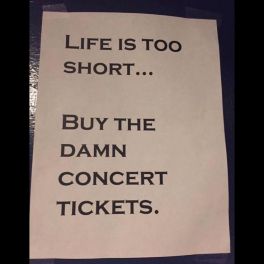
Despite the best efforts of those inside the profession, and many outside it as well, classical music still suffers from an image problem. It is perceived by many as stuffy, high-minded, exclusive, expensive and boring. So marketing classical music successfully is not easy, given the entrenched preconceptions about the art form and an apparent inability by some within the profession to market themselves and their concerts effectively.

Few musicians can tell you anything about what they do and/or why. They have been a few famous exceptions like Leonard Bernstein and Itzhak Perlman, but most are strangely inarticulate about their craft [EM]

Maybe musicians just assume that their performances speak for themselves, without giving any thought to why anyone else should want to listen. Maybe we are all so immersed in what we do that we forget to promote ourselves. A lot of musicians don’t seem to know how to get people to care about (their) music [RC]

Unfortunately, we’re starting out from an already difficult position: the words “classical music” have a stigma attached to them – as do words like “avant garde”, “contemporary”, “modern” or “new music” – and are immediately off-putting to certain people. Finding the right vocabulary to describe something that is already freighted with negative connotations ain’t easy. In addition, classical music is in competition with a whole host of other activities which want your attention.

I have lost count of the number of unenticing, badly-written, poorly-proofread and overly long emails I’ve received from musicians and/or their publicists trying to interest me in their concerts. Five paragraphs of densely-written text telling me about their concert series or tour, a dry list of pieces in the programme, the places where the performer has already played (this reminds me of the weatherman who gives an overview of what the weather has been before the main forecast), a boring impersonal biography (basically just a list of pieces performed, places, last season, this season, plus a few quotes from extravagantly positive reviews) – and then, right down at the very bottom of the message in the place where by this time I might not even look because I am bored, a link to purchase tickets. And sometimes that link doesn’t even work…..

I want musicians to connect to the content they share, to the music…. A link on its own is hardly enticing or engaging. On the other hand, a long press release can have pretty much the same (non) effect [RC]

If you can’t tell me why I should attend your concert within the first paragraph – or even the first two lines – of your email or marketing blurb, you’re not getting your message across clearly enough.

Too many people seem to start from the premise that classical music is boring and write slightly apologetic marketing material, hinting that I might like to come to the concert but there’s no guarantee I’ll find it interesting or exciting. Or that because music is “art”, they believe it should not be marketed in the manner of a new film or bestseller.

“Young pianist to perform at concert”

– hardly attention-grabbing is it?

Sometimes an attempt at humour may be used to attract my attention:

“Schopin, Schubert, Schampagne and Suschi!”

Nice try, but that particular concert promotion tweet made my toes curl in embarrassment. Using silly, sexy or just plain weird gimmicks to make classical music look cool or interesting tends not to work, in my experience.

Another offender is the person whose publicity material is overtly egocentric – It’s all about ME! This article examines this particular issue rather well.

If people who don’t know classical music keep getting ‘meh’ press releases, with nothing in them to interest any person with any spirit, any involvement with the world, then all of classical music suffers.

Because we’re not just flacking the project du jour. We’re representing all of classical music, in every public communication we make. That’s a big responsibility. If we fail in it — if we can’t bring classical music vividly alive — then we’re failing our art.

Greg Sandow – Why I’m talking about publicists (1)

When marketing concerts it’s important to remember that our publicity material – from tweets and Facebook posts to flyers, listings and the diary section of our website – reflects back on us and must reflect well. Such material is the potential audience member’s first point of contact with us, the performer, and first impressions really do count. The name of a composer or artist spelt incorrectly on a press release or website listing, errors in press releases and flyers, incorrect or broken links on your website, missing information: all these things will discourage people from purchasing tickets for your concert. And let’s not be coy about this: never mind all the high-falutin artistic reasons for giving concerts – sorry to say it, but we want “bums on seats”!

I get particularly hung up about badly-designed or difficult-to-navigate websites, possibly because I spend a lot of time online and can recognise a really well-designed website when I see one. As a blogging colleague of mine said recently, “Why do some websites still use white text on a black background? Are there people who enjoy having their eyes melted trying to read such things?“.

Instead, why not make it easy for your potential audience?

  • Describe the programme/pieces/concert format in a way that is enticing but not naff, nor dull or patronising
  • The classical music audience, and potential audience, is intelligent – probably as intelligent as you, or maybe even more so! Don’t talk down to them or over-simplify what you are trying to say. Respond and appeal to their intelligence in your marketing material.
  • Provide clear information about date, time, venue, ticket prices – and make sure the links to venue and/or ticketing site actually work
  • Remember that “brevity is the soul of wit” (Shakespeare, ‘Hamlet’) and keep marketing material concise and to the point
  • Use good-quality images (but not too many of yourself in white tie and tails or 1950s evening gown) and use natural, conversational language in marketing material
  • Avoid saying flattering things about yourself and instead focus on fulfilling your potential audience’s hopes and desires. Ditch the self-indulgent self-promotion and instead motivate your potential audience (or “customers”) to buy tickets.

Further reading

How to write a press release

If you think you need a publicist….

Marketing the Arts to Death – blog of Trevor O’Donnell, full of intelligent and relevant articles on arts marketing


IMG_829184A57052-1(1)

Who or what inspired you to take up the violin, and pursue a career in music?

Although neither of my parents were musicians, they were both very musical and liked to listen to classical music, so we often had BBC Radio 3 on at home and recordings of violin concerti by Elgar with Menuhin and Sibelius by both Heifetz and Ginette Neveu, were important influences. Apparently they discovered I was musical because the Sunday school teacher told my parents I was leading the singing at the age of 3!! Actually I don’t have such a great voice, but aim to sing through my violin. I am very grateful to my parents, who were not at all wealthy, for prioritising giving me piano lessons from the age of 6, over material things – they used to make some of our clothes and furniture and were generally very creative, which has imbued my life. I took up the violin 3 years later at school in shared lessons and was offered a Junior Exhibition to the Royal College of Music on both instruments and later a Foundation Scholarship to the RCM with a violin bought for me by my parents for £20. I had thoughts of becoming a composer when I was quite young and enjoyed harmony and music theory but my passion for the violin took over – I loved the possibilities, it’s such an expressive instrument and this is what made me pursue a career as a violinist.

Who or what have been the most important influences on your musical life and career?

I was lucky to be awarded the Fulbright/ITT Fellowship to study for a master’s degree in New York for 2 years with some very fine teachers – Donald Weilerstein (then leader of the Cleveland Quartet and a most inspiring musician), Sylvia Rosenberg, a real artist who’d studied with Nadia Boulanger as well as Ivan Galamian, and Dorothy DeLay at Juilliard and the Aspen Festival. But I later learnt as much from Jean Gibson – that “your body is your instrument” – to be free to channel and express the music. When I tour I’m likely to be be found in an art gallery; I find looking at paintings from Rembrandt and Vermeer to Cezanne, Monet and some abstract expressionists, very enriching.

Some of my most extraordinary musical influences in performing have been with Norbert Brainin and Ivry Gitlis. Being the violinist/violist in the Fires of London at the start of my career led me to meet all sorts of composers who then wrote works for me, such as Brian Elias, which has been a significant thread through my musical life.

What have been the greatest challenges of your career so far?

Funding and fundraising (for which we are not trained) has become more and more difficult. I feel so passionately about being a musician and not selling my soul so there’s time to devote to one’s art, that in order to do so, I’ve often lived quite frugally. My generation were supported in our studies whereas now it has become more difficult with tuition fees, living costs and buying an instrument. To be a fine musician requires great sensitivity and yet in daily life it’s challenging not to be too sensitive and affected by things. I also think there is not enough appreciation that artists can improve with age! I think my playing has gradually developed over time. There’s a lot of emphasis on the latest talent of course, but you can take on too much at that stage when you’re flavour of the month whereas later on, where you know the music better, you can return to works with added experience and perhaps wisdom.

Which performance/recordings are you most proud of?

The Grammy-nominated Lou Harrison Violin Concerto with Percussion Orchestra (‘FiddleSticks’ album with new works for violin and percussion), my NMC Artist Series disc ‘In Sunlight: Pieces for Madeleine Mitchell’ with a range of works written for me by composers including James MacMillan, Michael Nyman, Nigel Osborne etc., and a personal collection of favourites – ‘Violin Songs’. I’d very much like to pay tribute here to the pianist Andrew Ball, my musical partner for some 20 years in concerts, broadcasts and 3 albums.

Which particular works do you think you play best?

There is so much fine music I like to play. Perhaps late romantic/early 20C works like Bruch Violin Concerto, Franck and Elgar violin sonatas and the more lyrical contemporary works suit me best however.

How do you make your repertoire choices from season to season?

It depends on what I may be asked to perform, when I’m able to devise programmes or perhaps premiere a new piece. I’ve always loved putting programmes together, aiming for a good balance and being attuned to the situation – the audience or the occasion. I have eclectic tastes and enjoy playing a wide range of music from c1700 to the present and sometimes combining with the other arts.

Do you have a favourite concert venue to perform in and why?

Wigmore Hall, of course because of the sound and the atmosphere, also St. George’s Bristol, Djanogly Hall Nottingham and Carnegie Hall, but also venues such as some country churches – I was invited to be artistic director of a summer series called Music in Quiet Places with chamber music which was very special.

What is your most memorable concert experience?

Too many to list but my Century of British Music recital for the Queen’s Diamond Jubilee, both in Rome and in the US, receiving standing ovations and the first performance I gave of Messiaen Quatuor pour la fin du temps in the group I formed with pianist Joanna MacGregor in a special 6th century church, St Illtyd’s, which led to performances at the BBC Proms and a recording at Snape Maltings.

As a musician, what is your definition of success?

I think to be able to say you’ve played your best, reached audiences in all sorts of places with the music and enjoyed it.

What do you consider to be the most important ideas and concepts to impart to aspiring musicians?

To aim to be a well rounded, cultivated musician, to have your eyes and ears open beyond your own instrument and to the other arts, nature and so on.

Where would you like to be in 10 years’ time?

Still playing well and perhaps in a wonderful chamber group.

What is your most treasured possession?

My violin, which has been my companion in concerts in some 50 countries and my hearing and vision. Although not my possession, my life treasure is my daughter.

What do you enjoy doing most?

I enjoy playing music I love, to the best of my ability and I very much enjoy travelling (including swimming in warm seas). Listening to music, from Mozart operas to Jazz, but I also cherish silence – the most profound I ever experienced was in the Namib dessert when I was on tour giving concerts for the British Council.

What is your present state of mind?

Grateful, thinking back over all the things I’ve done, people I’ve met and worked with, amazing places I’ve visited through music and to Frances Wilson for hosting this interesting series.

MADELEINE MITCHELL has been described by The Times as ‘one of the UK’s liveliest musical forces’ (and) ‘foremost violinists’. Her performances as a soloist and chamber musician in some 50 countries in a wide repertoire are frequently broadcast including the BBC Proms, ABC, Bayerischer Rundfunk and Italian TV. She has given many recitals in major venues including Lincoln Center New York, Wigmore and South Bank Centre London, Vienna, Moscow, Singapore, Seoul Centre for the Arts and Sydney Opera House. She’s performed as soloist with orchestras including the Royal Philharmonic, Czech Radio, St Petersburg Philharmonic and most recently the BBC National Orchestra of Wales, in the concerto written for her by Guto Puw, which will be included on her forthcoming album, Violin Muse, of world premiere recordings by established UK composers, for Divine Art.

Mitchell’s acclaimed discography for which she has been nominated for Grammy and BBC Music Awards, includes works written for her by composers such as James MacMillan and the popular ‘Violin Songs’ – Classic FM CD of the week. She has also championed early 20C British music in performance internationally and in recordings. A highly creative artist, Madeleine devised the Red Violin festival under Lord Menuhin’s patronage, the first international eclectic celebration of the fiddle across the arts. She’s also created programmes with poetry and unique collaborations with voices and solo violin with percussion and has been Director of the London Chamber Ensemble for many years. Madeleine Mitchell won the Tagore Gold Medal as Foundation Scholar at the Royal College of Music where she is a Professor and the prestigious Fulbright/ITT Fellowship to the Eastman and Juilliard Schools in the USA, where she regularly returns to give concerts and master classes.

www.madeleinemitchell.com