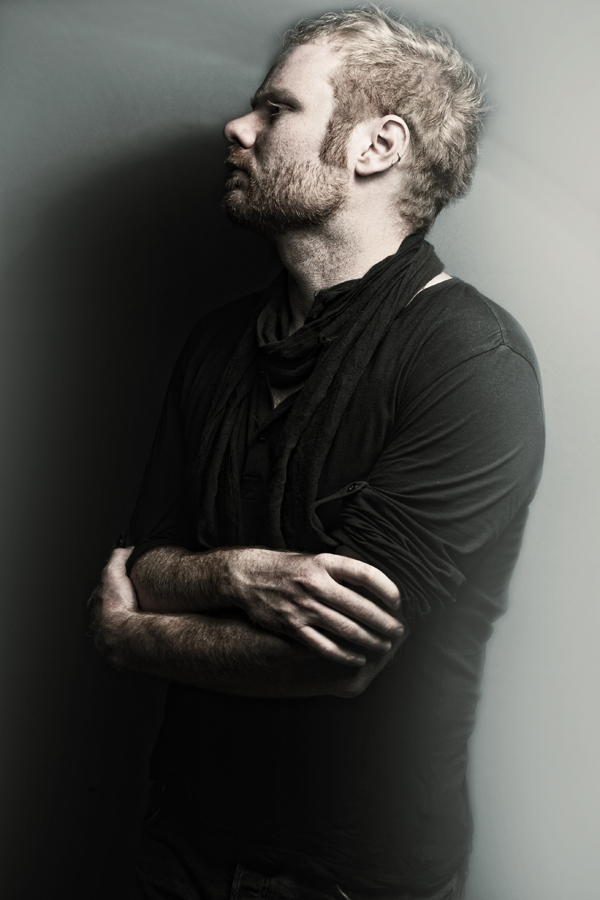
At a recent Wigmore Hall concert, given by the wonderful young Russian pianist Pavel Kolesnikov, I eschewed the printed programme and went into the hall empty-handed. It hardly mattered – I knew what was on the programme (and I could peek at my concert companions’ programme if I needed to) and it was rather liberating not to be clutching a large-ish booklet for the entire evening.

The printed programme is a traditional accoutrement of the classical concert format. When I went to concerts with my parents as a child, I found the printed programme a curious, esoteric document, full of complex, often foreign words and concepts. As I recall, I liked looking at the pictures of the soloist or conductor, many of whom had artistically wild hair (conductor Louis Fremaux, for example, who worked with the CBSO in the 1970s), but the programme notes were largely incomprehensible to me. When my musical studies were more advanced, I was better able to decipher programme notes: I understood terms like Ternary Form, Rondo or Coda, but still the notes seemed to inhabit a rarefied world of musicology which only a select few could enter.

Usually I don’t like audiences reading their programmes as one plays

– Steven Isserlis, cellist

I understand where Steven Isserlis is coming from with this comment from a recent tweet. If your head is buried in the programme, you’re obviously not going to give the music and the performer/s your full attention. Without a programme to read during Pavel’s performance, I found myself listening even more attentively than usual (and, by my own admission, I am generally an attentive concert-goer). My ears were alert to every dynamic nuance and expressive shift, and I found myself making interesting aural connections between the different composers in the programme (C P E Bach, Schubert and Schumann). In short, I was fully engaged and absorbed by the music. This is, of course, largely due to the performer’s skill in drawing the audience into his personal soundworld and communicating the composer’s intentions, but programme notes can be distracting, and without them, one tends to listen more carefully.

Programme notes have changed a great deal since my earliest concert going days in the 1970s. The esoteric, musicological or high-falutin language has largely disappeared, replaced with text which is accessible, readable, informative and informed, though some still remain nothing more than a sterile playlist. The best programme notes offer the audience a way in to the music (this is especially useful when hearing new or lesser-known music). Good programme notes will give an overview of the context in which the works being performed were created, some biographical details about the composer, and information about the structure of the music, but will also include text which can stimulate our anticipation of what we are about to hear or highlight the emotional content of the music, which often makes its more relateable to an audience of non-specialists. Sometimes there are anecdotes about how the work was received when it was first performed, or a quote from a contemporary observer or critic, or how the work is related to another piece or pieces in the programme. For song or choral recitals, programme notes usually contain the song texts in the original language and in translation. In general, today’s programme notes are well-written documents which I often return to after the concert has been and gone.

Sometimes performers writer their own programme notes, which adds a more personal take on the music, and the practice of the performer introducing the programme via a short pre-concert talk is becoming more common. I really enjoy such talks, especially when the performer offers more personal insights about the music or explains the music as he or she sees it. Most audiences are very interested in a performer’s reasons for choosing certain repertoire or why it is special to them, both compositionally and in terms of what it is like, physically and emotionally, to play it. Talking to the audience also breaks down that awful “them and us” barrier that can exist at concert venues, thus giving the audience a greater connection to the performer and a sense that a concert is very much a shared experience.

Modern technology has also changed the traditional programme note. Many concert venues now post videos or podcast interviews with performers or commentators ahead of a performance, which “adds value” to the printed programme. And some venues offer audiences the option to download a copy of the programme in advance. This is a very good innovation, in my opinion. One thing that does irk me about concert programmes is the cost of them: some are as much as £5 and contain page after page of advertising (the Proms programmes being a particular case in point – a veritable bumper edition of advertising and just 5 pages of actual programme notes……). Interestingly, when I attended a Sunday morning concert at the Vienna Konzerthaus, the programme contained only 5 adverts, of which 4 were directly related to the venue and its resident orchestra.

The lighting – or lack thereof – at some venues (Queen Elizabeth Hall and the Coliseum, for example) renders reading the programme during a performance almost impossible, which is probably a good thing. Programmes can be read and enjoyed before the performance, or during the interval, or indeed on the train on the way home. For many of us, the programme becomes a cherished souvenir of a memorable event – especially if it is signed by the performer!

The dance is as old as music itself, and many dances for keyboard or piano have their origin in folk dances such as the Mazurka, Polonaise, Polka, Tarantella and Tango. These folk dances and their characteristic rhythms and metres were taken by composers such as Fryderyk Chopin and elevated into refined salon pieces which are popular with audiences and pianists alike.

Playlist curated by Frances Wilson.

Listen to the playlist

Guest post by Gil Jetley, pianist, teacher and director of Music Holiday Italy

Whilst putting on his music critic’s hat, George Bernard Shaw once declared with great wisdom that the primary function of a conductor is to beat time.  

Er, yeah – I think we might have guessed that!  

But maybe not in the way he meant. You see, he meant that in beating time the conductor was setting the tempo – his point being that for any given work there is one tempo which is right. And other tempos (or tempi, if you must) which are not.  

With this view I largely agree; but it doesn’t only apply to orchestras. It seems to me these days that many pianists, even those great virtuosos that should know better, often play much too fast (and sometimes too slow).

If it’s too fast the sense of the music becomes unintelligible, a meaningless gabble of sound. No chance for it to breath or convey an expansive thought. And because the professionals do it, so too do too many students. Often for no better reason than because they can. There’s no doubting the phenomenal technical skills of the present generation – if measured in accuracy and speed (and one might add volume!) it’s very probably considerably higher than ever before. But since when did music become an Olympic event?

The same applies at the other extreme – taken too slow all sense of continuity, line, and phrase are lost. I recall a memorable masterclass with Andras Schiff where he parodied a famous colleague by playing ultra slow with hugely ‘expansive’ rests and declaring, “You see, I am so profound because I am so slow. The slower I get, the more profound I become!” (The movement in question, in case you are interested, was the Adagio from Beethoven Sonata Op.2.no.3).

GBS was right – for any given work there is a tempo that is right for the musical sense, and the tolerable range either side of that tempo is not very great. A true musician would be unable to bring himself to step beyond those boundaries. Even with the likes of Argerich and Yuja Wang, one might occasionally ask, ‘Well yes, most impressive, exhilarating, astonishing even, but is that really what the music means to you?’ Or one might put the opposite question to Baremboim. But never either to Wilhlem Kempff.

Related to that, I have two students preparing works at opposite ends of technical demands – one has the gently introspective Schumann ‘Scenes from Childhood’ and the other the mighty Bach/Busoni Chaconne. From the Schumann, a classic example of an excess of “tempo-induced-profundity” destroying the continuity is the genuinely profound final item, The Poet Speaks. But others in the set too (‘Dreaming’, ‘Almost too Serious’, ‘Child falling Asleep’) are equally at risk of being taken too literally!

In fact, if one is to perform the whole set it is rather nice to find an overall idea of tempo that works for all the pieces. That’s not to say they should all be played at one consistent tempo, but that there can be some feeling that the tempo of each individual piece is in harmony with that of the others. Without a shadow of doubt, the whole work is SO much more satisfying to hear in this way. And surely it’s more in keeping with Schumann’s intention, which was not to write instructional pieces for children, but an adult’s reflection of childhood.

Now much more controversially (oh goody!) let’s consider the Bach/Busoni Chaconne. Yes, we all know this is about how Bach, with astounding ingenuity, restated the same basic idea 64 times without ever repeating himself. But the Chaconne is absolutely not simply a set of variations – and that applies even more to Busoni (in this particular case). Busoni’s Chaconne is not a mere piano arrangement of an original violin solo. Even calling it a transcription belittles it. It’s substantially more than that; in fact, it’s a total reconstruction. The initial basic thought of Bach has been dismantled down to its very essence – and then reassembled in multilayered permutations (64 times), but using the entire resources of a new and foreign instrument of very different capabilities.

Yet how often it is played as nothing but a set of variations, complete with preposterous drama-filled fluctuations of tempo ranging from “profoundly” stately to undignified scramble. Such thoughtlessness utterly destroys the integrity of the massive edifice Busoni constructed.

Andante maestoso, as the score is headed, is hardly a license for extreme “profundity”. Nor does Più vivo at the end provide an excuse to suddenly double or even treble the pulse. It doesn’t help that Busoni plastered throughout the score multiple expressive indications which many students (and so-called great pianists) choose to interpret as grandiose tempo variations. They are not. They are clarifications of where the music is going. In most cases the required shift in emphasis Busoni has already provided with a change in register, dynamics, or note values. Subtle inflections of tempo, to ‘go with the flow’, are surely all he meant.

There is only one pianist I have heard who’s managed to find a unified tempo that serves the entire 64 restatements in all their variety. His name is Konstantin Scherbakov, and when the work is played in that way it takes on a dignity, a majesty, an Almighty-inspired truth. It becomes so powerful that pianist and audience together cannot help but bask in sense of fatherly approval from J.S.Bach himself. Not for nothing has it been said of Scherbakov’s playing “As if there were no other interpretation.” (Frankfurter Allgemeine).  

And wouldn’t we all like that to be said of us! 🙂 
Read other insightful posts by Gil Jetley at 

http://www.musicholidayitaly.com/posts-from-our-facebook-page/

www.musicholidayitaly.com

On leaving and returning to familiar repertoire

240_f_103173724_1wrksn0coxd91de5mebzkmiywytpkm1cI’ve recommenced work on Schubert’s penultimate piano sonata (D 959 in A), following a few months’ hiatus due to family health issues, during which I was unable to give the music my full and proper attention. Regular readers of this blog will know (along with my husband who works at home and hears me practising every day!) that this sonata has become something of an obsession for me since I embarked on a study of it in autumn 2014 (read more about this here.)

This is not the first time I’ve taken a break from the sonata. In the immediate aftermath of receiving my (disappointing) diploma result last September, I wanted nothing more to do with the music. The score was consigned to the back of the bookcase in my piano room, firmly hidden away. I needed time away from the music, to reflect and regroup. At the time, I wasn’t sure I ever wanted to go near the piece again, but as a pianist friend of mine pointed out, “You just need to let it ‘marinade’ for a few months“. And gradually during that marinading process I found myself returning to my books and articles on Schubert, to listening to his music again, absorbing new details, new thoughts about the sonata, allowing his distinctive, highly personal idioms to seep into my musical consciousness.

Some works reveal their subtleties, depths and complexities more slowly than others. This is certainly true of Schubert’s music which has so many details to be unearthed and explored that one cannot expect to cover all of them in one go – nor even two or three. Rather like the layers of an onion, these details are peeled away over time and through repeated “returns” to the score. For example, in my latest work on the sonata, I am finding more interesting bass details and inner voices/instrumental lines to be highlighted. Whether these details will find their way into a final version, I cannot say, but the process of exploration definitely throws light on other aspects of the music and throws up new ideas for consideration.


Another satisfying aspect of returning to a piece after a rest is finding that certain passages which previously seemed intractable or particularly challenging can now be played with ease and suppleness. This may seem curious, since one has spent weeks not practising the music at the instrument, but it strikes me that one needs time away to allow technical and musical details to embed in one’s mind and fingers. A rest also encourages one to practise differently: I have found myself returning to very simple practise in some areas of the work, stripping the music back and then rebuilding it.

When working on very complex repertoire one can reach a state of saturation where it becomes impossible to take in new ideas, nor even process existing ones. At this point, you may find yourself making silly or careless errors – this is usually the time to put the music aside and give it, and you, a rest.
There is plenty of useful work to be done while the music is resting – listening, reading (both score and books/articles about the music and composer), thinking and reflecting. If, like me, one is focussing on one specific composer or work, “listening around” the work in question is always helpful, in my opinion. I have a very large Spotify playlist of late music by Schubert, including string quartets, the ninth symphony, songs and other piano music, in addition to some works by Beethoven which have a connection to the Sonata I am studying. And of course while some music is resting, other repertoire can be explored and enjoyed. In fact, I find playing music which seems almost diametrically opposed to Schubert (20th century minimalism, for example) incredibly refreshing, allowing me to return to the Sonata with renewed enthusiasm.
There is such a thing as “over-practising” (though some students don’t believe me when I tell them this!). Over-practising can kill a piece of music, as we become complacent about the work and inured to errors, which are then very difficult to erase. Over-practising can also lead to boredom, which can make us careless in practise, and can cause injury which may leave us unable to play for weeks or months. Then an enforced rest from the music and instrument may be necessary, though one can still continue with work away from the keyboard as described above.
When I recommend taking a break from the music to students, they usually exclaim that they will “forget everything” when they return to the music. In general, this is not the case. Music which has been thoroughly and thoughtfully practised and is well learnt remains in the brain and fingers and can be brought back to a good standard very quickly. Returning to a work after a rest can be a wonderful experience, like reacquainting oneself with an old friend, while also making new friendships.
A work can never truly be considered ‘finished’ and thus resting and returning to the same work many times becomes an ongoing study. Often a satisfying performance of a work to which one has devoted many hours of study can be said to put the work ‘to bed’, but only for the time being. Rest the work and return to it, and suddenly new things come to light, informed by our reading, listening, life experience, and so forth. American pianist Bruce Brubaker, in his sensitive and thoughtful blog Piano Morphosis, describes this as a process of “continuing”. Thus, one performance informs another, and all one’s practising and playing is connected in one continuous stream of music-making.