
Regards from Rochester by award-winning British composer Thomas Hewitt Jones was commissioned by Rochester Choral Society to celebrate its 150th anniversary in 2023. The work received its premiere on 18th March 2023 in Rochester Cathedral and was subsequently performed in Wells and Glastonbury respectively in April 2023.
The town of Rochester in Kent is drenched in history. Regards from Rochester celebrates the rich history of the Medway Towns, exploring themes and valuable human stories while relating them to contemporary society. From the first Saxon settlement through to historic stronghold, from pillar of British naval history through to industrial centre and inspiration for Charles Dickens, composer Thomas Hewitt Jones feels that this “postcard from Rochester” celebrates and exudes compassion for our planet, social conscience, humanity and kindness – values that are incredibly important to our world today.
Director of Music, John Mountford, says: “Rochester Choral Society has passed some significant milestones recently, with 2022 marking the 100th anniversary of our first performance in Rochester Cathedral. We wanted to commission a piece which reflected the diversity of this area’s rich and turbulent history, with a historically accurate, humorous and engaging new piece. We wanted to find somebody with a connection and passion for the Medway Towns and who wanted to help raise awareness of the cultural and social heritage of the area.”
Composer Thomas Hewitt Jones, who lives in Rochester, says: “I was delighted when John Mountford approached me to commission this work for Rochester Choral Society’s very exciting 150th anniversary. Quite early on in our discussions, we decided that the richness of Medway’s history was conducive to a new text, so the result is a 10-movement oratorio which we hope tells the story of the area with sweeping melody and angularity where appropriate. I have written it to be as both engaging and as musically interesting as possible.”
John Mountford believes that choral societies are an essential part of national music-making after the COVID era. “Music is central to the lives of so many people; it binds community and enhances wellbeing for singers and audiences alike.
For Thomas Hewitt Jones, writing Regards from Rochester has been an extremely fulfilling and wholesome commission, not only given the richness of local history, but also due to the strength of the musical heritage of Rochester Choral Society dating all the way back to 1873.
“It was a privilege and a pleasure to discover many historic riches of the Medway area, which is often referred to in relation to Charles Dickens, the former Dockyard and as a stronghold to and from London, but in fact contains numerous other riches. Spending extensive time in Rochester library and reading around the history in detail, it became swiftly apparent that the area’s rich social history made up for any perception Medway may have externally of lack of charm; as the text and music were forming, I was delighted to have conversations with local Medway Council operative John Lester, who is an 8th generation of the Lester family in Rochester and who offered personal anecdotes of life in Medway since the Victorian era, some of which I have incorporated into the work. Above and beyond the history books and local connections, in this work I have aimed to reflect throughout the work on the nature of life in 2022, both beyond the recent pandemic (which let’s face it indelibly changed life as we know it) and also in the shadow of contemporary issues that affect our society, not least our collective sense of identity and perhaps most importantly, the current climate change crisis.”
This debut recording of Regards from Rochester features the BBC Singers, the Royal Ballet Sinfonia and Rochester Choral Society, with Harriet Mountford (soprano) and Simon Thorpe (baritone), conducted by John Mountford
Recorded at Henry Wood Hall, London, Regards from Rochester is released by Vivum Music Ltd on all streaming platforms. Physical CDs available from the Rochester Cathedral shop and Rochester Choral Society
For further press information/review copies/interviews, please contact Frances Wilson frances_wilson66@live.com
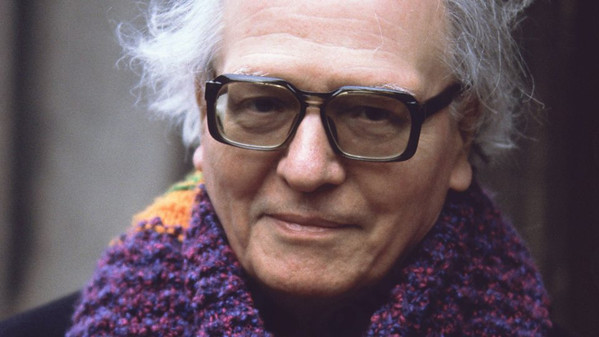 Olivier Messiaen is widely regarded as one of the most important composers of the 20th century, known for his unique approach to harmony, rhythm, and melody. His music is challenging for any performer, requiring not only technical skill, but also a deep understanding of his unique musical language.
The pianists presented here demonstrate a remarkable ability to capture the essence of Messiaen’s music, bringing out its intricate harmonies, colours, textures and rhythms, as well as its emotional depth.
Yvonne Loriod
Messiaen’s student, muse and second wife, Yvonne Loriod was a highly accomplished pianist in her own right. Many of his piano works were written with her in mind. The Vingt regards sur l’Enfant-Jésus (“Twenty Contemplations on the Infant Jesus”) were dedicated to Loriod, and she premiered the work at the Salle Gaveau in Paris in March 1945. Loriod’s playing is known for its clarity and precision, as well as her ability to capture the essence of Messiaen’s unique style. She recorded several albums of Messiaen’s piano music, including the complete set of Preludes and the Catalogue d’Oiseaux.
Pierre-Laurent Aimard
French pianist Pierre-Laurent Aimard is widely recognized as one of the foremost interpreters of Messiaen’s music. Aimard’s connection to Messiaen’s work runs deep, as he was a student of the composer and worked closely with him and his wife Yvonne Loriod. Aimard’s recordings of Messiaen’s piano music are considered some of the most authoritative, and he has performed Messiaen’s works all over the world to critical acclaim.
Angela Hewitt
Canadian pianist Angela Hewitt is perhaps best known for her interpretations of Baroque and Classical music, but she has also made a name for herself in more contemporary repertoire, including Messiaen’s piano music. Her recordings of Messiaen’s music are admired for their technical precision and attention to detail, as well as her ability to bring out the emotional depth of the music.
Steven Osborne
Scottish pianist Steven Osborne has performed Messiaen’s music all over the world, including the Vingt regards and Turangâlila Symphonie. Osborne expertly navigates the intricate harmonies and rhythms in Messiaen’s music with ease, bringing out the complex textures and polyrhythms that are hallmarks of the composer’s style. At the same time, he captures the emotional breadth and spiritual intensity that are crucial features of Messiaen’s music. His performances of the Vingt regards in particular are extraordinarily absorbing, meditative and moving, combining musicality, virtuosity and commitment. (I’ve heard Osborne perform this monumental work twice in London and on both occasions it has been utterly mesmerising and profoundly emotional.)
Tal Walker
For his debut disc, the young Israeli-Belgian pianist Tal Walker included Messiaen’s Eight Preludes. Composed in the 1920s, they are clearly influenced by Debussy with their unresolved or ambiguous, veiled harmonies and parallel chords which are used for pianistic colour and timbre rather than definite harmonic progression. But the Preludes are also mystical rather than purely impressionistic, and look forward to Messiaen’s profoundly spiritual later piano works, Visions de l’Amen (for 2 pianos) and the Vingt regards. Tal Walker displays a rare sensitivity towards this music and his performance is tasteful, restrained yet full of colour, lyricism and musical intelligence.
Other Messiaen pianists to explore: Tamara Stefanovic, Peter Hill, Jean-Yves Thibaudet, Ralph van Raat, Benjamin Frith, Peter Donohoe
This article first appeared on InterludeHK
Olivier Messiaen is widely regarded as one of the most important composers of the 20th century, known for his unique approach to harmony, rhythm, and melody. His music is challenging for any performer, requiring not only technical skill, but also a deep understanding of his unique musical language.
The pianists presented here demonstrate a remarkable ability to capture the essence of Messiaen’s music, bringing out its intricate harmonies, colours, textures and rhythms, as well as its emotional depth.
Yvonne Loriod
Messiaen’s student, muse and second wife, Yvonne Loriod was a highly accomplished pianist in her own right. Many of his piano works were written with her in mind. The Vingt regards sur l’Enfant-Jésus (“Twenty Contemplations on the Infant Jesus”) were dedicated to Loriod, and she premiered the work at the Salle Gaveau in Paris in March 1945. Loriod’s playing is known for its clarity and precision, as well as her ability to capture the essence of Messiaen’s unique style. She recorded several albums of Messiaen’s piano music, including the complete set of Preludes and the Catalogue d’Oiseaux.
Pierre-Laurent Aimard
French pianist Pierre-Laurent Aimard is widely recognized as one of the foremost interpreters of Messiaen’s music. Aimard’s connection to Messiaen’s work runs deep, as he was a student of the composer and worked closely with him and his wife Yvonne Loriod. Aimard’s recordings of Messiaen’s piano music are considered some of the most authoritative, and he has performed Messiaen’s works all over the world to critical acclaim.
Angela Hewitt
Canadian pianist Angela Hewitt is perhaps best known for her interpretations of Baroque and Classical music, but she has also made a name for herself in more contemporary repertoire, including Messiaen’s piano music. Her recordings of Messiaen’s music are admired for their technical precision and attention to detail, as well as her ability to bring out the emotional depth of the music.
Steven Osborne
Scottish pianist Steven Osborne has performed Messiaen’s music all over the world, including the Vingt regards and Turangâlila Symphonie. Osborne expertly navigates the intricate harmonies and rhythms in Messiaen’s music with ease, bringing out the complex textures and polyrhythms that are hallmarks of the composer’s style. At the same time, he captures the emotional breadth and spiritual intensity that are crucial features of Messiaen’s music. His performances of the Vingt regards in particular are extraordinarily absorbing, meditative and moving, combining musicality, virtuosity and commitment. (I’ve heard Osborne perform this monumental work twice in London and on both occasions it has been utterly mesmerising and profoundly emotional.)
Tal Walker
For his debut disc, the young Israeli-Belgian pianist Tal Walker included Messiaen’s Eight Preludes. Composed in the 1920s, they are clearly influenced by Debussy with their unresolved or ambiguous, veiled harmonies and parallel chords which are used for pianistic colour and timbre rather than definite harmonic progression. But the Preludes are also mystical rather than purely impressionistic, and look forward to Messiaen’s profoundly spiritual later piano works, Visions de l’Amen (for 2 pianos) and the Vingt regards. Tal Walker displays a rare sensitivity towards this music and his performance is tasteful, restrained yet full of colour, lyricism and musical intelligence.
Other Messiaen pianists to explore: Tamara Stefanovic, Peter Hill, Jean-Yves Thibaudet, Ralph van Raat, Benjamin Frith, Peter Donohoe
This article first appeared on InterludeHK







 The Cross-Eyed Pianist