Guest post by Tara Yonder

All it took was one comment. From someone whom I previously regarded as a friend but later realised was in fact a “frenemy”. I always knew that Wagner would tear us apart, to misquote the song by Joy Division. That composer above all others seems to provoke the most extreme reactions, divides people down party lines and creates a polarity of opinion akin to the binary contretemps one sees on Twitter virtually ever day: if you don’t agree with me (about Wagner) you are against me. He’s the Marmite composer.

Perhaps you are growing up” said the Frenemy in response to my posting a picture of the score of Wagner’s Siegfried Idyll, transcribed for piano by the late great Glenn Gould. I’d been meaning to learn the piece for some years, having first heard it on the soundtrack to the film ‘A Dangerous Method’, and I’d managed to find a score of the Gould transcription in Foyles (which has an excellent sheet music department). I was looking forward to getting my fingers on it and to treating it as a long-term project (it’s about 16 pages long).

Perhaps you are growing up“. The primary inference is that Wagner is for grown ups, for “proper” mature connoisseurs of art music. This of course is ridiculous. Music should, and does, cross generations and age groups. I have friends in their 20s and 30s who adore Wagner – and friends in their 70s who do not. It reminded me of a comment from a friend a few years ago, “Did you start to like classical music when you reached your 40s?”, thereby immediately reinforcing the common misconception that classical music is only for old people. No, I replied, I’ve always liked classical music. I grew up with classical music, I cut my eager concert-going teeth on the CBSO’s thrilling concerts at Birmingham Old Town Hall under the baton of Louis Fremaux and later a young, rookie conductor with wild tousled curls…..

What stung more was the Frenemy’s patronising tone, all too evident even in an impersonal email, like some elderly uncle from the 1950s chiding a gauche youngster.  Because it was not the first time this person had taken this tone with me – commenting negatively on my writing, nitpicking my reviews, criticising my proof-reading skills (which was pretty rich coming from someone whose own emails were regularly sprinkled with literals and spelling errors), even once telling me I needed to be “taken down a peg or two“, sneering at my liking for certain concert pianists, describing one of them as “the emperor’s new clothes” without actually having heard said artist in a live concert……(you can hear the pianist in question playing Schumann at the end of this article – it brings me to the brink of tears).

***

I caught sight of the score of the Siegfried Idyll on the lid of the piano and felt the hurt, the insult welling up inside me again. Tinged with anger too, because why shouldn’t I change my mind about a composer? Why shouldn’t my tastes shift and alter? Such things are not set in stone, and it’s certainly not about “growing up” – I am already a fully-fledged grown up, I’ve had a mortgage and a “family car”. It’s about changing taste, and exploring the rich and varied repertoire, and finding music to play which will challenge me as well as giving me pleasure.

But the music was ruined for me. I couldn’t play it, couldn’t even lift my hands to the piano to play the opening phrase – so poignantly beautiful, so delicately romantic. So I shoved it right at the back of my bookcase, returned to practising Chopin’s First Ballade and Schumann’s Romance in C, and opened Ravel’s Miroirs beside the piano, with the intention of tackling Oiseaux Tristes.

All of this is uncomfortably redolent of a comment I once received via Twitter in response to my early explorations of a late sonata by Schubert. Someone had the temerity to suggest that, as a non-professional pianist, I was not “worthy” of this music. It’s an attitude I’ve encountered occasionally amongst professional pianists, that certain repertoire should be “off limits” to amateurs (notably Gaspard de la Nuit and Islamey). To which I assert, the music was written to be played – whether to a full house at Carnegie Hall or at home in the privacy of one’s living room. Brilliantly or badly, we should be playing this fantastic repertoire we as pianists are so lucky to have.

One day, when the hurt has healed, I’ll return to the Siegfried Idyll. Meanwhile, I’ll take refuge in my beloved Schubert, and Schumann and Chopin. If the Frenemy reads this, I suspect he would accuse me of being “over-sensitive” or of having “a sense of humour failure”. But I’m a writer, and a musician, and sensitivity is woven into every fibre of my being. And I’m glad it is, because that sensitivity allows me to shape the music I play, to linger over a piquant harmony or interesting intervallic relationship, to sculpt and contour a phrase, and to remain alert to the micro-nuances and shifting emotional landscapes of the music I love to play and listen to.
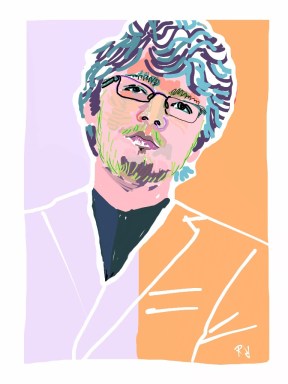
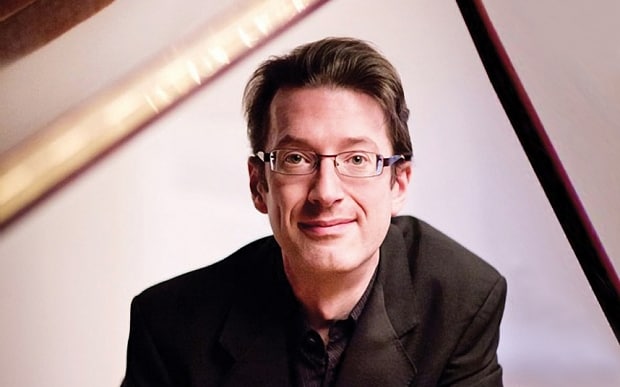
 

In this guest post Roman Rabinovich explores the interrelationship between the visual and performing arts and composition

Ever since I was a kid I have loved creating things, whether sculptures out of randomly found objects and dirt (I didn’t yet know about Robert Rauschenberg), improvising little character pieces on the piano, or compulsively drawing my family members and friends. It seemed at first that these were unrelated and separate activities, but I soon realised that they all came from the same impulse – the need to create my own emotional world in which I could freely express myself. I imagine that most kids are like this, but sadly many stop as they grow older.

I come from a family of musicians and piano playing was the only activity for which I had proper teachers, so I would say I’m primarily a pianist who also paints and composes. That is not to say that I’m less serious about painting and writing music. In fact, I had a difficult time deciding what I would do when I grew up. I’m happy I didn’t have to choose.

Performing and composing are two seemingly different processes. We perform music that composers notate with black dots on the page. However, these black dots are not music. Music emerges only when a performer transforms notation into real sound. A performer’s goal is to get into the composer’s world and mind, similar to an actor who seeks to inhabit a character role. We are taught to analyse a composer’s every mark with uncompromising detail and base our interpretation on the clues the composer leaves us in the score. But just following what’s written in the score is not enough. A compelling performance breathes life into and shines new light on a work. In this sense, performance becomes an act of creation. The process begins with imagining the sound in one’s mind. Fingers are the last factor. As András Schiff said, “fingers are just the soldiers, the General is the mind”.

In composition, on the other hand, there are no instructions; the possibilities are endless. There are rules of counterpoint, voice-leading and form, but the whole “game” is about creating one’s own rules and then breaking them. Every piece follows a different process and it has its own inner logic so there are no shortcuts. Sometimes the process is quick and smooth but more often it is painfully slow and daunting. I feel that it is quite unproductive to impose ideas on a piece. It has to unfold naturally and it takes time for the narrative to unveil itself. When in a state of flow, it feels like a piece writes itself, and as a composer I just listen to what it has to say.

Composing helps me understand how the great masterpieces were crafted. Through this process I also learn so much about myself. I love making these “sound sculptures” and I love the struggle it takes to create art: to be completely lost and not know how to proceed; to try out different options before gradually landing on the right solution. It is a fun way to spend a day. When I wake up, the first thing I do is go straight to the piano. It is a productive time to improvise and explore musical ideas while the brain and the body wake up. There is no inhibition, expectation, nor doubt yet. Often after a few hours of work I hit a wall and it is very helpful to take a walk. Somehow things come into focus when you are outside and moving. No wonder most composers were avid walkers.

I have always been fascinated with painting because, unlike music, it is permanent. The main difference between visual art and music is the perception of time. Music unfolds in real time. When you experience a live concert and the last chord ends, that’s it, it will only remain in your memory. With visual art you take time to absorb it. You can go away, come back and the painting will still be there, unchanged. You change; the painting doesn’t. Taking time is part of your experiencing it. One of my favourite things is to look at a painting, analyse it, and try to figure out how a great master organised two-dimensional space and made it look three-dimensional. In the last few years I’ve been making images on my iPad. It’s a new and exciting medium, and it works differently from paints on a canvas, because you are drawing with light. It is a completely different sensation. When you are drawing on paper or painting on canvas there is a limit to the number of layers before it starts to look overdone. In a similar way, a musical passage can be out of balance if there are too many notes in a chord and all the notes are played with the same volume, making it difficult for the listener to know what to listen for. With digital painting, you have unlimited layers and textures at your disposal.

Just like music, painting is about space and spatial relationships. Our perception of sound changes in relation to the space we are in. We have a visceral reaction to it. The same music will be perceived entirely differently depending on the venue in which it is performed – a small chapel will sound worlds apart from a 3,000-seat hall. Similarly, a painting’s effect is totally dependent on the space, lighting and framing around it.

Music is an abstract language and most of the time it doesn’t need any help from other art forms. However, sometimes I find it useful to visualise structures in music, especially if it is a long and complex piece. For example, when one plays a Bach fugue, one can envision a great cathedral and observe it from the bottom to the top. It all starts with one brick at a time, as with one voice at the beginning of a fugue, and slowly, layer by layer, develops into a marvellous structure. Similarly to decorative art, which has threads or visual motives, composers like to develop pieces from small and simple cells.

In my piece ‘Memory Box’, a suite of six miniatures which I performed at my recent Wigmore Hall recital, music and art merged. The opening movement, “Forgotten dreams”, is based on one of my oil paintings, and part of a series called Memory Box. My piano piece came out of the same creative impulse as these paintings – they are cousins, if you will. In this work I explored the theme of dreams, fantasies and the subconscious. Both the music and the painting are quite fragmented. They are full of gestures and bits and pieces that never seem to resolve and evoke a dream-like state.

Despite the discipline and the daily work routine, it is important for me that whatever I create comes from a place of spontaneity and playfulness. We must not forget to have fun and stay curious. For me, the initial impulse in a creative act has to be instinctive, whether it is improvising or just throwing colours at a canvas. I want to see how the art materials respond, or how the notes react. I can edit things later, but I try to compose with no concrete thoughts – they are often distracting and limit the imagination. I like to keep the integrity of this initial impulse as much as possible. We live in a crazy world full of distractions and it is rare to have a moment of quiet, a moment of being fully present. Art is a very powerful thing and it can give these moments, this sense of purpose to anyone at anytime.

10174523526_2b1d862b0c_b


Roman Rabinovich was born in Tashkent, Uzbekistan; raised in Israel; and is now based in the USA. A multifaceted musician, praised by the New York Times for his “uncommon sensitivity and feeling”, Rabinovich is also a composer and visual artist, and often creates artwork to enhance his musical performances.

Full details at: www.romanrabinovich.net

Meet the Artist……Roman Rabinovich

Who or what inspired you to take up the piano and pursue a career in music?

I used to listen to a lot of music (mainly vocal) when a young child and so my parents decided to buy a piano for me.

Who or what have been the most important influences on your musical life and career?

I’m largely self-taught as a pianist but have been inspired at different times by recordings of artists such as Richter, Gilels, Barenboim, Brendel and many others.

What have been the greatest challenge of your career so far?

Performing all the Beethoven sonatas in two weeks during the 2011 Edinburgh Festival.

Which performance/recordings are you most proud of?

I have just finished recording most of the Beethoven solo piano music and I’m currently listening to the tapes to work out whether I can be proud of them or not.

Which particular works do you think you play best?

I think that’s probably for other people to decide.

How do you make your repertoire choices from season to season?

I usually devise a large-scale project for the season such as a Beethoven or Schubert cycle but it’s also important to play as many different composers as I feel comfortable with. Inevitably I have to deal with requests from promoters which mean I always play more repertoire than is ideal each year.

Do you have a favourite concert venue to perform in and why?

The Concertgebouw in Amsterdam (both large and small halls) has amazing acoustics and I have fond memories of my Carnegie Hall debut.

What is your most memorable concert experience?

Possibly my debut at the Edinburgh International Festival in 2003 or returning there to play Charles Ives’ mind-bogglingly complicated Concord Sonata.

As a musician, what is your definition of success?

Being able to go to sleep after a concert and forget about it, not lying awake thinking that it wasn’t good enough.

What do you consider to be the most important ideas and concepts to impart to aspiring musicians?

The idea that music-making is not a circus and that we’re not necessarily interested in how fast you can play. Use imagination in choosing and exploring lesser-known parts of the repertoire as there is a risk that all young pianists now want to play the same pieces.

Guest post by Jennifer Mackerras

A performer with “presence” has something to say and is communicating effectively, with focus, commanding the audience’s full attention

– Mark Swartzentruber, concert pianist

Occasionally one attends a concert where the performer’s presence seems so modest and yet so powerful, commanding awed silence from the audience… I think such an ability comes from a deep love and respect for the music and a willingness to set aside one’s ego in the service of the music. Loss of ego brings powerful presence and creates an empathic relationship with the audience.

– Frances Wilson, pianist and blogger on classical music and pianism

The topic of stage presence is one that is often subject to heated debate. Who has presence? Is it the person with the biggest or loudest personality? Is it the performer who gives the most original interpretation of a work? Or is it something rather more personal and less showy – the performer whose focus and commitment to a work is so total that the audience is compelled to enter their musical world? Fran certainly came to that conclusion in her excellent post, quoted above.

So how do you learn to set aside your ego? How do you learn to put yourself in the service of the music? Here’s some practical advice on how to move towards that goal, coming from the work of FM Alexander.

The Private Universe theory

Back in 1923, FM Alexander wrote a sentence that I keep coming back to in my teaching:

We all think and act (except when forced to do otherwise) in accordance with the peculiarities of our particular psycho-physical make-up. – FM Alexander, Constructive Conscious Control of the Individual

In other words, all of us have a psycho-physical make-up – a unique melding together of mind and body – that is composed of all the influences, individualities and quirks created by our upbringing, friends, schooling, environment, media… We create our own little private universe of ideas and beliefs about the world and how we interact with it, and we act according to its rules. We think and act according to our private universe – our psycho-physical make-up.

Now, some of the ideas in our private universe will be fantastic, but some of them will be rather less so! Sometimes our ideas of what we need to do to fit into the world really don’t help us. Just think about the kid at school who tried to hide his insecurity and lack of self esteem by bossing other kids around. Or the girl who spends her teenage years hiding behind a wall of hair so that she doesn’t have to interact with the world.

When it comes to performing, each person will approach the performance according to the rules and assumptions of their private universe. If their private universe says that people only like them if they’re loud or very extrovert in their presentation, then they’ll approach the performance of music that way. If their private universe says that people are naturally judgemental in nature, and particularly if they assume that the judgements will be negative, then they will approach performing in such a way as to protect themselves from the negativity.

These private universes then begin to manifest themselves physically. Perhaps one performer will tense muscles in order to shield themselves from the negativity they assume they’ll receive. Another performer might be so concerned to ‘get the music across’ that they add in lots of unnecessary movement and tension that ultimately detracts from the piece they’re playing.

My job as an Alexander Technique teacher is to help performers get out of their own way. I work with a lot of musicians – amateurs, students and professionals. Typically, when they reduce the physical tension they create, they report feeling more vulnerable. But they also report an improved ability to achieve what they want technically, an improved sound, and improved ability to ‘get inside’ the music.

The best performances often come from the performers who are most prepared to ‘sit with’ the audience; to be wholly and unapologetically themselves. They are not trying to hide themselves because they are nervous; they are not trying to project an image of themselves, nor are they trying to ‘present’ the music. They are simply placing themselves at the service of the music and the audience

How can you begin to achieve this state for yourself? Here are a few ideas.

  • Really know the music. If you feel unprepared, you are more likely to be nervous, and more likely to increase the mental and physical tension prior to performing.
  • Come up with a one phrase (or even one word) key to your goals for each piece that you are playing.
  • Before you play, acknowledge that being nervous is completely normal and reasonable.
  • Remember that mistakes are normal. Everybody makes them!
  • Before each piece in your programme, take a moment to settle yourself and remember your key word or phrase.
  • Really examine your attitudes towards the audience. Do you view them as adversaries, or as a group of friends?
  • When you’re an audience member, are you judgemental? Or are you there to enjoy yourself? Perhaps remembering that audience members come out of enjoyment may be a helpful thought before you perform.

If you work on changing your thinking, you can begin to change the muscular tension that is getting in your way. And if you can do this, everyone will benefit: you, the audience, and the music.


jen_working6Jennifer McKerras is a performance coach, musician and fully qualified and registered Alexander Technique teacher



activateyou.com