Guest post by Joanna Wyld

I recently enjoyed a concert in the rejuvenated Queen Elizabeth Hall on the Southbank Centre; ‘An Evening with Danielle de Niese’ in which the soprano was joined by a host of other stars: Menahem Pressler, Sir James Galway, Mark Simpson, and the Navarra Quartet. The concert was memorable for reasons too numerous to detail here, but, alongside the purely musical elements of the occasion, I was struck by the fact that the programmes sold out.

Before the concert, the QEH kiosk queue (try saying that after an interval drink) was considerable and, alarmed by the increasing urgency of the announcements that the concert would start at any moment, I went into the hall, expecting to pick up a programme in the interval (it just so happens I’d written the programme notes, so I knew the works and running order already). At the interval I duly tried again to obtain the elusive programme, but was told by the QEH staff that they’d run out. They took my name and address, along with those of several other audience members hoping for a copy to be sent to them afterwards. Then, after the concert was over, I noticed that people were still giving their names to staff, wanting a programme even after any immediate necessity for one had passed.

So what? You might ask. Things sell out all the time. Gig tickets snapped up by touts. Almond croissants in cafes. Those leisure trousers you’d hoped to snaffle in the sale. But the significance here, especially for someone who writes programme notes, is that it demonstrates the real value of concert programmes to audiences. For some, it will have been a tangible souvenir of a combination of artists not likely to be seen together again. But concert tickets alone are a souvenir, so there must be more to it than that.

Programmes have a tactile appeal; they have gloss and weight, a sensual pleasure akin to a well-bound book. They tell us about the artists – yes, you can look up biographies on the internet, but it’s so much better to have all the information in one place, to browse during the concert or on the train home. And they contain the programme notes, those insights into the music and the composers, the song texts and translations. For many, a programme is essential during a concert, but it’s also a joy to happen upon at a later date, an aide memoir discovered whilst tidying a bookshelf. By that time, perhaps years later, one might well have forgotten the details of the concert, but finding the programme again brings to life the whole experience, reminding us of the artists and music we heard, animating faded, ghostly memories with fresh colour and life.

The need for programmes has been called into question in recent years. There are those who suggest that artists should speak about the music beforehand, as a replacement for programme notes. I’m not against this idea for those artists who wish to; it can be a pleasure to hear from musicians if they feel like engaging with the audience verbally as well as musically. But not all artists wish to do this, and there are language barriers to be considered, too. I heard James Rhodes perform a couple of years ago and he began with his own spoken programme notes. Rhodes is a great example of how this approach can work: personal, humorous, engaging. But, whilst I remember enjoying what he had to say, I remember his playing much more vividly. His words are harder to recollect now, not because they weren’t well communicated – they were – but, perhaps, because memory (my memory, at least) responds differently to visual and aural experiences. The nature of memory is far too complex to delve into here and is hardly my area of expertise, so I recognise that and it would be unfair to extrapolate a general principle from one experience. But perhaps the convention of hearing music and reading words has evolved because this is the way our brains best assimilate each facet of the concert. If one reads the score and listens to someone talking about it, it’s a lecture, not a concert; the visual and aural aspects of music are not straightforwardly interchangeable.

I overheard a woman at a conference recently dismissing programme notes as “boring”. Now, I took this with a pinch of salt, as people at conferences very often want to sell things to each other, and I imagine that whatever she wanted to sell was an alternative to the “boring” notes she mentioned. But it’s a nonsensical statement, too easily articulated in an age of poor attention spans; like saying that newspapers are boring on the basis of one article that didn’t immediately grip you, or that all food is boring because of one dish of overboiled Brussels sprouts. I cannot imagine someone talking of theatre programmes with the same dismissive attitude. For plays or musicals, programmes are a must, and to imply that classical concerts are fusty by including them is part of a wider trend in how classical music is sometimes discussed: self-flagellating, hand-wringing, terribly worried we’re not accessible enough, not fun enough. Whilst I agree that the accessibility of classical music to as wide an audience as possible is of real importance, there is a risk of creating a vicious cycle: the more we repeat those fears, without anything constructive offered as an answer, the more they risk being absorbed as insurmountable fact. Whereas if we believe in music as its own reward and act on that belief, many will discover it for themselves without needing to be apologised to or persuaded. Music writers are amongst the most devoted and enthusiastic out there; usually, if you take the trouble to read our efforts, you’ll be rewarded.

Programme notes can be fascinating because music, and musicians, are fascinating. I still love writing about music after 15 years of this kind of work, not only because of my own love of the music, but because it’s a real joy imagining that my writing might increase the pleasure of a listener; that it might entertain, move, amuse, or even, on a good day, induce goosebumps. Composers themselves are wonderfully helpful in providing these moments: flawed, eccentric, passionate, their words can be almost as delightful as their music. One of my favourites was a letter found in a library book (shout out to Bromley Library, to whom I owe a huge debt) when I was writing for a concert of music by Shostakovich and Prokofiev. Shostakovich had written to Prokofiev, who was reaching the end of his life, with remarkable tenderness:

“I wish you at least another hundred years to live and create. Listening to [your] works… makes it much easier and more joyful to live.

​I warmly clasp your hand.”

Goosebumps.

Then there’s the bawdiness of Mozart (much of it unprintable), the searing melancholy of Beethoven, the love-triangle of Brahms and the Schumanns (enough to titillate a tabloid), the pitch-black, meandering thoughts of Mussorgksy, the dry wit of Stravinsky (exhorting us to listen – “a duck hears also”) …

I could go on, but far better if, at the next concert you attend, you buy a programme and read the contents which, hopefully, will add to the joy of the music itself. I wish you charmed evenings of thrilling music, exceptional performances, absorbing programmes, and goosebumps. I warmly clasp your hand.

© Joanna Wyld, 2018


Joanna Wyld was born and educated in London before reading Music at New College, Oxford, where she was an Instrumental Scholar. She was listed as one of the Women of Distinction in 25 Years of Women at New College.

Joanna established Notes upon Notes in 2004 and has been writing liner notes, programme notes and other copy for a wide range of artists and record labels ever since. She also worked on Stop The Traffik for Steve Chalke and Cherie Blair, a book used as a resource by the UN.

Joanna won the 2014 OUP spoof Grove Dictionary article competition, as well as both second and third runner-up slots.

She curates playlists for classical streaming service IDAGIO, and recently appeared in a Southbank Centre video introducing a concert at the new Queen Elizabeth Hall. Joanna is Editor at Odradek Records, and is working on her first libretto for an opera by Robert Hugill.
Notes upon Notes

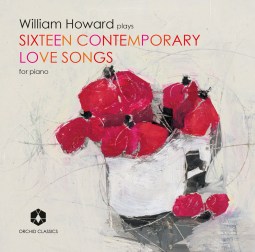
William-Howard-2-ORC100083-WebCover.jpgWilliam Howard, piano
Sixteen Contemporary Love Songs

Orchid Classics ORC100083


Love songs can be found in music across the world and across the centuries

– William Howard, pianist

Love in its infinite variety has been a major preoccupation for British pianist William Howard whose Love Songs project began in June 2016 with the release of Sixteen Love Songs, a selection of hauntingly beautiful 19th and early 20th-century song-like romantic works scored for solo piano. Sixteen Contemporary Love Songs is the companion disc to the original recording, and features new music for solo piano specially commissioned by William Howard by some of the leading composers active today, including Cheryl Frances-Hoad, Piers Hellawell, Nico Muhly, David Matthews, Judith Weir and Howard Skempton.

Having commissioned and performed music by living composer throughout my professional life, I was not far into this project before I started wondering what the contemporary equivalents to these romantic works would sound like.

– William Howard

In addition to the new commissions, a major part of the Love Songs project was an international competition for writing piano love songs. Running from June to October 2016, it received over 500 entrants aged between 13 and 90, from 61 different countries. The album features the two winning pieces from the competition –  Chanson Perpétuelle by Chia-Ying Lin and Herz an Herz by Frederick Viner – and represents an important new contribution to the pianist’s repertoire.

Love is a universal theme and the aim of the album is to present contemporary piano music which will appeal to a wide range of listeners. The music reflects the myriad facets of love: tender pieces written for babies or children (‘Camille’ by Joby Talbot) or a partner (‘For Teresa’ by Robert Saxton, which quotes Beethoven’s ‘Fur Elise’, another love song for piano). Other works focus on more abstract aspects of love, or love other than the human kind. Each composer has contributed a brief programme note illuminating the inspiration or creative impulse for their piece.

It’s a rewarding disc of contrasting piano miniatures, from the simple Scottish folk idioms in Howard Skempton’s Solitary Highland Song to the poignant lyricism of Roses in a Box by Elena Kats-Chernin, the delicate Lisztian filigree of Joby Talbot’s Camille or the spareness of Judith Weir’s Fragile. The disc closes with Love Song for Dusty by Cheryl Frances-Hoad, a homage to Dusty Springfield, which combines jazz and pop-inspired harmonies with sweepingly romantic gestures redolent of Mendelssohn. The entire album reveals a wonderful variety of compositional languages, imagination, moods and character, and many of the works are very meaningful, or highly personal. All are easy to relate to and travel beyond the confines of the strictly defined genre of “classical music”. William Howard brings clarity, warmth, sensitivity and gracefulness to each piece and demonstrates his acute ability to shift between changing moods and styles to highlight the individual character of each piece.

Recommended


Sixteen Contemporary Love Songs is available on the Orchid Classics label


Who or what inspired you to take up the piano and pursue a career in music?

I don’t think I can give a definite answer but I remember an immediate fascination with the piano though it wasn’t really something I seriously pursued until the age of about 11. Having said this, I don’t think one really chooses to pursue music but, rather, that it is a calling.

Who or what have been the most important influences on your musical life and career?

I suppose, repertoire-wise, Marc-André Hamelin was the biggest influence – his recordings really opened the door to me as to what there was off the beaten track. Opera has also been quite important to me in recent years. Aside from these more obvious things, art and literature (contemporaneous to whichever music I’m studying) are generally of huge importance when it comes to cultivating an understanding of the music.

What have been the greatest challenges of your career so far?

I think most musicians, if they’re honest, will answer that earning a living is up there. In connection to this is the aspect of striking a healthy balance between teaching and playing together with whatever else we have to do.

Which performance/recordings are you most proud of?

There are some tracks I’m very proud of. I think all CD recordings I’ve made I’m proud of in different ways but, for me, I also think it’s more a sense of what each CD represents; what was going on in my life at the time and the memories connected with learning the works.

Which particular works do you think you play best?

At the moment I am especially drawn to the nineteenth century. I feel I have a particular flare for operatic fantasies but if you had told me that ten years ago I would have laughed in utter disbelief!

How do you make your repertoire choices from season to season?

At the moment, it tends to revolve around what I’m doing recording-wise but not exclusively so. There are also certain things I imagine I would like to play at certain times of the year – not quite sure why that is but the seasons do influence this.

Do you have a favourite concert venue to perform in and why?

I can’t say I do though there are places I enjoy playing and I do sometimes programme works specifically for the space and instrument if I feel it might be particularly gratifying.

Who are your favourite musicians?

Marc-André Hamelin, Myra Hess, Georges Cziffra, Raymond Lewenthal, Maria Callas and Richard Bonynge to mention but a few.

What is your most memorable concert experience?

Probably giving the Hellenic première of the Liszt Hexaméron in Athens, 2012.

As a musician, what is your definition of success?

Earning a living – the rest is an added bonus.

What do you consider to be the most important ideas and concepts to impart to aspiring musicians?

I think a sense of what our purpose is. It’s something so obvious it’s overlooked. The world will always need music – it comforts, enlightens and, above all, unites us. Sharing it I regard as a solemn duty and one of grave importance in these fractured and distorted times.


Mark Viner is recognized as one of the most exciting British concert pianists of his generation and is becoming increasingly well known for his bold championing of unfamiliar pianistic terrain. He studied at the Purcell School of Music and the Royal College where his principal teachers included Tessa Nicholson and Niel Immelman. Having won first prize at the C.V. Alkan – P. J. G. Zimmerman International Piano Competition in Athens in 2012, his international engagements have flourished, he has been broadcast on German Radio and been invited to the Oxford Lieder Festival, Cheltenham Music Festival, ProPiano Hamburg and Husum Rarities of Piano Music in Germany. Last year he was invited to play for the Prince of Wales’s visit to his hometown of Oxford. Due to his close association with unjustly neglected areas of the piano literature, he was recently elected Chairman of the Alkan Society.

His recent recording of Aklan’s 12 Études in the major keys Op. 35 was praised for ‘turning Alkan’s forbidding torrents of notes into real music’.

The concert pianist cuts a romantic, almost mysterious image: alone on the stage with only a shiny black minotaur of a concert grand for company, the pianist exists in a place other than ours, elevated – both physically and metaphorically – before us. We invest special heroic qualities in the pianist, knowing that he/she must convey supreme mastery and complete oneness with the music by playing from memory. Pianists are like Himalayan adventurers, scaling the highest peaks without a safety net: Triumph or fail, they do so in the very public sphere of the concert hall.

A concert is not called a “performance” – and its participants “performers” – for nothing. Like an actor inhabiting a character created by a playwright, so the musician takes on a special role for the duration of the concert. Like actors, they also wear special clothes for the occasion, which further defines their role, and the occasion occurs in a special building, often in darkness or semi-darkness. Thus the concert becomes an experience outside the realm of daily existence – for audience and performer.

Every physical act you do when you’re on stage is part of the drama of the performance. Playing a concert is theater. It’s one of the reasons I think we should have a different costume for playing a concert, as opposed to listening to a concert. It doesn’t have to be tails, but I think we need to emphasize that this is something that’s not of the everyday.

– Stephen Hough, concert pianist (from an interview with Pacific Standard

Milton Court, London after a concert by America pianist Jeremy Denk
The mystique of the performance begins as the house lights dim, the unspoken signal to the audience to fall silent. A palpable sense of expectancy permeates the concert hall, and the shared adventure of the performance begins as soon as the pianist crosses the stage. The applause, the audience’s way of greeting the performer, and, in return, a bow, the performer’s way of acknowledging the audience. There is no enmity: for the next few hours we are, to quote British pianist Stephen Hough, “all friends”, sharing in the experience, our many differences forgotten for the duration of the concert.

The moments before the performance begins resembles nothing else. One has a sense of the awesome formality of the occasion, the responsibility, the knowledge that, once begun, a performance cannot be withdrawn. Silent, poised at the piano, at that moment the pianist has complete control over our reactions:

I sit down, and I don’t move a muscle. I create a sense of emptiness within myself, and in my head I count up to thirty, very slowly. This causes panic in the audience: ‘What’s happening? Is he ill?’. Then and only then I play the G [of Liszt’s Sonata]. In this way, the note sounds totally unexpected, but in an intentional way. Clearly, there’s a sort of theatricality about this, but the theatrical element seems to me very important in music. It’s essential if you want to create a feeling of unexpectedness….

The unexpected, the unforeseen – it’s this that creates an impression

– Sviatoslav Richter (from Sviatoslav Richter: Notebooks and Conversations by Bruno Monsaingeon)

The best performers (and I don’t necessarily mean the most famous or technically assured) are the ones who take us into their confidence, creating an unspoken mutual connection through music. They weave stories for us, create magic, transport us to another place and allow us to forget ourselves and the tedious minutiae of our daily lives.

The pianist’s mystique and the ritual of the concert create a unique connection in time and place between the performer, the music and the audience.

Today, when presenting classical music seems to be all about “accessibility”, the mystique of performance can be lost in the desire to “connect” with the audience “extra-musically”, so to speak, by talking to the audience, for example, to break down barriers. It’s great to enjoy classical music in a more relaxed setting; it’s interesting when the performers introduce the programme, discuss their particular connection to the music, or why they selected it. This can work especially well in smaller venues where the audience and performer are in close proximity. But talking to the audience pre-concert in a big hall is problematic without proper amplification, and the big venues almost naturally lend themselves to a more formal, mystical concert experience. And I think audiences like performers to actively create a sense of mystique – because we know we are mere mortals in the face of such superhuman ability.

The most startling thing can be meeting a concert pianist “off duty”, so to speak. Years ago, long before I started writing this blog, I interviewed a concert pianist at his fairly modest home in leafy suburbia. I have always been fascinated by pianists (still am, as this blog testifies!) and I had an overly romantic image of the “concert pianist” (this was some years before I took up the piano again and learnt how to be a performer myself, which gave me an understanding of what goes on on stage during a concert and the curious psychology of performance). The mystique was dispelled the moment the pianist answered in the door. I remember he was was wearing navy socks of the type one can buy in M&S, and his piano room was not some Lisztian salon, as I had imagined it might be, all crimson swags and a bust of the composer for inspiration, or an ascetic monkish cell, but a tidy “office” equipped with the tools of his trade – a grand piano and a career’s worth of scores neatly lining one wall. The virtuoso at home. This person had kids, and a friendly cat, a mortgage to pay and a car to service: in truth, he was disappointingly ordinary. I had imagined something, someone, more esoteric, and his very ordinariness was a shock – he regarded the fine art of creating beautiful music for others to enjoy as nothing more than something he did day to day, nine to five, just like any other job. In fact, most of the musicians I have met via this blog and my Meet the Artist series, and of course after concerts, are normal people – and they “normalise” the incredibly artistic and highly intellectual thing that they do on stage in order to function day to day and get their work (practising) done. Because for them, music is their job. But of course what marks them out is their ability to transform the normal into the beautiful, the transcendent, the magical……and if we want to preserve that mystique, maybe it is better we don’t meet our pianistic heroes and heroines.

…the further a performance must travel to reach the origin of the music, the more the artist demonstrates the measure of both his conscience and his genius

Mark Mitchell, Virtuosi!


