barley-matthew-299

Who or what inspired you to take up the ‘cello and pursue a career in music? 

Having had a brief and disastrous career on the piano aged five (6 lessons and the teacher sacked me for being ‘totally unmusical’), when I was seven I heard a cellist, loved the sound, and announced I would be a professional one day with my own helicopter. I’m still saving up.

Who or what were the most important influences on your musical life and career?

I have been influenced by many things around me in my life – famous cellists of course (Yo-Yo Ma, Rostropovich, Casals etc), but also by Russians and their approach, by my wife, Viktoria Mullova and her uncompromisingly pure and selfless approach to music-making. But there are two influences that are not so obvious. I grew up on the Beatles and the aspect of their output I find most fascinating is that they did everything with love – at least until the last year or two – and this really shows in their music. George Harrison remarked that whenever any of them had an idea the response would always be ‘yes’ from the rest of the band, and that philosophy I aspire to – the positivity, inclusivity and humanity at the centre of the music. Also, I was profoundly influenced by watching the film The Thin Red Line. I was in a hotel room in Sydney and watched this brilliantly made war film and it completely destroyed me – I was a weeping wreck by the end, and the thing that exercised me most was, ‘what can I do to respond to this’? It just felt so impossible to do nothing, but what can a cellist do in the face of the inhumanity of our world? The only thing I could come up with was that I must practice and play with more heart, more dedication, and challenge myself every day to do better – in short to do my utmost every day to become the best I possibly can and help to add a happy and fulfilled grain of sand to the beach of the world. It is a lifelong task and one I take seriously, although I’m aware of how small one man’s contribution is, but that film was a deep inspiration.

What have been the greatest challenges of your career so far? 

Working with my physiotherapist to overcome a skiing injury, and a hypnotherapist to overcome stage nerves were big mountains to climb.

Which performance/recordings are you most proud of? 

I’m probably most proud of the last concerto performances before a short sabbatical I took this year. The cello concerto by HK Gruber is one of the hardest every written and I played it with the BBC Phil and Gruber conducting at Bridgewater Hall. I had such a good time playing. The orchestra were just awesome, Bridgewater Hall is very kind to cellos and I was very happy. Then a few weeks later I had 3 performances of Tavener’s The Protecting Veil in Mexico in beautiful halls where I felt totally free and comfortable onstage – Stephen Layton conducted like a dream so that I was absolutely liberated to make music without having to worry about anything. Heaven.

Which particular works do you think you perform best? 

The Protecting Veil is a special one for me (see above), because I don’t approach it as a piece of classical music, but more from my experience of Indian classical music and improvisation – it was the music of India that inspired John Tavener as he was writing it. I enjoy playing it SO much!

How do you make your repertoire choices from season to season? 

Pretty random really – sometimes just because people ask me, and sometimes I decide what I want to play on a whim.

Do you have a favourite concert venue to perform in and why?

Dartington Great Hall, Wigmore Hall, St George’s Brandon Hill Bristol, Beethovenhaus in Bonn, the new hall in Cremona…well, quite a few – places where the cello can really sing.

Favourite pieces to perform? Listen to? 

Right now it’s all about gorgeous Brazilian music – Egberto Gismonti, Jobim, Danilo Caymmi, Milton Nascimento, Elis Regina, Chico Buarque. And of course Bach is always there in the centre, recently inspired by reading John Eliot Gardiner’s brilliant book, Music in the Castle of Heaven.

Who are your favourite musicians? 

Carlos Kleiber, The Beatles, Beethoven, Bach, Ella Fitzgerald, Annie Lennox, Glenn Gould, Bernstein, Casals, Stevie Wonder – well, hundreds of them really…

What is your most memorable concert experience?

Mahler 9 with the Berlin Philharmonic and Abbado at the Proms in 1991. I would have laughed if you had told me that one day I would raise his wonderful son, Misha. Life is beautifully unpredictable.

What do you consider to be the most important ideas and concepts to impart to aspiring musicians? 

So long as it is done with with true sincerity from the heart, you are on the right track.

As a musician, what is your definition of success?

Success is making the sound that comes out of the cello the same as the one in my head.

Where would you like to be in 10 years’ time? 

Anywhere with family and friends.

What is your idea of perfect happiness? 

Being anywhere with family and friends.

What is your most treasured possession? 

My cello, of course.

What do you enjoy doing most? Breathing.

What is your present state of mind? 

Sitting on a train, passing a beautiful river, ducks flying overhead in formation. All is good.


Matthew Barley is internationally known as cellist, improviser, arranger, music animateur, and Artistic Director of Between The Notes. His musical world is focused on projects that connect people in different ways, blurring the boundaries that never really existed between genres and people.

As a soloist and chamber musician he has performed in over 50 countries, including appearances with the BBC Scottish (Volkov) and Philharmonic (Hazlewood), the Melbourne Symphony (Tortelier), New Zealand Symphony (Tan Dun), Hong Kong Sinfonietta, Netherland Radio Symphony (Stenz), Czech Philharmonic, Vienna Radio Symphony, Kremerata Baltica, Royal Liverpool Philharmonic, Royal Scottish National (Alsop), and London Chamber Orchestra. He has performed at festivals in Lucerne, Schleswig-Holstein, Bonn-Beethovenfest, Hong Kong, Lanaudiere, Abu Dhabi, Krakow, City of London and in recent seasons has performed at some of the world’s great concert halls: London’s Wigmore Hall, Royal Albert Hall, Amsterdam’s Concertgebouw, Kumho Hall in Korea, Pablo Casals Hall in Tokyo, The Rudolfinium In Prague, and the Teatro Colon in Buenos Aires. A key aspect of his recitals is mixing repertoire in unusual ways, pairing Bach suites with jazz and improvisation. He is particularly interested in music with electronics, having commissioned works from many composers including Dai Fujikura, Peter Wiegold, DJ Bee, John Metcalfe and Jan Bang. He has given other premieres of pieces written for him by James MacMillan, Thomas Larcher, Detlev Glanert, John Woolrich, and Fraser Trainer.

Read more here

(artist photo © Nick White)
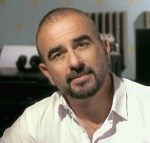
Guest post by Phil Best

The great piano composers were all fluent improvisers. Bach, Mozart, Chopin and so many others are reported to have improvised to audiences regularly. Beethoven’s improvisation duel against Daniel Steibelt, which he won to become the most lauded improviser in Vienna, proves this point whilst it also demonstrates how many virtuoso pianists of the time were skilled improvisers. So when did improvisation cease to be part of the job description for classical pianists, and why?

First of all, I’d like to consider different forms of improvisation. The piano composers of the past were masters of real-time composition and this is a very particular kind of improvisation. Some people today might hear those words and conjure up notions of free, atonal, arrhythmic music. Perhaps the idea of creating complex rhythmic and tonal music that makes perfect sense over many minutes, without some kind of pre-existing framework seems impossible and atonality appears to be the only outcome of attempting such a thing. Another possible form of improvising is the simple, rather post-minimal and free-form explorations that many amateur pianists do these days – you can hear many examples on YouTube and often to great effect. The fact that this kind of activity is making piano improvisation something accessible and truly self-expressive is wonderful. But Beethoven’s or Chopin’s improvisations would have been far more complex and involved. Of course, jazz musicians do improvise but often around a framework of a song structure, with an outline of harmonic and rhythmic unfolding to guide them. When jazz pianists, such as Keith Jarrett do compose in real time, the results can be pretty spectacular. But what about classical pianists?

Well, there is a handful of famous classical pianists who improvise in public. The wonderful Gabriela Montero is an example of a well-known pianist who regularly improvises, usually creating a pastiche of a great composer’s style and Robert Levin is renowned for making improvisation an integral part of Mozart’s piano music, improvising cadenzas on the spot and fleshing out the barebones writing that is often encountered in slow movements. But this is still not quite the same thing as a pianist-composer creating new music in real time.

I believe this points to one underlying reason for the waning of classical piano improvisation in classical concert halls. Composers began to inhabit a distinct realm, quite separate from that of performing. Perhaps the increasing prevalence of atonality in composition or simply the fashion for hyper-intellectualism that was sweeping through the arts generally made the combined role of composer-pianist less valid. Rachmaninov really had two hats as many artists of the early part of the century did and he famously spoke of feeling uncomfortable at times when performing his own works. Later on, composers who were also great pianists, such as Andre Previn, have crossed into jazz in order to showcase their improvisation skills, once jazz had gained its status as an intellectual equal to classical music. I believe that improvising classical music on the spot may have appeared to cheapen its new brand as a very high status, intellectual activity that was not jazz. This branding also affected the way pianists sounded when they played classical pieces, in my opinion. Natural rhythm and phrasing were replaced by something altogether drier or more mannered-sounding. To play Chopin or Mozart without the perceived rigour of interpretative analysis, simply playing the melodies, harmonies and rhythms with full-blooded, natural expression was left to amateurs or perhaps the highly commercialised artist, Liberace. In this climate, attention turned towards a very different skill set from fluent musicianship: scholarship was regarded as the core of classical music studies, with interpretation, theory and historical or authentic performance knowledge being the key skills.

This competitive world of the classical piano virtuoso was of course dominated by recordings, which could well be another very important reason why improvisation was no longer part of the job of a classical pianist. In their new role as master interpreters of historic music, pianists in the last century had to battle it out for supremacy not only in the great concert halls of the world but also in the pages of music journals such as the Gramophone magazine. Highly regarded music critics would rate interpretations as being more or less worthy of esteem and of course purchase. I remember how my father and uncle would strive to acquire the most definitive interpretations of certain piano works. All of this is a million miles away from the idea of spontaneous music creation. It is much more difficult to offer any authoritative critique of the worthiness of music that just appeared instantly without the hours of careful scholarly study that has become expected!

Perhaps Beethoven’s dual was more like “Vienna’s Got Talent” than the modern idea of a classical concert, but somehow, I seriously doubt that! The dumbing down of classical music to the level of light entertainment seems like a modern phenomenon to me, and a knee-jerk reaction to the ivory tower quality that classical music sadly can appear to have. I imagine that classical music, before the 20th century, was intelligent entertainment for the educated classes and my hope is that it is moving steadily back into that realm once again. If so, I can see no valid reason why classical musicians who have fluent musical skills should not take to the stage and create music spontaneously. The immediacy and excitement of a live improvisation appealed enormously to Beethoven’s, Bach’s, Mozart’s and Chopin’s audiences and I think it can hold the same appeal today.


Phil Best is a pianist, composer, teacher and singer based in London. His artist website is https://philbestmusic.com and his teaching website https://playpianofluently.com.
 

22069948_1912056895725052_5514396914646253568_nFor this, its 47th year, Rye Arts Festival has a new director of Classical Music, cellist Alison Moncrieff-Kelly. With this year’s festival just over a month away, I asked Alison to give us a taster of some of the highlights on the programme and to tell us a little more about what goes into organising a festival….

What can we expect from the classical music element in this year’s Rye Arts Festival and what are the events we should be looking out for?

As the incoming classical music Director for the Rye Arts Festival (RAF), I felt that I had to do a bit of research into what had gone before. The Festival has a wonderful pedigree, and the spread of musical interest has been remarkable; but what I did notice was that singers in particular had been less represented than other performers. So I lifted the phone to my close friend Iain Burnside, to brainstorm ideas. I very much admire the work Iain does in curating dramatised performances; and as one of the themes of the Festival is commemoration of the end of the First World War. It seemed like a perfect opportunity to put on ‘A First War Poet of England Am I’, a celebration of the songs and poems of Ivor Gurney. This will bring to the Rye Arts Festival Roderick Williams, along with Iain Burnside, and the actor Philip Franks, who will perform the poems. It’s an incredible privilege to have this combination of talent in our first week.

We also have Dame Emma Kirkby leading a programme of music by Dowland, Campion, Danyel and Ford with her group, Dowland Works. This is a wonderful opportunity to fill St Mary’s Rye with that famous crystalline voice.

I have tried to vary the offer, so there is also a big choral event – The City of London Choir are performing a programme of Elgar, followed by the Duruflé Requiem, Chamber recitals include The Revolutionary Drawing Room, who are performing ‘Music in Time of War’ in Winchelsea Church, and violinist Ani Batikian will perform music ‘From Armenia to Armistice’.

We have two wonderful pianists in the Festival: Danny Driver joins us for a recital that will include Rachmaninov York Bowen and Henriette Bosmans. Then Kenny Broberg, the winner of last year’s Hastings International Piano Concerto Competition, makes a welcome return to the Festival, performing the Mozart G Major piano concerto with the Hastings Philharmonic. This performance marks the beginning of a new relationship between the Rye Arts Festival and the Hastings Philharmonic.

We are also delighted to be consolidating a longstanding relationship with the Worshipful Company of Musicians by promoting two of their young artists in our lunchtime series – guitarist Laura Snowden and Buck Brass Trio.

Alisdair Kitchen and Euphonia Studio are giving the only UK performances of Les Mamelles des Tiresias this year. We are very proud to have Alisdair on board as the Rye Arts Festival in-house opera director – he’s a veritable powerhouse of creative invention!

How did you select the performers/programmes for this year’s RAF?

The idea was to start with the WW1 theme, and work from there. It’s been fascinating to discover how many strands led out of that central theme – so for instance, the Armenian armistice idea was very much Ani’s own inspiration. I love the enthusiasm that all the performers show for the Festival and the WW1 theme – the excitement has been extraordinary.

Can you tell us more about your role as Director of Classical Music?

My role is to create the classical music element of the Festival and to make sure that as many elements of the musical spectrum as possible are represented. I already have plans in place for the next two years, and am looking forward to continuing to broaden the scope of what the Festival offers.

This is your first year as director of classical music for RAF. What have been the challenges and pleasures?

It’s been a steep learning curve in terms of the organisational aspects of the job – an awful lot to put into place for a September Festival  when i was only appointed in October; but the committee has been wonderfully supportive, and I have found the energy and commitment around me incredibly stimulating. That, and the spontaneous enthusiasm from the performers has been really heartening.

What can people expect from the Festival? What kind of audience does it draw and what do you hope people will take away from the Festival?

People can expect a wide-ranging and varied programme, with some younger, emerging talent alongside stars of the classical firmament such as Roderick Williams and Emma Kirkby. The audience comes both from the local area and from London – there are a lot of second home owners in Rye, so the net is cast pretty wide. I hope people take away a sense in which the whole of the Rye area is expanding in cultural terms. It’s really accessible from London, and the town is magical – fabulous history, atmosphere, literary connections.

How do you see the music festival developing under your directorship?

I’d like to develop the mixed-media idiom that we initiate this season with Iain Burnside’s Gurney show. Iain is a fountain of creativity and I want to tap into that! I’m interested in several of his shows – Schwanengesang, which is a composite of the song cycle with dramatic interludes, was a brilliant piece of theatre that I saw him produce at the Guildhall. I also want to build on Emma Kirkby’s first appearance at the Festival: we’re discussing a residency for next year, to combine some workshops as well as performances. Other than that I’m really open to new ideas – definitely want to do move away from the traditional recital mold as the only form. There’s so much potential for other ways of performing.

You are a musician yourself – has this affected your approach to RAF?

Yes – I remember a friend of mine who works in management telling me that he thought he would make a really good manager, because he had been so badly managed so many times in the past, that he really knew what was needed to keep his staff happy. I have experienced some of the best and some of the worst of this challenging profession, and I think I know how to invite people to offer their best ideas, rather than telling them. Time will tell; but I’m a great believer in letting artist’s have their heads – they know far more about it from their vantage point on the stage, intuiting the audience response.

What are you most excited about in this year’s programme? What are your personal highlights?

I’m really challenged to answer this one, because I’m excited about the whole Festival, and not just the musical part: i anticipate getting no sleep for two weeks while I try to attend every single event! It’s a fantastic multi-arts Festival with a staggering range of talent and skill. Ask me again afterwards!


The 47th annual Rye Arts Festivals runs from 15-30 September 2018. For full details and tickets please visit the festival website


rye-arts-festival-logo


Who or what inspired you to take up the saxophone, and pursue a career in music?

My first memory of a wind instrument was during a choir rehearsal at school when a flautist came to play alongside us – I was absolutely mesmerised by the way the instrument sounded. After weeks of begging my parents, they eventually gave in and got me a flute and lessons. I remember that they bought me the cheapest flute in the shop (thinking that it was going to be a five-minute wonder) and that when I tried to play it the head joint would spin around, we soon realised the problem and took it back to the shop for an upgrade!

After a year or so I was keen to start playing a second instrument, my teacher at the time was an ex-military musician and owned many different instruments. Each week he would bring one for me to try, eventually after several weeks he brought a saxophone and it was love at first sight. He left me with just the mouthpiece to practice on and I continued to make squeaks on it for a whole week (I must of sent my family crazy). Shortly after I acquired my first saxophone.

Not long after this when I was 13 years old I left to study at Chetham’s, already by this time I was sure I wanted to pursue a career as a musician. At the time I had no idea about what this meant, only that I loved playing music and that this was what I wanted to do all day long.

Who or what have been the most important influences on your musical life and career?

First of all my family: both my parents are very sporty, my mum was twice world champion in slalom canoeing and an ex-olympian. They know what it’s like to be dedicated to something. This has been amazing because I don’t think that it’s always easy for non-musical parents to understand music as a career choice, they’ve always been so supportive. They’ve helped me to understand more about my physical needs as a musician and given much advice on mental aspects such as dealing with stress, anxiety and nerves, something that isn’t alway talked about enough.

I’ve been lucky to have had many wonderful teachers right from the beginning. I really do owe a lot to Chetham’s who lay down the foundations for everything and provided me with the exposure that led to my studies at the Paris Conservatoire. Every year Chet’s would take us to the RNCM’s annual saxophone day, during these events I heard Claude Delangle and Vincent David for the first time, who would both eventually become my teachers in France. My time at the Paris Conservatoire massively influenced my playing, pushing it to new limits and helped me to realise the saxophones potential as a serious classical instrument.

After my studies in Paris I returned to London, where I’ve just finished at the Royal College of Music on the Artist Diploma course with Kyle Horch who is an absolute inspiration. I feel that the combination of Kyle’s teaching and the college’s amazing support structure has really allowed me to find new depths in my interpretations and performances.

What have been the greatest challenges of your career so far?

When I first arrived in France at 18 years old, not speaking French and just trying to understand what was happening around me! This was a period where I went through many changes as a musician, but also the first time I was looking after myself. Thinking back it was quite a scary thing to do but it definitely helped shape who I am today.

Which performance/recordings are you most proud of?

It would have to be my first performance at the Wigmore Hall in 2016, not only am I proud of my performance but I feel that it was a real bench mark in my career that heralded the start of increasingly regular solo engagements.

Which particular works do you think you play best?

Perhaps the best way to answer is by considering the audiences reaction to my performances, works by composers such as Debussy, Mark-Anthony Turnage and Takashi Yoshimatsu have received powerful responses.

How do you make your repertoire choices from season to season?

Sometimes I’m requested to perform specific repertoire but when allowed to choose I’m very keen to find a balance between transcriptions and original works. Although the saxophone doesn’t have the same quantity of repertoire as some other instruments, we do have many fantastic pieces, that deserve to be better known than they are.

When deciding what repertoire to perform I try to imagine myself as a member of the audience. I think about what would make me want to come to the concert and always choose pieces that I genuinely really like and feel a strong connection with.

Do you have a favourite concert venue to perform in and why?

I have particularly enjoyed performing at the Wigmore Hall, St John’s Smith Square and Queen Elizabeth Hall. Above all I value the audience and their response to my playing, this is what really makes a venue for me.

Who are your favourite musicians?

There are of course many but I am a big fan of Emmanuel Pahud and Martin Fröst, I find their performances, creativity and versatility so inspiring.

What is your most memorable concert experience?

Winning the gold medal at the 2018 Royal Over-Seas League Annual Music Competition at Queen Elizabeth Hall, South Bank Centre.

As a musician, what is your definition of success?

A feeling of self-fulfilment whilst maintaining high levels of musicianship, communication with your audience and transmitting feelings and emotions. I believe that you are only as good as your last concert, therefore for me it’s about maintaining high standards repeatedly.

What do you consider to be the most important ideas and concepts to impart to aspiring musicians?

First of all never expect opportunities to just turn up out of the blue, be proactive about creating and finding new work. Be pleasant to be around, assume fully all projects you commit to and always strive to be better. Stay determined, there are always high and low points, believe in yourself and you capabilities. Don’t underestimate the need for rest, set aside time for yourself.

Where would you like to be in 10 years’ time?

Continuing to perform as much as possible in exciting places and alongside fantastic musicians.


Praised for his “exceptional musicianship and emotive playing”, saxophonist Jonathan Radford is the 2018 Royal Over-Seas League Music Competition Gold Medalist and first prize winner. He is currently a Philip and Dorothy Green Young Artist with Making Music (PDGYA), a Park Lane Group Young Artist and a Countess of Munster Musical Trust Recital Scheme Artist.
Jonathan has given recitals at major venues in Europe including Wigmore Hall, St John’s Smith Square, Bridgewater Hall in Manchester, Grieg Hall in Bergen, the Centre Pompidou and Philharmonie in Paris.  He has appeared as soloist with several orchestras including the Slovenian Chamber Orchestra and Liverpool Mozart Orchestra. A keen advocate of contemporary music he has premiered works by Luis Naón (co-commissioned by Radio France), Betsy Jolas (commissioned by the CNSM) and collaborated with IRCAM in Paris.
Highlights this season include recitals for music societies and festivals throughout the UK and performances at the Queen Elizabeth Hall (Southbank Centre), Wigmore Hall, the Elgar Room at the Royal Albert Hall, St Martin-in-the Fields and St James’s Church Piccadilly. Over the past year Jonathan explored and commissioned new works for saxophone and mixed ensemble as part of his Junior Fellowship at the Royal College of Music.
Born in 1990, Jonathan studied at Chetham’s Schools of Music and at the Conservatoire National Supérieur de Musique de Paris (CNSM) with Claude Delangle, graduating in 2017 with Masters degrees in both saxophone and chamber music with distinction. He recently graduated from the prestigious Artist Diploma course at the Royal College of Music, London with Kyle Horch where he was the Mills Williams Junior Fellow 2017-18.
Passionate about chamber music, Jonathan is a co-founder of the Yendo Quartet. The Quartet is regularly broadcast by Radio France featuring on Generation Jeunes Interprète, Alla Breve and En Piste, they have recently released their first CD, Utópico. This summer they take part in festivals in Croatia, France and Spain.
Jonathan is grateful for support from the Mills Williams Foundation, the Royal Over-Seas League,  the Hattori Foundation (Senior Soloist Award), the Musicians’ Company (Maisie Lewis Young Artist) and Help Musicians UK (Ian Fleming Award).
He is also a Vandoren Paris Artist.