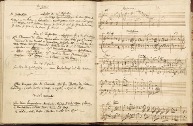
A Senior Lecturer in Piano at the Royal Birmingham Conservatoire says she’s “delighted” that a new work of music by Frédéric Chopin has been unearthed nearly 200 years after it was written.
The unknown waltz has been dated between 1830-1835 and was found in New York.
Pianist Katharine Lam says it’s an exciting opportunity for generations of Chopin’s fans to hear new music from the Polish composer centuries after his death.
“It’s a noteworthy and precious find, as several waltzes that Chopin original wrote are believed to have been entirely lost or destroyed,” said Ms Lam. “Finding lost works of any great composer reminds us of their unique, musical fingerprint and gives us, no matter how small of fleeting, a fresh and treasured glimpse of their voice and genius.
Like any artist, or even a popstar putting out a new single, it’s really exciting to experience hearing a piece of music for the first time, especially one that you never expected.
In a mere 80 seconds, the waltz captures the listener with Chopin’s beloved and haunting gift for melody, his distinctive harmonies and the opening turbulent outburst which points to the drama and passion infused through so much of his work.”
I’ve been going to live classical music concerts since I was a little girl – and not just professional concerts, but also amateur performances when my dad (a clarinettist) played in a local amateur orchestra. As keen music-lovers, my parents took me to all sorts of concerts – big orchestral performances at Birmingham Old Town Hall (the former home of the City of Birmingham Symphony Orchestra), chamber music, opera and choral concerts in churches. I quickly grew to love the “special occasion” nature of going to a live concert and enjoyed the rituals and etiquette (even if I found some of the music over-long or boring on occasion!).
Going to concerts with other people can be a very special shared experience. There is the pleasure of meeting beforehand, perhaps for a drink in the venue’s bar, purchasing a programme, easing oneself into plush seats and enjoying the hum of anticipation before the performers come on stage. Then there is the interval when one can chat about the first half and enthuse with friends before the music begins again.
When I started reviewing concerts in 2011, I tended to go alone, unless a friend or two happened to be at the same performance. At first I felt slightly awkward, sitting alone in the bar beforehand, a glass of wine in hand, reading the programme, making notes…. but gradually I came to enjoy the experience of attending on my own, and now I actively relish it.
Attending a concert can be a powerful, shared experience that transcends the boundaries of individuality, regardless of the genre of music being performed. While the idea of going to a concert alone might seem daunting to some, there is undoubtedly positivity in the shared atmosphere of live music. Whether you’re surrounded by a sea of familiar faces or standing alone in a crowd, the concert space creates a special sense of community, connecting individuals through the universal language of music.
London’s Wigmore Hall
Perhaps one of the most tangible aspects of this shared experience is the palpable sense of communal energy. The collective anticipation, excitement, and emotions create a shared atmosphere that unites the audience. As the house lights dim, an expectant hush pervades the concert space as the audience anticipate the arrival of the artist or artists. In such an environment, it becomes less about being alone and more about being part of a larger, unified whole.
Regardless of whether you attend a concert alone or with friends, the music itself becomes the common thread that binds everyone together. In a crowd of strangers, the shared appreciation for the artist’s craft creates an unspoken connection, fostering a sense of unity and camaraderie among concert goers. I love those moments when it seems that the entire audience is listening really intently, as if with one, collective ear. Or the sense that the audience is holding its collective breath, so engaged are they with the performance. And then, at the end, a joint exhalation as the audience relaxes, anticipating the applause.
Attending a concert on your own offers an opportunity for personal freedom and self-discovery. Free from the expectations of others – the obligation, perhaps, to express your opinion of the performance during an interval chat – when attending a concert alone, you can fully immerse yourself in the music, allowing it to resonate with you personally. You can choose to listen intently, or allow your mind to wander. The solitude within the crowd provides a space for self-reflection, and an opportunity to experience the music in a way that is entirely your own.
Thus, attending a concert alone is not an act of isolation; rather, it is an opportunity to experience the communal tapestry of music. Even if you never speak to a fellow audience member, there is something very special about experiencing music together.This is because the unifying power of live performance goes beyond individuality, creating an environment where strangers become companions in a collective journey of musical expression and a celebration of shared experience.
This site is free to access and ad-free, and takes many hours to research, write, and maintain. If you find joy and value in what I do, why not
‘….simply beautiful choral writing by someone who knows, from a singer’s perspective, how to compose music which every choir will want to sing.’ Sir John Rutter CBE, composer
Following Heaven to Earth, Joanna Forbes L’Estrange’s first album on Signum Classics, Winter Light is an album of works (complete with some world premiere recordings and new arrangements) celebrating the season of Winter, as well as Christmas and Advent. The common themes linking all 19 tracks are of light triumphing over darkness, good overcoming evil and, ultimately, love conquering all.
The first 12 tracks tell the familiar Christmas story, from the eager anticipation of the saviour’s birth (Advent ‘O’ Carol, track 1) and its foretelling by the prophet Isaiah (Isaiah’s Prophecy, track 2) to the Annunciation (I Will Hold Him, track 3, and O Virgo Virginum, track 4), to the birth itself (Carol of the Crib, track 5 and Jesus Christ is Born Today, track 7) and its significance for humankind (In the Bleak Midwinter, track 8, and Love Came Down, track 9). Thereafter, the visitation from the shepherds (Song of the Shepherds, track 10) and the arrival of the magi at Epiphany (A Present for the Future, track 12) remind us that we, like the shepherds and wise men, need also to follow the light (A Story of Light, track 11). In the midst of this nativity narrative sits the title track (Winter Light, track 6) whose words mark the transition from darkness to light.
The second part of the album takes on an altogether different tone to reflect secular winter themes. As a professional singer Joanna Forbes L’Estrange is known for performing in a wide variety of styles and this is reflected in her compositions. Whereas the first half of this album is stylistically largely within the familiar realms of the sacred choral music tradition, the latter leans towards jazz and folk. The Three Wise Women (track 13) was written in response to a commission from St Swithun’s School in Winchester. ‘There are numerous pieces in the Christmas choral repertoire about the three wise men so it was about time for the women to have their own song,’ says the composer. The remaining six tracks explore various winter themes. Winter Songs (tracks 14-16) was composed for the 60th anniversary of Finchley Children’s Music Group. Though conceived for children’s voices, the songs’ themes of hibernation, homelessness and human kindness are relevant to all ages. Green Christmas (track 17) was written during the first covid lockdown and is a subtle play on Irving Berlin’s classic, White Christmas. Track 18, Spring Will Come Again, is a folk-style song about the cyclical nature of the seasons. The album concludes with an arrangement of Auld Lang Syne (track 19) which Joanna wrote many years ago when she was Musical Director of The Swingle Singers.
Joanna Forbes L’Estrange says, ‘The impetus for recording this album sprang from my desire to present choirs with some contemporary yet singable Winter/Christmas-themed pieces which they might like to add to their repertoire.’
Praise for Joanna Forbes L’Estrange ‘Joanna has an amazing understanding of both the human voice and the human heart. The result: quality music making effective use of the voice, with tunes and harmonies and a wonderful storytelling quality to the songs which lift the hearts of singer and listener heavenward. These will surely be part of the Christmas choral canon for centuries’ – Ken Burton, conductor, composer & arranger
‘…an album of fresh new gems, full of Christmas warmth and great tunes’ – Louise Clare Marshall, singer
‘Forbes L’Estrange seems to have been born with catchy melodies coursing through her veins’ – BBC Music Magazine
Winter Light is released on 18 October on the Signum Classics label on CD and streaming. Joanna Forbes L’Estrange, composer London Voices Ben Parry, conductor Richard Gowers, organ Olivia Jageurs, harp Harry Baker, piano
To coincide with the release of her new album ‘Chopin: Voyage’, Russian pianist Yulianna Avdeeva talks about her life in music, balancing one’s artistic needs with the external pressures of a professional career, and how inspiration “can be found anywhere”.….
Who or what inspired you to pursue a career in music and who or what have been the most important influences on your musical life and career?
In my childhood I was surrounded by music. Although my parents are not professional musicians, they were great music lovers and had an upright piano at home, as well as a solid LP collection. At some point they realized that I was trying to play a melody that I had just heard with one finger on the piano, and took me to the Gnessin Special Music School. When I was 5 years old I entered the piano class of Elena Ivanova, with whom I studied for 13 years, until my graduation, and who became a family member for me. Thanks to her amazing admiration and approach to music, I was able to discover this magical world for me as well. However, the moment I remember so well, which was crucial to me, was my first public performance, when I was 6. I was supposed to play 2 Tchaikowsky pieces from his Children‘s album, and my parents and teacher were explaining that I shouldn‘t be scared by the light and people and the audience and should be concentrating on the music I’d play for them. I was not scared at all; on the contrary, I enjoyed very much communicating with the audience through the language of music! And I wished to perform again. So the solution for how to stay motivated for practice was found! I keep that feeling until today and am so grateful to be able to speak this universal language with people all over the world.
What have been the greatest challenges of your career so far?
I think the greatest challenge is to find out what your mental and physical needs are in order to achieve the most satisfying artistic result. This result depends on many factors, which I had to recognize and acknowledge in my preparation work as well as in my stage performance. Time management is one of the most essential elements; it means that I must know how I should organize my practice, so that I give each piece I perform enough space not only in my daily practice but also in my soul, since I need to “live” with a piece for a while so that it becomes, in a way, my co-creation. On the other hand, I have to know my limits — for instance, if I have a very tight schedule, how many programmes can I really handle? And does it make sense, artistically? My personal goal is to be in the best shape when I walk onstage, and it is probably a never-ending process to understand myself.
Which performances/recordings are you most proud of?
It is always very difficult for me to listen to my own recordings or the recordings of my own concerts. I almost always think, “Oh, now I would play that completely differently!”. This is the charm and challenge of music — it exists only in the moment when it is being performed, and it is not easy to capture this moment on any recording. So I very rarely listen to my own performances — with some exceptions, of course. For example, it is an amazing inspiration and joy to work with Bernhard Guettler, the sound producer I have worked with for my latest two recordings — Resilience, and Voyage, my new Chopin album, on the Pentatone label, featuring his late works, which has just been released. This particular recording experience was absolutely unique for me for two essential reasons: the location and the instrument. I was so lucky to make this recording at the one and only Tippet Rise Arts Center, in Fishtail, Montana, surrounded by nature and a wonderful team. And on top of that, I played the music on Vladimir Horowitz’s personal piano, which has an exceptionally long and warm sound that opens up like a flower.
When I first touched this piano in September 2022 at the TIppet Rise Arts Center, my first thought was, “This piano is my dream partner for Chopin’s music!”. So I am very thankful to Peter and Cathy Halstead and the entire team at Tippet Rise Arts Center for their most kind support; Mike Toya for his amazing care of the piano; Bernhard Guettler for his patience and his unlimited desire to explore the sound worlds; and the Pentatone team for bringing this recording to life.
Which particular works/composers do you think you perform best?
The moment I decide to play any piece, it becomes “the best and dearest piece” for me, otherwise I will not be able to find an authentic approach to it. Nevertheless, of course there are composers I admire so much, since they have an enormous emotional impact on me, such as Bach, Beethoven, Schubert, Schumann, Chopin, Liszt, Rachmaninoff, Mahler, Prokofiev, Shostakovich, and Bartok, to name just a few. A great discovery for me was Bernstein’s Second Symphony, “Age of anxiety,” in which the piano has a very important solo-like part. It was an exciting process to prepare this unique work, based on Auden’s poem, and I am so lucky to have performed it a couple of times in Spain and Italy and finally to play it in the United States with the Minnesota Orchestra and Robert Trevino on October 18th and 19th, 2024!
How do you make your repertoire choices from season to season?
The piano repertoire is just limitless, which is the pianist’s curse and blessing! My personal list of pieces I would love to play is getting longer every year, so I have to make decisions about what I would like to play next. Sometimes it takes a long while to decide on a recital programme; for me it is important that there is a certain concept, or at least a connecting idea between the pieces. The programme I am performing at Carnegie Hall on October 22, 2024 is a Chopin and Liszt recital. They were the two giants of the Romantic era, both unique performers, and both were trying out the most extreme ways of expression on the piano, even if they were moving on very different paths.
Next year I will be performing Shostakovich’s 24 Preludes and Fugues, op 87, which for me is one the greatest cycles for piano of all time. It was inspired by Bach’s The Well-Tempered Clavier, which I will be playing in 2027. These cycles require my entire concentration in the preparation. At the same time, for next year I also prepared a programme that connects two composers you wouldn’t expect to see together — Chopin and Shostakovich. But Shostakovich was a participant at the first Chopin Competition, in 1927, in Warsaw, and he played Chopin a lot in his younger years. So it is always kind of a work of investigation to create a recital programme.
Do you have a favourite concert venue to perform in and why?
There are many; I could not pick only one. Some of the halls are very inspiring because of their history and the musicians who have performed there — like Carnegie Hall, or the Musikverein in Vienna, but also some modern halls are amazing because of their acoustics and atmosphere — for example, Disney Hall in Los Angeles, or Elbphilharmonie in Hamburg.
What do you do off stage that provides inspiration on stage?
I am convinced that inspiration can be found anywhere — it can be a color from the sky or of the leaves on a tree; it can be a conversation, or a great book, or even a smell — like the smell of the air in the autumn, or the aroma of a fantastic meal. I just have to be very open to be able to absorb it.
What is your most memorable concert experience?
It is difficult to say. In every concert I share a part of my soul, and my soul in turn keeps the memories of each single concert. And, as I mentioned, the music exists only in a moment when it is being performed and cannot be repeated — that is why each concert experience, even with the same repertoire, is always different.
As a musician, what is your definition of success?
Artistic success for me is probably when I am able to present an interpretation of a piece which on the one hand comes as close as possible to the composer’s will — though this criteria is very subjective — so, on the other hand, it is about my personal feelings about the music, which should be very strong and authentic. And the message of the music I perform should be acceptable for the audience, otherwise I have failed to translate the music score into human feelings.
What do you feel needs to be done to grow classical music’s audiences?
It is essential to give access to music to the youngest. That can be through playing an instrument, singing, dancing, or any other kind of musical activity, because music also helps children to feel and articulate the emotions they experience. This is what makes human beings unique and irreplaceable. Later on, children who have been exposed to these experiences will decide whether they want to play or sing for their family, or go to concerts, or become a professional musician. Maybe they will not have any interest in it at all. But our goal should be to give them a chance to explore this magical world of music.
What advice would you give to young or aspiring musicians?
I would like to encourage young musicians to think, before they go on stage, about how lucky we are to be able to speak the language of music and share our passion with the audience. And it does not matter if their audience is big or small, or if it is a concert, an exam, or a competition — it is only music, which matters for the performer, and we should only focus on it. I am wishing you a long, happy life, full of wonderful sounds!
Yulianna Avdeeva performs music by Chopin and Liszt at Carnegie Hall, New York, on 22nd October. Find out more here
Yulianna Avdeeva’s new recording ‘Chopin: Voyage’ is available now on the Pentatone label.
The Cross-Eyed Pianist is free to access and ad-free, and takes many hours every month to research, write, and maintain.
If you find joy and value in what I do, please consider making a donation to support the continuance of the site