Guest post by Marci Meth

The prominent French intellectual property attorney looked me straight in the eye and told me it would be impossible. I liked the idea of trying to do the impossible, so when I walked out of her office, I decided I would try to create my own record label and produce its first album.

I did go down quite a few rabbit holes while producing The Wild Song, but the quest for digital distribution proved sheer madness.

In terms of digital distribution for an “indie artist,” the main options are TuneCore and CDBaby. There are actually many others, and if you are interested in a complete list, you can consult Ari Herstand’s comparative digital distribution chart here.

I decided to work with TuneCore because TuneCore is one of the rare distributors that will deliver a digital booklet to iTunes. My friend Patrick Guérin and I spent months translating all of Britten’s songs and Yeats’ poetry on the album into French for the booklet, and Sanni Sorma also spent months designing it. I couldn’t let all of that work go to waste. TuneCore it was.

One of the first things TuneCore asks you to do is put your album in a category. I scanned the categories, but I couldn’t find “classical.” That’s odd, I thought. I did a Google search and found out TuneCore does not distribute classical music. I couldn’t believe it. One of the two biggest digital distributors won’t deliver a classical album to iTunes or any other digital platform. I knew there were very few classical artists who produced and distributed their own work, but I was shocked to learn why. The system doesn’t allow it.

I had to find a solution, so I studied the other album categories. The Wild Song alternates between Britten’s folksong arrangements, poetry by Yeats recited by Simon Russell Beale, and electronic music by the Oscar-winning composer Mychael Danna. It didn’t fit into any of their proposed categories. Since 90% of the album is either spoken or sung, I decided upon “vocal.” That seemed like the best compromise.

I uploaded all of the “metadata” for the album into TuneCore’s system. This includes the music itself, which must be uploaded in a specified compressed format, but also includes information about the music and performers on each track. I spent an entire day doing it. When all of the data was uploaded, TuneCore asks you to select the platforms where the album will be distributed. I clicked on iTunes and after a week of waiting, The Wild Song was approved for distribution to iTunes and was set for pre-order. What a relief, I thought.

I also wanted the album to be distributed to Amazon Digital Download, but I learned that when TuneCore delivers an album to Amazon Music, the album is automatically included in Amazon’s streaming service. I didn’t want the album on any streaming service (more about that here: https://bit.ly/2RIDr3r), so that meant I couldn’t use TuneCore to distribute the album to Amazon. I needed another distributor…

CD Baby, on the other hand, will deliver an album to Amazon Digital Download without sending it to Amazon’s streaming service. They will also distribute a “classical” album. Fabulous, I thought. I will send The Wild Song to Amazon via CD Baby. I uploaded all of the metadata to CD Baby’s site (another two days of work—CD Baby’s system is much slower than TuneCore’s…) and chose Amazon Digital Download as the only platform for delivery. Thus began the conversation with the Cheshire Cat of digital distributors.

“We cannot deliver your album to Amazon in the Classical category,” they told me. “You cannot have a lyricist on a classical album.”

“Why not?” I said. “Mozart had a lyricist.” I persisted: “The physical album is already on Amazon in the classical category. I have a physical distributor.”

“Physical distribution is different,” said CD Baby. “They don’t have the same data restrictions. Change the genre of your album to folk and resubmit it for distribution. That will solve the problem.”

The Wild Song is not a folk album, but I could see I wasn’t going to get anywhere in this land of illusion by arguing for logic. I changed the genre to folk and resubmitted the album to the CD Baby inspection team. It was refused.

“You will have to change the cover art on your album if you want it to be accepted in the folk genre,” they said. Your name must be bigger than Benjamin Britten’s and Mychael Danna’s.”

I laughed. “I’m sorry. That’s impossible,” I said. “That would be like making my name bigger than Mozart’s on an album cover. It shows a lack of respect for the composers.”

After spending a total of about five hours on the phone with CD Baby over the course of several conversations, a very kind man named Colson began to lobby the powers that be at CD Baby on my behalf. Colson convinced the distribution committee to accept The Wild Song in the classical genre and allow me to keep the original cover art. They required that I list WB Yeats as a composer on the tracks with his poetry.

“I will do that because you are asking me to do so,” I said. “But please know that WB Yeats was a great Irish poet and not a composer.”

A few days later, thanks to Colson, the album was sent to Amazon as a digital download in the classical category. CD Baby clarified that they would never be able to send The Wild Song to any other digital platform in the future. The exception that was made was uniquely for Amazon.

The current digital distribution system was designed for the needs of indie pop musicians. The metadata for classical music requires more specific formatting and the system we have now cannot accommodate it. There are new streaming sites for classical music which obviously have systems that can accommodate the metadata classical music requires. However, independent classical musicians need a distributor which can deliver our metadata to these platforms. When will we have a digital distributor for independent classical musicians?

Alice is waiting for it.
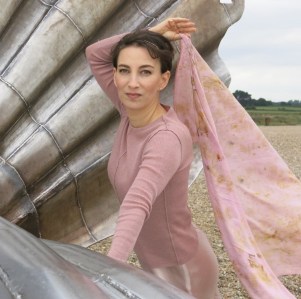


GetAttachmentThumbnailMarci Meth, soprano & creative, producer of The Wild Song

Music by Benjamin Britten & Mychael Danna, poetry by WB Yeats. Marci Meth (soprano), Anna Tilbrook (piano), Simon Russell Beale (reader)


The Wild Song is available here: smarturl.it/modern-poetics

For more information about metadata and classical music: https://www.nytimes.com/2019/06/23/business/media/stream-classical-music-spotify.html

Review of The Wild Song


noun

noun: elite; plural noun: elite

a select group that is superior in terms of ability or qualities to the rest of a group or society

The word “elite” is frequently applied to sportspeople and no one has a problem with that. Athletes and sportspeople at the top of their game are regularly described as “elite”, and afforded an elevated status. And rightly so: these people are at the peak of their fitness, they train long, hard and meticulously, and the medals, trophies and approbation they receive are the visible badges of their achievements. They are truly “elite”. We have no problem in applying this word to our sporting champions and when we use it it is replete with respect, admiration and awe.

It’s a rather different scenario when the word is used in relation to classical music. In this case it suggests exclusivity and privilege, and describes an art form which is regarded as the preserve of the monied few not the many. As I explain in this article, this view is inaccurate and misguided.

But of course classical music is full of elite people – the musicians are elite.

Look at how they train, the meticulous way they approach preparation, fitness, mental attitude. The mindset and physical preparation of the musician is very similar to that of the athlete, and many comparisons can – and should – be drawn between sporting elite and musicians.

These days many musicians look to sport and more specifically sports psychology to inform their musical training and preparation (cf The Inner Game of Music which came from “inner game” sports training which has been used successfully by top tennis players). Musicians, like sportspeople, require discipline, dedication and commitment to put in the many long hours of training to do what they do and do it well, and many make huge sacrifices to achieve this. And just like elite athletes, musicians undergo a very rigorous training which includes much repetitive physical activity (practising) and psychological conditioning. We admire our elite athletes for their physical prowess, their stamina, their grace and strength – and we praise them for their dedicated, meticulous training. And we should admire the same attributes in our musicians.

Musicians, unlike sportspeople, last longer: those who’ve been elevated to the dizzy heights of “elite” (aka “world class”, “internationally renowned”, “legendary” etc) can continue a career well into their 80s (Paul Badura Skoda, for example). A few know when it’s time to step back to let the younger players through (notably, Alfred Brendel, Maria Joao Pires and Radu Lupu). Others cling on determinedly, even if their playing does not match their revered status.

We want our musicians to be elite: by adopting a mindset and training regime akin to that of the elite athlete, musicians are able to produce performances which are consistently impressive, technically assured, absorbing, moving, exhilarating, inspiring…… These are the traits we admire in our elite musicians and for this reason we should celebrate their superhuman talents, in just the same way that we lionise our medal-winning athletes.


According to this article which appeared in The Guardian at the weekend, classical music is for the elite monied few, not the many. What a shame The Guardian, which in the past has championed classical music, has fallen back on that tired old trope that classical music is elitist and inaccessible – and to make the point, the (unknown) author of this lazy article has chosen the Proms as the prime example of this.

The Proms is the most democratic, non-elitist and accessible classical music festival there is. Not only can one pick up a promming (standing) ticket for just £6 and thereby have access to some of the greatest musicians and orchestras in the world, there are cheap seats in the auditorium, and every concert is broadcast on BBC Radio Three, so you can listen at home, for free. If that’s not “accessible”, I don’t know what is.

Classical music concert tickets are generally far cheaper than West End theatre and musicals, and significantly cheaper than pop gigs/festivals and football matches. Even opera, always tiresomely wheeled out as an example of how elitist classical music is, is affordable with venues like the Royal Opera House offering tickets in the gods for c£25, and ENO’s secret seat scheme where you pay c£30 and may end up in a £100 seat in the front row of the dress circle. Meanwhile, Wigmore Hall’s partnership with ClassicFM gives under 30s the opportunity to purchase tickets for just £5, and Cavatina Trust‘s ticket scheme provides young people free entry to 100+ concerts around the country every year.

In its keeness to highlight “the unwillingness of many audiences to expose themselves to the shock of the musically new” (the author blames the UK’s classical music radio stations and their “unchallenging” programming for this), the article omits to mention that the Proms is also one of the greatest showcases for new music, opening with a world premiere and new commissions peformed in virtually every concert, thus bringing contemporary music and living composers (of every gender and colour) to the attention of a large audience (in fact, the article reads as if the author has never actually attended a Prom, or indeed any other classical music concert).

With its obsession with elitism and privilege, The Guardian article also overlooks the primary reason why most people engage with classical music. At its best, classical music has the power to transport us to places we never thought possible, freeing the imagination and removing us, for a few hours at least, from the every day. Classical music puts us in touch with the full range of human emotion – because those who wrote/write it, whether dead white guys or living composers of all genders/colours, were/are human too and share our hopes and desires, fears and joys. For some, classical music provides therapy, solace and comfort (and let’s not snobbishly dismiss the therapeutic, relaxing benefits of classical music); it uplifts and excites, energises and thrills.

Classical music still has an image problem and its association with privilege, the notion that one must have specialist knowledge to “understand” or appreciate it, and that the etiquette and customs of classical music concerts or opera are confusing and off-putting, remains a problem for those of us who seek to encourage more people to engage with this fantastic artform. Ill-thought articles such as the piece in The Guardian are not helping.

Meanwhile, if you want to sample classical music, just buy some goddam concert tickets – because classical music is for everyone.


9780571350476The title is a play on his name and the collection of essays in this satisfyingly chunky volume were often “roughed out” by Stephen Hough while travelling between concert engagements, If you think the life of the international concert pianist is glamorous, think again – in between rehearsals and concerts much time is spent at airports, on planes or in faceless continental hotels; for Hough writing was a way of filling that dead time.

The word “polymath” is nearly always uttered in the same breath as “Stephen Hough” – concert pianist, composer, writer, artist, teacher, thinker –  but Hough wears the title modestly. Articulate and highly communicative on and off the concert stage, he is charming and natural when you meet him after a concert, and his lively Twitter presence reveals a penchant for the good things in life – fine food, perfume, hats – combined with an intelligent, open-minded approach to the challenges of our modern world. While other internationally-renowned concert artists may hide behind their reputation, Hough is happy to engage with his audiences, online and in person, and this warm-hearted, genuine approach, alongside his thoughtful suggestions on changing the format of concerts, for example, has helped break down some of the barriers and misconceptions surrounding classical music.

Many of the essays in Rough Ideas will be familiar to those who have enjoyed Hough’s blog in The Telegraph (sadly no more – so thank goodness for this compilation!) and writings elsewhere. As befits a Living Polymath, Hough’s writing net casts wide, and while the bulk of the volume focuses on musicians and music – the exigencies of being a professional musician, the piano and those who play it, concerts (giving and going to them) – there are also engaging articles on art and culture, and more challenging and philiosophical reflections on religion and the difficulties of being a gay Catholic.

Most musicians communicate best via their music, but Hough, himself a deeply communicative and intellectually acute pianist, is also an eloquent and intelligent writer, whose words are as carefully crafted and colourfully nuanced as his playing, and the phrasing, cadence and pacing of his writing pleasingly mirrors musical shaping.

Hough illuminates the pleasures and challenges of being a concert pianist and offers readers an intriguing view “beyond the notes” and the concert stage into this sometimes masochistic, often lonely profession, while never quite dispelling the mystique of the professional musician. There are thoughts on those sacred, church-like spaces where music is performed and heard (a lovely appreciation of London’s Wigmore Hall opens the book), ageing audiences (be kind to them – they populate and support concerts), dealing with creative block and performance anxiety, page-turners, the joy of making mistakes, and what happens when musicians “lose it” on stage (in the best possible way).

In the section entitled Studio, he discusses the musician’s “tools” – practicing, fingering schemes, scores, trills, pedalling and more – sharing his wisdom and offering encouragement and inspiration to pianists, whether amateur or professional. Later sections ‘….and More’, ‘…..and Religion’ reveal Hough as a profound thinker, always curious and questioning, never accepting nor complacent, and the entire volume is a wonderful insight into the mind of one of our greatest living pianists and a significant cultural figure in his own right.

This generous, varied compendium is intriguing, engaging and thought-provoking, always readable and elegantly written. Dip in and out of the chapters or read from start to finish, Rough Ideas is an ideal volume for the serious musician or keen amateur, music lovers in general and anyone who enjoys well-crafted, intelligent prose on a broad range of subjects.

Highly recommended


Rough Ideas is published in the UK on 1 August by Faber & Faber in hardback and e-book editions

Meet the Artist interview with Stephen Hough


