
Schubert Lieder: Love’s Lasting Power – Harriet Burns, soprano, and Ian Tindale, piano
This is the first joint recording from longtime musical partners Harriet Burns and Ian Tindale, and it celebrates not only the last ing power of love, in its many guises, but also the lasting appeal of Schubert’s lieder. Harriet Burns’ voice is wonderfully expressive and operatic, with a golden tone and clear diction. This is complemented by Ian Tindale’s sensitive, supple playing. Together they highlight all the contrasting colours, nuances and moods of Schubert’s lyrical writing. Recorded at St Mary’s church in Haddington, near Edinburgh, the overall sound is at once resonant and intimate – perfect for this music.
This has been a thrilling opportunity to curate and record a powerful sequence of songs that speak strongly to some of the relationships Schubert held dearest in his life. It is also deeply meaningful music with which we have a close affinity as a duo, and it is a world of repertoire in which we have come to feel at home over the years.
Ian Tindale, pianist
Harriet and Ian are giving the album’s launch recital at Oxford International Song Festival on Tuesday 30th January at Wolfson College, Oxford. Further information
Released on the Delphian label and via streaming

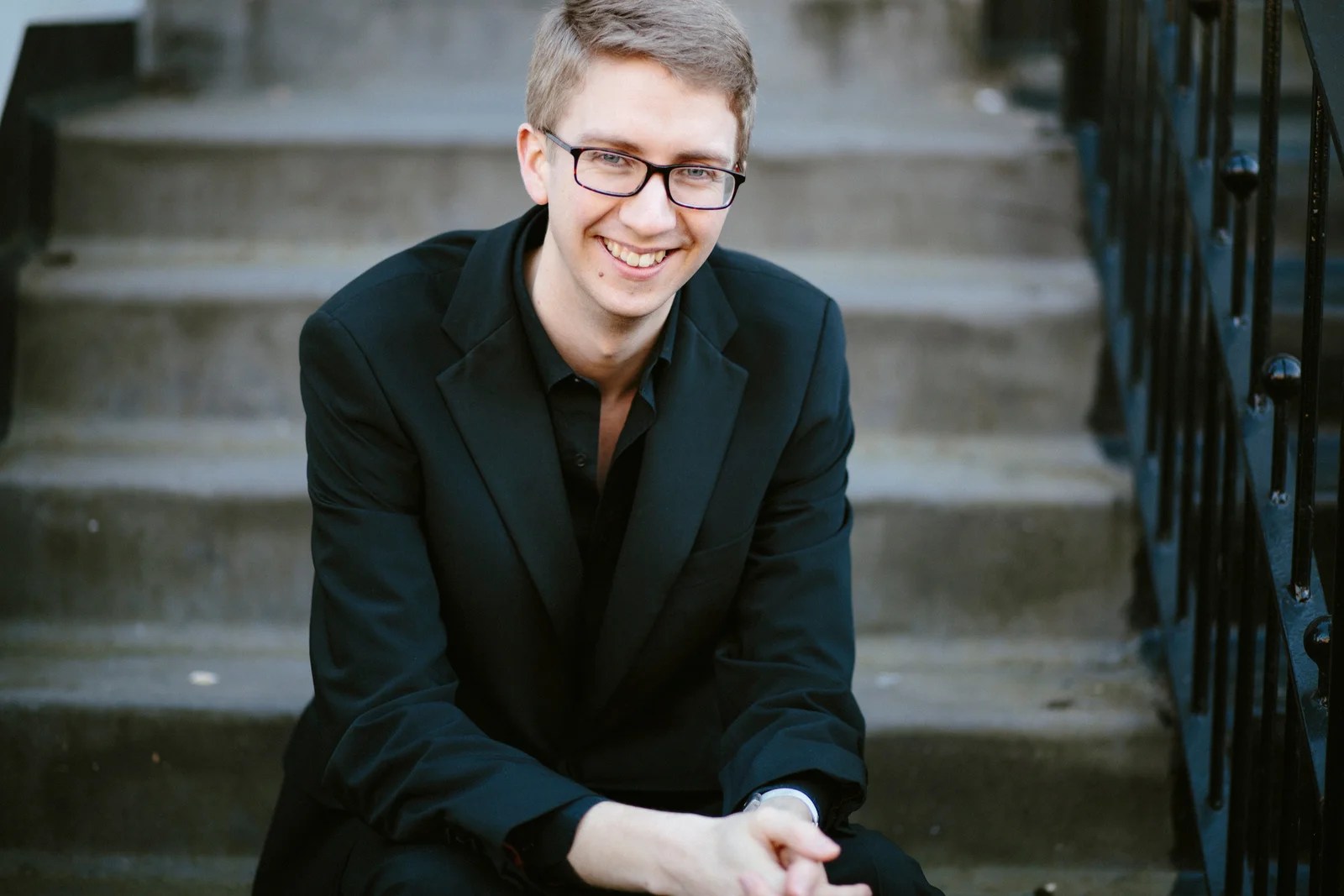
Mendelssohn: Lieder Ohne Worte (Songs Without Words) – Igor Levit, piano
More lieder, this time without words, and another set of romantic music which has a lasting appeal. Released digitally before Christmas, the CD is released today. This is a very personal project for Levit: the album is his own artistic response to the 7th October atrocities in Israel and the current rise of anti-semitism worldwide.
I made this recording out of a very, very strong inner necessity. I spent the first four or five weeks after the attack on October 7th in a mixture of speechlessness and total paralysis. And at some point, it became clear that I had no other tools than to react as an artist. I have the piano. I have my music. And so, the idea came to me to record these works, the “Songs without Words
Igor Levit
Levit and his team gave their time pro bono for this recording and proceeds from CD/download sales will be donated to to two German organisations fighting anti-Semitism – OFEK Advice Center for Anti-Semitic Violence and Discrimination and the Kreuzberg Initiative Against Anti-Semitism.
Perhaps it is the context in which this recording was created which gives it so much depth and poignancy. There’s strength and passion too, often in the more intimate or tender pieces.
Available on the Sony Classics label and via streaming


 Letter(s) to Erik Satie


 ENTRANCED
The Orchestra of the Swan
Signum Classics SIGCD853
Musical adventurers, Orchestra of the Swan (OOTS), led by the charismatic violinist David Le Page, complete a remarkable musical journey with their latest release, Entranced. It’s an extraordinary odyssey which has seen them topping the US Billboard and iTop charts, and launching millions of streams from new audiences. Their innovative, imaginative approach cleverly combines “traditional” classical music with rock, pop, jazz, techno, ambient and folk to produce eclectic programmes and performances which blur the lines between genres. This enlightened approach to repertoire, combined with the Swan’s concerts in non-standard venues and experiments in digital sound, appeals to listeners with less exposure to classical music.
Over the past few years, OOTS have released a series of “mixtape” albums, which continue the spirit of the mixtapes and compilations on cassette tape of the 1980s (something which those of us of a certain age will remember creating for friends and boyfriends/girlfriends). These inventive, carefully curated and beautifully executed albums present a diverse compilation of arrangements (many of which are by David Le Page) and reinterpretations of works by an eclectic mix of composers.
Entranced is a compilation of these compilations, as it were, incorporating 15 tracks from OOTS’ critically acclaimed trio of mixtape albums, Timelapse, Labyrinths and Echoes, with all tracks now produced in Dolby Atmos – the immersive, surround-sound technology developed by cinema, that places the audience at the heart of the sound.
Artistic Director of OOTS, David Le Page says, “Entranced weaves together the genius of David Bowie, Schubert, Delius, Philip Glass, and Piazzolla. There is a brand new arrangement of Finzi’s extraordinary The Salutation for solo violin and strings, and transcendent beauty, from Brian Eno’s gorgeous An Ending (Ascent), to Peter Maxwell Davies’ Farewell to Stromness.”
Listening in not-quite-darkness, with only the dim light from my bedside clock radio, I hear An Ending (Ascent) by that master of ambient, Brian Eno. Of course I recognise it, but not quite in this arrangement. The sounds wash gently over me and in the dark and still of the night, it’s intimate and meditative, almost a lullaby. Listening again, in daytime, in the surround sound of my kitchen HiFi, the music floats, weightless but for a simple sequence picked out on the harp, now growing in intensity with a soaring violin line over lusher instrumental textures….
This track embodies the spirit of Entranced. The music on this album is serene and introspective, mesmerising and immersive – from the opening track, an arrangement of David’s Bowie’s song Heroes to the gracefulness of Rameau’s Les Boréades, the haunting sensuality of Piazzolla’s Oblivion, and the hypnotic, minimalist loops of Philip Glass, Entranced presents a sequence of beautifully atmospheric musical landscapes, infused with light, which transport the listener to the far reaches of their imagination.
Entranced is released on 20 October by Signum Classics, on disc and via streaming
ENTRANCED
The Orchestra of the Swan
Signum Classics SIGCD853
Musical adventurers, Orchestra of the Swan (OOTS), led by the charismatic violinist David Le Page, complete a remarkable musical journey with their latest release, Entranced. It’s an extraordinary odyssey which has seen them topping the US Billboard and iTop charts, and launching millions of streams from new audiences. Their innovative, imaginative approach cleverly combines “traditional” classical music with rock, pop, jazz, techno, ambient and folk to produce eclectic programmes and performances which blur the lines between genres. This enlightened approach to repertoire, combined with the Swan’s concerts in non-standard venues and experiments in digital sound, appeals to listeners with less exposure to classical music.
Over the past few years, OOTS have released a series of “mixtape” albums, which continue the spirit of the mixtapes and compilations on cassette tape of the 1980s (something which those of us of a certain age will remember creating for friends and boyfriends/girlfriends). These inventive, carefully curated and beautifully executed albums present a diverse compilation of arrangements (many of which are by David Le Page) and reinterpretations of works by an eclectic mix of composers.
Entranced is a compilation of these compilations, as it were, incorporating 15 tracks from OOTS’ critically acclaimed trio of mixtape albums, Timelapse, Labyrinths and Echoes, with all tracks now produced in Dolby Atmos – the immersive, surround-sound technology developed by cinema, that places the audience at the heart of the sound.
Artistic Director of OOTS, David Le Page says, “Entranced weaves together the genius of David Bowie, Schubert, Delius, Philip Glass, and Piazzolla. There is a brand new arrangement of Finzi’s extraordinary The Salutation for solo violin and strings, and transcendent beauty, from Brian Eno’s gorgeous An Ending (Ascent), to Peter Maxwell Davies’ Farewell to Stromness.”
Listening in not-quite-darkness, with only the dim light from my bedside clock radio, I hear An Ending (Ascent) by that master of ambient, Brian Eno. Of course I recognise it, but not quite in this arrangement. The sounds wash gently over me and in the dark and still of the night, it’s intimate and meditative, almost a lullaby. Listening again, in daytime, in the surround sound of my kitchen HiFi, the music floats, weightless but for a simple sequence picked out on the harp, now growing in intensity with a soaring violin line over lusher instrumental textures….
This track embodies the spirit of Entranced. The music on this album is serene and introspective, mesmerising and immersive – from the opening track, an arrangement of David’s Bowie’s song Heroes to the gracefulness of Rameau’s Les Boréades, the haunting sensuality of Piazzolla’s Oblivion, and the hypnotic, minimalist loops of Philip Glass, Entranced presents a sequence of beautifully atmospheric musical landscapes, infused with light, which transport the listener to the far reaches of their imagination.
Entranced is released on 20 October by Signum Classics, on disc and via streaming






 The Cross-Eyed Pianist