Piano pieces inspired by Erik Satie

biography-default2016 marks the 150th anniversary of the birth of Erik Alfred Leslie Satie, and to celebrate this occasion British composer Richard Fowles has released a personal hommage to Satie and his musical orginality.


Today Satie’s Three Gymnopedies are amongst the most well-known and much-loved music for piano, but during his lifetime, Satie was relatively unknown to much of the musical world. An unremarkable student, he was bohemian by nature, sceptical of established ideas and authorities, and was considered lazy by his teachers. Despite his relatively low profile during his lifetime, Satie helped shape the music of the 20th century: he was an inspiration and mentor to the group of composers known as “Les Six”, which included Poulenc, Milhaud and Honegger, and influenced contemporaries such as Debussy and Ravel who recognised him as a “new spirit” with a highly original approach to composition. It was not until the mid-20th century that his work became more widely known and appreciated, thanks in part to the endorsement of American composer John Cage.

Composer Richard Fowles was encouraged to pursue this composing project by his piano teacher at Brunel University, Sally Goodworth, after he wrote a couple of Satie-inspired pieces as a student. The result is a suite of 16 piano miniatures in part inspired by Satie’s own music (Knossienne Nos 1-3 being the most obvious, where the eastern melodies of the original Gnossiennes are woven into a harmonic framework redolent of the original, but never an imitation of it) and also by the composer’s life and unusual personality. For example, ‘Sea Bird’ (track no. 6) was the nickname given by Satie to his uncle Adrian, like Satie an eccentric character and an important figure in Satie’s early life. The music juxtaposes quirky melodies which unusual harmonies to create a work which is moody, enigmatic and witty.

In fact, wit pervades these charming miniatures, particularly in the triptych ‘The Velvet Gentleman’ which references aspects of Satie’s attire with which he was most associated, including his identical grey velvet suits:

On most mornings after he moved to Arcueil, Satie would return to Paris on foot, a distance of about ten kilometres, stopping frequently at his favourite cafés on route. According to Templier, “he walked slowly, taking small steps, his umbrella held tight under his arm. When talking he would stop, bend one knee a little, adjust his pince-nez and place his fist on his lap. The he would take off once more with small deliberate steps.”

Robert Orledge, Satie Remembered. French translations by Roger Nichols.

See also: “A Day in the Life of a Musician” by Erik Satie

From: ‘Daily Routines’, a blog by Mason Currey (published in book form as Daily Rituals)

In many of the pieces, Fowles mirrors the “walking beat” that seems to pervade many of Satie’s own piano pieces, a meter which may have been the results of his “endless walking back and forth across the same landscape day after day . . . the total observation of a very limited and narrow environment.” (Roger Shattuck, in conversation with John Cage).

Other pieces in the collection are more melancholy: ‘A Walk to the Chat Noir on a Snowy Day’ conjures up the solitary figure of Satie, dressed in his grey velvet suit, making his customary walk to a favourite haunt in the centre of Paris. Meanwhile the set called ‘Biqui’ recalls Satie’s relationship with Suzanne Valadon and his feelings of devastation when the affair ended. Each piece is offered in Andante and Lento, the slower metres and repeated chord motifs lending a desolate yet intimate atmosphere to the music.

‘Sylvie’, the final track on the disc, is named after one of three poems written by Satie’s friend J.P. Contamine de Latour that Satie put to music in 1886.Its jazz harmonies and winding melody is infused with a tender, almost elegaic air.

Throughout the collection, Fowles avoids pastiche by offering us the essence of Satie’s music, and some of his contemporaries,  viewed through the lens of own originality and inventiveness which fuses eastern melodies with sensuous perfumed harmonies.

The music is performed on this disc by pianist Christina McMaster, whose affinity for this type of music is evident in her crisp articulation, preciseness of touch, and an acute sense of pacing which brings the music to life with vibrancy and atmosphere. And there is an added bonus, for pianists may also purchase the collection as sheet music (roughly Grade 6-8 level). Fowles has scored the music in a traditional way and also without barlines, à la Satie.

There is much to enjoy in this evocative collection, for those who love the piano music of Satie, and for those who are just beginning to explore it.

The sheet music is available now. Order here

The CD is released on 8th April.

Sample tracks here

Richard Fowles is an English composer, guitarist and teacher. He has worked as both a composer and session musician in some of the UK’s biggest recording studios and has provided the scores for a number of films and television programmes. He is also an in demand orchestrator. ‘Un Hommage à Erik’ is Richard’s debut album and book.


Pianist Christina McMaster certainly does not lack ambition, nor innovation. She created her own record label MC|MASTER Records in order to release her debut album Pinks & Blues, the sold out launch of which at St James’s Theatre included a performance by a rapper. This reflects Christina’s eclectic approach, vision and energy in her music making (she has previously collaborated with London Fashion Week and is now joining forces with graduates of Central St Martin’s School of Art & Design).

cunrlhkwiauhvm7

Pinks & Blues presents contrasting music from two key soundworlds in American music in the 20th century: the industrial, pioneering spirit and the rise of the teeming metropolis (demonstrated in works such as Samuel Barber’s ‘Excursions’ and Frederick Rzewski’s ‘Winsboro Cotton Mill Blues’), and Negro spirituals, Southern blues, smoky jazz clubs and the foot-stomping dance scene of New York City. The album also includes new commissions by two exciting young British composers, Freya Waley-Cohen and Richard Bullen, and on two tracks Christina is joined by Jay Phelps (trumpet), Sami Tammilehto (percussion) and Mark Lewandowski (double bass).

The album opens with the first of Barber’s ‘Excursions’, a work whose frenetic “perpetuum mobile” ostinato bassline suggests the fast-moving big city, replete with rattling metro trains, honking taxis and bustling crowds. But by track three, ‘Peace Piece’ by Bill Evans, we’re transported somewhere altogether more calm – the shady deck of a southern villa perhaps. There is a lightness of touch here which suggests both repose and an urging forward. The work is bookended by two Études by Ligeti which contain motifs redolent of Evans, also deftly played.

Richard Bullen’s ‘Scenes from a Deserted Jazz Club’ is highly atmospheric, at once smoochy and unsettling. It is followed by Frederick Rzewski’s ‘Winsboro Cotton Mill Blues’, another work of hypnotic, urgent energy immediately proceeded by the second of Barber’s Excursions, a languid blues number.

Freya Waley-Cohen’s ‘Southern Leaves’ opens with a figure reminiscent of a southern hymn tune which builds in intensity through increasingly plangent chords. It is meditative and dramatic, and provides a good foil for Gershwin’s ‘It Ain’t Necessarily So’ (from Porgy & Bess, which is of course set in the Deep South). Back to the urgency of the industrial city with Stephen Montague’s ‘Songs of Childhood’, while the album closes with another work by Montague’s, ‘Southern Lament: Nobody Knows the Troubles I’ve Seen’, the traditional spiritual given a contemporary twist with fanfare-like repeated figures, strumming and plucking the piano’s strings directly, and a restful hymnlike section to close.

This imaginative selection neatly reflects Christina’s personal musical tastes and her eclectic approach to programming. The American theme ehich runs through the entire album ties together tracks which in another’s hands may seem disparate, but such is Christina’s expertise in moving seamlessly between the percussive and agitated and the meditative and soulful, she achieves a very satisfying and enjoyable whole. The more bluesy numbers have the requisite sense of time standing still with sensitive use of rubato and elastic tempi, while the upbeat, more mechanical works are precise, sprightly and crisply articulated. This album promises much more to come from this exciting and stylish young pianist.

www.christinamcmaster.com

Meet the Artist……Christina McMaster


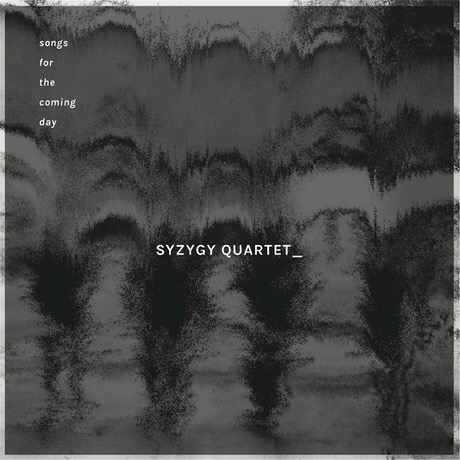
Syzygy Saxophone Quartet formed in 2009 after playing together at the World Saxophone Congress in Bangkok. The quartet aims to promote and perform established contemporary classical works for saxophone, alongside new music written especially for the ensemble. 

At the beginning of 2013 Syzygy Saxophone Quartet were the only ensemble in Europe to be awarded the performance and recording rights to the new 45 minute work by the American composer David Maslanka. Entitled ‘Songs for the Coming Day’, the work  considers ethical and moral issues facing the world today such as the environment and war. Despite such problems, the piece is imbued with hope, reflecting the composer’s belief that “that under the chaotic surface of our world there is a rising creative energy through which is growing a new idea of living in harmony with ourselves and the Earth” (David Maslanka) and that there is still optimism regarding the future of the planet.

  
Lasting around 45 minutes, the work comprises nine movements, relatively brief “songs without words”, with titles such as Breathing, Awakening, Letting Go of the Past, and The Soul is Here for its Own Joy. The movements have hymlike qualities both in the SATB harmonies and ensemble playing, but also because some are actually based on hymns or songs,  adapted and reset for saxophone. Eight of the nine movements have varying degrees of slow tempi and a generally quiet or restrained dynamic palette.

The opening movement, ‘At This Time’, utilises a three-note motif redolent of ‘Nimrod’ from Elgar’s Enigma Variations, and just as in the Elgar, this rising figure sounds a note of hope. All the movements, except for the penultimate one, are reflective and meditative, and Syzygy’s precise and concentrated ensemble playing and exceptionally well-blended, warm tones enhance the sense of contemplataion and stasis. The music itself is melodic and accessible. At times it has a choral quality reminiscent of Renaissance sacred music in it harmonies and simple lines underpinned by ostinato figures or pedal points.

In contrast to the other movements, the eighth, ‘The Soul is Here for its Own Joy’, bursts forth with exuberance and rhythmic excitement, while the closing movement, the poignant and introspective ‘Song for the Coming Day’ returns to the pensive mood of the earlier movements.

The saxophone is often the poor-relation instrument in classical repertoire, rarely utilised in the orchestra and not generally taken up by “famous” composers. In ‘Songs for the Coming Day’, the combination of elegance, restraint and melody and Syzygy’s technical assuredness and musical understanding, we are given the opportunity to appreciate the saxophone as a classical instrument.

Highly recommended

‘Songs for the Coming Day’ is available now 

Syzgy Quartet will feature in a forthcoming Meet the Artist interview

syzygyquartet.co.uk

Pianist Ivan Ilic has already featured music by American minimalist composer Morton Feldman on his previous disc The Transcendentalist. His new disc (released 16 October) is devoted to a single work by Feldman, ‘For Bunita Marcus’, dedicated Feldman’s student who studied with him from 1975-1981. For seven years until Feldman’s death in 1987, he and Bunita Marcus were inseparable (though she refused his marriage proposal), composing side by side and sharing ideas.

The work typifies Feldman’s style: comprising small clusters and units of notes, mainly consisting of 3/8, 5/16 and 2/2 bars – tiny ideas which together form a vast and musical landscape, it is curiously absorbing music. What it lacks in texture, it makes up for in its meticulously placed sounds, and its intensity comes from its repetitive and reiterative qualities, with figures varied but not developed.

As Feldman himself said of this music “It can only work if you go along with the material and see how it is turning out.” There is an exploratory quality to Ilic’s playing, a sense of the music being wrought in the moment, spontaneous and unprepared. His touch is assured yet sensitive. Sounds chime, resonate and glow, and the work’s 22 sections unfold with a subtle and graceful expansiveness.

The disc comes with comprehensive notes to guide the listener through the work, but you, like me, may prefer to simply allow the sounds to drift over you.

‘For Bunita Marcus’ (1985) is released on the French label Paraty, distributed worldwide by Harmonia Mundi. The album is the final installment in Ivan’s Morton Feldman Trilogy, alongside the CD The Transcendentalist (2014) and the Art Book/CD/DVD Detours Which Have To Be Investigated (2014).  

Further information here

Meet the Artist……Ivan Ilic