An embarrassment of riches amongst recent releases for piano. I regret I don’t have time to write a detailed review of each one, but I hope this brief overview will pique the interest…..

Denes Varjon – De La Nuit (ECM)

Varjon brings vivid imagination and musical poetry to works by Schumann, Ravel and Bartok whose associations with night-time are the unifying thread in this recording which works well as a “recital disc”. Varjon’s sense of spontaneity and range of colours is particularly suited to Schumann’s ever-shifting moods, while the quality of the production brings a special shimmer and resonance to the Ravel.

Steven Osborne – Rachmaninov: Complete Etudes Tableaux (Hyperion)

Osborne’s clarity, scrupulous attention to detail and musical sense, coupled with his wide-ranging sound palette and imagination, bring these miniature “picture studies”  brilliantly to life, often revealing unexpected inner voices and textures. Despite their brevity, many of these works mirror the idioms, architecture and expansiveness of Rachmaninov’s piano concertos: Osborne really appreciates this and treats them with the respect they deserve.

Vikingur Olafsson: Bach (DG)

I very much enjoyed Olafsson’s Philip Glass recording (2017), in particular for his very personal, romantic approach to Glass’s music, richly expressive playing and beautiful cantabile sound. He imbues Bach’s keyboard music with the same qualities, making a strong case for an individual approach to this music and proving that there is no “right way” to play Bach. The wide range of Bach’s character is also revealed, from playful and witty to sombre and grief-laden, while the transcriptions, including Silotti’s ethereal B minor Prelude, pay hommage to Bach’s own penchant for borrowing or augmenting others’ works while also demonstrating how Bach touches and inspires each generation.


Helen Anahita Wilson: Bhooma (Golden Girl Records)

I must admit a personal connection here as Helen is a friend of mine and I have been fortunate to hear selections from her debut disc at several of her concerts over the past year. This album reflects Helen’s ongoing interest in Indian and Persian music and includes her own compositions – intimate miniatures with Sitar-like shimmers of sound, hypnotically pulsing accompaniments, and perfumed chords – alongside works by Peter Feuchtwanger (with whom she studied) and Chick Corea, plus a piece by Stephen Montague, ‘Beguiled’ written especially for her. The piano sound is warm and mellow, perfect for this music.


Guest review by Adrian Ainsworth

Rick Wakeman has been a consistently fascinating artist throughout his decades-long career. As a fan of both classical and progressive rock music, I feel he’s been a constant presence, his cape sweeping nonchalantly across any so-called dividing lines between genres and styles.

In contrast to the grandeur of some of his earliest and most familiar work, Wakeman’s most recent releases have felt more intimate and introspective. The 2017 album ‘Piano Portraits’ was just that: solo piano treatments – somewhere between arrangements and variations – of an eclectic range of pieces that covered Debussy and Fauré, Elgar and Holst, Bowie and the Beatles… and not to leave out his own band, Yes.

This new album, ‘Piano Odyssey’, is in many ways a sequel with seemingly deliberate echoes of its predecessor. As before, there are two Beatles tracks, and just the one from Bowie this time, amid other carefully chosen cover versions. Yes is represented by two new arrangements. On the classical team are Liszt, Dvorak and Handel.

As the album title suggests, though, a journey of some kind has taken place. Rather than simply repeat himself, Wakeman has added strings and a choir more or less throughout, diluting the forensic focus on the lone piano. However, the lush arrangements can’t disguise the fact that this feels like an even more personal project, surveying Wakeman’s career more incisively and giving it a perhaps unexpected unit

I think this unity is behind the quality I loved most about the disc, which is that it sounds exactly like something its creator would pull together – and yet at the same time, it feels like a surprise, not quite like anything else. In theory, given the forces involved, the classical feel should dominate, but that isn’t what happens. Instead, it’s rather more like listening to a kind of ‘chamber’ prog: Wakeman often deploys his string players and singers as if they were band members, the choir in particular performing ‘solos’, moving in and out of tracks as needed rather than saturating them. His own distinctive playing has him operating like a combined rhythm and lead guitar might, capturing the melodies at the top end with great delicacy (and some very agile embellishments!), without sacrificing a sense of real propulsion.

As a result, the pieces that really hit home for me are the two Yes songs, in particular ‘And You & I’, and the reworks of two of his solo tracks, ‘After the Ball’ (now merged with Liszt’s ‘Liebestraume’), and ‘Jane Seymour’ (originally composed on organ, and with Bach coursing through its bloodstream). In the CD liner notes, Wakeman explains how the new versions make what he was trying to do clearer, more audible. And there’s no doubt that ‘Piano Odyssey’ is giving him the opportunity to shine a light on his practice: without trying to ‘match’ or ‘outdo’ Liszt, he has deliberately designed his medley to show how the composer influenced him. (Elsewhere, he uses this technique to illuminating effect in ‘Largos’ – merging Dvorak and Handel with the utmost respect, but a refreshing lack of deference.) Equally, in ‘And You & I’, the sparkling high-pitched melody is so evocative of Jon Anderson’s vocal it’s somehow uncanny.

I don’t think the record is totally flawless. How you react to the more familiar covers will inevitably depend on your relationship to the originals, and what you want a new version to achieve. I felt ‘The Boxer’ was a misfire: to me, the song, while tender, has an underlying resolve and pugnacity that befits its title. Here, the slow pace fatally weakens it, along with oppressive strings and the choir contributing isolated ‘lie la lie’s with no context. On the other hand, a similarly sentimental treatment of ‘While My Guitar Gently Weeps’ fits the song like a glove. The version of ‘Bohemian Rhapsody’ is shot through with wit, subverting any bombastic expectations the listener might have – even Brian May’s guitar cameo appears out of nowhere.

Two completely new compositions again emphasise the personal – named for two adopted moon bears, Rocky and Cyril (Wakeman is a passionate animal rights advocate). Writing from scratch in this idiom allows Wakeman to produce probably the most nakedly emotional tracks on the record, the signature traits (again, the steady motor, the climb to the high register) reflecting how much of himself he has put into these pieces. And I think it’s fair to say that the whole album – a heart-on-sleeve musical autobiography-of-sorts – wins through as an accomplished yet totally sincere attempt by the artist to communicate a true audio sense of himself.

Rick Wakeman’s ‘Piano Odyssey’ is available now on the Sony Classical label.

Meet the Artist interview with Rick Wakeman


Adrian Ainsworth writes for a living, but mostly about things like finance, tax and benefits. For light relief, then, he covers his obsessions – overwhelmingly music, but with sprinklings of photography and art – on the ‘Specs’ blog, which you can find at

Twitter: @adrian_specs

Adrian is a regular guest writer for The Cross-Eyed Pianist


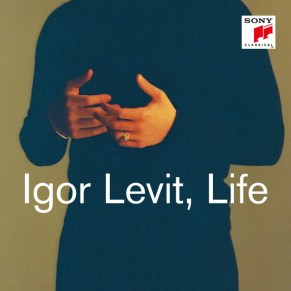
life_cover_750x750_88985424452_enThis could be the best thing I’ve heard this year. A bold claim, I know, but listening to Igor Levit’s new recording Life (Sony Classical) literally stopped me in my tracks….



With four recordings already and glowing reviews wherever he plays, this latest offering – his first in three years – from German-Russian pianist Igor Levit was eagerly awaited. It’s very different from his previous recordings which have focussed on “big” serious works (the Diabelli and Goldberg Variations, Rzewski’s The People United Will Never Be Defeated, late Beethoven Sonatas). ‘Life’ is a classical concept album, a very personal existential reflection on life and death, prompted by the death of a close friend. Music has proven therapeutic benefits and Levit finds a way through his grief , though perhaps not a sense of closure, in a series of solemn, valedictory and deeply thoughtful works by Busoni, Bach/Busoni, Schumann, Rzewski, Wagner/Liszt and Bill Evans. There’s no flashiness here, no glittering runs or vertiginous virtuosity – that would be inappropriate. Instead we have a continuous meditative flow of music from Busoni’s Fantasie after J S Bach through the fleeting poignancy of Schumann’s Geister (‘Ghost’) Variations to Bill Evans’ Peace Piece, an unusual but entirely fitting work with which to close this wondrous recording.

Every note is considered, measured, poised but never mannered: there’s none of the pedantry other “intellectual” pianists tend towards in performance. This playing epitomises the maxim “through discipline comes freedom” – something I felt very strongly in Levit’s mesmerisingly intense concert of Beethoven’s last three sonatas at Wigmore hall last year. You could have cut the atmosphere – one of concentrated collective listening – with a knife, and Levit achieves the same palpable sense of presence, intimacy and profound communication on this recording. It’s as if you’re in the room with him, quietly observing, listening, almost without breathing, while he plays. He finds incredible delicacy in the quietest reaches of the dynamic range – technically hard to achieve and emotionally wrought – and the entire album has a compelling processional quality, felt most strongly (for me) in Liszt’s transcription of Wagner’s Solemn March to the Holy Grail from Parsifal, to which Levit brings immense control and a hushed, prayer-like quality to the magisterial architecture of this work.  The Fantasia and Fugue on the Chorale  ‘Ad nos, ad salutarum undum’,  the longest work on this 2-disc recording, is another glowing transcription, also by Liszt, demonstrating that music, like life, is subject to change. Isolde’s passionate Liebstod and Busoni’s poignant Berceuse pave the way for the final work on the recording.

Bill Evans’ ‘Peace Piece’ matches the solemnity and intensity of the rest of album but in its ostinato bass and delicate treble filigrees, so redolent of Chopin’s tender Berceuse, there is, finally, a sense of consolation. It’s beautifully played by Levit, as are all the pieces on this recording.

Highly recommended


Guest review by Adrian Ainsworth

In 2015, when Carolyn Sampson first joined forces with Joseph Middleton for the recital disc ‘Fleurs’, it was more or less her first venture into art song. Up to that point, many people would have associated her most closely with the earlier end of the repertoire, her crystalline voice gracing Bach, Dowland, Handel, Lully, Monteverdi, Purcell and others besides. But that overlooks her occasional forays into more modern eras: discs of Esenvalds and Poulenc, say, or Tavener at the Proms. One senses it was only a matter of time before song came calling.

Joseph Middleton is surely one of the finest and most well-regarded accompanists working today. He is currently Director of the Leeds Lieder festival, and he received the 2016 Young Artist Award from the Royal Philharmonic Society, whose jury described him as ‘a born collaborator’. As well as a superb sound – more of which later – he has a real flair for interesting, inventive programming that gives so many of his recordings an album-like unity.

‘Fleurs’, an album of English, French and German songs all with a floral theme, was an absolute revelation to me. First, there was the opportunity to hear the purity of CS’s tone inhabit such intimate and intense settings, then to appreciate JM’s ability to honour the different composers’ styles while maintaining a consistent ‘feel’ across the whole disc.

The pair obviously clicked, as – seemingly on a mission – they have been fast assembling a distinctive, irresistible body of work. The two subsequent CDs, ‘A Verlaine Songbook’ (theme – Verlaine’s words set by a variety of composers) and ‘Lost is my Quiet’, featuring countertenor Iestyn Davies alongside CS in a programme of lovestruck duets, have been equally captivating. Now for number four, and in all honesty, it’s probably their most sublime achievement yet.

Full disclosure: Schubert is my favourite composer, and ever since I heard CS and JM were planning an all-Schubert disc, I’ve been more or less ticking off the days to release one-by-one on the calendar. At the same time, would my expectations be unreasonably high? Could this possibly be as good as I hoped it would be? Here’s why I think it is.

While this disc is their first dedicated to one composer, the duo have still pushed the programming aspect further, to find their own way into such a vast catalogue of lieder. As the title of the album suggests, the tracks chosen focus on Schubert’s ability to compose such powerful, deeply-felt songs for and about women.

As a result, the album includes some of the indelible ‘greatest hits’ you might expect – but CS and JM have kept the integrity of any suites they belong to: for example, ‘Gretchen Am Spinnrade’ comes with the Britten completion of ‘Gretchens Bitte’, and ‘Der König in Thule’; while the famous ‘Ave Maria’ is the third in the sequence of ‘Ellen’ songs, all included here. The disc’s generous running time also features all four ‘Mignon’ and both ‘Suleika’ lieder.

‘Suleika I’ opens the programme, and is as good an example as any to illustrate the telepathic connection the duo seem to share. The early part of the song demands that JM play with great tenderness, but at great speed, as the accompaniment shimmers beneath lyrics speaking of burning heat cooled by the stirring wind. CS, taking full advantage of one of Schubert’s loveliest vocal melodies, shapes her tone and timbre to be part confessional, part conversational. The power and excitement rise – the dynamics of the piano and voice in perfect sync – then subside into the steadier sensuality of the closing, repeated verse. It’s the first five or minutes, containing an album’s worth of delights.

Two of the ‘stand-alone’ songs are also particular stand-outs for me. Like the ‘Suleika’ songs (words by Marianne von Willemer), the lyric used for ‘Romanze’ was also written by a woman, Wilhelmina Christiane von Chézy. Perhaps understandably, this draws out an exquisitely tender rendition from CS. As the voice sighs its way towards the end of each verse, JM subtly increases the volume of the left hand, as if the bass could buoy the singer up. The very last ‘Herz’ is as heartbreaking as the final line describes.

This is followed by ‘Blondel zu Marien’, which starts as almost a steady, stately serenade. However, as each of the two verses progress, they build to a complex sequence dominated by a spine-tingling downward cascade of notes, punctuated by trills and decorations that demonstrate exactly why CS’s combination of vocal beauty and agility make her such a natural communicator in art song.

I could enthuse like this about every track on the disc, from the tragic dignity of ‘So last mich scheinen’ (the third Mignon song) to that Everest of lieder, the 13-minute ‘Viola’, where both navigate the changes in mood as if a single unit.

But perhaps it’s wise to finish on ‘Gretchen am Spinnrade’, an extraordinary song by any standards, but famously composed when Schubert was only seventeen. The piano represents Gretchen’s spinning wheel, and by extension, her (in)ability to focus on operating it as she is distracted by thoughts of Faust, the man she loves. As a result, the accompaniment endlessly orbits around itself – apart from one key moment – while the voice rings out above it, ranging from hesitancy to unchecked passion. It’s hard to imagine a song where it’s more vital for the two performers to track each other with such precision, while conveying such extremes of emotion.

CS and JM absolutely nail it. As in the very best performances of this song I’ve heard, the pace only starts with exact regularity, until the movement begins to shift constantly with Gretchen’s concentration. JM audibly changes the way he ‘leans’ on the keys, spikier here, lengthier there, as if to capture the changing pressure on the wheel. CS is utterly in character and expertly paces the build-up to the astonishing ‘breakdown’ near the end of the song when the wheel stops altogether. After the climactic “sein Kuss!” she takes a breath, and then another, her Gretchen clearly reeling before gathering herself and sending the wheel spinning again.

Moments like this not only help elevate the disc from being brilliant to something of an instant classic – they also prompt me to mention the fantastic production by Jens Braun, recording at Suffolk’s Potton Hall. All four of the Sampson/Middleton CDs were made in the same conditions, and the space within the sound really helps you to feel like you’re in the room as private audience – especially if you use a decent pair of headphones.

This is the kind of album I could talk about until you physically stopped me; I can imagine pressing copies into the hands of friends. It’s everything I could have hoped for, and more.


Adrian Ainsworth writes for a living, but mostly about things like finance, tax and benefits. For light relief, then, he covers his obsessions – overwhelmingly music, but with sprinklings of photography and art – on the ‘Specs’ blog, which you can find at adrianspecs.blogspot.co.uk

Twitter @Adrian_Specs

Adrian is a regular guest writer for The Cross-Eyed Pianist


A Soprano’s Schubertiade is available on the BIS Records label

Catalogue Number BIS-2343 SACD
EAN 7318599923437
Format SACD Hybrid
Release date Apr 2018
Total time 77’32