In a neat piece of programming, Monday’s Wigmore Hall lunchtime concert brought together two French master-pianists to play two French masterpieces for the ballet, Debussy’s erotic and ecstatically playful Jeux, and Stravinsky’s “beautiful nightmare”, The Rite of Spring. Read my full review here
Who or what inspired you to take up singing, and make it your career?
As a child I went to dancing class at a very early age. I would often get picked to sing solos in the annual dancing shows and I discovered that I was a better singer than dancer! So I started singing lessons at the age of nine and never looked back.
Who or what were the most important influences on your singing?
I was always a big musicals fan, and I would go to see West End shows and would be desperate to join in! I also loved Phantom of the Opera. To play Christine would have been a dream! Consequently, many years later, I auditioned for the role and was told I was too tall!
What have been the greatest challenges of your career so far?
One of the biggest challenges for a singer is that you have to wait for your voice to mature and as an impatient teenager that can be very frustrating. There is no rushing nature but at the same time you seem to be wishing your years away. Not anymore! I still feel as though my voice will improve with age, but I’m no longer in any hurry!
Which performances/compositions/recordings are you most proud of?
I am most proud of my concerts in South Africa in 2011. I went on a tour for 2 weeks and did 10 concerts in the space of those 2 weeks. I was part of a trio – The Nightingale Trio – which was voice, flute and piano. We flew the flag for English Songs and the audiences loved it. The travelling was amazing and I was so thrilled to just get through the concerts without any sore throats or illnesses.
Do you have a favourite concert venue to perform in?
Generally I love performing in churches and cathedrals. They always have amazing acoustics which are fantastic for the voice. They also have a great sense of stillness about them which is so calming. They are fascinating places full of history and are like little museums of the local area.
Favourite pieces to perform? Listen to?
One of my favourite pieces to perform is Da Tempeste by Handel from his opera Guilio Cesare. It is like gymnastics for the voice. It’s such a showy piece full of runs and acrobatics. I also love playing around with ornaments. It’s a real chance to stretch the voice to the extreme. Sometimes the ornaments are different every time I perform them. It just depends on the day and I like to keep my accompanist on their toes! I also love the other Cleopatra arias, especially Ah! Mio cor. It’s beautiful in many ways and just shows the versatility of Handel’s compositions. They are a real work out for the voice but so rewarding to sing.
Who are your favourite musicians?
I really admire Renée Fleming. She has such a shimmering voice with so much depth and body to it. She is extremely charismatic when she performs and never fails to deliver. She has had a wonderful career and deserves all of her successes.
What is your most memorable concert experience?
I once did a concert in a restaurant and the owner had two big Great Dane dogs. I am not the biggest fan of dogs and so I was very nervous when they lumbered into the room and came to sit at my feet. I couldn’t concentrate on performing for the fear of being licked!
What do you consider to be the most important ideas and concepts to impart to aspiring musicians?
My most important bit of advice to aspiring singers would be to enjoy the journey. Training can be frustrating but it’s also a time for experimentation. Use the training years as a time to explore a vast array of repertoire. You will then hopefully find your niche which will eventually allow yourself to carve out a career based upon your area of expertise.
What are you working on at the moment?
At the moment I am working with a composer called Andrew Keeling on a new album. It has a rocky feel to it which is totally new for me! We are in the middle of recording it and it is all very exciting. Then I’m back to opera with a new production in the Autumn.
What is your most treasured possession?
The article that has been with me throughout my career to date is my black leather music bag. My mum bought me it when I started singing lessons at the age of nine and I still keep music in it. It was my pride and joy!
English soprano Jane Wilkinson grew up on the Fylde Coast in Lancashire and began her vocal training with singing teacher Brenda Waddington. After a year studying with Barbara Robotham, she was accepted in 2002 to study at the Royal Scottish Academy of Music and Drama, Glasgow, on the Bachelor of Music course with Helen Lawson. Jane then studied as a post-graduate at the Royal College of Music, London, with Jennifer Smith. Her current teacher is Jane Irwin.
Jane is an experienced performer in all aspects of singing – opera, recitals, concerts, choral singing and competitions. She currently sings and teaches in London.
Jane recently was short listed for the BBC Radio 2 Kiri Te Kanawa Prize. She was lucky enough to sing for Dame Kiri in a masterclass at the Royal college of Music.
It’s thirty years since British pianist Peter Donohoe won joint silver medal at the 1982 Tchaikovsky Competition in Moscow. Hard to believe now that at that time Russia was still the Soviet Union, under the iron rule of an old guard communist leadership, when people’s rights and freedom was severely restricted and when visiting foreigners, such as Peter and his co-competitors, were treated with suspicion and were subjected to close surveillance.
To mark the thirtieth anniversary of his fine achievement, Peter has published his Tchaikovsky Competition diary on his blog. It’s a fascinating document, charting not just the highs and lows and daily anxieties of participating in an international competition, but also an insightful and entertaining glimpse behind the iron curtain. Despite the fact that we know the final outcome, this is a thrilling account.
Spiegel in Spiegel has to the best-known of all the music by Estonian composer Arvo Pärt (b.1935). Composed in 1978, just before Pärt left Estonia for Berlin, it was originally written for single piano and violin, though many other versions exist, including for piano and ‘cello, or viola, clarinet, flute, and percussion. An example of minimalist music, it has a meditative and serene simplicity in both its structure and tonalities.
The piece has earned the status of “iconic”, largely due to the fact that it has been much used in film and television soundtracks, as well as in ballet and theatre productions; it is hard to credit now that Pärt’s music was relatively unknown in the west until the 1990s. The work’s recurring motifs – rising crotchet second-inversion broken chords in the right hand of the piano and sustained notes in the violin (or other instrument) which slowly ascend and descend – are instantly recognisable.
In the 1960s, although largely cut off from western contemporary classical music, Pärt experimented with serialism, collage, neo-classicism and aggressive dissonance, styles which cemented his modernist credentials, but set him at odds with the Estonian Soviet authorities. However, he was frustrated with the dry “children’s games” of the avant-garde, and, as a reaction to this and in an attempt to find his own compositional style, he went into a self-imposed creative exile, during which he explored the traditions, both musical and cultural, he was most drawn to: Gregorian chant, harmonic simplicity, and his Russian Orthodox faith. What emerged was a distinctive and unique compositional voice: the music of “little bells”, or “tintinnabuli”, heard for the first time in his piano miniature Für Alina. This piece set the seed from which his most famous music grew, including Spiegel im Spiegel, Fratres, Summa, and Tabula Rosa.
It is easy to dismiss Pärt’s music as simplistic, sentimental and clichéd “holy minimalism”, but the music’s power lies in both its absolute simplicity and the austere rigour applied to its construction. And here Pärt was harking back to his adventures in serialism, devising strict rules to control how the harmonic voices move within the music. As a result, his music sounds both ancient and avant-garde, while the new tonalities of the “little bells” and the simple harmonic progressions give the music a spare, profound and meditative expressivity.
The German title Spiegel im Spiegel means both “mirror in the mirror” as well as “mirrors in the mirror”, referring to the infinity of images produced by parallel plane mirrors. In the music, this mirroring is achieved through the fragments in the piano, which are endlessly repeated with small variations, as if reflected back and forth. These repeating fragments also invoke, in tintinnabuli style, the twilight first movement of Beethoven’s Piano Sonata Op. 27 no. 2, the ‘Moonlight’, with its peaceful recurring triplets. The piano part also reaffirms the melody notes of the violin line with parallel thirds and octaves, and further voices unfold from the core note, A. F major, the key in which the piece is written, remains the underlying and omnipresent tonality throughout.
The opening measures of Spiegel im Spiegel
The piano part carries the tintinnabular voice with its repeating broken chords and low, sustained Fs in the bass. The texture is coloured throughout by high, bell-like (tintinnabular) recurring sounds in the upper registers. The violin line is based on a slow ascending melodic line, beginning with a G-A two-note scale, which alternately ascends then descends to A by step. With each subsequent ascent and descent, a note is added to the line, a process which could go on indefinitely (the “mirror in mirror” again). It is this continuity and constant inversion of the violin line, combined with the piano, that creates the sense of perfect tranquility. There is no drama or ambiguity here because we know the music will always return to the “home” tonality of A. Rather, the emotional content comes from introspective atmosphere created by the simplicity and pure sonorities of the music.
The composer gives no dynamic or phrase markings: the violin part in particular is curiously blank, and one could play it in a completely “flat” way, and it would still sound effective. However, the musician has a natural tendency to increase the dynamic level as the music rises. When I was rehearsing this piece with my violinist partner, the first time we had played it together, we both found ourselves adding some dynamic colour and shading to complement the rise and fall of the melodic line. I have also found a tendency, when practising the piano line, to give the tiniest “breath” before the restatement of the opening motif (which recurs, rather like a traditional rondo theme), to indicate that we are returning “home”. The music closes almost exactly as it begins, with the repeated motif in the piano and a sustained A in the violin. A gentle ritardando in the final bar is all that is needed to close this piece.
The notes themselves are not difficult, but it is important to set an appropriate tempo for the music (too slow and it could sound ponderous). Then the main task is to set the mood of reflection, with the notes falling like water dropping into water, and to play the notes “as beautifully as possible” (Tasmin Little, violinist). The music, in effect, plays itself: there is absolutely no need for over-interpretation, and one should simply step back, “have faith” in the music, and the composer’s ability to create a mesmeric tranquility.
The piece featured in an episode of Radio 4’s series ‘Soul Music’, in which people discuss the importance and impact of a certain piece of music on their lives. Listen to the programme here
The Cross-Eyed Pianist is free to access and ad-free, and takes many hours every month to research, write, and maintain.
If you find joy and value in what I do, please consider making a donation to support the continuance of the site

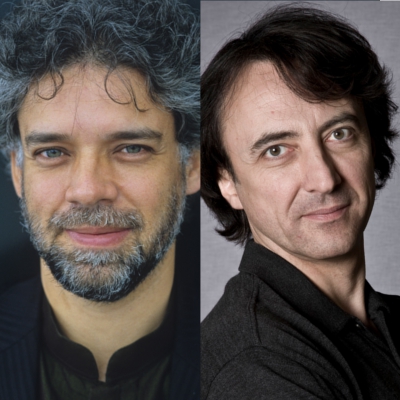 In a neat piece of programming, Monday’s Wigmore Hall lunchtime concert brought together two French master-pianists to play two French masterpieces for the ballet, Debussy’s erotic and ecstatically playful Jeux, and Stravinsky’s “beautiful nightmare”, The Rite of Spring. Read my full review here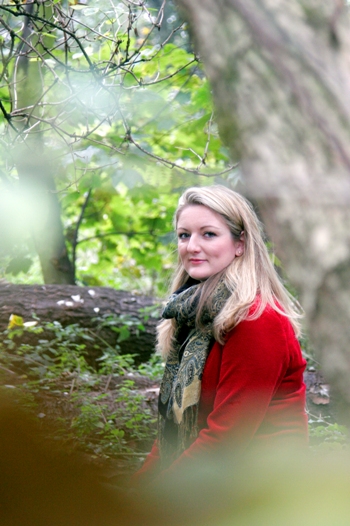






 The Cross-Eyed Pianist