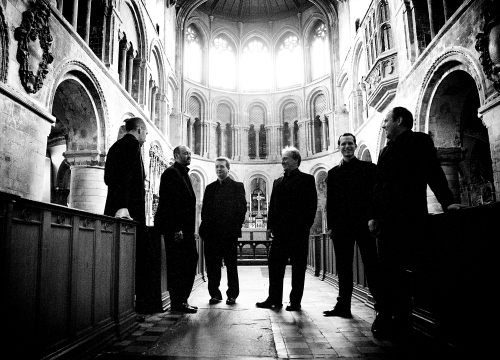
Pierre-Arnaud Dablemont

Who or what inspired you to take up the piano, and make it your career?

What an embarrassing question for me! I could say that I immediately fell in love with the instrument, that it was inside me and so on, but that would be a big lie. The truth is I can’t remember how I came up with the idea to learn how to play the piano. I remember I wanted to take a ballet class, but it didn’t work out and I never had my ballet lessons. Next thing I know: I’m playing the piano. But one thing is absolutely sure: my parents didn’t force me. They had no musical background and were pretty scared by my aspirations to be a professional musician. Concerning my career choice, I can’t remember whether someone or something specifically influenced me; I think it grew in me and finally became obvious in my teens. I started studying mathematics alongside my studies at the conservatory; finally I stood up for myself and came out of the closet as a full-time music student!

Who or what were the most important influences on your playing?

My teachers Véronique Menuet-Stibbe and František Maxián. They are very different pianists and both brought me what I needed at the time I met them. I only recently discovered how much I owe them for the pianist I am now and how deeply they influenced me. Of course, some world-class famous pianists played an important role in my development as well, like Schnabel, Michelangeli, Gould, Pollini or Pogorelich, among others.

What have been the greatest challenges of your career so far?

Being happy with what I do and finding out who I really am as a pianist. It takes time to find your repertoire, to understand who are the composers you’re able to understand and play well, and who are those you like but shouldn’t play. It takes time to get what’s important for you in music, which direction you want to give to your work. And I have the feeling that giving yourself space to think is a real challenge in today’s music business.

Which performances/recordings are you most proud of?

Well, my first album was released 3 months ago and I’m very proud of this achievement. It was a difficult project and I’m happy I managed it from the beginning to the end. It was very important for me to understand the whole process and I gained a immensely valuable insight. I’m also very proud I can offer it for free.

Do you have a favourite concert venue to perform in?

Not really. As long as there is a good piano, the basics of a concert hall and an attentive audience, I’m happy with the venue.

Favourite pieces to perform? Listen to?

Of course I love performing Ravel’s Gaspard de la Nuit and Janáček’s On an Overgrown Path as well as In the Mists, and that’s why they are part of my debut album. I have also a special thing for performing Beethoven and contemporary music: both feature in my next recording projects. I don’t listen to a lot of piano music (I used to) but in my current playlist, you’ll find Brahms’ Violin Concerto (C. Ferras/ H. von Karajan), Brad Mehldau’s Elegiac Circle, Dvořák’s ‘cello and piano concerti (Dupré/Barenboim – Richter/Kleiber), Beethoven’s Symphonies (Fürtwangler) or Bach’s Goldberg Variations (Gould – 1981).

Who are your favourite musicians?

Those who make me think, those who make me want to play the piano.

What is your most memorable concert experience?

Performing in the dark, with just one little reading lamp for me to see the keyboard. This was a difficult Messiaen/Berio/Takemitsu program: the experience was amazing both for the audience and me. I’d like to do it more often, maybe with a more standard repertoire. I think it really enhanced the performance and was really interesting, musically speaking.

What do you consider to be the most important ideas and concepts to impart to aspiring musicians?

Never take anything for granted. Find your own truth and stand up for it. And remember that piano playing can’t only be based on goodwill, feelings, intuitions or piano practice. It is much more than that.

What are you working on at the moment?

I’m working on my next recording dedicated to Beethoven’s Sonatas op. 27, 28, 109, 110 and 111, so I’m diving into his piano works, especially the Sonatas and Concerti, and it’s a real pleasure to go back to this music I haven’t played for a long time. And alongside this work on Beethoven, I’m learning Bach’s Partitas, quite new repertoire for me, and planning several multimedia projects for next year.

Where would you like to be in 10 years’ time?

I hope I’ll keep the same attitude towards life and music, the same amount of insane musical ideas, the same passion for my instrument, with a little more free time and easiness to realize my projects.

What is your most treasured possession?

I don’t own much things, I don’t really connect with objects. My piano is certainly the best answer I can provide here.


Pierre-Arnaud Dablemont has built a reputation as a unique recitalist with an unusually broad repertoire. His multifaceted musical personality and insatiable curiosity have led him to exciting new directions, going beyond the beaten paths of the usual conformist thinking and giving him a particular view on the works he interprets.

His album Introducing Pierre-Arnaud Dablemont, released in July 2012 is Dablemont’s first solo recording and includes works by Janácek and Ravel, two composers who have a particular resonance with Pierre-Arnaud Dablemont and reflect his path in the music world.

In 2013, Dablemont will release two new albums featuring six piano sonatas by Beethoven op. 27 n°1 & 2 “Moonlight”, op. 28 “Pastorale”, op. 109, op. 110, op. 111. Alongside these two recordings, the pianist will issue an essay on piano and interpretation. In the course of 2013, he will also appear in a documentary film about his work and point of views and release video recordings of several recitals.

Actively involved in the expansion and promotion of contemporary piano repertoire, Dablemont has premiered new works by composers Pavel Trojan, Petr Pokorný, Edith Canat de Chizy. In 2013, he will perform and record two new short pieces by British composer Steven Berryman: …brightly illuminated, vividly seen and Can it be such raptures meet decay?.

Born near Paris, he grew up in a non-musical family. Dablemont received his first piano lessons at age 8. Showing a talent for music, he quickly became more serious about piano and began his education under Véronique Menuet-Stibbe. He later studied with the eminent pedagogue and pianist František Maxián at the Prague Conservatory, who particularly influenced his playing.

Pierre-Arnaud Dablemont keeps a widely-read blog. There he writes about his concerts, practicing as well as he publishes detailled essays on music or analysis of works.

www.pierre-arnaud-dablemont.com

This delightful interactive art/music project was created by Newcastle artist Anton Hecht. A small grand piano was set up in the busy Haymarket bus station in Newcastle, and commuters and passers by were invited to join the pianist at the piano to play a few notes of Beethoven’s iconic Piano Sonata Op 27, no. 2 , the ‘Moonlight’.

Filmed over the course of an entire day, Anton edited each contribution together to create an almost seamless performance in a film which is as much about the daily life of the bus station and the people who pass through it as it is about the music. The end result is a rather special communal playing experience. Anton has worked on a companion project, ‘Come Play Satie With Me’, in which the public engage in the process of collectively playing one of Eric Satie’s Gnossienne on a Steinway in the main auditorium at St. David’s Hall, Cardiff. Pianist Andy Jackson accompanies and guides, and like the Bus Station Beethoven, the resulting film is rather wonderful. Look at the concentrated expressions on the faces of the people who join Andy at the piano.
Watch both video clips here:

‘Bus Station Sonata’

;

Come Play Satie With Me

Masterchef judges Monica Galetti, Michel Roux Jr and Greg Wallace

People who know me well – and who have eaten at my dinner table – probably feel it was inevitable that I would eventually combine my twin passions of food and pianism in a blog post.

This time last year I was in the midst of final preparations for my ATCL Performance Diploma. I was also hooked on Masterchef the Professionals, a BBC TV competition for working chefs. This time this year I am once again immersed in Diploma preparations (for the higher LTCL), and nightly glued to Masterchef the Professionals.

So how can a cookery tv game show (which is how Masterchef began nearly 20 years ago) provide inspiration to the pianist, and musician in general?

The programme features some very talented individuals. Many of the dishes they submit to the highly discriminating judges are amazing: creative, imaginative and beautifully prepared. In order to progress through the contest, the participants must complete a variety of tests, including skills tests which examine things like the ability to joint a bird correctly, prepare a lobster or make Hollandaise sauce (three ways). They must also prepare a classic dish, set by Michael Roux Jr, as well as cooking and serving a two-course meal for food critics. As the competition progresses, the tasks become more challenging.

The more I watched Masterchef, and the further the competition proceeded towards its exciting denouement, the more it became apparent to me that the chefs who consistently came out top (and the one who eventually won the competition, Ash Mair), all had their “skills sets” perfected. At the foundation of everything they cooked was a solid understanding of technique, ingredients, flavour combinations, and time-management, combined with creative flair and imagination. And as I watched, it occurred to me that musicians, especially those preparing for concerts, competitions, festivals or exams, also need to have secure “skills sets” (i.e. technique).

Technique is at the foundation of everything we do as pianists (and this is true for anyone who works in a profession/craft requiring skill and dexterity – for example, sportspeople, surgeons, sculptors, plumbers). Piano technique is not just finger dexterity but – just as for a chef – an aggregate of many skills. It is an understanding of how movement can influence the way we play the piano, the sounds we make, our ability to move rapidly around the keyboard. It is “a way of using your body to play the piano” (Maria Joao Pires). I see technique as the solid architectural framework on which we hang our creativity, artistic and interpretative vision, our musicality, and our communication with the listener. And technique must never just be about acquiring “finger technique”; we should always practice in a musical way – because practically any technical flaw can be detected in the music.

Sure, you come across people who play the piano well, but maybe you wonder, when you hear them play, why their fortes are too strident, or their tonal control lacks true cantabile sound. Both aspects require an ability to understand how we use the body to create particular sounds and effects on the keyboard. So, like the chefs on Masterchef the Professionals, we must bring together our skill set and our musicality to enable us to play better.

Another aspect which was very obvious from Masterchef was that all the finalists were highly organised time managers. They knew how long their dishes would take to prepare and they were expert at multi-tasking. They also had a well-developed understanding of how the different components of a dish should come together to create a whole meal. In the same way, the skilled musician understands how to construct a programme that will delight, excite and surprise the listener. The ingredients of a good programme should pique the listener’s appetite well before the soloist arrives on stage (when I select concerts to review, I largely base my choices on interesting repertoire and programming rather than performer). A concert pianist friend of mine once told me that his teacher (Phyllis Sellick) described a programme featuring music by the same composer as “a list!”, but “seasoning” your programme well can make a concert focusing on a single composer a fascinating and engaging experience – for listener and performer.

Let me backtrack a little in the process and explain how Masterchef influenced my Diploma preparations in the run up to the exam last December:

Be well-prepared: allowing oneself enough time to fully prepare each piece. Last-minute preparations are never a good idea, whatever level of exam you are taking. Being well-prepared can also counteract nerves on the day.

Time-management: make sure your programme runs to the correct timings as given in the exam regulations. At Diploma level, you will be marked down if your programme is too short, or over-runs. Time your pieces individually as well as your entire programme. And think about the silences between the pieces too: some pieces hang together naturally (I played a Bach Toccata and Debussy’s Sarabande from ‘Pour le Piano’ virtually back-to-back in my Diploma recital, to demonstrate the connections between the pieces, but a longer pause between the Schubert E flat Impromptu and Liszt Sonetto 123 was necessary, in part to allow me to catch my breath!)

Plan your menu. Your programme is your menu: plan it wisely. In my experience, as a regular concert-goer and occasional performer, the best programmes are those which offer different levels of energy, perhaps building to the climax of a big virtuosic piece, or piano sonata at the midway point. If the programme is very weighty, remember that the audience needs a break too.

Presentation: at Diploma level you are marked on your presentation skills and stagecraft, and your attire and manner must be professional. Dress appropriately for an afternoon or early evening recital, and practice playing in your concert clothes ahead of the actual date. (I had trouble with my shoes, for example, as I cannot pedal in high heels! And make sure your page turner is correctly attired too: mine wore plain black shirt and trousers).

Stay focussed: nerves can get the better of you but if you are well-prepared you should have no reason to feel nervous (beyond the “positive nerves” of looking forward to presenting your programme to an audience/examiner).

A couple of other tips for practising have come up as I’ve watched this year’s Masterchef The Professionals contest:

Last year, I played the Schubert E flat Impromptu to a pianist friend, twice, as part of my preparations. He told me I was using the pedal too much and ordered me to practice the piece without the pedal (except in the trio). At first, I found this a difficult and unpleasant experience, not least because the piece sounded dreadful without pedal on my piano. After a while, however, I began to notice new details about the music, which had hitherto been hidden by my rather over-enthusiastic foot. Likewise, on Masterchef last year, one of the finalists made a ‘Deconstructed Chicken and Mushroom Pie’. He took all the components of a classic chicken pie, stripped them down and presented them in an elegant and witty way. When I made it myself, I realised why my friend had suggested practising the Schubert without pedal: when I went back to play the piece for my teacher, with one-eighth pedal, the result was more refined, musical and had far greater clarity.

So, it’s worth taking the trouble to strip the music back to its components: this does not necessarily mean doing an exhaustive analysis of the score, but being aware of all the little details that make up the whole. Practising sans pedal allows you to hear better what is going on in the music – maybe some interior voices or melodic lines were not obvious before? Understand what makes the whole and try to bring all the individual parts together to make a coherent and elegant finished version.

I’ve been working on my LTCL repertoire for nearly a year now, and soon it will be “decision time” as to when I take the exam (spring or summer 2013). The experience of the previous Diploma – and the inspiration from Masterchef! – means I feel far better prepared this time around. I’ve spent a lot of time fine-tuning aspects of technique including pedaling (specifically for Mozart A minor Rondo, K511, which requires very little, and very sensitive pedaling), and building stamina to enable me to play a brash and exuberant Rachmaninov Étude-Tableau (op 33, in E flat). I’ve done a lot of “tasting” – listening around my repertoire to gain inspiration from recordings, other works by the same composers, live performances etc. My ‘menu’ is nearly ready to be run by friends and colleagues who will sample it ahead of the exam:

Bach – Concerto in D minor after Marcello, BWV 974

Takemitsu – Rain Tree Sketch II

Mozart – Rondo in A minor, K511

Liszt – Sonetto 104 del Petrarca

Rachmaninov – Two Etudes-Tableaux, Op. 33 – No. 7 in E flat & No. 8 in G minor

Joseph Haydn: ‘London’ Trio in F Hob XV no 17

Bohuslav Martinů: Trio

Josef Suk: Elegie, Op 23

Jean-Michel Damase: Sonate en concert

Just five minutes’ walk from Camden Town tube station, tucked up a side street off Camden High Street, is the relatively new arts venue of The Forge. Custom-designed as a flexible arts space, bar and restaurant, The Forge squeezes a lot into its small site: the airy recital space can accommodate around 100 people, and has a good reverberating acoustic, thanks to hard and reflective surfaces. The Steinway Model B grand piano is just right in this size of venue. The Forge is run by a husband and wife team who juggle their baby daughter while welcoming guests. The atmosphere within the venue is friendly and relaxed, and if you come to a Sunday morning ‘Keys and Coffee’ concert, as we did, you can take your coffee into the recital space.

Metier Ensemble is a flute, piano and ‘cello trio, comprising Claire Overbury (flute), Elspeth Wyllie (piano) and Sophie Rivlin (‘cello). They met while studying at the Royal Academy of Music and the University of Oxford, and all three have won prizes and awards for their playing. They perform solos, duos and trios, and this mix of instrumentation allows them to explore a wide range of repertoire, as was evident from the programme for their concert at The Forge. The musicians introduced each piece, engaging our interest before they had played a single note.

The concert opened, appropriately, with one of Haydn’s ‘London’ Trios (Hob. XV, 17). This is unusual amongst Haydn’s trios of the time as it has only two movements (in fact, Haydn originally billed it as a sonata for piano with flute or violin). The first movement Allegro is sprightly and, after the opening piano solo, the flute takes prominence, with the ‘cello in a supporting role. Claire Overbury played with a sweet, bright tone, combined with crisp articulation. The development section is dramatic, foreshadowing Beethoven, with some unusual modulations, before the cheerful opening motifs return. There were some lovely ‘conversations’ between piano and flute in this first movement, underpinned by some rich ‘cello support from Sophie Rivlin. The second movement is marked ‘tempo di Minuetto’, though it feels more like a proper finale, and was, like the opening movement, executed with humour, grace and evident enjoyment on the part of the musicians.

Martinů composed his Trio for flute, piano and ‘cello in 1944, a highly productive year for the composer, who was by now resident in America. It is a largely extrovert work, full of Eastern European folk motifs and nostalgic resonances of his homeland (former Czechoslovakia). The outer movements are imbued with boisterous, holiday moods, while the middle Adagio reveals the composer’s homesickness in a yearning hymn-like theme, expressively played by Elspeth Wyllie. As in the Haydn, the interplay between all three instruments was colourful, precise and lyrical.

Suk wrote his Elegie, op 23, in memory of the Czech poet Julius Zeyer, and the subtitle to the work, “Under the Impression of Zeyer’s Vysehrad,” is a reference to the writer’s epic poem based on elements of Czech mythology. The music is nostalgic rather than elegiac, full of rich, warm melodies, striking chromaticism and harmonic shifts, and an aching passion, all sensitively executed by Metier Ensemble.

The concert closed with an effervescent trio by Jean-Michael Damase (b. 1928). Damase chose not to follow his contemporaries Messiaen and Boulez into new, experimental realms of composing, and instead continued to explore the possibilities of the kind of elegant French musical language set out by Debussy and Ravel, and later Poulenc. The Sonate en Concert is organised in the manner of a Baroque suite, with contrasting movements based on different dance rhythms. The music is uplifting in mood, melodic and tonal, though containing some unusual harmonic complexities. The flute and piano carry the main interest in the work, with the ‘cello providing a Baroque ‘basso continuo’. There are several recapitulations based on the stately, expressive opening motifs, including a beautiful ‘Aria’, interspersed with livelier movements. The ‘Sicilienne’ had a delightfully relaxed lilt, while the presto ‘Gigue’ crackled with excitement, the sparkling glissandi in the piano accompanied by the happy gurgling of The Forge owners’ baby daughter. The entire work was pulled off with elan, humour and yet more obvious enjoyment by the musicians.

This was a really charming concert: a programme guaranteed to refresh and delight everyone, combined with the relaxed, convivial atmosphere at The Forge made for a thoroughly enjoyable morning.

www:metierensemble.co.uk

Pianist Elspeth Wyllie featured in my Meet the Artist series. Read her interview here

More about The Forge here: www.forgevenue.org