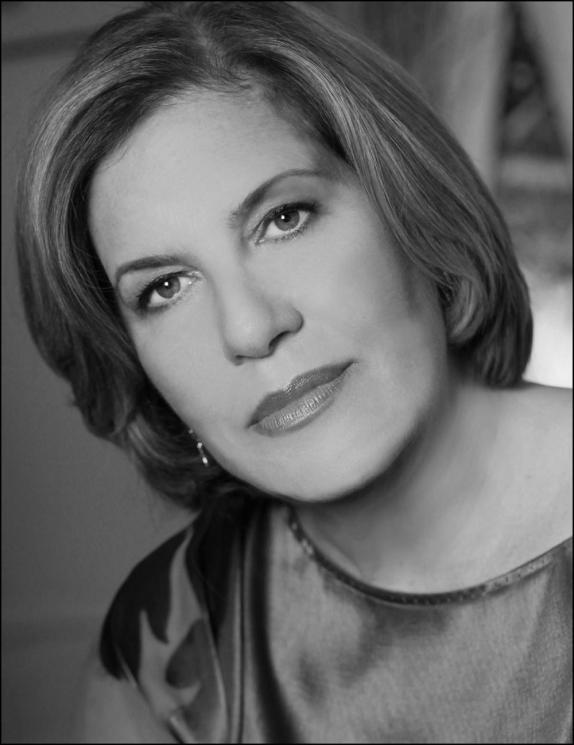
Who or what inspired you to take up the piano/composing/conducting, and make it your career? 

Not just a single person has inspired me. I’ve had some great piano teachers before and during my time at university. My last lessons were with Mikhail Kazakevich from Trinity College of Music. I found it amazing that every piece I wanted to learn he was already able play from memory, while looking at me, and could really shake the grand piano playing Liszt. It was a really relaxed environment where I was able to not just ask questions, but also have discussions about the music and I learnt an incredible amount from this. I discovered during this time how to really uncover and convey the music’s narrative as opposed to just learning the technical aspects of a piece.

Do you have a favourite concert venue to perform in? 

Unsurprisingly, especially for the people that know me, I relish the spotlight and the idea of putting on a grand performance is always on my mind. However, I do a lot of lounge jazz playing, and I love having an audience who are doing other things and where music isn’t the main focus. I feel completely free to explore music and try new things without the pressure of the spotlight. It’s really easy to make the space a performance for myself.

Favourite pieces to perform? Listen to? 

I love the intense emotion and raw power of the late romantic Russians (Rachmaninov, Mussorgsky, Scriabin, etc). I think this is in part due to my style of composition, as I love creating piano works in their style and I can never resist learning a challenging piece of music. However, I’ve always loved the simple beauty and lyricism of Chopin, so I always try and have a piece of his on the go.

Who are your favourite musicians? 

Musicians like Vladimir Ashkenazy and Leonard Bernstein I really aspire to, as they are greats in more than just one field. However, for specific pieces, composers and genres I have my favourites. Jazz Trio playing – Brad Mehldau, Rachmaninov’s Third Piano Concerto – Olga Kern, Conducting Stravinsky’s Firebird – Valery Gergiev. The very long list goes on.…

What is your most memorable concert experience? 

My first time as a concert pianist, I was performing Gershwin’s Rhapsody in Blue. This was such a fun piece to learn, and even though I was nervous before, the moment I started playing I relaxed into the music and for 15 minutes the audience didn’t exist, it was just the music and me. It was over way to soon, and I felt such an incredible rush I wanted to do it again straight away. However, I wasn’t fully satisfied and I think I will always be looking for bigger and better things to get involved in. After the concert, I was told there where children dancing at the back, a success in my opinion!

What do you consider to be the most important ideas and concepts to impart to aspiring musicians? 

Always have a performance to work toward otherwise it’s really easy to put practicing to the side. Keep an open mind to new pieces of music you are introduced to, I know my taste in music has dramatically changed over the last few years. Join in everything!

What are you working on at the moment? 

Mussorgsky’s Pictures at an Exhibition for a concert later this year, and Blumenfeld’s Etude for the Left Hand, Op.36 for my birthday party/jam night next week – I want to be able to finish a drink in my right hand before the piece is over!

Where would you like to be in 10 years’ time? 

I would love to have my hand firmly in the three things I love, which is Performing, Composing and Conducting. My idea of perfect happiness is centre stage in a grand concert hall abroad with the Berlin Philharmonic performing and conducting a piano concerto I have composed.

Ho Wan Jeremy Leung 梁皓雲

www.howanjeremyleung.com

Interview date: September 2013


The music of George Gershwin remains perennially popular with performers and audiences alike, and his life and work are vividly illustrated in ‘Classic Gershwin’, a new words and music production with actress Susan Porrett and acclaimed Gershwin interpreter, pianist Viv McLean.

It is a mistake to think of Gershwin purely as a composer of “jazz” (a term he in fact disliked, preferring the term “swing” to describe his jazz-inspired music). His musical tastes and influences were wide, from Bach to Stravinsky and Schoenberg. He was particularly influenced by the French composers of the early twentieth-century, notably Maurice Ravel, who in turn was most intrigued by Gershwin’s work. Gershwin’s great skill was his ability to manipulate different forms of music into his own unique musical voice.

‘Classic Gershwin’, the third words and music collaboration between Susan Porrett and Viv McLean, takes the audience on an exhilarating, foot-tapping journey through Gershwin’s life and music, from his early years in Brooklyn to Tin Pan Alley, Broadway and Hollywood to his tragically early death from a brain tumour in 1937. Just as in ‘Divine Fire’, Viv and Sue’s moving concert focusing on the life of Chopin and his relationship with Georges Sand, the text of ‘Classic Gershwin’ offers just enough information to continually pique the listener’s attention and brings Gershwin to life with the clever and eclectic interweaving of words and music. Each nugget is illustrated with sensitively-chosen music selections, including Someone to Watch Over Me and the rarely-performed Three Preludes, to Swanee, the song which marked Gershwin’s elevation into the realms of established composer and song-writer, after Al Jolson heard Gershwin play it at a party.

The first half of Classic Gershwin closes with Rhapsody in Blue, Gershwin’s hommage to bustling metropolis of Jazz-Age New York, the city of his home, complete with wailing sirens, honking car horns and the rattle of the subway. The second half focuses on Gershwin’s later life, his growing success and fame, and his work in Hollywood. The description of his failing health (the result of a then-undiagnosed brain tumour) was told with great poignancy, and the concert closed on a tender note, a fitting contrast to the sparkling bravura of the Rhapsody in Blue.

The great appeal of this words and music concert, aside from the wonderful music, played by Viv with great precision, exuberance and musical sensitivity, all underpinned by his pristine technique, is its ability to offer just enough information in the text to keep the listener wanting more. Viv demonstrated that pieces driven by rhythmic vitality and syncopation can still have the most exquisite tonal palette and a magical dynamic range, and the music provided the most delicious interludes, complementing the text at every turn (the musical selections are made between Viv and Sue). The overall effect is a glorious and intriguing celebration of Gershwin’s life and work.

This was the world premiere of this new words and music collaboration and it was rapturously received by the audience at the OSO Arts Centre, Barnes, SW London. Highly recommended.

My review of ‘Divine Fire’

Franz Peter Schubert

Schubert wrote two sets of Impromptus (D899 and D935). Composed in 1827, his post-‘Winterreise’ annus mirabilis, a year of fervent creativity, the Impromptus remain some of his most popular piano works, particularly the first set and the third of the D935 (a set of variations based on the ‘Rosamunde’ theme from his opera of the same name). The first set tend to be performed more frequently and I have occasionally heard both sets in the same concert, with a selection of the Moments Musicaux slotted in between them.

The word “Impromptu” is misleading, suggesting a small-scale extemporaneous salon piece. In fact, all of Schubert’s Impromptus are tightly-knit and highly cohesive works, and the longest lasts over ten minutes. Schubert did not invent the term “impromptu”: Jan Vorisek, the Bohemian composer living in Vienna, published the first impromptus in 1822, and the term was assigned to Schubert’s works by his Viennese publisher. When he sent out his second set of Impromptus, Schubert numbered them five through to eight. Schumann posited that Schubert may have had something much larger in mind when he composed the D935 set, and even suggested that the key sequence of the four pieces formed a piano sonata in all but name. Certainly the F minor Impromptu (the first of the D935 – the set ends with another F minor impromptu) has the grandeur and scale one expects from a piano sonata from this period but all four works also stand alone, each distinct in their own right.

I have lived with Schubert’s Impromptus since my teens, and have muddled through all of them and learnt two of them properly (the E flat Impromptu from the D899 formed part of my first Diploma programme). For me, the works are continually interesting for their range, depth, variety, individual characters and specific musical challenges. They each display in microcosm many aspects and distinctive characteristics of Schubert’s large-scale piano music (sonatas and fantasies for example) and are extremely rewarding to play. They work well in concert programmes, performed either as a complete set, or as separate pieces, and remain perennially popular with artists and audiences alike.

The entire D935 is a much more substantial set of pieces than the first set, and this is especially true of the first F minor Impromptu. Organised in sonata-rondo form, the tone of this impromptu moves between an almost-Beethovenian drama and assertiveness in its opening section and the more flowing, melodic duet of the central sections.

In terms of learning and playing this Impromptu, I would suggest the following based on my current study of the work:

  • The piece is organised in distinct sections (and one will tend to learn it sectionally). Keep in mind the overall structure and narrative of the piece to produce a cohesive whole and be alert to the bridges between each section
  • Be careful not to over-emphasise the forte, fortissimo and fz markings: remember this is Schubert not Beethoven. I feel the dynamic contrasts are not as black and white as one would expect in Beethoven.
  • Bars 13-19 (and also 126-133): here you want to try to recreate a sense of the underlying chords and chord changes. This section must not sound too dry. Aim for a “shimmering” touch with a sense of string articulation. (Extract 1)
  • Bars 30-38 (and also 144-152): don’t begin this section with too much power or heaviness (remember – it’s not Beethoven!). Hold back to allow for a real climax into bars 30/31. Keep the touch light and the RH semiquaver arpeggios delicate.
  • Bars 44-64 (and also 159-177): after some discussion and experimentation with my teacher, I try to keep this section light and rhythmic (there is a danger of making the textures too thick here because of the chords). Although Schubert marks it sempre legato, the staccato markings suggest that one should continue in this vein throughout this section. This gives the chords a wonderful dancing lightness. But be sure to observe all the legato markings very diligently. The RH semiquavers at bar 56+ should just shimmer over the LH chords. (Extract 2)
  • Bars 69-112 (and also 182-225): this is the emotional heart of the piece – plaintive duetting fragments in treble and bass, accompanied by gently rippling semiquavers in the RH. The accompaniment must not intrude, but it is also important to retain a sense of the underlying harmonies and chord changes. Keep the hand soft and the wrist flexible: some of these broken chords are awkward (in particular, bar 204) and at no point must these semiquavers sound “notey” or dry, especially in the forte sections. Meanwhile the duet (played by the LH only) should sing, with careful shaping in the fragments. (Extract 3)
Extract 1
Extract 1
Extract 2
Extract 2
Extract 3
Extract 3

Download the complete score

Further reading

Charles Fisk – Returning Cycles: Contexts for the Interpretation of Schubert’s Impromptus and Last Sonatas

John Daverio – Crossing Paths: Schubert, Schumann and Brahms

grahamfitchWho or what inspired you to take up the piano and make it your career? 

I was destined to read modern languages at Oxbridge but my heart wasn’t really in it. The piano was an all-consuming passion by my mid teens, and I’m afraid once the blinkers went on I couldn’t see myself being happy doing anything else.

Who or what were the most important influences on your musical life and career? 

Apart from my wonderful teachers Stephen Savage, Peter Wallfisch and Nina Svetlanova (each of whom gave me different parts of the puzzle), I was very influenced by András Schiff. Not only his playing (which blew me away the first time I heard it) but having the privilege of studying with him at Dartington in 1982 and then privately afterwards. Another profound influence was Leon Fleisher’s weekly piano class during my Peabody year, studying Chopin with Ann Schein and having some marvelous lessons with Julian Martin. Playing chamber music with some amazing string players and also playing the song repertoire have made me a more rounded musician than if I had just played solo.

What have been the greatest challenges of your career so far? 

I think juggling the various elements of what I do – playing, teaching, writing, adjudicating and now in my role as a principal tutor on the Piano Teachers’ Course (EPTA) UK. There never seems to be enough time to practise!

Which particular works/composers do you think you play best? 

I have played a wide variety of styles in my time, from the French and German baroque through to contemporary music. If push comes to shove I would have to say I identify most with the mainstream Classical and Romantic repertoire. I can’t imagine a world without Bach, Haydn, Mozart, Beethoven, Schubert, Schumann, Chopin – to name but a few.

What is your most memorable concert experience? 

If you mean as a listener, it would have to be Schiff’s Goldbergs at Dartington in 1982. One of the most memorable of my own would probably be playing the same work in Perth, Australia in the late 90’s – in front of an audience of pianists.

What do you consider to be the most important ideas and concepts to impart to aspiring musicians? 

A love of music, an appreciation of how music is built and how to communicate this in your playing. Aspiring musicians need a heck of a lot of discipline if they are going to amount to anything, but so often they don’t really know how to work. Part of my mission seems to be helping them learn how to practise.

Your ‘Notes & Notes’ recital on 14th September includes works by J S Bach and Haydn. Tell us a little more about why you selected these particular composers and works? 

I chose to play these particular works because I think Bach and Haydn go very well together. The B flat Partita and the G major French Suite are very often played, and I find I often teach them. The Haydn C major is such an inventive work – I just love the humour in it.

Why perform and talk about the music? How do you think this approach illuminates the music and composers for the audience? 

There is a growing trend for performers to talk about music, and to engage with their audience on a more personal and intimate level. If the venue is small enough, it can be a great way of enhancing the listening by offering what are basically spoken programme notes – and maybe some personal observations and anecdotes.

Graham Fitch’s ‘Notes&Notes’ recital is on Sunday 14th September 2014 at 3pm at Craxton Studios, Hampstead, north London. After the concert, the audience is invited to join Graham for a cream tea and a chance to socialise with other music lovers. Further information and tickets here. This concert marks the launch of the 2014/15 season of the innovative and popular South London Concert Series.

Graham Fitch, now based in London, maintains an international career not only as a pianist, but also as a teacher, adjudicator and writer. He has been appointed to the piano staff at the Royal Welsh College of Music and Drama, and runs private teaching studios in South West London, and the West End of London.

A published author, Graham has written several articles on aspects of piano playing and musical style. He has also produced a generation of teachers through his influence as a teacher. He is a regular contributor to Pianist Magazine, and is the author of a very successful blog, http://practisingthepiano.com/

www.grahamfitch.com