Who or what inspired you to take up the piano and pursue a career in music?

My first contact with the piano was the upright piano my parents had at home. My elder sister started lessons and I was very interested in listening and after a while I started playing her pieces by ear. It all happened very naturally from the lessons to winning competitions, participating in concerts and when I realised I was playing professionally.

Who or what were the most important influences on your musical life and career?

I was very lucky to meet lots of very distinguished musicians early in my life. The two artists that have influenced me the most are both Brazilian. The first was Jaques Klein who was an extraordinary pianist. I played for him several times and his approach to music inspired me forever. There was something organic in his playing, natural but profound and that balance influenced me to search for my style in those models. The other is Nelson Freire whom I know since I was 13 and have played for him throughout my life. Another exceptional artist and again his way of playing with a natural flow and musicality made a great impact in the way I look at music in general. We continue to meet regularly in Brazil, Paris or here in London. Another important part of my musical influences came much later in life and it was my discovery of Philosophy. Reading the great philosophers have changed quite a lot the way I study music and see the infinite possibilities we have to interpret the scores.

What have been the greatest challenges of your career so far?

A life in music is challenging in several ways. I could say that the interesting challenging side is the one of preparing scores which is always an adventure and a conquest but there is also the “practical side” of the profession with the travels, unexpected pianos and circumstances, getting bookings and so on.

But to me a great challenge has been conquering a space for the Latin American music that I so much want to bring to light. People are always afraid of the unknown and it still needs a lot of convincing to get more Latin American music into the programmes.

I feel really happy when I am “asked” to include some Brazilian composers in the recitals as I have been doing for many years and more recently pieces by Ernesto Nazareth which have been extremely well received in the concerts I have played. I remember playing his Tango Brejeiro as an encore on several occasions and always being asked afterwards what that was and how nice it sounded. For the forthcoming launch of my new CD Portrait of Rio tomorrow, I will play five pieces by Nazareth and will end the concert with his Poloneza, a real show-stopper.

Which performance/recordings are you most proud of?

Every recording is the result of intensive research and practice and to see the CD coming out at the end of all the work is a wonderful feeling. I couldn’t single out just one because every time I listen to them again, which is rare, I have different opinions about the performances…I think it is only natural as with time we change our views of the music but obviously the first CD, Villa-Lobos was a landmark and then I managed to follow him by other important Brazilian composers who are much less known outside Brazil, such as Francisco Mignone, Marlos Nobre and now Ernesto Nazareth. I must say, I feel a great sense of achievement especially with the Nazareth CD because so much of his music was still unpublished until a few years ago but thanks to the fantastic work of a couple of foundations in Brazil, all his scores are now available online which has meant I have been able to include some debut recordings of certain pieces. It was thrilling discovering some amazing compositions that had not been recorded before including the Poloneza and Valse Brillante, a fox-trot and even a Funeral March. The difficult part was to choose the material and limit it in one CD but I am happy with the varied selection I’ve assembled.

Which particular works do you think you play best?

There are composers that I feel more comfortable with than others and pieces that feel more enjoyable. I like playing for instance Mozart’s Sonatas and Variations, Chopin’s Ballades, Nocturnes and Waltzes, Schumann’s Carnaval, Kinderszenen and Etudes Symphoniques. From the Latin American and Spanish repertoires I love playing Lecuona’s Suite Andalucia and Afro Cuban Dances, Villa-Lobos’ Brazilian Cycle and Bachianas No.4, Mompou’s Scenes d’Enfants, Canciones and Danzes, and I am also enjoying the group of pieces by Nazareth that I have so far played in the UK and in Italy with one tango, one polca, one classical waltz and one samba!

How do you make your repertoire choices from season to season?

Each season is different and depends a lot on the bookings I get. There will always be the concertos asked by different orchestras and some recitals with specific requests. Only then I can really choose what else I would like to include in my performances. I like to research and make connections between composers and some historical context and for the new CD launch in London I included to accompany the Nazareth pieces, a Polonaise and a couple of Waltzes by Chopin and a Paraphrase by Gottschalk who were two of his greatest influences. I always try to vary the repertoire so that I am not playing the same pieces for too long as I think there is a good number of times you can reinvent your performances but if it goes for too long it can start to lose the freshness and excitement.


Do you have a favourite concert venue to perform in and why?

I am going to play at Sala Cecilia Meireles in Rio after quite a while because it has been closed for a few years for refurbishment. I am really looking forward to it as it is a wonderful hall with fantastic acoustics and by being in my hometown it has some special vibe to it. It was one of the first halls I played as a professional when still in my teens.

Favourite pieces to perform? Listen to?

I love playing Mozart and Chopin and obviously the Latin American repertoire. I feel happy when the public enjoy music they have not heard previously.

When it comes to listening I prefer to hear operas by Mozart and Wagner and chamber music by Schubert, especially Lieder.

Who are your favourite musicians?

Another difficult question. I love many pianists of the past and we are lucky to be able to continue enjoying their art with their recordings. Pianists such as Clara Haskil, Arthur Rubinstein, Ingrid Haebler and Emil Gilels are among my favourites. I also heard the other day the First Ballade by Chopin played by Claudio Arrau and was amazed, what a wonderful performance! Among the living artists I would say that Daniel Barenboim who is a complete musician and Nelson Freire, who I consider the greatest living pianist today, are my favourites. I also admire many singers such as Dietrich Fisher-Dieskau, Barbara Hendricks, Maria Callas, etc

What is your most memorable concert experience?

The concert I will always remember was Dietrich Fischer-Dieskau singing Schubert at the Queen Elizabeth Hall. The whole experience was memorable. The music making was extraordinary as every word he sang kept you in wonder.

What do you consider to be the most important ideas and concepts to impart to aspiring musicians?

I think the most important thing is to keep the love for music whatever happens. It is a difficult profession and there will be many disappointments and frustrations on the way but after all being an artist is working with beauty and emotions and it is what makes this profession so special. Respect to the composer’s ideas and humility as an interpreter are the fundamental values of the true artist.

Tell us more about the Mignone and Albeniz Piano Concertos which you have recorded

It is very exciting that the project to record Mignone and Albeniz piano concertos has finally become a reality. I am glad that SOMM recordings took up the challenge with me and managed to get the fabulous Royal Philharmonic Orchestra and conductor Jan van Steen. The team work was especially inspiring and professional.

I am so privileged to have met Francisco Mignone as child and enjoyed a long friendship with him.

I have played a lot of works by Mignone for piano solo, chamber music and even piano and orchestra but there was one work which I dreamed of playing for a long time which was his Piano Concerto. He wrote some beautiful Fantasias Brasileiras for piano and orchestra (I played and recorded No.3) but only one piano concerto and it is without doubt the climax of his pianistic production. Mignone was arguably the most complete pianist among the Brazilian composers of the time and in this concerto he explored the vast possibilities of the instrument. He once accepted that his music suffered influence from European composers such as Debussy and the Italian opera composers of the turn of the century, especially in his earlier works and in his long life he moved away from these earlier composers and experimented with a more “modern” language for a while before he realised that melody was central to his music.

He looked for a synthesis of the European influences with Brazilian folklore and that is what he achieved in his piano concerto. He may have had Rachmaninoff and Ravel in mind as a model for his concerto but combined these influences with Brazilian motives and came up with a masterpiece.

His orchestration is very original and complex but extremely skillful. There is an old anecdote about Mignone and Villa-Lobos in which Mignone was going to conduct a work by Villa-Lobos in Rio and during the rehearsals found a few problems with the orchestration. Mignone was very polite with the older master but he thought the instrumentation could be improved and suggested a few changes for which Villa-Lobos replied “OK you can fix them, just don’t tell anybody about this.”

This concerto was only played by two pianists as far as I know, the dedicatee Arnaldo Estrella, an excellent pianist and teacher of a generation of famous Brazilian pianists and his wife, Maria Josephina in the late 50’s early 60’s. I don’t know why it has then been forgotten by the following generations of pianists.

When I started planning this recording I found an old score I had here at home for a long time which I got from the National Library of Rio, it was a photocopy of a printed score for two pianos but when I started looking for the full score and parts I realised they had made a new edition at Academia Brasileira de Musica. So I bought the score and the piano part but to my dismay I realised it was full of mistakes and needed another revision. The hand written originals were in very bad condition and difficult to use for a performance. We definitely needed a new version. I then with some help got it revised and did the piano part myself. In fact I ended up using Maria Josephina’s copy for the recording as it had Mignone’s own markings on it. I think it gave me confidence and inspiration!

The Albeniz Concerto is another wonderful piano concerto which has been sparsely performed since its premiere in 1887. Albeniz himself played the premiere in Madrid, followed by performances in Paris and London. It received very favourable reviews. Despite being an early work and criticised for not being Spanish enough I can see the Albeniz of Spanish Suite and Iberia already coming through in the themes and the piano writing.

I would love to see these two concertos rediscovered by the pianists around and see them reinstated in the main repertoire.

Where would you like to be in 10 years’ time?

If I am alive I would like to be still playing the piano and enjoying music as much as I do now.

What is your idea of perfect happiness?

Happiness for me is when my family is together.

What is your most treasured possession?

I love my piano, it is my companion.

What do you enjoy doing most?

In love travelling (on holidays!!), discovering new places.

What is your present state of mind?

Optimistic.

Clélia Iruzun’s recording of piano concertos by Isaac Albeniz and Francisco Mignone is available now on the SOMM lable. Further information here


Clélia Iruzun’s childhood was spent in the rich cultural atmosphere of Rio de Janeiro where she began playing the piano at the age of four, winning her first competition at seven and making her orchestral debut playing Grieg’s Piano Concerto at 15. At 17 Clelia won a scholarship to continue her development by studying with the highly regarded Maria Curcio in London, and then with Christopher Elton, who took her under his wing at the Royal Academy of Music where she graduated with the Recital Diploma. Later she also studied with Noretta Conci and then with Mercês de Silva Telles, who encouraged Clélia to develop her own definitive style. Her mentors have included Fou Ts’Ong, Stephen Kovacevich, and her compatriots, the great pianists Jacques Klein and Nelson Freire.

www.cleliairuzun.com

Bringing exciting musical experiences to Vancouver – a guest post by Jennifer West, Co-Founder and Artistic Director of Müzewest Concerts

Müzewest Concerts has been a recital series for just under 2 years in Vancouver. The goal of the series is to bring live classical music to the next generation of listeners. It is also to provide a space for community to develop by offering ticket prices that are reasonable for most households. This means that culture can become more accessible to all people who wish the enjoy the gift of music. Furthermore, Müzewest Concerts offer performance opportunities to young musicians who have recently graduated and are looking to share their music with an appreciative and warm audience. Their innovative recital programmes often include contemporary compositions by living composers.

With high-calibre concerts and unique accompanying outreach concerts at schools, hospitals etc, Müzewest Concerts harness the power of music to improve less privileged communities.

Müzewest Concerts firmly believes that there is a space in Vancouver for high calibre classical music concerts at an affordable rate for the public. Unfortunately, fundraising and financial support have been a challenge for the organization. The goal is to keep this project going but vast support is needed in order to pay artists properly and rent venues that are welcoming to the audience.

Earlier this week an ignorant, opinionated and badly-argued article appeared in ‘The Spectator’ stating that ‘There’s a good reason why there are no great female composers’. The basic premise of the author’s argument is that there are no good, let alone “genius”, women composers because what they wrote was boring or just plain rubbish when compared to the output of their male counterparts.

I’m not going to supply a link to this article as I feel it is mostly a cynical attempt to encourage clickbait. Personally, I found the contents of the article to be ill-informed, sexist and, frankly, pretty offensive that a man writing in the first quarter of the 21st century should still hold such unreconstructed views. It makes me wonder how far we have really progressed in the last 50 years.

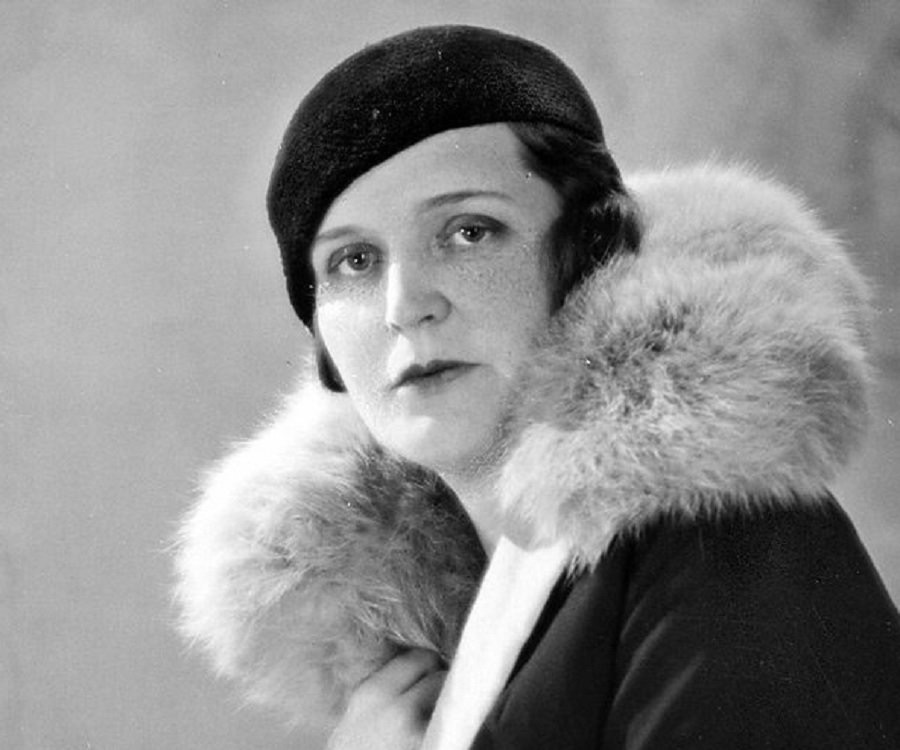
Germaine Tailleferre

The coverage – or lack thereof – of women composers on radio and tv broadcasts and in concerts is a continual preoccupation. Earlier this year, Radio Three devoted one day – yes, a whole day! (International Women’s Day in fact) – to music by women composers. To be fair, the station also ran features on living women composers as part of the Composer of the Week series, and there were other programmes to complement the broadcasts on 8th January. But tune in to the Radio Three Breakfast programme on any given day and you’ll be hard put to find many works by women on the playlist.

If women were considered equally as capable as men in work, the arts and everything outside of family life then there would be no need to have specific events to celebrate our achievements or validate our work. It depresses me write this, but sadly in 2015 this still is not the case.

In response to The Spectator article, the pianist Danny Driver, who has himself recently recorded music by Amy Beach (USA), Dorothy Howell (English) and Cécile Chaminade (France), suggested I compile a list of women composers, along the same lines as the list of British pianists I compiled earlier this year in response to another ignorant article. When I posted a call for suggestions on Facebook, I was deluged with names of women composers, living and dead, well-known and obscure, together with many comments, from men and women, declaring a passionate interest in this subject, and a total disdain for The Spectator article and its author.

Ultimately, of course, the gender of the composer shouldn’t matter and we should simply celebrate music and take pleasure in playing and sharing it. To this end, I’d like to quote from a post by a pianist colleague which expresses very eloquently how we should approach music:

We cannot change history and blaming our circumstances on it won’t change the present. Can we instead turn our attention towards inclusion, admiration and respect towards others instead of perpetuating a world of exclusion, comparison and separateness? 

I choose the music I play and listen to not because of the person it was written by but because it improves my quality of life. It challenges me, brings me joy, makes me ask questions and allows me to discover something new about our world. 

Can we change this conversation, which more often than not turns in to argument, to cultivation and continued celebration of human endeavor and joy? 

Can we remind ourselves that music bypasses boundaries, walls, beliefs and opinions and can we allow it to connect humanity regardless of what gender? [EM]

Women composers – a very incomplete list:

Hildegard of Bingen, Clara Schumann, Cecile Chaminade, Germaine Tailleferre, Louise Farrenc, Amy Beach, Grażyna Bacewicz, Roxanna Panufnik, Anna Magdalena Bach, Fanny Mendelssohn, Cheryl Frances-Hoad, Jenni Pinnock, Alison Wrenn, Judith Weir, Judith Bingham, Rebecca Saunders, Tansy Davies, Sally Beamish, Elizabeth Maconchy, Alissa Firsova, Kerry Andrew, Olga Neuwirth, Thea Musgrave, Elizabeth Lutyens, Sofia Gubaidulina, Betsy Jolas, Chaya Czernowin, Liza Lim, Kaija Saariaho, Laurie Anderson, Meredith Monk, Galina Ustvolskaya, Lera Auerbach, Sadie Harrison, Karen Tanaka, Lili Boulanger, Jocelyn Pook, Imogen Holst, Ethel Smyth, Joan Trimble, Margaret Hubicki, Lilian Elkington, Ruth Byrchmore, Dobrinka Tabakova, Elizabeth Ogonek, Madeleine Dring, Mary Plumstead, Diana Burrell, Debbie Wiseman, Eleanor Daley, Angela Morley, Phyllis Tate, Elizabeth Poston, Grace Williams, Liza Lehmann, Cecilia MacDowall, Claude Arrieu, Rebecca Clarke, Pauline Viardot, Janet Graham, Lotta Wennäkoski, Helen Eugenia Hagan, Deidre Gibbin, Jennifer Higdon, Barbara Strozzi, Elo Masing, Litha Efthymiou, Helen Grime, Stef Conner, Nwando Ebizie, Rachel Porter, Joanna Marsh, Unsuk Chin, Freya Waley-Cohen, Eleanor Alberga, Sally Whitwell, Errollyn Wallen

In fact, this list only scratches the surface, and as a colleague of mine commented, “the list of accomplished women composers with international recognition is so long that to list some or even a lot is to leave out many”.

I am pleased to see works by women composers reasonably well represented in the Trinity College of Music graded piano exam syllabus.

For a different angle on this discussion, do read this most interesting article The ‘Woman Composer’ is dead

Guest post by Rolf Dragstra

The name that can be named

Is not the right name

The way that can be told

Is not the right way.

Laozi

My older son must have been about five years old, when we were riding on a 43 double-decker bus from Highgate Station down the Archway Road. Its sides appeared to be rigidly converging towards the bridge still far below, whose high arch, once having given the road its name, now looked like a tiny loophole hovering over it in the distance. “That’s where we’re going, through there”, I pointed out. “But the bus can’t through there”, he exclaimed, “it’s too small!” Luckily, another red double-decker, the 134, was just overtaking us at the bus stop, and I said: “Watch that one, Adam, it may well go through down there before we do!” And his eyes followed the bus now quickly diminishing in size while descending – eventually slipping way below through the arch, to complete the experiment…

Our bus, taking in lots of passengers, had just about stopped long enough to make this observation possible. By that time, at least subconsciously, my son must have already started to register the shrinking size of a person or a ball or a car moving away from him. But I had alerted his consciousness by pointing towards the tiny arch below, made him aware of a peculiar situation. He was about to become more aware of something he had learnt already. And it wasn’t me explaining it all to him that raised his awareness – it was Adam looking again: his eyes following the dramatically shrinking size of the bus ahead of us, guided by the converging size of the road, the “bridle and rudder” (1) of this experiment in perspective diminution. Looking afresh enabled my son to create a better balance between what he had seen and was seeing now: that apparent sizes continuously shrink and expand very much when things, including ourselves, are on the move.

For all animals, including ourselves, learning is a subconscious process. It starts long before we become aware of it, before we learn to speak, let alone explain things. And becoming aware of ourselves, learning to think things through, does not put an end to it. It’s a lifelong process. Even the eureka moments of our conscious discoveries, often inspired by a gulf of common sense emerging from our memories, have to sink in, as we say. This process of embedding takes time – especially if academically acquired knowledge appears to contradict common sense and past experience…

At any point in our lifetime, the part of our knowledge, which we are, have been, and will become aware of, only forms the tip of an iceberg, or better: a huge mountain forest… First of all, we should become aware of, and respect, that giant mountain on whose shoulders we are standing. And the roots of all its trees are out there. The information is out there. Information is a natural phenomenon. Both the natural and the fabricated world pervade us through perception, through the use of all our limbs and senses. As the pioneer of perceptive psychology J.J. Gibson put it: Ask not what’s inside your head, ask what’s your head inside of (2) : the natural world.

Learning is always based on creating a balance between what we do or observe, and what we make of it. A balance between all forces involved: inside out, and outside in. It’s physical, not just about thinking straight, but finding out whether it works, doing it. Il faut le faire, as the French say.

Nature isn’t just the “environment”, as our eyes would have it, and as everyone seems to call it these days. We’re part of it: grew up in it. And our brain is part of it: a muscular organ, physically rooted in all corners of our body, like the crown of a tree. Thus we would appear to be walking trees, whose limbs and organs, like branches and leaves, are reaching out to as much as taking in what’s happening.

I am aware that the tree is only a metaphor. But I’m suggesting it might be a more appropriate one than that of a machine, or a computer.

There always was, and is, one way or another, a lot of computation going on inside the brain. Each time we cross a busy road, we have to estimate the acceleration of an approaching car; the better we get at it, the better we’ve learnt it – and the more casual we go on about it… But we’re not aware of these processes; and do not yet know how we perform all these computations: many ways lead to Rome…(3)

And let’s not talk about virtual worlds either; let’s stick to the real world, for once – not talk about artificial intelligence, but stick to natural intelligence, natural learning:

How do we learn to walk? How the cat, to pounce? How do we learn to swim, or a bird to fly? How does the child’s mouth learn to speak? How does the hand find the right measure of force? How did that girl learn to always put her fingers in the right place while bowing her violin with the other hand? How did I learn to tune pianos?

I had two parallel educations, as an academic, and as a craftsman. I studied philosophy and physics, history of science and the arts – while practicing the skill of tuning and maintaining pianos which my father had passed on to me. Trying to find a balance of touch and tone on those instruments, while trying to maintain a balance of the two strands of my education, wasn’t always easy, but personally rewarding.

At the time of the Archway Road bus ride with my son, when my third education into becoming a father was already in full swing, I was doing research on Renaissance perspective, and was therefore intrigued by Adam’s initial rejection of what linear perspective was all about. Shortly after I got involved with this subject, pondering over Leonardo da Vinci’s Last Supper, I had realised that there was an analogy between scaling and creating the geometry of a visual space, as surveyors and painters were doing, and scaling an acoustic space, as I was doing every time I tuned a piano.

My academic qualification hasn’t made much of an impact on my professional career: bringing up my sons, and, much more so, curing all those ill-maintained pianos in this country, hasn’t left much time for research, writing or publishing. But more recently, a customer of mine whose old Schiedmayer upright piano is in my care, gave me an article published in the Journal of Neuroscience, 29/8/2012.

Julija herself is working in the field, and she told me it contained the first piece of pioneering neuroscientific research on piano tuners.(4)

The research, based on acoustic experiments comparing the performance of piano tuners – differing in years of experience – “with controls matched for age and musical ability” demonstrates that particular parts of the brain are activated, moulded and enlarged during and in relation to years of tuning practice: The “psychophysical task” of piano tuning results in the creation of “precise sound templates”, “encoded and consolidated into memory over time in an experience-dependent manner.” (5) This process of learning is compared to that of taxi-drivers, who, while obtaining and consolidating their spatial knowledge in years of driving, create templates of maps shaping regions of the brain very close by. (6)

Acoustic navigation of tuners within an octave, memorising and comparing the speed of harmonic vibratos created by different musical intervals, is compared to spatial navigation in a jungle of roads. In both cases, the memory bank built up over the years appears to be located in the hippocampus. This comparison of spatial and acoustic navigation took me back to my realization of the analogy between perspective and tuning: scaling the visual, and scaling the acoustic reality. (7)

The result of this research confirms the physical and largely subconscious nature of learning. Although piano tuning seems to be a rather quaint and highly specialised activity, it is, like any other art, definitely embedded in the roots of natural learning. Experience remains the ultimate judge of your work, the routine completion of which does not ask for conscious intervention, unless a problem arises. Empty that head: let ears, hands and memory do the talking. Most communication is still non-verbal…

But the article in the Journal of Neuroscience only looks at what’s inside the head, not what the head’s inside of. There is no mentioning of the cooperation, the creation of a balance: between the ears; the hand of the tuner turning that crank firmly, but very slightly; and the located parts of the brain involved in the process. Only practice makes perfect – but the practice is not investigated here. It’s not about the process, but about its results. But, as Bertolt Brecht’s reading working man asks:

Caesar beat the gauls

  Did he not at least have a cook with him? (8)

The limitation to evidence that can be located in the brain may come with the territory. Yet for the sake of future research and our underlying understanding of reality, it may be wise to look for, and question its philosophical premises – especially if they turn out to be not part of the solution, but part of the problems and traps that are being created. What if Descartes’ dictum: “I think therefore I am” will neither allow us to understand the nature of our existence, nor the process of learning? What if the true nature of the beast cannot be merely understood as a cognitive process?

What if the balance of all agents involved was at the root of natural selection itself?

The agents here not understood – as in Peter Kropotkin’s somewhat romantic theory of mutual aid (9) – as creatures or persons working together; but as perceptive organs, or even tiny integral parts of these, cooperating with their natural surroundings: obtaining, processing and exchanging information. It’s out there: it’s not all happening inside heads… Nature produced an ecological niche filled by the brain. And nobody, no brain, nothing became what it is on its own, not even a “selfish” gene.(10) As everyone else, as George Bernard Shaw and H.G. Wells, Charles Darwin was a child of his age. He was well aware of the difference between his concept of “natural selection” – in the context of aeons of evolutionary change; and its ideological misunderstanding – in the context of socialisation and economic competition. “Survival of the fittest” became the metaphor for individual and social success, a principle of education, a philosophical principle: “the way of the world”… Darwin himself did not escape the influence of this abuse of his concept – nor do we, still tied up in the same rat race, long after the decline of the British Empire. (11)

To sum it up: at some point “competition” was identified as the engine of natural selection. Yet any working engine is based on a well-balanced interplay of all its vital parts. Competition itself is, on a deeper level, always based on cooperation…

Metaphor and formula: no scientist, let alone the rest of us, can do without either of them. And when there are not many estimates, rules, equations, there will be all the more metaphors… We need them both, balanced; and apply them both in the right way…(12)

The clockwork was once what the computer is today: they tried to apply it to everything. It was the pinnacle of mechanical engineering in the Middle Ages, and was soon to be used to simulate all sorts of physical activities and operations: by breaking them up into little segments of linear and circular movements. The piano action, for example, is a set of 88 clockworks in a row, simulating the action of hitting the strings of a harp with hand-held little mallets.

Classical mechanics with its mathematical framework laid foundation to physics as a science. The planetary movements were to be described as those of a clockwork wound up by its creator, and eventually, even human perception and thought processes were described in a mechanical fashion. (13) When we get too good at something, we keep using the same recipe, the same metaphors: it’s like a progress trap…(14)

But our brain isn’t a calculating machine – it’s a living organ. And nature isn’t a factory, nor is a hospital a business, or a university a chicken farm, producing degrees like eggs: all these understandings, or misunderstandings, of reality are based on ridiculously false premises. But beware: the ridiculous will become the dangerous, once we stop laughing, and the money is allocated to put the wheels in motion…(15)

“Cogito, ergo sum”? I can feel my heart beat; I sing, I dance, I tune a piano: that’s also how I know I’m around. And all the while, Nature still makes a lot of common sense – probably most of it; and animals and children, from a very early age, are partaking in it…

As a piano tuner, I am inclined to use the term of resonance to describe the balance created in the learning process: all agents involved acting in resonance – not necessarily an acoustic resonance, for that matter.

Something comparable to the power of resonance could strengthen, shape and mould particular parts of our body, when learning a skill: muscles, organs, nerves, the “medial temporal lobe” or the hippocampus.(16) Or even much smaller vital parts…

I am a biased layman, of course – but I will throw my hat into the ring, anyway.

And it wouldn’t make me wonder if this did not just apply to the navigational skill of taxi-drivers and piano tuners – but to all skills we, like all other creatures, pursue with a vengeance. They have been, are and will be shaping our mind and body.

Like the tune played on a fiddle, or a temperament put on the scale of a piano:

We are making ourselves up as we go along, always have been, and always will be.

And what the scientists investigating my skill have impressively demonstrated is that we have to give ourselves time, allow for the information we process – including all we learn academically, I would add – to sink in: take root in the backhand of our memories; memories also of all the mistakes we made, without whom we would not learn anything. It all happens over time, “in an experience-dependent manner”. “Experience is the mother of wisdom”, says Leonardo. (17)

With so much useless or misleading information bombarding us these days, whether “science, non-science or nonsense” (18), we can’t be mindful enough. My father’s soft-spoken warning is still ringing in my ears: “Some never learn, others later still”…

Notes:

1) Leonardo da Vinci, Treatise on Painting:

“Perspective is the bridle and rudder of painting.”

2) James J. Gibson, The Senses Considered as Perceptual Systems, Boston 1966, p. 21; and W.M. Mace, James J. Gibson’s strategy for perceiving: Ask not what’s inside your head, but what your head’s inside of, in: R. E. Shaw & J. Bransford (Eds.), Perceiving, acting, and knowing, Hillsdale, New Jersey, 1977.

3) And Neuroscience has taken the lead in exploring them: Stephen Pinkers How the Mind Works, 1997, was and still is a revelation.

4) Sundeep Teki et al., Navigating the Auditory Scene: An Expert Role for the Hippocampus, in: Journal of Neuroscience, 29/8/1912, pp. 12251-12257.

5) Ibidem, p.12251

6) Maguire et al., Navigation-related structural change in the hippocampi of taxi-drivers, Proclamations of the National Academy of Science, vol. 97, USA 2000, pp. 4398-4403.

7) It was the late Prof. E.H. Gombrich who pointed out the limits of this analogy to me: There are no octaves in optics”

8) Bertolt Brecht, Fragen eines lesenden Arbeiters, Moscow 1936. Brecht is in exile in Denmark at the time.

9) Peter Kropotkin, Mutual Aid: A Factor of Evolution, London 1902

10) Again, a metaphor introduced in 1976 by the young Richard Dawkins, which may not have been the best choice for what he was trying to say. Or, as Andrew Brown, The Science of Selfishness, 22/12/98 (Salon, book review) puts it: “Selfish”, when applied to genes, doesn’t mean “selfish” at all. It means, instead, an extremely important quality for which there is no good word in the English language: “the quality of being copied by a Darwinian selection process.” This is a complicated mouthful. There ought to be a better, shorter word—but “selfish” isn’t it.

11) Less than the first two, Darwin also shows a certain affinity to the ideas of eugenics, which were quite popular in Britain and other parts of Europe and the United States at the time…

12) Around 1800, when the triumphs of experimental physics are popularizing the scientific endeavour around Europe, the German writer, playwright and publicist Heinrich von Kleist put it this way:

Metaphor and formula: those who understand both of them are small in number – they don’t make up a class.” In a distich, musing about gravity, he observes the stability of a stone arch standing the test of time: “because all stones want to fall together”… Poetry – of the romantic period! – isn’t always “romantic”: the metaphors of poets observing nature are often much more precise than those chosen by scientists themselves…

13) The mathematical framework of Classical Mechanics is Analysis, as devised by Isaac Newton and Gottfried Wilhelm Leibniz; the eminent French mathematician, physicist and astronomer Pierre-Simon Laplace imagines God as the great clockwork custodian, and the German philosopher Immanuel Kant, in his Critique of pure Reason, analyses the cognitive processing of perceptions in metaphors borrowed from his thorough understanding of Newtonian mechanics and its mathematical foundation: the result almost reads like the action of a film camera at work – long before the actual existence of such a device…

14) Ronald Wright, A Short History of Progress, Edinburgh 2006.

15 E.H. Gombrich, On General Knowledge, in: Ideas and Idols, Oxford 1979.

16) Sundeep Teki et al., p. 12256

17) Leonardo da Vinci, Treatise on Painting

18) Martin Kemp, Science, Non-Science and Nonsense: the Interpretation of Brunelleschi’s Perspective, in: Art History 1, 1978, pp. 134-61

Rolf Dragstra was born in 1952 in Germany. His father was a piano master builder, with a workshop in which he overhauled and restored pianos and other keyboard instruments. That is how and where Rolf picked up his first tools and tricks of the trade, alongside academic studies in physics, philosophy, history of science and the arts. During the 1980s he worked in Berlin as a piano tuner and technician, and author of radio dialogues. In the 1990s he undertook post-graduate studies on Leonardo da Vinci at the Warburg Institute, University of London. From 2000 to 2010 he worked as head piano technician in London’s oldest music shop (Yamaha Music, formerly Chappell of Bond Street). Now self-employed as a busy piano tuner and technician, he has also started writing again.


