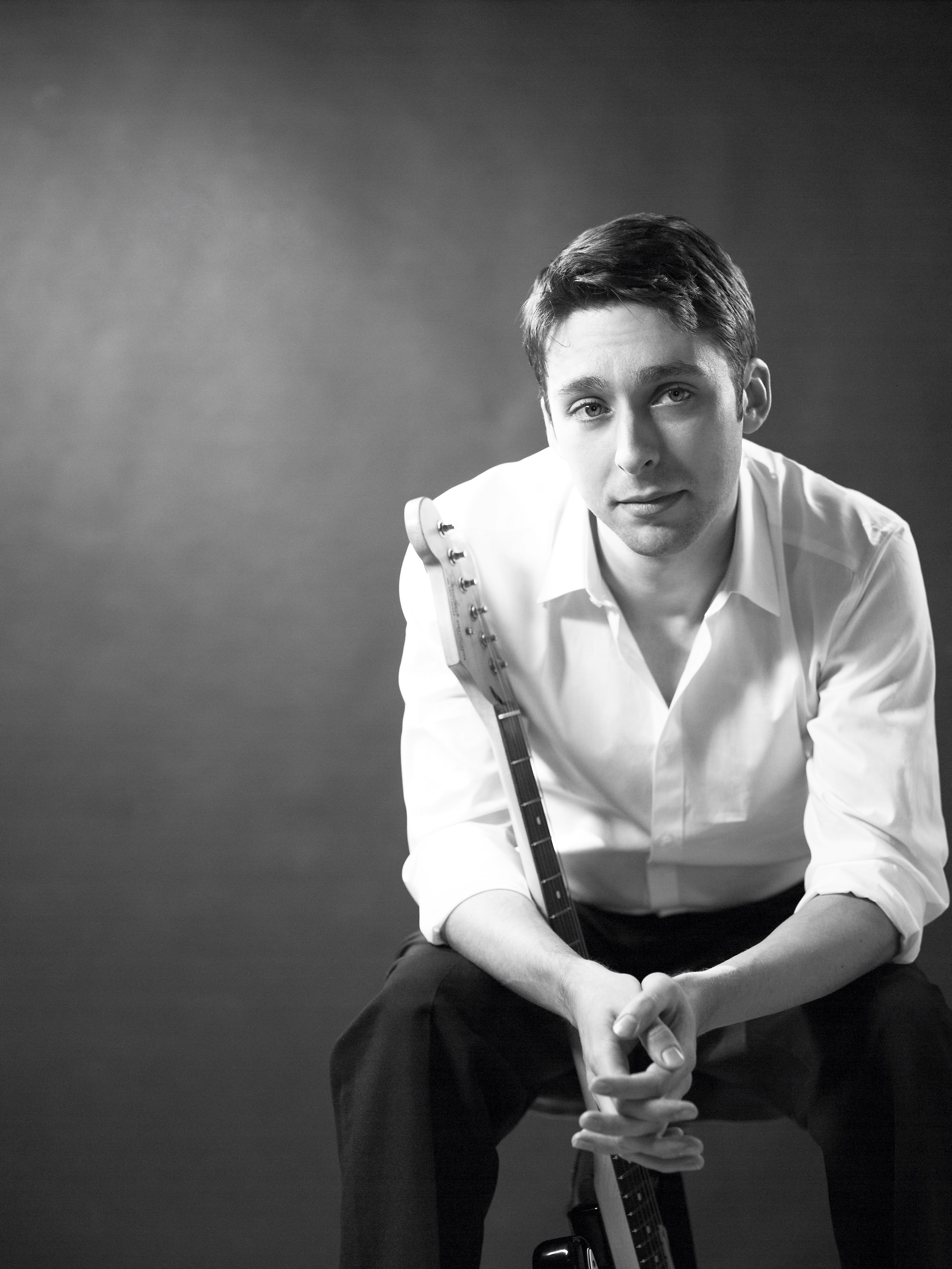
Who or what inspired you to take up composing, and pursue a career in music?

I was obsessed with music as a teenager so I never really considered any other career. At that age I was very dedicated to my instrument and so chose to do a degree in music performance. However, by the end of it I had realised that it is the creative side of music that engages me more than performing.

Who or what were the most significant influences on your musical life and career as a composer?

The first person that comes to mind is Christopher Fox. He was a tutor of mine while I was doing my MMus. He encouraged me to focus on the music that I enjoyed and not worry about musical trends and what other musicians were doing. As my career has developed I have found myself becoming increasingly interested in small ensembles/solo instruments and sparse, understated music and this has been reflected in my compositions. I love delicate piano music so I really enjoy the work of the Impressionists. I also have a soft spot for the music of the film composer Thomas Newman. Shostakovich’s string quartets are particular favourites of mine but I have to be in the right mood to listen to them! The minimal textures he created with pedals have certainly influenced my own work. Of course there are endless composers I like but these are the ones that first come to mind. Lastly, I would say my father; he is a painter. Being someone who has worked in a creative industry, he has been able to give me some invaluable advice over the years.

What have been the greatest challenges of your career so far?

Although occasionally inspiration strikes and I write a piece without too much effort, the vast majority of the time it takes a great deal of hard work. I would say the greatest challenge I have faced as a composer has been sticking at pieces when my creativity is at a low point. It is very frustrating when, after spending weeks struggling to develop a small musical idea, I decide to scrap 90% of it and take the remaining 10% in a completely different direction. Many times I have found that leaving the piece for a few months can help, but there have been some ideas that have been an uphill struggle all the way. Of course, it is worth it when they are finally finished.

What are the special challenges/pleasures of working on a commissioned piece?

I have done commissions where the brief has been extremely specific and it has taken many re-writes before I was able to even understand what the person who commissioned it wanted. This can be even more challenging when the individual doesn’t know what they want and the only feedback they give involves vague unmusical descriptions and a lot of hand waving. However, I have also had some really enjoyable experiences with commissions where I have been asked to combine several very different genres and have been able to do so successfully. French, flamenco, military jazz, anyone?

What are the special challenges/pleasures of working with particular musicians, singers, ensembles and orchestras?

There are several musicians I work with who have a very particular sound. It is always a pleasure bringing a piece to them knowing that their input will not only make it sound as good as possible, but will also give me new insight into my own music.

Which works are you most proud of?

There are a few compositions on my new album of which I am particularly proud. My album celebrates the music of Erik Satie 150 years after his birth. My piece ‘Sea-Bird’ was inspired by Satie’s uncle; an eccentric man who had a profound influence on the composer as a child. Both Satie and his uncle were known to have had bad tempers, swift mood swings and a childlike innocence and I think I captured this very successfully. Although a simple piece, I am also particularly pleased with ‘Knossienne No.1’ as it came out exactly as I hoped it would. I would also say ‘A Walk to Le Chat Noir on a Snowy Day’ as I am pleased with my use of quartal harmony.

Who are your favourite musicians/composers?

As well as the musicians I mentioned in question 2, I would also say Arvo Pärt, Charles Ives, John Tavener, Morton Feldman, Michael Nyman, Saint-Saëns, Prokofiev, Messiaen, Holst … all sorts really. There are also some non-classical artists whose music I enjoy; I love the music of blues musicians such as Stevie Ray Vaughan, Albert King, Tommy Emmanuel and BB King. I’m still discovering new music all the time; I have only just been introduced to the music of Stephen Montague.

What is your most memorable concert experience?

That really is impossible to answer as I remember different concerts for different reasons. I have seen orchestras play at The Royal Albert Hall and been blown away by their power and the atmosphere of the venue. Likewise, I remember seeing the Borodin Quartet at the Southbank Centre and being very impressed by the delicacy of their playing and the intimacy of the experience. However, I have also seen many weird and wonderful performances that were memorable for other reasons. One of the most memorable performances I have seen in recent years was a comedy act called ‘Mr. B The Gentleman Rhymer’. Although not ‘high art’, I have to say it was very funny and very memorable!

What do you consider to be the most important ideas and concepts to impart to aspiring musicians?

When you decide to be a professional musician it is because you want to do something you love. However, it is important that aspiring musicians learn early on in their careers that they will probably have to do some performing/composing/teaching that they’d rather not do in order to pay their bills. It is a bitter pill to swallow, but the earlier it’s done the better.

Where would you like to be in 10 years’ time?

I would like to be in a home that I own. I am a member of Generation Rent and I have to say that I am becoming increasingly concerned with the housing situation in London. It is starting to feel like a pipedream!
Nine talented composers receive grants of up to £10k to help them take more control of their careers

PRS for Music Foundation today (28 June 2016) announces the first nine composers that will be supported through the ground breaking Composers’ Fund established by PRS Foundation earlier this year to support the UK’s most talented composers to develop their work in the UK and overseas.

The nine composers receiving support are:

  • Cheryl Frances-Hoad – to promote her repertoire in North America with US orchestras, ensembles and choirs.
  • Gabriel Jackson – to develop his writing for instruments his compositions are not usually written for.
  • Gavin Higgins – to cover costs of using a studio space.
  • Joanna Lee – to cover costs of childcare, enabling her to compose full-time to write a new commission for BBC Proms and an opera for ENO.
  • Joe Cutler – to cover costs for sabbatical from full time university post, freeing up time for a major commission.
  • Ken Hesketh – to cover costs of recording his orchestral works spanning 12 years.
  • Laura Bowler – to cover costs for a commission and collaboration with Phil Venables.
  • Luke Bedford – to cover costs for research and development for a new opera and collaboration with playwright David Harrower
  • Luke Styles – to cover research and development for a Neo-Baroque opera.

The Composers’ Fund was created following PRS for Music Foundation’s research in 2014 exploring the challenges composers meet when controlling their career direction. The research highlighted that composers faced limited access to funding, low commission fees, lack of any support structure, pressurised working conditions and for established and mid- career composers in particular, a decrease in commissioning opportunities.

This first round revealed that composers require support for a broad range of needs, demonstrating the importance of an open and flexible fund like this. Across the applications received; 33% were looking for support to fund the writing of a new piece; 28% the research and development of new work; and 26% seeking support for work space, childcare, sabbatical cover, and equipment costs to give more time and space to aid composition.

Vanessa Reed, Executive Director for PRS for Music Foundation said, “Congratulations to the nine composers selected from this competitive first round of applications. We’re proud to be supporting these talented and distinctive composers, to take more control of their own destiny. I very much look forward to following their progress and seeing how this support enables them to develop their music and take their career to the next stage.”

Alison Holdom, Grants Manager Esmée Fairbairn Foundation said “We support the development of emerging artistic talent – usually through established arts organisations. Supporting composers directly is a new way of funding for us, and we’re grateful for the expert guidance of the PRS Foundation in directing our funding. We’re excited to see where this model takes us, and the composers themselves.”

Supported composer Cheryl Frances-Hoad said, “I am so thrilled and grateful to have been given this support by the PRS for Music Foundation’s Composers Fund. It will make a huge difference to my composing life.”

The PRS has partnered with up and coming classical music streaming service Grammofy to allow you to listen to a special playlist of works by the composers – find it here (create a free trial membership to access the playlist).

www.prsformusicfoundation.com


(Source: PRS)

m16_ltr_o-2

Originality

No one ever became original by trying to be original. Besides, originality is highly overrated. It’s an ephemeral thing which only really exists as a by-product. If you try too hard to grasp it you may only be left, at best, with a passing style, at worst, with trite novelty.

Whilst “people watching” at a wedding recently I patronisingly noticed that each of the guests (myself included) could easily be slotted into a category of wedding guest that I’d seen at about every wedding I’d ever attended. Yet, as often happens, once I got chatting to people and sharing stories I realised how facile my shallow categories were. Each “type” of person had a story that was unique in the telling and my quick reference label told me very little about who they really were.

Being original has nothing to do with the external elements we present to the world and everything to do with our internal story. When our internal authentically becomes our external we are functioning as artists.

Which musician doesn’t start out copying? In composing we begin by aping a style we love (I wrote two pages of a bad pseudo “Brahms” Piano concerto when I was 12) In Jazz we learn a favourite solo from a player we want to emulate. As performers we either absorb or reject the sound and style of those we hear.

This is a natural and healthy way to develop as an artist, but surely imitation doesn’t bode well for originality? This is where an artist can take a wrong turn.

If you learn a language the next step isn’t to subvert or manipulate that language, but simply learn to tell your story with it: your unique story that only you can tell. Yes, it may be true that in the process you may have to develop that language, or even extend it, but that will only be because the story requires it in the telling.

Today we create and recreate our music in a world where almost any style or interpretation can be accessed at the click of the ubiquitous mouse. Maybe the originality of a Haydn or a Bach was easier to nurture when the field of play was so much narrower. Such composers had relatively very little to influence them, but far from creating parochial music of its time, they wrote universal music for all time. 300 years later we keep listening, not because they were different but because they were themselves.

We hear Charlie Parker or Jascha Heifetz and of course we hear originality, but I suspect neither of them was seeking that. Rather they were finding their voice and in the process the language had to be developed a little further. As Thelonious Monk (allegedly) said “A genius is the one most like himself”.

If we ever meet at a wedding and get chatting, don’t try to impress me with something new or novel, tell me your story; it’s the most original thing you possess.


Simon Hester, pianist & composer

Simon Hester was born in Sheffield and studied at the Royal Academy of Music with Geoffrey Pratley and Jean Harvey winning many prizes for his performances both as a soloist and accompanist.

His career has covered a wide range of musical worlds, and his versatility is much admired in both classical and jazz repertoire. He gives recitals throughout Great Britain and has appeared at the Bath, Edinburgh and Exeter festivals and has toured throughout the UK and abroad with the highly successful show “All You Ever Wanted to Know about Opera”

Simon performs frequently with the violinist Carmine Lauri, and has also worked with the distinguished violinist Maurice Hasson having appeared with him in recitals throughout Europe.

www.simonhestercomposer.com


ON ACQUIRING A PIANO. A question might be: “how long do you want a piano to last?” That suggests a new piano is a better choice than an old piano. But of course there is no definition of “a better choice.” A newer piano with its more recent manufacturing techniques will likely last longer than the gorgeous sounding antique with the hand-carved legs. But we buy pianos for their sound so that’s the important part of the equation.

About brand names: I’ve heard about pianos made, for example, by Blüthner and how special they are. I think Brahms and Schumann preferred them as the piano of choice. But every piano is an individual. So auditioning instruments raises a fundamental essential question which is how do you decide? One answer is you don’t decide. Or “you don’t pick the piano. The piano picks you.” Brand name is of secondary importance if it’s important at all. And of course Blüthner makes wonderful instruments.

Playing and assessing pianos are two different activities with some commonalty between them. Meaning knowledge in the one area doesn’t necessarily convert to the other. Therefore patience is a virtue when selecting a piano and choosing an instrument is a learning experience. The longer we learn the more we know.

A month before I acquired the piano I now have, I visited Steinway Hall in London because, well, “How could I not go there?” So I went and played six wonderful instruments, each one mind bending in tone and action. My metric on that visit was: Could I play without getting distracted by tone or touch that wasn’t to my taste? A few seconds with each piano was enough to believe any of them was the best of the lot.

These were the instruments–6 great pianos that I could play one after another–that led me to know “what’s what” – the qualities I wanted in a piano. Because after playing 6 excellent pianos I saw patterns and I could describe them. Previously I could “feel” the patterns–I “knew” what I wanted  but couldn’t put them into words.

My ideal piano has

  • strength and character to be summoned rather than faults to be hidden.
    an expressive action connecting to warm, round sound.
  • presence at soft dynamics.
  • pitches that sustain and taper with the ineffable proportion of “perfect.”
  • an una corda pedal with a pronounced timbral shift.
  • clarity at high and low extremes of the piano.
  • overall presence rather brightness
  • general character to inspire exploration of sound and artistry as the reason to have a piano.

Acquiring a piano, whether new or used is a learning experience. The more time we take in the selection the more we learn about the pianos from which we’re choosing.

Mark Polishook Known as a diversely talented artist with boundary-crossing projects, Mark Polishook is a pianist, a jazz improviser, a composer, and a music technologist. He teaches in those areas to individuals and groups in his Leicester studio and to students around the world through Skype. In addition to individual and group teaching, Mark’ also available for master classes and artists’ residencies and for consulting on music and art-related projects and initiatives.

www.polishookpiano.com


A colleague of mine suggested that, as a concert reviewer, I should write an entry on Opinions….

Opinions are curious things. Personal and often highly subjective, commenting on a musical performance may simply be one person’s taste 636026058822784511-855769937_opinionsversus another’s. There was a time, not so long ago, when a critic’s or opinion-former’s comments could make or break a career, but in our social media-dominated age, now everyone can be a critic and offer their opinion on a concert. I really enjoy reading people’s tweets and Facebook posts immediately after a concert – there’s a wonderful immediacy as people share their reactions to what they’ve heard, and these opinions often feel natural and very spontaneous. Such people may not be “experts” or “professional journalists” but their opinions matter (in my humble opinion!) and they have as much right to express them as anyone else. When I write a review I do so with the conviction that my opinion is just one of many.

In the world of piano playing, people have opinions on everything – whether or not Bach played on the piano, whether Bach played on the piano should be pedalled, the correct use of tempo rubato in Chopin, which is the best Urtext score to use, what is the greatest make of piano – and opinions change with the times, drawing on performance practice, new scholarship, “traditional” ways of doing things and the wisdom (or otherwise) of teachers and mentors. We can form our own opinions about the music we are playing by listening to recordings, listening around the music (other works by the same composer, works by composers from the same period), going to concerts, reading about the music, talking to other pianists and musicians, and studying performance practice.  Learning to take on board or take with a pinch of salt a teacher’s opinion is an important part of our pianistic development: never be afraid to challenge a teacher’s view if you do not agree with it or do not understand it. Always bear in mind that there is often no absolutely “right way” of doing something: listen to the opinions of others and make your own judgement. If you play with conviction, your opinions about your music will come to the fore.

Frances Wilson (AKA The Cross-Eyed Pianist)

Understanding and coping with the stress of performance

We all have a tendency to post-mortem our performance after a concert, audition, or exam, focusing on the negatives and the errors rather than the good things, and in the heightened state of sensitivity that often accompanies such occasions, small errors can become huge. Of course it is important to review what happened and to reflect upon it, for this informs our future practising, but dwelling too long on mistakes is not healthy as it can  negatively colour our attitude to our music making.

Wouldn’t it wonderful if we could see into the future and predict what is going to happen in a performance? To be able to look ahead and figure out all the things that could go wrong, and try to work out what you can do to prevent those things from happening. We might call this a “pre-mortem”.

The “pre-mortem” technique of risk assessment was devised by research psychologist Gary Klein who found that “prospective hindsight” – imagining that the event has already happened – increases and improves our ability to correctly identify reasons for future outcomes. We can use this technique to help us prepare for stressful situations – such as performing – and a pre-mortem ahead of that potentially high-stress situation can ensure that rational thinking and reactions are available to you despite the inevitable physical and emotional side-effects of stress.

As musicians the single most important thing we can do to protect ourselves is good preparation. This is not simply practising at the piano but also recording and filming ourselves, playing to other people (teachers, friends, colleagues), playing other pianos, giving practise performances ahead of the big day, visualising the performance and imagining the sounds of the music in our head before we play, recalling previous successful performances, and engaging in positive, affirmative and mindful thinking. This is the musician’s “prospective hindsight” toolbox.

Managing our anxiety is another important aspect – and I refute anyone who says they do not feel nervous ahead of a performance, whether they are a world-class internationally-renowned musician or a young person taking Grade 5. Being nervous is normal; it is also a sign that you care about what you are doing. Understanding why we are nervous is also important: when asked, most people will respond that it is fear of making a mistake that fuels the anxiety.

Fundamentally, performance anxiety is fuelled by straightforward fear, and this is hard-wired into our physiology. There’s an evolutionary reason for this: when face-to-face with a predator, the body goes into “fight or flight” mode and releases stress hormones adrenaline, nor-adrenaline and cortisol, which cause certain bodily systems to shut down (for example, the digestive system, the libido, and the immune system) to focus on supplying the brain and muscles with much-needed blood, glucose (sugars) and salts to enable the body to react immediately: stand and fight that sabre-toothed tiger or flee from it as quickly as possible. The physical symptoms of performance anxiety – racing heart, sweating, nausea, trembling – are entirely due to the release of stress hormones, and one’s anxiety can actually increase by worrying about these symptoms.

In a performance situation, the body reacts in exactly the same way as in the sabre-toothed tiger scenario, and the physical side-effects of stress hormones flooding the body can be extremely unsettling when we are trying to be as calm as possible in order to play accurately and well. Many of the techniques suggested for alleviating performance anxiety are to do with “kidding” one’s mental state – positive affirmation (“I can do it!”), Neuro-Linguistic Programming, mindfulness – which can distract one’s mind away from negative thoughts and damaging self-criticism. There are also some very useful physical strategies, including deep-breathing (Pilates-style thoracic breathing) and power poses, which have been proven to reduce cortisol and increase testosterone. In addition to the unpleasant physical symptoms before the performance, many of us also suffer afterwards due the depletion of sugars and salts during physical effort, and the effect of the stress hormones leaving the body and the body settling back into its normal state. frustrated-piano-teacherThese symptoms, which may linger for a good 24 hours post-performance, can include tiredness, grumpiness or depression, and physical aches and pains. Personally, I have found these symptoms more unpleasant than those of pre-performance anxiety. That is until a pianist friend of mine, who is a medic at a leading London teaching hospital, suggested I try using an isotonic sports drink before and after a performance.



Sports people use isotonic drinks, which contain similar concentrations of salt and sugar as in the human body, to help fuel the body when exercising, and to replace electrolytes and carbohydrates which are depleted during exercise. These drinks (the leading brands are Powerade and Gatorade) have also been proven to help patients recover more quickly after undergoing complex colorectal surgery (surgery which puts the body under significant stress) resulting in reduced morbidity rates. I used Powerade before and after a recent concert and took note of the effects. Certainly, I didn’t feel as physically or mentally tired after the performance (c45 minutes of continuous playing of advanced repertoire), and by continuing to drink Powerade on the drive home after the concert seemed to reduce the post-concert slump and the aches and pains I usually experience the day after. An understanding of what my body was undergoing physically before, during and after the performance certainly helped too, and I think if more musicians appreciated the physiological effects of stress they may be better equipped to cope with the psychological side effects too: it largely is not “all in the mind”, rather it is “all in the body”.

Until fairly recently, performance anxiety was a taboo subject for most musicians. To discuss it openly may betray a weakness which might lead to loss of work and by default income. Today many of the leading conservatoires and music colleges have courses, workshops and practitioners in place to help students understand and cope with performance anxiety: the Guildhall School of Music and Drama, for example, offers a course in mindfulness for performers, while the Royal College of Music has a dedicated Centre for Performance Science. I believe that a better understanding of the physical effects of stress combined with a positive and sympathetic approach to the emotional and psychological effects will enable musicians to not only discuss performance anxiety more openly with teachers and colleagues, but also put in place effective personal strategies to enable them to play with confidence, fluency, expression and vibrant colour.


Further reading

How to stay calm when you know you’ll be stressed – TED talk by Dr Daniel Levitin

Your body language shapes who you are – TED talk by Amy Cuddy

Science finds new way to overcome your performance anxiety


(Header photo from livescience.com)