
Who or what inspired you to take up the saxophone, and pursue a career in music?
My first memory of a wind instrument was during a choir rehearsal at school when a flautist came to play alongside us – I was absolutely mesmerised by the way the instrument sounded. After weeks of begging my parents, they eventually gave in and got me a flute and lessons. I remember that they bought me the cheapest flute in the shop (thinking that it was going to be a five-minute wonder) and that when I tried to play it the head joint would spin around, we soon realised the problem and took it back to the shop for an upgrade!
After a year or so I was keen to start playing a second instrument, my teacher at the time was an ex-military musician and owned many different instruments. Each week he would bring one for me to try, eventually after several weeks he brought a saxophone and it was love at first sight. He left me with just the mouthpiece to practice on and I continued to make squeaks on it for a whole week (I must of sent my family crazy). Shortly after I acquired my first saxophone.
Not long after this when I was 13 years old I left to study at Chetham’s, already by this time I was sure I wanted to pursue a career as a musician. At the time I had no idea about what this meant, only that I loved playing music and that this was what I wanted to do all day long.
Who or what have been the most important influences on your musical life and career?
First of all my family: both my parents are very sporty, my mum was twice world champion in slalom canoeing and an ex-olympian. They know what it’s like to be dedicated to something. This has been amazing because I don’t think that it’s always easy for non-musical parents to understand music as a career choice, they’ve always been so supportive. They’ve helped me to understand more about my physical needs as a musician and given much advice on mental aspects such as dealing with stress, anxiety and nerves, something that isn’t alway talked about enough.
I’ve been lucky to have had many wonderful teachers right from the beginning. I really do owe a lot to Chetham’s who lay down the foundations for everything and provided me with the exposure that led to my studies at the Paris Conservatoire. Every year Chet’s would take us to the RNCM’s annual saxophone day, during these events I heard Claude Delangle and Vincent David for the first time, who would both eventually become my teachers in France. My time at the Paris Conservatoire massively influenced my playing, pushing it to new limits and helped me to realise the saxophones potential as a serious classical instrument.
After my studies in Paris I returned to London, where I’ve just finished at the Royal College of Music on the Artist Diploma course with Kyle Horch who is an absolute inspiration. I feel that the combination of Kyle’s teaching and the college’s amazing support structure has really allowed me to find new depths in my interpretations and performances.
What have been the greatest challenges of your career so far?
When I first arrived in France at 18 years old, not speaking French and just trying to understand what was happening around me! This was a period where I went through many changes as a musician, but also the first time I was looking after myself. Thinking back it was quite a scary thing to do but it definitely helped shape who I am today.
Which performance/recordings are you most proud of?
It would have to be my first performance at the Wigmore Hall in 2016, not only am I proud of my performance but I feel that it was a real bench mark in my career that heralded the start of increasingly regular solo engagements.
Which particular works do you think you play best?
Perhaps the best way to answer is by considering the audiences reaction to my performances, works by composers such as Debussy, Mark-Anthony Turnage and Takashi Yoshimatsu have received powerful responses.
How do you make your repertoire choices from season to season?
Sometimes I’m requested to perform specific repertoire but when allowed to choose I’m very keen to find a balance between transcriptions and original works. Although the saxophone doesn’t have the same quantity of repertoire as some other instruments, we do have many fantastic pieces, that deserve to be better known than they are.
When deciding what repertoire to perform I try to imagine myself as a member of the audience. I think about what would make me want to come to the concert and always choose pieces that I genuinely really like and feel a strong connection with.
Do you have a favourite concert venue to perform in and why?
I have particularly enjoyed performing at the Wigmore Hall, St John’s Smith Square and Queen Elizabeth Hall. Above all I value the audience and their response to my playing, this is what really makes a venue for me.
Who are your favourite musicians?
There are of course many but I am a big fan of Emmanuel Pahud and Martin Fröst, I find their performances, creativity and versatility so inspiring.
What is your most memorable concert experience?
Winning the gold medal at the 2018 Royal Over-Seas League Annual Music Competition at Queen Elizabeth Hall, South Bank Centre.
As a musician, what is your definition of success?
A feeling of self-fulfilment whilst maintaining high levels of musicianship, communication with your audience and transmitting feelings and emotions. I believe that you are only as good as your last concert, therefore for me it’s about maintaining high standards repeatedly.
What do you consider to be the most important ideas and concepts to impart to aspiring musicians?
First of all never expect opportunities to just turn up out of the blue, be proactive about creating and finding new work. Be pleasant to be around, assume fully all projects you commit to and always strive to be better. Stay determined, there are always high and low points, believe in yourself and you capabilities. Don’t underestimate the need for rest, set aside time for yourself.
Where would you like to be in 10 years’ time?
Continuing to perform as much as possible in exciting places and alongside fantastic musicians.
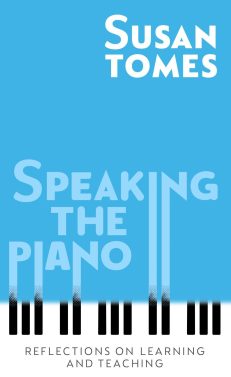 This is the fifth book by acclaimed Scottish pianist Susan Tomes, and unlike her previous books whose primary focus is on the exigencies of life as a professional musician – from ensemble playing and touring, coughers in the audience to concert attire, or dealing with reviews – this latest volume is a series of reflections on learning and teaching.





 The Cross-Eyed Pianist