image1(1)

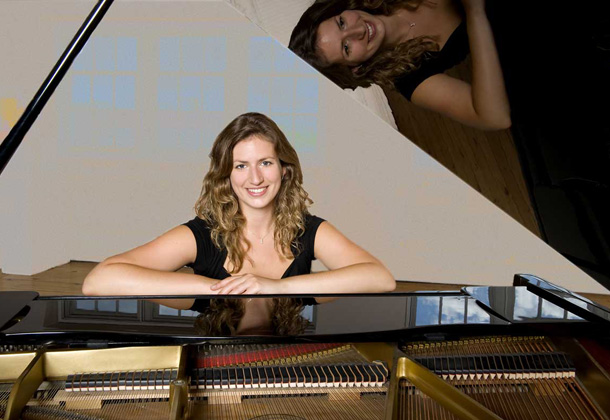
Who or what inspired you to take up composing, and pursue a career in music?

Music has always been a large part of my life.  My granddad used to play 7 instruments and work in radio, my Nana was a great pianist, my dad plays guitar and my cousin is a songwriter, so I was always surrounded by music. Playing music from a young age, I always wanted to play my own music and make things up rather than do my classical practice. Playing guitar, saxophone and piano gave me a diverse range of music to play and from which to draw influences.

It was only in my late teens that the prospect of pursuing a career in music became a real idea that would never leave me. My dad being a cinematographer meant that I was always going on set from a young age, so that, plus music, is probably where my love for film music came from, and from wanting to know more about the relationship between music and visual elements.

Who or what have been the most significant influences on your musical life and career as a composer?

My family have played a vital role in my musical life.  If it wasn’t for their constant support and belief in me, then I might not be doing what I love today. I got my break into the film music world working with and alongside composer, Ilan Eshkeri, working my way up as an assistant then to additional composer where I then met more composers on different projects. Through this I was able to learn a variety of skills required to succeed in this industry.

It’s important to have a mentor to offer advice and guidance. I definitely learnt the art and skill of film music writing from Ilan; also from film music producer Steve Mclaughlin.

What have been the greatest challenges/frustrations of your career so far? 

One of the greatest challenges so far would be taking the step away from working as an additional composer on larger films under composers to focus on my own composing career. It didn’t happen overnight, it was a gradual process over a few years. Film music is very much a service industry and as a composer, you need to be willing to adapt and shift your music style to accommodate each particular project. The key thing to remember is that the film is the most important thing, so being able to maintain a form of musical language that is true to one’s self whilst being able to accompany the visuals perfectly can sometimes be difficult, especially under the frequent tight time constraints that occur.

What are the special challenges and pleasures of working on film and tv scores?

The greatest challenges in working in film is to remember that composing is really only a small part of the job.  You need to understand film and how to help tell the story alongside the images with which you are working . You also need to be accepting to the constant changes that might be asked of you and to be made in the music you are writing.

Working in film is all about collaboration, either with the director, producer or another composer. This can be such a rewarding process and hive of creativity. I am always blown away in how a particular scene from a film can be changed so much by the music. The pleasure comes when you know that you have got it right and the two art forms are working seamlessly together.

Of which works are you most proud?

Alongside my debut album PASSAGE that took about 3 years to write and release, I am most proud of the score I wrote to a documentary called ‘Three Identical Strangers’. I had a tight budget so resources were small but this forced me to think of different ways to achieve an immensely cinematic score. It was also probably one of the hardest films I had worked on. Tim Wardle, the director, knew exactly what he wanted which made the process so much easier and by the end we both had a clear vision of what we wanted to achieve in the music.  This is all a composer can ask for.

How would you characterise your compositional language/musical style?

I am classically trained but I like to combine a lot of electronics in my writing with more classical instrumentation. I feel that my writing style pulls me between smaller more intimate emotional music to then much larger, epic styles of music. My album PASSAGE touches on a line between the two, interspersing the more euphoric pieces with intimate solo piano works.

How do you work? What methods do you use and how do ideas come to you?

Most of my initial ideas will start in their simplest forms either in my head or on the piano. Other times an idea can be inspired by a sound or a rhythm, depending on the kind of music I am writing. I love to record a lot of found sounds and turn them into instruments using a sampler such as Kontakt,, making something unique and new.

Sometimes I can be working on a piece of music or cue to a film and be so focussed that 5 hours can slip by in a blink. It’s only when you take a break and listen back that I sometimes think, “how did I do that”?!

Who are your favourite musicians/composers?

Growing up, I listened to a large variety of music but it was listening to the music of Hans Zimmer (most notably his score to ‘The Last Samurai’) that got me interested in film scores, then film composers like Thomas Newman, Brian Tyler, Alan Silvestri, and the choral work of Morten Lauridsen and Eric Whitacre. I am also very inspired by more minimalist composers such as Michael Nyman, Phillip Glass, Brian Eno, The Cinematic Orchestra and Nils Frahm, to name a few.

As a musician, what is your definition of success?

Success to me is doing that which you love for a living and enjoying every minute of it. Music was my hobby and is now my career.

What do you consider to be the most important ideas and concepts to impart to aspiring musicians?

Try not to compare yourself to others. Everyone has their own path so it’s an impossible ideology that one composer’s path could be compared to a path of another composer. Try to enjoy the ever-changing road that lies ahead, there is no need to rush. I am naturally quite an impenitent person, so there have been times where I have had to tell myself to take a step back and reflect on my own achievements.

What next? Where would you like to be in 10 years time?

I am about to start work on Season 8 of SKY ONE’s action drama STRIKE BACK with Scott Shields. In ten years time I hope to have written a few more solo albums as well as working on larger scale films and productions, a goal which I am sure is shared with many other composers.

Paul Saunderson’s debut album Passage is available now. More information


Paul Saunderson is a British film composer with a career spanning over 40 feature films and 8 TV shows. His work includes RAW’S latest award winning documentary THREE IDENTICAL STRANGERS (Tim Wardle dir.), Jim O’Hanlon’s 100 STREETS (Idris Elba + Gemma Arterton), Bill Clark’s heartbreaking true story STARFISH (Joanne Froggatt + Tom Riley) and most recently Justin Edgar’s gripping noir thriller, THE MARKER (Frederick Schmidt + Ana Ularu). Other works include collaborating on hit SKY One action series STRIKE BACK now in its 8th season, SKY Atlantic’s mystery thriller RIVIERA (Julia Styles) and MTV’s action adventure series THE SHANNARA CHRONICLES. Saunderson also wrote the music to Aram Rappaport’s debut feature RomCom SYRUP starring Amber Heard & Kellan Lutz and John Shackleton’s psychological gothic horror THE SLEEPING ROOM.

Read more

I first visited Dartington back in the mid-1980s when I was a student at Exeter, reading English with Medieval Studies. The Medieval element of my degree course included a module on Medieval art and my tutor group visited Dartington to see the splendid 14th-century Great Hall. I recall a special atmosphere on the Dartington estate and in the courtyard in which the Great Hall is an imposing feature. The place was imbued with tranquility, undoubtedly enhanced by the beautiful setting, but also a sense of purpose.

For four weeks during the summer, that sense of purpose is chanelled into making music as young professional and amateur musicians, leading artists and tutors come together at the Dartington International Summer School (DISS). The Music Summer School was founded in 1947 at Bryanston School, Dorset, by William Glock, and moved to Dartington in 1953. It has been host to some of the greatest musicians and composers, including Arthur Rubinstein, Igor Stravinsky, Imogen Holst, Benjamin Britten, Peter Maxwell Davies, Ravi Shankar, amongst many others, and continues to attract leading artists.

The Summer School arrived at a place which was already rich in innovation, experiment and vision. In the 1920s Dorothy and Leonard Elmhirst purchased the neglected 14th-century Dartington estate and set about restoring the buildings and regenerating the land. Their pioneering ‘Dartington Experiment’ saw the creation of a wealth of farming, forestry and education projects, and early initiatives included the progressive Dartington School, Dartington Tweed and later Dartington Glass. The place quickly became a magnet for artists, writers, poets, architects and musicians, and was a hub for creativity, innovation and learning. The Elmhirsts believed that people thrive best in an environment which nourishes the whole self and Dartington Hall Trust continues to promote this ethos with a broad learning programme including courses on the arts, ecology, food and crafts with an emphasis on cooperation, collaboration and ‘learning by doing’.

Now in its 71st year, the Dartington International Summer School sits comfortably with the philosophy of the Dartington Experiment: in the idyllic tranquil surroundings of Dartington Hall, musicians hungry to explore new musical landscapes come together to collaborate, create and learn by doing. Since its foundation, thousands of participants have shared in Dartington’s magic, from renowned musicians such as Imogen Holst, William Glock (the first Artistic Director), Peter Maxwell Davis, Nadia Boulanger, Richard Rodney Bennett, Anne-Sophie von Otter, Alfred Brendel, Natalie Klein, and Tamara Stefanovich (to name but a few) to keen amateur musicians who go to learn, be inspired to play at the highest possible level, mingle with other musicians and like-minded people, and thoroughly immerse themselves in its compelling and diverse community of performers, composers and thinkers. For many it is a wonderful musical “retreat”, and they return year after year. The summer school is unique in that it brings together amateur and professional musicians, particularly young professionals, who are taught by world-class artists (including, this year, Joanna Macgregor (outgoing Artistic Director), Tom Randle, Adrian Brendel, Skampa Quartet, Florian Mitrea and Sarah Gabriel). In addition to over 30 taught courses each week, there are more than 90 concerts and music-related events, with most taking place in the wonderful Medieval Great Hall. Each of the four weeks of DISS has a specific theme, including early music and piano (week 3, which I attended for a few days).

Everyone I spoke to during my all-too-brief stay at Dartington mentioned the “special atmosphere” and it is very palpable – yet also quite hard to explain! The setting undoubtedly helps, but there is something else, a sense of common purpose and intent, a desire for self-improvement, to learn, and forge friendships, the unifying thread of course being music.

Music is also a great leveller and at Dartington there is little sense of demarcation between amateur and professional players, no “them and us”, for we are all equal in the face of the music. Nor did I encounter any of the hero worshipping I have observed at other piano courses. Instead, there is a mutual appreciation and respect between students and teachers, and I observed some of the most inspiring and generous teaching in the workshops and masterclasses I attended. Florian Mitrea, a young Romanian concert pianist and a regular at Dartington, teaches in such a way as to give each student some useful nuggets to enable further independent practising/self-teaching, but also encourages the student to think in terms of personal artistry, intepretation and performance rather than simply focusing on technique. This approach is too often lacking in the realm of the amateur pianist and I felt Florian’s approach gave each student, regardless of ability, the confidence to explore their own personal approach to their music. Joanna Macgregor is an equally generous teacher, whose infectious energy and commitment resulted in some incredibly transformative playing on the part of the young professionals she was coaching.

The opportunity to explore other music is also a hugely important part of the DISS experience. One is not confined only to one’s chosen course and all the classes are open so that one can drop in on conducting, chamber music, percussion and singing. Learning from other instrumentalists is so important and gives a broader, more informed approach to one’s own music making.

dartington20summer20school1
A concert in the Great Hall

By 5pm a small queue has formed outside the Great Hall for the first concert of the evening (usually about an hour long). The concerts are open to the general public and it was very encouraging to see the Great Hall full for both of the concerts I attended (a fascinating Liszt lecture-recital by Florian Mitrea and Rev. Iain Lane, and Haydn and Beethoven trios by Trio Opal). There is a deliberate effort on the part of DISS organisers to ensure the local community is made to feel welcome too, and at next year’s summer school, in addition to public concerts, there will be a greater emphasis on participatory projects to bring people together, including listening clubs, family-friendly workshops and open choirs, initiatives by the incoming Artistic Director, Sara Mohr-Pietsch, who stressed the need to ensure those outside of the wonderful enclave of Dartington feel included.

sara-mohr-pietsch-dartington-2018-image-kate-mount-copy-crop
Sara Mohr-Pietsch

Talking to Sara in The Green Table, a friendly café close to the gardens, she expressed a strong desire to build on what Joanna Macgregor has put in place during her five-year tenure as AD, to remain faithful to the original concept of DISS, while also bringing fresh initiatives, including public masterclasses in the Great Hall, opportunities for conversations about music, including concert presentation and programming, and the listening experience, and the creation of daily ‘open space’ session within the course programme to give participants time to step back and reflect on what they have been doing, to generate new work, create taster sessions and curate their own time. With Sara’s own keen advocacy for new music, there will be a new course on composition, with Nico Muhly as composer in residence. Sara feels this will also reflect DISS as a “laboratory” where attendees can experiment, explore and collaborate in a safe space. With artists such as Iestyn Davies, Stile Antico, Dunedin Consort, Rachel Podger, Joseph Middleton, Tom Poster and Aidan O’Rourke on next year’s roster of artists, DISS 2020 promises to be busy, vibrant and inspiring.

Practicalities:

Course participants can opt to stay on site on a full-board basis, with meals taken in the White Hart next to the Great Hall. There is a choice of accommodation, which is allocated on a first come, first served basis. The meals at the White Hart are very good and there are other places to eat on site, including The Green Table.

Dartington is easily accessible by car off the A38 Exeter-Plymouth road. There is ample parking on site and participants are entitled to free carparking. Totnes is the nearest railway station (direct service from London Paddington).

Further information:

Dartington International Summer School and Festival website


Thank you to DISS staff for making me so welcome, to Damson PR for organising my trip, and to my piano friends Neil and Julian who have been urging me to visit Dartington for the past two years. I look forward to returning next year as full participant.

Better get practising……!

Piano playing shouldn’t be an olympic activity, yet players are regularly pitted against one another in international music competitions. Alongside this, is an ongoing argument about what are the hardest pieces in the pianist’s repertoire.

In his book ‘Play It Again’, Alan Rusbridger claimed that Chopin’s First Ballade was “one of the most difficult pieces in the repertoire”; it’s not, and taken alongside the Second or the Fourth Ballade, or indeed some of Chopin’s Etudes, it seems quite benign in comparison. Ravel’s Gaspard de la Nuit and Balakirev’s Islamey are also up there in the top 10 of “most difficult pieces”, along with Schumann’s Toccata, Alkan’s Concerto for Solo Piano, Beethoven’s ‘Hammerklavier’ Sonata, Messiaen’s Vingt Regards sur l’enfant Jesus, Ronald Stevenson’s Passacaglia on DSCH, Sorabji’s Opus Clavicembalisticum, Ives’ ‘Concord’ Sonata. Ligeti’s Etudes, and Boulez’s Second Piano Sonata. There are many more pieces from the core canon which would slot neatly in to the “hardest piece” category, not to mention contemporary works which can be impenetrable except to the most skilled and intellectually-acute pianist.

In a way, all this is relative, because each pianist has his or her own strengths when it comes to repertoire. There are of course some performers who seem to be able to tackle anything – the late Sviatoslav Richter is one example. He had an incredibly large and varied repertoire, running to some “eighty different programmes, not counting chamber works”, from Handel to Hindemith and he worked indefatigably to learn new pieces. The Canadian pianist Marc-André Hamelin is another example. In addition to the standard works, he has a penchant for the more esoteric or lesser-known corners of the repertoire and seems to positive relish the most finger-twisting works.

Young performers entering the profession seem to think they should be able to play everything and anything. Perhaps this is what concert promoters and audiences demand, and it is interesting to find many young performers coping comfortably with the complexities and athleticism of Islamey, Gaspard, Rachmaninov’s Third Piano Concerto, Liszt’s Transcendental Etudes and more.

Many people think the faster the piece the harder it must be, and audiences are often more impressed by flashy vertiginous virtuosity and piano pyrotechnics above beautiful sound or the ability to create a remarkable sense of communication and connection between performer, music and audience. I remember once showing one of my students a piece of piano music which consisted of just a handful of carefully-placed notes on a single stave. He was intrigued to learn that I was performing the piece in a concert the next day and declared that it couldn’t possibly be a concert piece because “it doesn’t look difficult enough”.

Too often we associate “difficult music” with concert repertoire, and while many pieces which are heard in concert are difficult, many are also well within the reach of the competent amateur pianist. (Indeed, no music should be “off limits” to anyone, though many amateurs are reluctant to tackle pieces they’ve heard in concert, believing, mistakenly, that this repertoire is the exclusive preserve of the pros.)

Very well known repertoire can be the hardest to perform because the music comes with a long heritage of previous “great” performances and recordings which can be stifling for the performer seeking to say something new, different or personal in the music.

maxresdefault
Just Before Dawn by Paul Burnell

“Easy” music presents its own problems too. Pieces such as the one I showed my student (‘Just Before Dawn’ by British composer Paul Burnell) may be comprised of only 24 notes, yet it must be voiced with care and thought to convey the composer’s message. Music like this offers the performer nowhere to hide, unlike the dark thickets of notes one finds in an Etude by Liszt for example. Music whose dynamic range is very muted is also challenging, but it can have a remarkable effect of encouraging very concentrated, careful listening by the audience, drawing them into the inner circle of the performer’s own special soundworld.

Repertoire can be very personal. Most of us choose to play music we like rather than music we feel we should be playing – though of course professionals may “play to order” to satisfy a promoter’s request. I have noticed a certain competiveness about repertoire within piano meetup groups (amateurs can be quite olympian when choosing repertoire!) which can be perceived as “showing off” and may intimidate less advanced players. There’s a lesson here – that one shouldn’t constantly compare onself to others and that one will enjoy one’s music and play better if one focusses on one’s own strengths. I have been guilty of this myself and it made me very unhappy for awhile. Why couldn’t I play Ravel’s Jeu d’Eau or Sonatine (both works which I really like) when others could? I realised that some people are just better suited, physically and mentally, to this kind of repertoire, and that maybe my own strengths lie elsewhere.

Your “hardest piece” may not be my hardest piece, and vice versa, and being accepting of our own capabilities and strengths is an important part of our musical and artistic maturity.


If you enjoy the content of this site, please consider making a donation towards its upkeep:

Buy me a coffee

Guest post by Marie McKavanagh & Julian Davis

Thoughts on Lot Music 2019: participants’ perspectives

Amateur pianists come from a diverse range of backgrounds. We are frequently viewed as benign mavericks, eccentric and obsessive hobbyists who spend many lonely hours detached from family and friends with a shiny wooden box containing hammers and strings. Because it is a solitary activity, we duly seek out the company of others who understand the compulsive nature of our pastime. Always on the look out for opportunities and safe places to perform the music we have learnt, we find places of pianistic sanctuary where we celebrate and reveal our musical triumphs, sharing our mistakes and aspirations in an unfettered and experimental manner, supporting each other with kindness, encouragement, technical solutions, musical ideas and compassion.

It was with these hopes and aspirations we attended Lot Music, a piano course for advanced and committed adult amateur pianists held annually in July over two consecutive weeks in the South of France. We had heard about it for a few years from friends who had previously attended and they felt we would enjoy the experience. It is now in its 21st year, organised by Anne Brain, a retired plastic surgeon, and held at Le Vert, a large hostellerie in the tiny remote village of Mauroux, owned by Bernard and Eva Philippe.  Anne leaves her piano there through the year, a well-maintained Yamaha grand, easy to play with a consistently beautiful clarity of tone and full range of sounds. Some participants also stay at Le Canel, a gîte located a few miles away from Le Vert.  Practice pianos are scattered around both sites, including one rather dangerously positioned in the wine cellar next to some fine French claret! The tutors for this year were Martin Cousin and Leon McCawley.

156360034

One of the joys of being a pianist is the endless volume and multifarious range of repertoire written for the instrument. There is available literature for all levels of skill, representative of so many countries, spanning over four centuries, illustrating all musical genres and magnitudes of composition. We played music written between the 17th and 21st centuries. We were two happy gangs of none adult participants in week 1, and another 9 in week 2. A few had persuaded their spouses and partners to join us, perhaps lured by the promise of superb food and hospitality, the swimming pool, the beautiful French countryside and the many moments of wonderful piano music.

What can we say about those professional pianists who offer us their time? They are away from their homes and families, prepared to live with and work with a group of diverse adult personalities, musical dilettantes from other professions with all the usual baggage of grown-up life experiences. We remain in awe of their pianistic skill and are grateful for their generosity.

LOt

Our tutor on the first week was Martin Cousin. His teaching was insightful, detailed, tenacious and always encouraging. He was a respectful and supportive advocate of our often unrealistic personal ambitions. Fundamentally, he never suggested any of our music should only be played by those with a professional training. There were tear-jerking moments for all us when we made technical and musical changes suggested, facilitating our fingers and opening up worlds of harmonic and orchestral sound previously not considered.

He had taken time to examine the scores we brought before coming to Lot. Much of it he had played during his career, but we were always amused when he told us he didn’t know a particular piece of music well, and then proceeded to sight read it accurately and beautifully! Most importantly, we experienced tremendous joy, fun and laughter through the week, and we shared two piano and duet repertoire in some performances.

Martin played two evening recitals during the week, treating us to Rachmaninoff’s Variations on a Theme of Chopin Opus 22, Chopin’s Sonata Opus 58, Rachmaninoff’s Variations on a Theme of Corelli and Prokofiev’s Sonata No 7, Opus 83. There is no room for inertia when playing this repertoire, and he served the music with complete technical security and artistry throughout. The audience were captivated by his range of sound and the triumphant and exhilarating virtuosity displayed. However, it was in the quieter more contemplative moments of the Chopin sonata and the Corelli Variations that we were witness to real musicianship, suspended in a beautiful and reverent sound world of hope and contentment. It was as good as it gets, and both recitals demanded stamina and poise in the ambient intense heat.

One participant compiled a collection of ‘Martinisms’, amusing us all at the dinner table with quotations from our lessons that were entertaining and insightful. One comment that particularly resonated was the suggestion about how to deal with a repeated passage in a piece of music; “it’s the same picture, but the sun is in a different place”. Wonderful imagery. In music, as in life, we should continually keep looking for where the light is coming from.

During the second week, our tutor was Leon McCawley. Like Martin, he was thoughtful, energetic and kind, and tremendously helpful in his coaching to a disparate bunch of pianists, all with our different ambitions and challenges. He was a fount of advice and guidance on a wide repertoire of works, and we enjoyed his gentle good humour and wit. All of us took away lots of sound advice, such as “get to really know the piano keys, they are your friends”. He very indulgently played some duets and duos after dinner with some of us, including some very impressive sight-reading of the Lutoslawski Paganini variations!

Leon treated us with two recitals, including a deliciously sparkling Haydn sonata (G major, Hob XVI/40), and an enthralling performance of Schubert’s C minor sonata (D958); in the second recital we enjoyed some rarely heard lovely Sketches by Hans Gál, together with Brahms’ Op 119 Klavierstücke, Schumann’s Abegg variations, and Chopin’s Polonaise-Fantasie, Op 61. Every performance was musically inspiring, exciting, beautiful and thought-provoking, and we felt extremely privileged to be such closely involved listeners.

So why do many of us continue to play piano as adults? We could bore you with the robust scientific evidence about how playing the piano maintains cognitive reserve and is a safe and intellectually stimulating hobby to entertain mature adults. But we won’t do that. Music is indeed a source of intellectual and emotional nutrition, a universal language crossing continents and cultures.

We continue to play the piano in adult life because it opens up the heart and re-calibrates the soul, realigning our lives in a way that helps us function with renewed enthusiasm and with the resilience needed to handle the vicissitudes in our professional and personal lives. We meet interesting people and make many real and meaningful friendships when we share music with each other. But mostly we express all that it means to be human when we play.

So many thanks again are due to both tutors, but special thanks are due to Anne Brain, without whom Lot Music simply would not happen. She masterminded and has run this wonderful French musical house party for over two decades, liaising with our hosts Bernard and Eva, who allow us to invade their home and kept us regularly supplied with excellent French food, aperitifs and fine wines. We shall be returning.

Lot Music website

Piano courses in the UK and Europe


Dr Marie McKavanagh grew up in a musical family where playing an instrument, singing and dancing were viewed as essential social skills rather than accomplishments. These were troubled times in Northern Ireland and the Performing Arts was one of the few areas of 1970s life to freely cross the political divide. At 17 she won a scholarship to Queens University, Belfast where she read Medicine. She continued her piano lessons with Nancy Patton-Scott at the Belfast School of Music during her undergraduate years, and has continued to have lessons and play the piano as a compelling and uplifting hobby throughout her adult life. She holds an LTCL in Piano Performance. She moved to Cheshire in the late 1980s and worked as an NHS GP in Nantwich for 28 years. She completed her MSc in Performing Arts Medicine at UCL in 2018 with Distinction and won the BAPAM award and the Dean’s nomination for her research into the cognitive functions of adult amateur pianists. She now works as a BAPAM practitioner at Philharmonic Hall in Liverpool, a freelance locum GP and an NHS England GP Appraiser. She is married to Dr Richard Leigh who works in Bolton A/E and flies biplanes when she is practising. They have two grown up children who remain the centre of their universe.

Julian Davis has played piano since childhood and passed the LRAM Piano Performer’s examination in the 1980s. He worked until recently as Professor of Medicine at Manchester University and Manchester Royal Infirmary, while remaining active as an amateur musician. He has regularly given recitals as a soloist, in 2-piano duos, and in chamber music ensembles, and has enjoyed recent recitals with violinist Simon Evans, cellist Eva Schultze-Berndt, and his sister, soprano Nicola Stock. He has taken part in masterclasses and workshops at Dartington Summer School in recent years with Christian Blackshaw, Steven Osborne, and Florian Mitrea. He currently has piano lessons with William Howard (pianist and founder of the Schubert Ensemble) in London.