An important new recording, ‘The Spirit of Love’, featuring chamber music and songs by British composer Alisa Dixon (1932-2017), will be released on the Resonus Classics label on 22nd August.

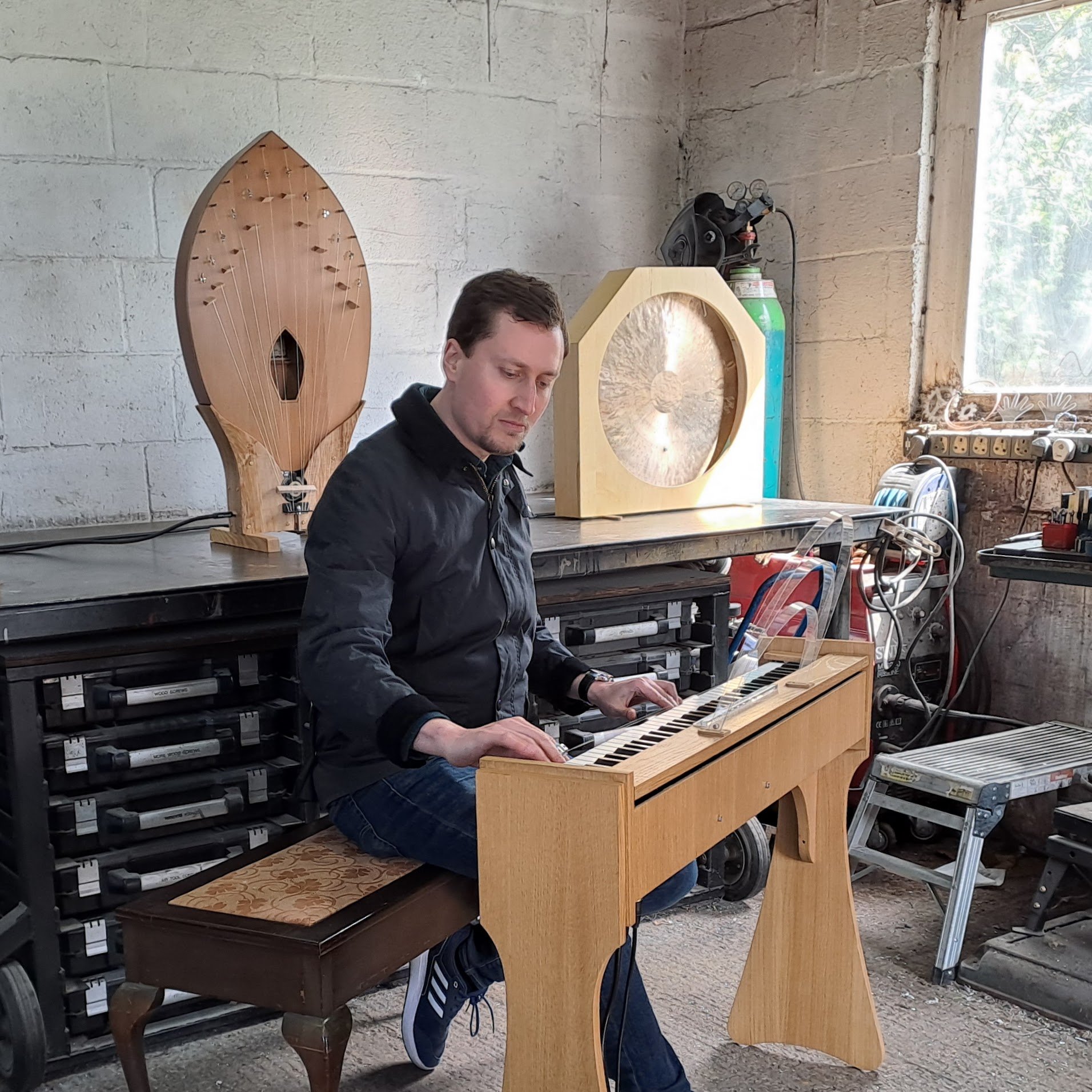
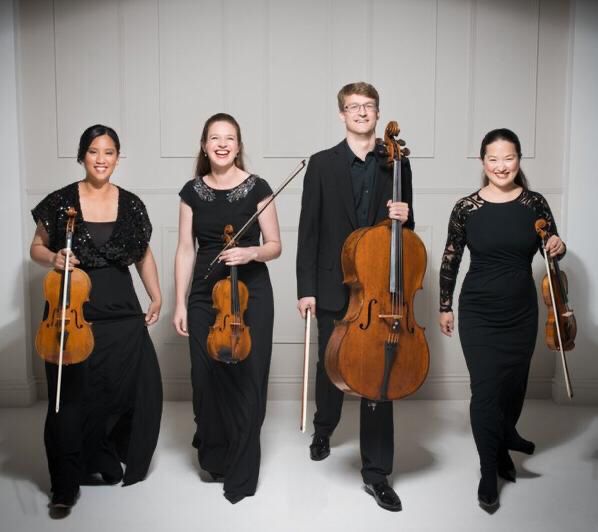
This landmark recording highlights Dixon’s chamber works, many of which have remained largely unknown, until now. With the combined talents of the Villiers Quartet, soprano Lucy Cox and ondes Martenot player Charlie Draper, this recording represents a vital step in rediscovering the depth and breadth of Dixon’s music.

Born in 1932, Ailsa Dixon began composing before reading music at Durham University, and later studied with Paul Patterson, Professor of Composition at the Royal Academy of Music. Her works include a two-act opera, several pieces for string quartet, songs, chamber music and instrumental works including a sonata for piano duet.

In July 2017, five weeks before she died, her anthem for choir, These Things Shall Be, was premiered by the London Oriana Choir at the Cutty Sark in London. This marked the beginning of a revival of interest in her music and has led to a host of new performances of choral, vocal and instrumental works in concerts across Britain

Hailed as a ‘stunning find’, with its ‘lush harmonies’ and ‘strange yet still beautiful dissonances’ (Nottingham Chamber Music Festival, 2024), The Spirit of Love gives the title to this recording – a selection from her most fertile period of composition in the 1980s and 1990s. One of the many works found in Ailsa Dixon’s manuscript archive after she died, these songs for soprano and string quartet were premiered posthumously at St George’s Bristol, where a spellbound reviewer for the British Music Society registered ‘a feeling that something special had just occurred’.
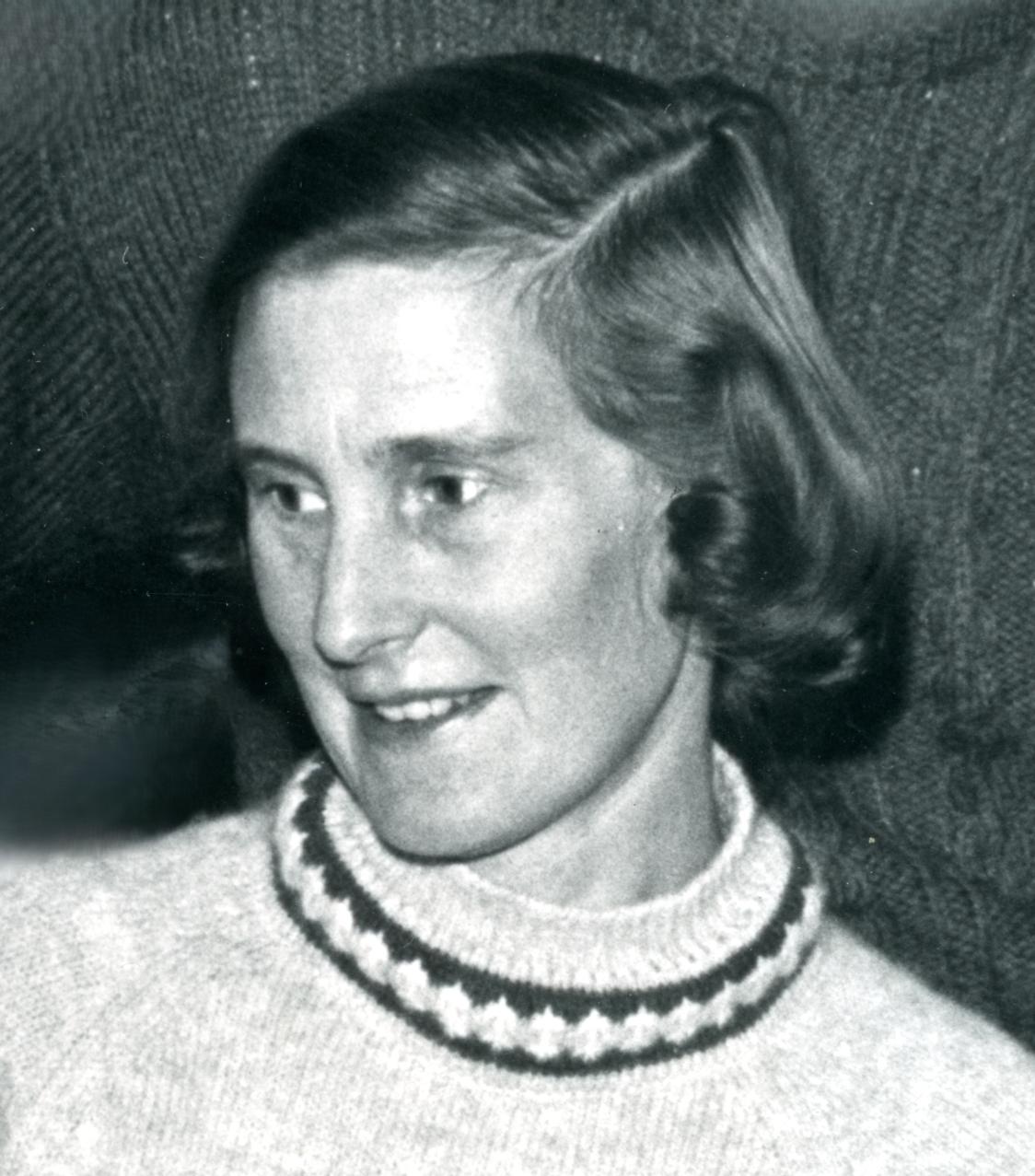
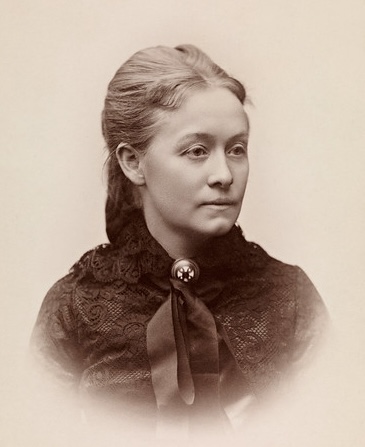
Ailsa Dixon

A collection of three songs for soprano and string quartet, composed between 1987-88, and originally commissioned through Dixon’s lifelong musical friendship with Irene Bracher, The Spirit of Love sets texts by Dixon herself, along with works by A.E. Housman and F.W. Bourdillon. The work was given its posthumous premiere in 2020 at St George’s Bristol by the performers on this recording.

Another distinctive piece is Shining Cold for soprano, ondes Martenot, viola and cello. This work is characterized by its haunting vocalise and uniquely explores the sonorities created by the soprano voice, strings, and the ondes Martenot, an electronic instrument famously associated with Messiaen’s Turangalîla-Symphonie. This work highlights Dixon’s innovative use of instrumentation and vocal expression.

Other significant works on this recording include:

The ‘lost’ Scherzo for string quartet. Written in the 1950s while Dixon was at Durham University, this piece disappeared for over half a century before the manuscript came to light after her death. The recording presents its first performance, 70 years after it was written. Its changes of time signature may show an early interest in Bartok whom Dixon cited in later life as an inspiration for his ‘elasticity of musical motifs’.

Sohrab and Rustum for string quartet. This ambitious, through-composed work from 1987-88 was inspired by Matthew Arnold’s poem of the same name, depicting the tragic encounter between a father and son in battle. The music is a vivid response to the poem’s human drama and atmospheric setting.

Variations on Love Divine for string quartet. Written in 1991-92, this is Dixon’s final string quartet work and an exploration of religious chamber music, perhaps inspired by Haydn’s Seven Last Words. Woven around John Stainer’s Anglican hymn tune, it explores themes from St John’s Gospel, the Incarnation, Nativity, Passion and Ascension, culminating in a vision of heavenly joy. The Villiers Quartet recently gave the work its first complete concert performance.

This is more than just a new album; the release of The Spirit of Love represents a pivotal moment for the rediscovery and appreciation of Alisa Dixon’s diverse and compelling chamber music – music which combines lyrical lines, adventurous harmonies, and a spiritual undercurrent, brought to life with vibrant intensity and finesse by the Villiers Quartet, Lucy Cox and Charles Draper. This recording offers listeners an insightful journey into the rich, previously under-exposed world of a significant British composer.

The project has received support from the Vaughan Williams Foundation, and the release of this recording coincides with the publication of Ailsa Dixon’s scores by Composers Edition, making much of her previously unpublished material available for the first time, thereby enhancing scholarly and public access to her complete works.

Scores of the pieces featured on the recording are available from Composers Edition. The album is released on the Resonus Classics label, on CD and streaming, on 22nd August.
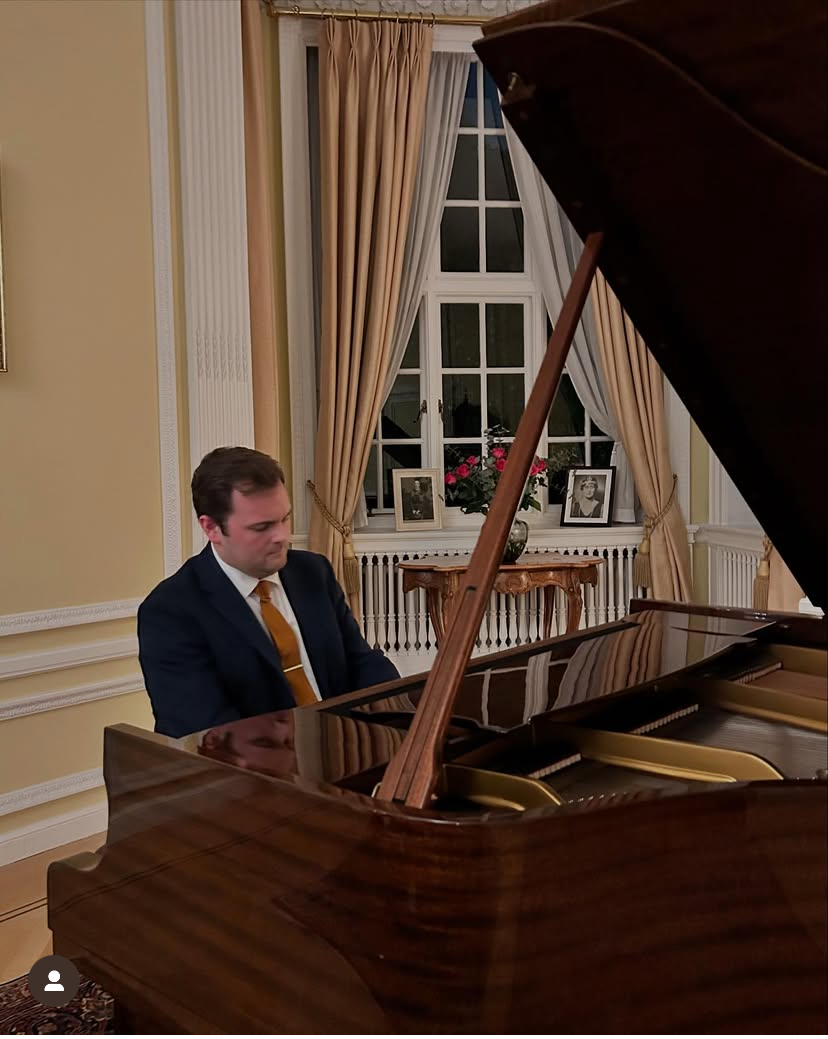
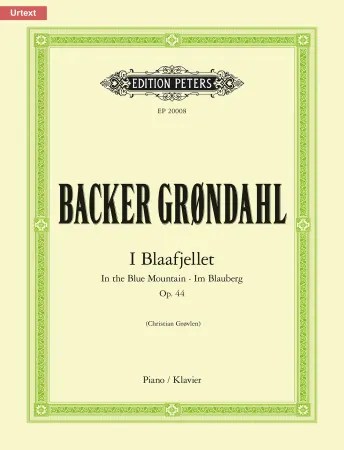
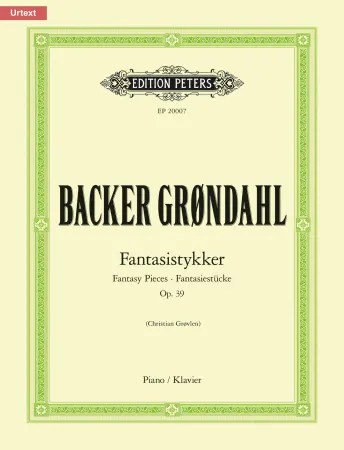
Last week I attended a reception and recital hosted by H.E. Tore Hattrem, Ambassador of Norway, and Mrs Marit Gjelten, together with Faber Music and Kode Art Museums & Composers Homes to celebrate the first ever Urtext edition of Fantasistykker (Fantasy Pieces) Op. 39 and I Blaafjellet (In the Blue Mountain) Op. 44 by Norwegian composer Agathe Backer Grøndahl. The exclusive event for leading music professionals took place at the Ambassador’s residence in London, an elegant mansion close to Kensington Palace.

Agathe Backer Grøndahl (1847-1901) was a Norwegian pianist, composer and music teacher. She studied with Franz Liszt and Hans von Bulow, amongst others, and was a contemporary and close friend of Edvard Grieg. She wrote over 400 works, mainly for piano and voice, and, like Grieg’s, her music blends Norwegian folk elements with Romantic influences. The English writer and music critic George Bernard Shaw described her as one of the foremost pianists in Europe, and at the time of her death in 1907, she was hailed as one of the great names of Norway’s musical heritage. Yet, over the following years her music was overshadowed by her famous compatriot and has remained relatively unknown, until now.

The music was performed by Christian Grøvlen, who gave some fascinating insights into Backer Grøndahl’s life and her compositional output. Although these works can be defined as “salon pieces” , they display an intriguing range of styles, textures and musical colours – at times impressionistic or nodding towards Bartokian folk idioms and dance rhythms; at other times, energetic, virtuosic and sweepingly Romantic, with a depth of emotion that goes beyond far beyond the salon miniature.  

The Fantasy pieces resemble Grieg’s Lyric Pieces yet they can also be seen as tone paintings with their programmatic titles (Summer Night, In the Boat, Bird’s Winter Song, for example). And while beauty and charm may lie on the surface of these pieces with their elegance and decorativeness, there is smouldering darkness beneath – and this is the core of Agathe Backer Grøndahl’s music.

This darkness is more evident in the suite I Blaafjellet (In the Blue Mountain), one of Grøndahl’s major works, dedicated to her sister, the painter Harriet Backer. It owes something to the programmatic music of Liszt in that the suite takes the listener on a journey, not unlike the first year of Liszt’s Annees de Pelerinage. The ‘fairytale’ suite evokes the different moods of the magical mountains of Norway, replete with trolls and wood nymphs, and from the outset, despite the relatively calm opening piece ‘Night”, there is an unsettling sense that something is afoot…. The suite builds in intensity, as the troll emerges from the mountain, heralded by portentous, almost aggressive chords, and unnerving jazz-like rhythms.

This was a splendid introduction to Backer Grøndahl’s piano music, characterfully performed by Christian Grøvlen, whose affection for and appreciation of it shone through every note.

The first-ever Urtext editions of two of Backer Grøndahl’s greatest piano works are published by the distinguished music publisher Edition Peters. Edited by Christian Grøvlen, they are based on the original manuscript and the first edition of 1898, which was out of print for many years. Now, in these new critical editions, the beauty and inventiveness of Backer Grøndahl’s writing for piano can be brought to a wider audience and enjoyed by pianists professional and amateur alike.

“I hope these new editions will make more people play, explore, understand and love Backer Grøndahl’s music” – Christian Grøvlen, pianist

 Find out more


Support The Cross-Eyed Pianist

This site is free to access and ad-free, and takes many hours to research, write, and maintain. If you find joy and value in what I do, why not

BUY ME A COFFEE

Duncan Honeybourne (piano) & Leora Cohen (violin)

This interesting new release from British pianist Duncan Honeybourne, with British-American violinist Leora Cohen, introduces the hitherto little-known music of Jessy Reason, known somewhat cryptically during her lifetime as “J. L. Reason”.

A long-forgotten, enigmatic figure, Jessy Lilian Reason, née Wolton, was born in London in 1878, the daughter of a wealthy hop merchant. In 1902, in Cornwall, she married a gentleman of private means twenty years her senior, with whom she settled firstly in Devon and later in Tonbridge, Kent. In the late 1920s the couple made a final move, to Reading, where Jessy died in 1938.

In May 1992 a writer called Alan Poulton discovered a large stack of handwritten music manuscripts in a second-hand bookshop. He purchased the collection and during the 2020 Covid lockdown, now retired and with time on his hands, he set about exploring and cataloguing the manuscripts, and researching the life of the woman who had composed 70 handwritten works in the early decades of the twentieth century. The paperwork accompanying the collection reveals that Mrs Reason studied composition with the renowned composer and conductor Eugene Goossens; she was then in her mid-40s, her tutor some 15 years younger. How much of Reason’s music was performed during her lifetime remains unclear: all that has come to light so far is a performance of a single song at London’s Wigmore Hall and a song cycle given at a minor concert in West London, all in the early 1920s. (The current catalogue of Reason’s music, compiled by Alan Poulton, can be found on the British Music Society website.

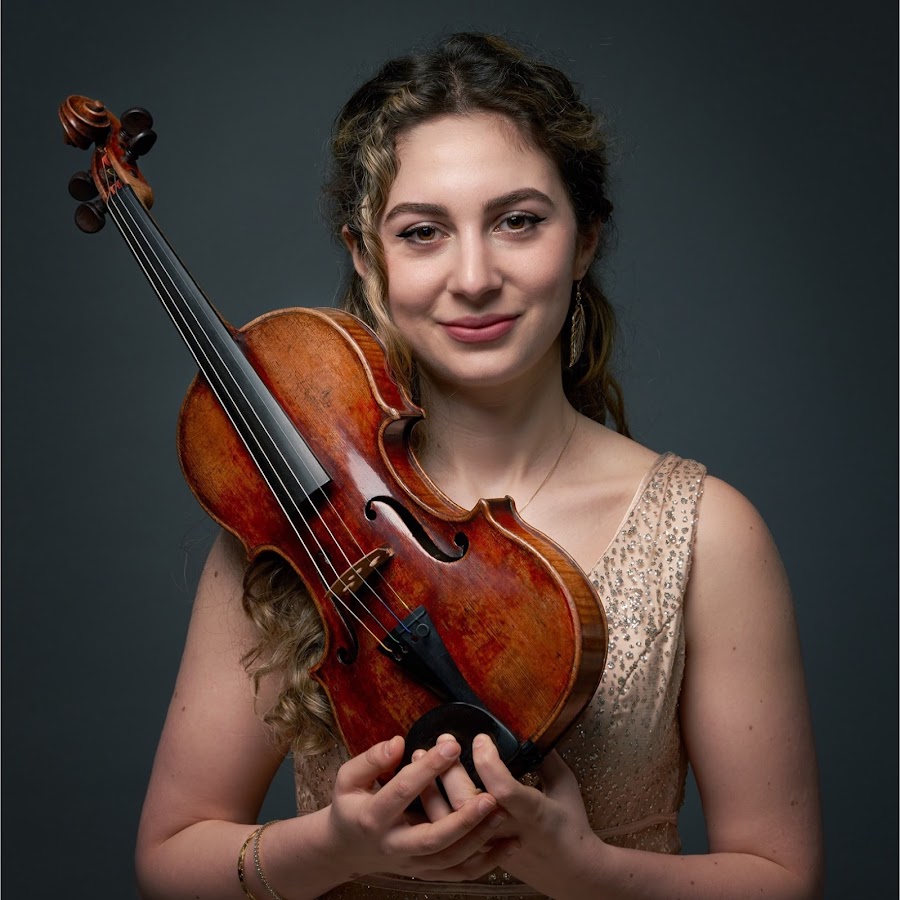
Pianist Duncan Honeybourne is a passionate advocate for lesser-known and rarely-performed music, and this new release by Prima Facie Records reflects his unerring ability to unearth really fine music and bring it to a wider audience by recording and performing it (see also his release, also on the Prima Facie label, of piano music by William Baines). On this recording he is joined by young British-American violinist Leora Cohen. She brings a wonderful range of colours and nuance to the Three Poems for Violin and Piano, matching Honeybourne’s playing with a remarkable sure-footedness, sensitivity and musical maturity.

This disc presents Jessy Reason’s entire output for solo piano, together with the Three Poems, and as such is a wonderful introduction to Reason’s writing. She was clearly a highly-skilled yet largely self-taught composer and musician (her writing for piano reveals an intimate knowledge of the geography of the keyboard): in his biography of his mother, Richard Reason describes her as “an ardent musician, with a fiery style of violin-playing . . .teaching herself the whole technique of writing for full orchestra”. Her scores, some of which I have seen, thanks to Duncan Honeybourne, are elegantly crafted and neatly laid out.

By turns richly romantic, impressionistic, darkly lyrical, sensuous and harmonically complex, there are hints of late Brahms, Debussy, Ravel, even early Messiaen in Reason’s sophisticated, inventive music. This inspiring legacy of work is brought vividly to life by Duncan Honeybourne on a piano contemporaneous with the music, a 1922 Bösendorfer.

Piano and Chamber Music by Jessy Reason

Duncan Honeybourne (piano) with Leora Cohen (violin)

Prima Facie Records, July 2024

leoraviolin.com

duncanhoneybourne.com

Unsuk Chin composer
Unsuk Chin, Berlin, den 12.05.2014

Korean-born composer Unsuk Chin is one of the featured artists at this year’s Aldeburgh Festival, which is celebrating its 75th anniversary. Find out more about Unsuk Chin’s influences, working methods, and thoughts about classical music in general in this insightful, thoughtful interview:

Who or what are the most significant influences on your musical life and career as a composer?

The most formative influences are probably those from childhood when the senses react to everything around them in a more ‘holistic’, immediate approach. Then, there was the time of my studies: immersing myself in European avant-garde music in the early 80s was vital, as I had before that known ‘Western’ musical history only until Stravinsky’s Violin Concerto. Conversely, the experience of studying with Ligeti, who denounced the avant-garde, requested utterly original music of excellent craftsmanship from himself and his students, asking me to throw away my prize-winning works, was a pivotal moment. Indeed, moments of crisis and subsequent attempts to find a way out are essential moments and threshold experiences.

The excellent Danish poet Inger Christensen wrote that the major influences on her work were creative stumbling blocks, irritations that, in the long term, made her question and develop her approach. For me, such a moment was when I worked, in the late 80s, and after a writer’s block of almost three years, for a couple of years at a studio for electroacoustic music. Through this, I could re-evaluate the essential elements of my compositional approach and expand the basis of my music. Another significant experience was, in the 90s, longer stays in Bali, where I studied Gamelan music – the acquaintance of a different tradition of great refinement and quality deeply rooted in the society was a discovery.

What have been the greatest challenges of your career so far?

That was to realise my childhood dream of becoming a professional musician and fighting my way out of difficult circumstances – in the 1960s and 1970s, South Korea was a poor post-war country on the periphery, and it was not easy to start as a female Asian composer in Germany.

What are the special challenges and pleasures of working on a commissioned piece?

Without a commission or deadline, I would never compose a work. One needs much pressure from the external world to get through this crazy process. I don’t have any works in my drawer. Writing a new piece is a very demanding process and can take years. I wouldn’t go for it without external pressure and the adrenaline rush. At the same time, I would never accept a commission with conditions that don’t fit into the musical thoughts and goals I am working with during a specific period.

What are the special challenges and pleasures of working with particular musicians, singers, ensembles or orchestras?

I always choose very carefully which commissions I accept. One has to prioritise. It almost needs to be a compulsion: if I don’t have an idea what to write for a certain instrument or concept, I won’t do it. For example, I wrote my First Violin Concerto in 2001 and was convinced I would never write another one. But then, when there was a possibility to write for Leonidas Kavakos, I reconsidered, and the work, 20 years later, is very different from the first one.

Of which works are you most proud?

I move on and try to do something new with every piece. I have removed several earlier works from my work list as I am not content with them. As for the remaining ones, I accept them, but there are also pieces to which I feel more emotional distance than others – which is unsurprising when one revisits works from several decades ago. But I can also name a counterexample – my Piano Concerto, which is from 1995 but which wasn’t much performed before the Deutsche Grammophon recording two decades later. This is a work into which I put all the energy and frenzy of my then 34-year-old self – I wouldn’t compose in this manner any more, but I feel emotionally close to it.

How would you characterise your compositional language?

I prefer not to, as it may make it more difficult for the listener to approach the work without prejudices. Besides, when I compose a new work, the most important thing for me is its unique shape. Of course, as a composer, you have a particular craft; you prefer certain materials and draw on compositional techniques acquired through the years. You cannot and perhaps shouldn’t avoid that. Nonetheless, it is important for me to attempt each work to be singular in character. Pablo Picasso once expressed it this way: style holds the painter captive in the same point of view, in a technique, in a formula, but he always wants to make something that is new and unknown to himself.

How do you work?

With pen and paper. Composing is, above all, waiting — days, sometimes weeks, before the empty staves. And then, suddenly, a door opens in the head. With age and experience, one develops trust that this door opens at some point if one tries hard enough. The music is in my head. I sometimes jot down ideas, plan harmonies, etc., but for me personally, it is an abstract process without piano or other devices. It can take several years for thoughts and concepts to mature. And when the pressure is great enough, it’s like giving birth: the thoughts have to come out, then you write.

As a musician, what is your definition of success?

That I am fortunate to be performed by several excellent musicians.

What advice would you give to young or aspiring composers?

To think carefully if one really wants to have a life as a professional composer. It is usually a back-breaking and lonely job, and the financial prospects are often non-existent. If one really wants to do it, one should, but one should be aware what price it takes.

What do you feel needs to be done to grow classical music’s audiences?

This is not easy since, nowadays, there is a tendency to think more and more in purely economic and functional categories, on top of which you have to add the quickness of modern mass media. Besides, there exists a mistaken notion that classical music would be something ‘elitist,’ which is why the notion that society should support artforms that only a small minority will engage with has lost traction. All of this does not mean that things were better during other times. However, it is concerning and a scandal that music is often no longer even considered a minor subject in schools due to very obscure claims of competitiveness and economic success – claims often made, for example, by numerous politicians. It is wrong to withhold from children the experience of art, which is one of the things that distinguishes human beings from AI, not to mention that art often provides indispensable solace and a utopia. Anyway, there are also ‘late bloomers’, audiences that can be won over with creative ideas and new approaches even if they won’t have had previous exposure to classical music; after all, the experience of great music can be a deeply emotional one. The methods and approaches used to try to develop classical music’s audiences depend on the place and context. But the main thing, I believe, is trust. Trust in quality, the hard work of serious performers and composers, the slow progress of building audiences and overcoming obstacles, an almost aggressive defence of artists’ quality and hard work, the audience’s right to hear this music, and the need for financial support of the whole musical ecosystem.

What is the one thing in the music industry we’re not talking about but you think we should be?

I doubt that such a thing exists as ‘the music industry’ – fortunately, we live in a diverse world. At the same time, of course, certain tendencies exist, but these are intertwined with societal developments. Our times are obsessed with the speed of information, packaging, and the surface, which can be problematic for developing sustainable quality standards. Also, the future of classical music institutions in many places is endangered. That leads often to market-think and occasionally to a winner-takes-it-all mentality. At the same time, fortunately, there are many niches and different initiatives. It was much more polarised in the 50 years after the Second World War: there was the established conservative music world, and then there were the rebellious circles of both the avant-garde and the early-music revival, who not infrequently fractured into warring factions. But every time has its challenges.

What do you enjoy doing most?

Playing the piano. If I need a break during an intense compositional process, I might play fugues by Bach for hours. This helps me clear my mind and persevere.

On Wednesday 12th June Tenebrae give the first UK performance of Unsuk Chin’s Nulla est finis – a prelude to ‘Spem in alium’ in Ely Cathedral as part of this year’s Aldburgh Festival. Find out more about Unsuk Chin’s music at Aldeburgh Festival here