Weymouth Lunchtime Chamber Concerts (WLCC) is delighted to announce its 2021/22 season of concerts which take place once a month at St Mary’s Church, Weymouth. This season is particularly special as not only does the series return to full capacity concerts, it also celebrates its 20th anniversary in 2022.

Despite the disruption caused by the coronavirus pandemic, WLCC was able to present four concerts in its 2020/21 season which were enthusiastically received by a socially-distanced audience – proof that people really craved and appreciated live music.
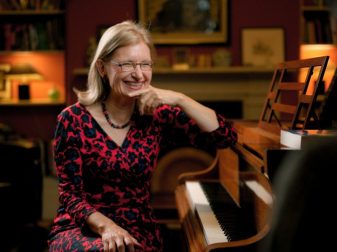
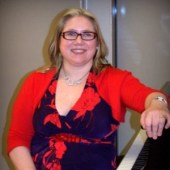
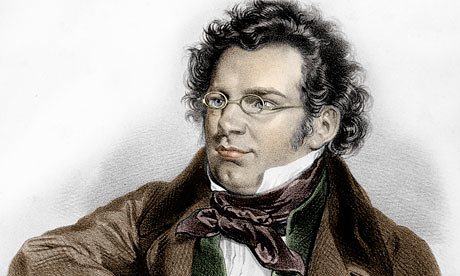
The first concert of the 2021/22 season will be given by Penelope Roskell, who was brought up in Weymouth, and was fortunate to study piano with Elsie Monckton from an early age. As a child she played regularly at Weymouth Arts Centre. Since then, she has gone on to a stellar career as an international concert pianist, writer and Professor of Piano at Trinity Laban Conservatoire of Music and Dance. Penelope’s programme features three much-loved works for piano by J S Bach, Fryderyk Chopin and Franz Schubert, spanning over 100 years from the Baroque period to the Romantic era.

Future performers include pianists Margaret Fingerhut, Jelena Makarova, Nina Savicevic, Alan Schiller, John Humphreys and Duncan Honeybourne, violinist Peter Fisher, bassoonist Antonia Lazenby, and cellist Ulrich Heinen.

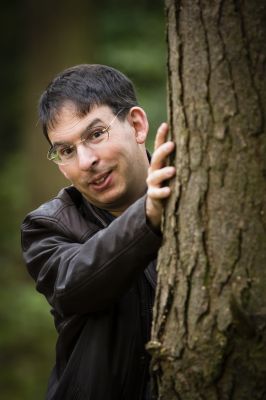
Founded in in 2002 by concert pianist and Weymouth resident Duncan Honeybourne, Weymouth Lunchtime Chamber Concerts presents high-quality chamber music in the heart of Weymouth and offers a platform for musical partnerships with friends and colleagues, many of whom enjoy international acclaim. The concerts also give young musicians, often recent graduates from conservatoire or university, valuable performing experience to a friendly, loyal audience.

WLCC programmes are varied and imaginative, mixing well-known works with lesser-known repertoire and composers, and all concerts take place in the attractive, welcoming surroundings of St Mary’s Church, Weymouth. WLCC is very fortunate to have use of an excellent Yamaha grand piano maintained by Weymouth Pianos Ltd. Tickets cost just £5, which represents extremely good value considering the very high quality of WLCC performers and programmes. WLCC is grateful for the support of staff at St Mary’s Church in ensuring concerts are covid-secure, safe and enjoyable for performers and audience alike.

Penelope Roskell performs on 15th September 2021 at 1pm. BOOK TICKETS

Full details of WLCC’s concerts can be found at weymouthchamberconcerts.com/.

Weymouth Lunchtime Chamber Concerts provide the whole musical package. Their programme includes established artists and emerging talent; and the conditions are superb for audience and performer alike.

Under the professional and experienced guidance of Duncan Honeybourne and Frances Wilson, Weymouth is truly fortunate to have a concert series that benefits both local people and the wider musical community…..this is a valuable initiative that deserves continuing support and celebration.

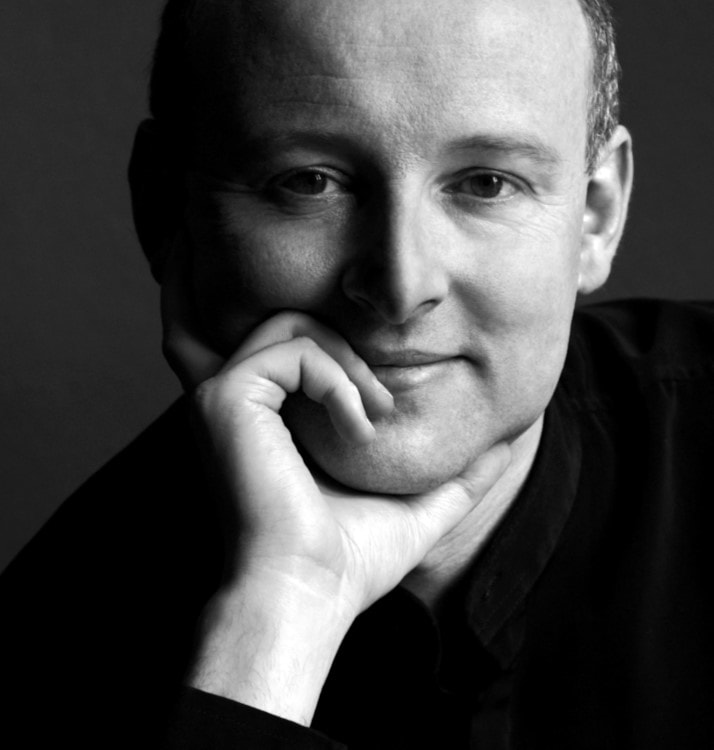
James Lisney, concert pianist

The series is organised by Duncan Honeybourne and Frances Wilson (The Cross-Eyed Pianist)
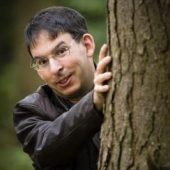

Duncan Honeybourne – Founder/Artistic Director

Commended by International Piano magazine for his “glittering performances“, Duncan enjoys a diverse profile as a pianist and in music education. His concerto debut in 1998 at Symphony Hall, Birmingham, and the National Concert Hall, Dublin, was broadcast on radio and television, and recital debuts included London, Paris, and international festivals in Belgium and Switzerland. Duncan has toured extensively as soloist and chamber musician, broadcasting frequently for the BBC and radio networks worldwide. His many recordings reflect his interest in 20th and 21st century British piano music. He is a Tutor in Piano at the University of Southampton.

duncanhoneybourne.com

Twitter: @DuncanHoneybou1

Frances Wilson – Concerts Manager

Frances is a writer, reviewer and publicist. Described by international concert pianist Peter Donohoe as “an important voice in the piano world“, Frances’ blog The Cross-Eyed Pianist has an international reputation and enjoys a large following. She also writes for Hong Kong-based classical music website Interlude and has contributed articles to Pianist magazine and The Schubertian, the journal of the Schubert Institute UK. She has appeared on BBC Radio Three’s Music Matters programme to discuss the role of music criticism today and the effect of the internet on music journalism. An advanced amateur pianist, Frances holds Licentiate and Associate Diplomas in Piano Performance (both with Distinction) and has studied with or received mentorship from a number of distinguished pianist-teachers, including Penelope Roskell, Graham Fitch, Murray McLachlan, Stephen Savage and James Lisney.

Twitter: @crosseyedpiano
The 2020/21 concert season has been difficult for all of us, from the largest venues and orchestras to small, local festivals, music clubs and concert series like the Weymouth Lunchtime Chamber Series (WLCC), which I co-organise with pianist Duncan Honeybourne.

Because of the coronavirus restrictions, we managed only three concerts in 2020 – one in February, before the first lockdown, and just two further concerts in October and December. Our autumn concerts were presented in accordance with government Covid guidance, which meant we could only admit a limited number of audience members (it goes without saying that the financial implications of reduced audience numbers are stark). But, like so many other musicians, promoters, venues and cultural organisations, WLCC adapted to the “new normal”: we have initiated an online and telephone booking system, and present two shorter recitals to allow as many people as possible within the current restrictions to attend. Our audience have adapted too, returning to our live concerts with enthusiasm, albeit in smaller numbers.

After five months of silence in 2021, our series resumed in June with a lovely performance by Duncan Honeybourne of piano sonatas by Schubert and Beethoven. It was a double celebration – the resumption of live classical music in Weymouth and also WLCC’s 200th concert (watch the livestream here).

On 7th July, pianist James Lisney closed our 2020/21 season with a generous, poetic performance of Schubert’s D935 Impromptus and selected Liszt transcriptions of Schubert’s Schwanengesang.

***

Schubert composed two sets of Impromptus, written late in 1827, the year before he died, and he numbered the D935 set 5, 6, 7 and 8, suggesting he intended them as a continuation of the D899 set.

The entire D935 is a much more substantial suite of pieces than the first set, and this is especially true of the f minor Impromptu, the first of D935, whose tone moves between quasi Beethovenian drama and assertiveness in its opening section to a contrasting, almost dream-like fragmented duet in the central sections. It is these sections which really tear at the heartstrings, yet James Lisney was careful to avoid too much introspection or sentimentality through sparing use of the sustain pedal, lively rhythms and tasteful rubato.

By contrast, the second Impromptu is serene and good-natured, its opening section reminiscent of Beethoven’s Piano Sonata No. 12, which is also scored in A-flat major. A middle section of burbling triplets moves from warmth to regret with the introduction of the minor key and thence to resignation before the opening theme returns. A more lively tempo and bass highlights emphasised the waltz rhythms of this Impromptu.

The third, in B-flat, is the most famous of the set. A set of variations, its theme resembling the incidental music Schubert wrote for the ballet Rosamunde, this Impromptu is graceful and mercurial, occasionally tongue-in-cheek, and James brought an appealing sense of warmth and wit to the music, especially in the later variations where the textures grow increasingly florid, though never dense.

The final Impromptu of the set is a wild, stomping Hungarian dance, with brilliant passagework, rapid scales and arpeggios, trills, off-beat accents, and cross modulations which take the music to unexpected places, thus creating vibrant shifts in mood and tone. The piece ends with a rapid plunge down the piano, in a scale “which tells you when to clap” (James Lisney). It was lively and boisterous, with supple tempi and improvisatory flourishes.

James Lisney has a long-standing affinity with the music of Franz Schubert, and it shows in his naturally flexible tempi, lyrical treatment of melody and songlines, an appreciation of the essential drama and introspection in Schubert’s music, and an acknowledgement that the interpretation of this music is not settled, that it is in a state of flux. He brings clarity to this music through a thorough appreciation of Schubert’s phrasing and architecture, but also finds the essential “soul” of this music through an eloquent sensitivity to the tiniest details of the score, often revealing inner voices or unexpectedly piquant harmonies.

Liszt’s great skill as an arranger, and his sensitivity to the originals, is very evident in his beautiful transcriptions of Schubert’s songs, but this is also very much his own work in the way he changes the piano texture to provide a personal commentary on the original song text and the music. Liszt sometimes takes Schubert very literally, at other times he adds flourishes and embellishments, but he always retains the essential melodic structure of the song. These three love songs were contrasting, tender and intimate – appropriately, given the small size of the audience – and we might have been in Liszt’s salon, such was the intensity of feeling, closeness and poetry portrayed in these miniatures.

This was an extremely special close to the WLCC 2020/21 season, and a fitting prelude to the new season, which will celebrate the piano – as both a solo and a chamber instrument. The season launches on 15th September with a recital by Penelope Roskell, which will include Schubert’s final piano sonata. All being well, there will be no restrictions on audience numbers and we will revert to our usual practice of a single recital of 60 minutes at 1pm.

Watch the livestream of James Lisney’s recital here


Weymouth Lunchtime Chamber Concerts were founded in 2002 by pianist Duncan Honeybourne. Concerts take place once a month on a Wednesday at St Mary’s Church, Weymouth. Visit the WLCC website for full details and to join the mailing list.

cropped-unnamed-file

After five months of enforced silence, Weymouth Lunchtime Chamber Concerts resumed with two splendid recitals by concert pianist and Artistic Director Duncan Honeybourne. 

Schubert’s melancholy sonata in a minor D784 was complemented by Beethoven’s penultimate piano sonata, the luminous, transcendent Op 110 which closes with one of the most uplifting finales in the piano sonata repertoire. It felt wholly appropriate – to celebrate not only the resumption of live classical music in Weymouth but also the instrument for which the music was written. The second concert in this “mini series” as a prelude to the launch of the 2021/22 season will be on Wednesday 7 July distinguished concert pianist and noted Schubert interpreter James Lisney will perform Schubert’s second set of Impromptus together with some of Liszt’s transcriptions of Schubert’s Schwanengesang (Swan Song), including the much-loved Ständchen

We are currently working within social distancing guidelines in the church in central Weymouth where the concerts are held and this has meant we can only admit a limited number of audience members. This has not deterred our very loyal audiences, and tickets for Duncan’s concerts sold out almost immediately. The enthusiastic support of our audiences is encouraging and cheering and a sign that people have really missed live music during the long months of lockdown. 

The 2021/22 season will be a celebration of the piano (we are lucky to have a very fine Yamaha C6) – as both a solo and chamber instrument, and also one which can accommodate not one, but two pianists at the keyboard! Do keep an eye on the Weymouth Lunchtime Chamber Concerts website for updates and details of forthcoming concerts and performers.

Meanwhile there are some tickets still available for James Lisney’s concerts at 12 noon and 1.15pm on 7 July.

I was so cheered to read this thread of tweets from cellist Julia Morneweg, and I agree with her comment that it is those in the profession with a “Can do” attitude who are driving the return of live music to venues.

It’s true that London’s Wigmore Hall has done a great deal to bring live music back to audiences, first with its summer series of livestream concerts (albeit to an empty hall) and now with its autumn season of concerts with a limited, socially-distanced audience. Other larger venues, such as St John’s Smith Square, are beginning to follow suit, finding ways to manage the logistics of admitting living, breathing audience and performers within the constraints of government covid-secure guidance and rules, and its seems audiences are very keen to be back. It is well known that classical music audiences are generally older/elderly – the demographic which is most vulnerable to coronavirus – but these are also people who are well able to make their own judgements about levels of risk, without constant nannying and interference from the state, and it’s encouraging to see pictures such as those in Julia’s tweets of people enjoying live music again.

As I wrote on my sister site ArtMuseLondon back in May, the pandemic may have forced the closure of music and arts venues, but it has also presented musicians and concert organisers with an opportunity to innovate and experiment. Julia Morneweg is quite right when she states that it is the smaller venues and organisations which will rebuild live music. Musicians want to perform and with the support of such organisations, they can do so again. Smaller venues/organisations are often more adaptable – from how seating is arranged to managing overheads and other financial considerations (bigger venues have hefty overheads such as staff costs, property maintenance and rent).

If we sit on our hands and wait to be told when is the right time to resume live concerts, we could be waiting a long time. With this in mind, I and my pianist friend/colleague Duncan Honeybourne, who founded Weymouth Lunchtime Chamber Concerts which we run together, decided we would take the initiative and approach the church where we hold our concerts with a view to resuming our series with at least a handful of concerts before Christmas (our last concert before lockdown was in late February). We decided that before approaching the church management, we should formulate a plan about how we would manage the events (I’m the concert manager, so am responsible for ticketing and audience relations, amongst other things). We were delighted that our suggestions were met with an very enthusiastic response from our friends at the church, and we then met at the church to do a risk assesssment and discuss covid-secure arrangements.

Without the contribution of food and beverage sales, from which venues like the Wigmore Hall and Southbank Centre derive a sizeable income stream, smaller concert venues/organisations/music societies often rely on ticket sales alone for revenue. Smaller audiences due to social distancing obviously mean lower ticket sales – and it is not necessarily practicable, nor fair on audiences, to hike up ticket prices to make up for the loss of revenue. For our Weymouth series we decided, again with the support of the church and our performers, to offer two shorter concerts on the same day. All being well, we will be able to sell nearly as many tickets as we used to for a single lunchtime concert with the church at full capacity (c70 people). And to ensure that numbers are strictly managed, I set up an online box office so that people can book in advance, with the option to reserve a ticket by phone and pay on the door (for which I have invested in a neat little contactless card reader which can be run from an app on my phone). This also allows me to keep track of people’s contact details, which we are required to do by law for Track and Trace purposes. I have been delighted by the response so far – the many telephone calls I have taken from our regular audience members confirm my belief that elderly people are willing to venture out, and many told me how pleased they are that the concerts are resuming.

The most crucial aspect is making audiences feel safe and confident about returning to a venue (restaurants have already demonstrated that it is possible to do this). People have praised the Wigmore Hall for its sensible approach and the venue has more than demonstrated that social distancing and other safely measures can be implemented without audiences feeling they are being herded like sheep or subjected to unnecessarily bossy rules. (There is nothing worse than visiting a venue, restaurant or visitor attraction and being ordered around by some officious person on the front desk!). If we treat our audiences as adults, with courtesy and respect, they will respond by observing guidelines, one-way systems, use of hand sanitisers and face coverings, etc. For many, these are fairly minor irritations (and things which we have by and large grown used to this year) in exchange for the renewed pleasure of enjoying live music in the company of other people. And my goodness do we need it, after the year we’ve had so far!


Some tips to make concerts happen safely and successfully:

  • Be fully conversant with the government guidelines/rules on live performance
  • Liaise with your venue, and understand and respect their own covid-secure rules/guidelines, including maximum numbers permitted, the Rule of Six,  including Track & Trace requirements, green room arrangements, cleaning of venue etc
  • Consider using an online ticketing platform such as TicketSource or Billetto to allow people to book in advance. Easy to manage, such platforms allow you to track bookings, including customer contact details (necessary for Track & Trace), and produce sales reports/guestlists
  • Consider using a portable card reader to take contactless card payments on the door, to avoid handling cash. iZettle and SumUp are two such systems and are very simple to use via a smartphone or ipad app.
  • Make sure covid-secure guidelines are prominently displayed on your website (if applicable) and at the venue.
  • Make sure your performers and audience are fully aware in advance of the venue’s covid-secure arrangements
  • As printed programmes (and other printed material such as tickets or flyers) are not allowed, consider displaying the programme with programme notes on your website or send it to your audience by email. Encourage performers to introduce their programmes to the audience.

A postcript: on 21st October 2020, Weymouth Lunchtime Chamber Concerts, for which I am Concerts Manager, held its first concerts since late February. As described above, I and the Artistic Director, Duncan Honeybourne, together with our colleagues at the church where the concerts are held, had put together a plan to ensure the events would be covid-secure, safe and enjoyable for our audience and performers. We presented two concerts of the same programme to allow for a socially-distanced audience and welcomed a total of 50 people to the concerts. All the arrangements ran very smoothly, and the pleasure in hearing live music again, and the audience’s applause, after so many months was like being given water after a drought. But perhaps the best part was the enthusiasm of our audience, evident not only from their warm applause for the music but also the many positive comments we received, on the day and in the phone calls when people rang to book tickets. This gives me hope for the future of our Weymouth series and others like it, and with the support of both audience and performers, and our friends at the church, we are looking forward to our next concerts with excitement.

This site is free to access and ad-free, and takes many hours to research, write, and maintain. If you find joy and value in what I do, please consider making a donation to support the continuance of this site


Make A Donation