Wigmore Hall/BBC Radio 3 Special Broadcast series

JS Bach, arr. Busoni Chaconne from Partita No 2 in D minor for solo violin, BWV 1004 Schumann Fantasie in C, Op 17

Charles‐François Gounod – Meditation sur le 1er prelude de Bach (encore)

Stephen Hough, piano

Monday 1 June 2020


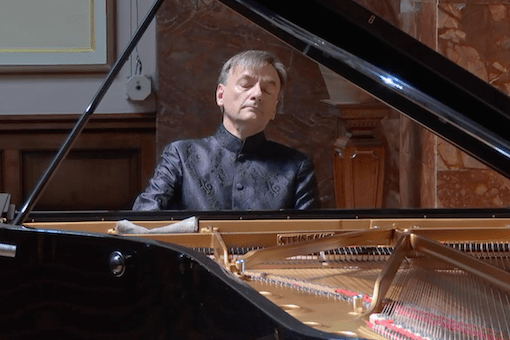
I admit I welled up as Stephen Hough played the opening measures of the Bach D minor Chaconne, transcribed for piano by Ferruccio Busoni. Yes, that opening has a spine-tingling authority, but the spontaneous tears were less for the music and more the effect of having beloved Wigmore Hall filled with music again – if not filled with an audience. Along with many other people, musicians and music lovers, I miss live music so much: I feel painfully bereft and in order to deal with this emptiness, I have avoided, until now, the many livestream performances and other music making which is going on online all the time now.

This was the first of a much-heralded and eagerly anticipated series of live concerts from Wigmore Hall, made possible by a collaboration with Radio 3, the hall and a generous benefactor. Why is this so significant, so tear-jerkingly meaningful? Because in the third week of March 2020, Wigmore Hall, along with the rest of London’s cultural life, closed its doors in the wake of the coronavirus pandemic. My last visit to WH was at the very end of February to hear, with a good friend, Jonathan Biss scorching his way through Beethoven, a concert which had an edge-of-the seat electricity and immediacy, and left us speechless. I didn’t know then that this would be my last visit to beloved Wigmore Hall for many months; I don’t know when I will be back there.

But, as Stephen Hough said in a conversation with Petroc Trelawny on Radio 3’s Breakfast show, the fact that live music has returned to WH, albeit bereft of an audience but for the Radio 3 presenter and hall director John Gilhooly, is a glimmer of hope, a sign that things may be making tiny, tentative steps to return to normal (I refuse to use phrases like “the new normal”!). Later, in an interview on Channel 4 News, Stephen said that not since the 16th century had we been “starved of” live music in this way; the concert halls remained open and the music played on even during wartime.
173441-bildschirmfoto-2020-06-01-um-13-35-56-kopie

The programme was, of course, exemplary in both its selection and execution. One can guarantee that Stephen Hough will always perform music which is so much more than notes on the page. Ferruccio Busoni was a regular performer at the Wigmore, then Bechstein Hall, in its early years, and indeed played at the hall’s inaugural concert. His transcription of the extraordinary Chaconne is a romantic tour de force, for both instrument and player, a fantasy of sorts, while remaining faithful to Bach’s original conception. Robert Schumann’s Fantasie in C, Op 17, is also a tour de force, of the myriad facets of love, originally conceived as a deep lament for his beloved Clara during a period of enforcement separation.

This music is profoundly moving at the best of times, and now, in what for the music industry is the worst of times, it had a special resonance, emotionally charged, brave yet never showy, authoritative and thoughtful and, in the Schumann, both extrovert and virtuosic and passionately tender. Inspiring, uplifting and painfully wonderful, there was Stephen Hough on stage, immaculate in his usual concert attire, playing beautifully to an empty hall.

As he said in his Channel 4 interview, the audience are a crucial part of the concert experience for the performer. Not only does a hall full of people have a different acoustic, but a living, breathing – and, yes, coughing – audience creates “a very active involvement in the music, and I think a performer senses this, the energy…and that quietness, when people are listening and attentive, and you feel an electricity there that you cannot replicate” (Stephen Hough).

An empty hall has a different kind of quietness, and in that strange solitude Busoni’s architecture seemed all the more monumental, while Schumann’s inner struggles had a greater poignancy.

Apparently, some 2000 people tuned in for the livestream performance, which was notable for the high quality of both sound and filming (for piano nerds like me, close ups of the pianist’s hands were a real treat – you just don’t get that close as an audience member). As a friend of mine, like me a regular at Wigmore Hall, remarked on Twitter:

Of course this makes us ache for performance with an audience again; but it’s also brought home to me that this is the only way some people can *ever* see/hear a Wigmore Hall concert. That so many of us are ‘together’ remotely for this adds something inexpressible to the stream. @Adrian_Specs

There was, via the social networks, indeed a shared experience. Not the same shared experience as one enjoys at a concert with friends, but nonetheless a very palpable togetherness. I knew I was listening with several of my regular concert companions, albeit remotely, and this brought a feeling of solidarity too. Because we will be back at Wigmore Hall. We will once again sink into its plush red velvet seats, open the programme to peruse the evening’s offering, enjoy conversation and wine during the interval, and experience the incomparable thrill of live music.

In the meantime, BBC Radio 3’s Special Broadcast series continues at Wigmore Hall every day until 19 June. Full details here

Watch Stephen Hough’s concert here


John Gilhooly, Director of London’s prestigious Wigmore Hall, has announced a new series of lunchtime concerts at the Hall, starting on 1 June. This is, sadly, not a return to “normal” for classical music – far from it – but it does signal a tiny glimmer of hope for an industry decimated by the global response to the coronavirus.

In collaboration with BBC Radio 3, part of their Culture in Quarantine season, lunchtime concerts will be broadcast from Wigmore Hall, featuring artists who can get to the hall easily, and without, where possible, the need to use public transport. These include pianists Imogen Cooper, Benjamin Grosvenor, Angela Hewitt, Stephen Hough, Mitsuko Uchida and Paul Lewis, singers Lucy Crowe, Iestyn Davies, Mark Padmore and Roderick Williams, violinist Alina Ibragimova and clarinettist Michael Collins. These esteemed artists will perform to an empty hall, with a maximum of two performers on stage and BBC broadcasting and hall staff observing strict health and safety guidelines in order to produce the programmes. A series of 20 concerts will be broadcast on weekday lunchtimes on Radio 3 and livestreamed via the Wigmore Hall’s website and YouTube channel.

John Gilhooly writes:

We are very grateful to our wonderful colleagues at BBC Radio 3 for collaborating with us on this project, as well as the private donor whose magnificent lead gift has made the series possible, helping us to match the BBC’s contribution. Through these concerts we will bring great live music from our acclaimed acoustic to every corner of the nation and overseas.

I hope this project will also provide a glimmer of light for the entire industry, administrators and musicians alike. Arts and culture contribute £8.5 billion to the UK economy, and this complex industry will need to be rebuilt with public and government support, in due course. It is still unclear exactly when we will be able to open our doors to the public again, and although we remain cautiously optimistic about the future, we can only react to events as they unfold.

The intention is to present a larger number of artists in similar future broadcasts, possibly some who are included in the Wigmore’s autumn 2020 programme.

This will bring a degree of cheer to those of us who love the Wigmore and miss live concerts in the “sacred shoebox”: it will undoubtedly be a pleasure to hear the Wigmore Steinway being played once more, and to have the sounds and colours of music flood the fine acoustic. This will be a different kind of live music, a little closer to the “real thing”, perhaps, than the livestreams and  “living room recitals” we’ve grown used to seeing online as musicians strive to keep the music going while also validating their identity during these uncertain times, and beyond.

Nothing can replace the excitement, drama and atmosphere of live music. As pianist Imogen Cooper remarked on BBC Radio 4’s Today programme:

The audience will be completely invisible – hundreds of thousands of people out there cooking their lunch…..We all need the immediacy and the danger and raw emotion of live music at the moment. It’s very cathartic.

Cathartic indeed. Yet I find I cannot listen to and enjoy much classical music at the moment as it reminds me all too painfully of the great hole coronavirus and government responses to it have ripped in our cultural life, and the grave difficulties faced by friends and colleagues in the profession. But of course I will tune in to these concerts (most probably on Radio 3 rather than via the livestream – I don’t particularly want to see my beloved Wigmore Hall devoid of the audience which helps to create its special ambiance).

For those of us who love live music, it is not just the “immediacy and the danger and raw emotion” that we miss. It is also the sense of a shared experience, the communication of emotions, and the celebration of creativity. Sure, one can appreciate those things in a radio broadcast or livestream, but you cannot truly replicate the live concert experience, not in its entirety.

It will be a curious experience for the performers too, playing to an empty space. For most, the sea of faces and the applause on walking across the stage, that special hush of expectation as the house lights dim, the feeling of collective listening and concentration, is as much a part of the live performance as the music itself. Imagination may go some way to create atmosphere in the mind of the performer (and this kind of ‘mental performance’ is a key part of the performer’s skillset in preparing for concerts) but I imagine playing to an empty hall, with only a few microphones and a handful of staff to be the “ears” for the performance, will feel quite strange. Yet, the artists giving these lunchtime concerts are respected, highly skilled professionals and I do not doubt that they will give their all to bring the music to us. British pianist Stephen Hough opens the series (programme TBC).


Further details of Wigmore Hall lunchtime concerts


JS Bach – Chaconne from Partita No.2 in D minor, BWV.1004 arr. Busoni for piano
Busoni – Berceuse élégiaque (Elegy No.7), Op.42
Chopin – Sonata No.2 in B flat minor, Op.35 (Marche funèbre)
Stephen Hough – Sonata No.4 (Vida breve)
Liszt – Funérailles from Harmonies poétiques et religieuses, S.173; Mephisto Waltz No.4 (unfinished); Mephisto Waltz No.1

Stephen Hough, piano

Tuesday 19 November 2019, Tuner Sims, University of Southampton


My first visit to Turner Sims concert hall at the University of Southampton, and a treat of an evening in the company of British pianist Stephen Hough playing music by Bach arr. Busoni, Busoni, Chopin and Liszt.

This was a typical Hough programme, thoughtfully conceived and superbly presented, deadly serious, for the theme of the concert was death – pieces inspired by or identified with death, including Chopin’s Piano Sonata No. 2 with its famous Marche Funèbre, and Liszt’s Funerailles, written in the same month as Chopin died and at the time of the violent Hungarian revolution of 1849.

stephenhoughcjiyangchen-1

Superlatives quickly become redudant when describing a pianist of Hough’s calibre, whose wide-ranging intellectual acuity always informs his programmes and his playing; therefore this is not a review, rather some reflections on what I thought was a most absorbing programme, especially the first half. In addition to the thematic asssociations between the pieces, there were musical connections too: the dark rumbling bass octaves in the Bach/Busoni Chaconne were reiterated in Chopin’s Marche funèbre – a plangent left hand accompaniment which, in the reprise of the famous theme dominated, with a dark tolling grandeur. And this figure was later heard again in the opening of Liszt’s Funerailles. Likewise, the haunting, unsettling soundworld of Busoni’s Berceuse (more a mourning song than a lullaby) was reflected in the finale of the Chopin Sonata, a curious, hushed fleeting stream of consciousness, and then in the wayward uncertain harmonic language of Liszt’s ‘Bagatelle without tonality’.

The Bach/Busoni Chaconne was a magnificent, emphatic opener for this concert, and Hough gave it a multi-layered, orchestral monumentalism. The Berceuse was a remarkably contrasting work, interior, intimate, mysterious and disquieting, and by segueing straight into the Chopin Sonata, Hough infused this work with a similarly discomforting atmosphere. With agitated tempi the Sonata moved forward with an anxious intensity but Hough lingered over the more lyrical Nocturne-like moments in the opening movement and the Scherzo. Like the Chaconne, the funeral march was magisterial rather than simply funereal and the tender, dreamy middle section lent an other-worldliness to the music’s atmosphere before the tolling bass and mournful theme returned.

Hough’s own piano sonata No. 4 ‘Vida Breve’ opened the second half of the concert, an abstract work constructed of five tiny motivic cells (including a quotation from the French chanson En Avril à Paris, made famous by Charles Trenet) lasting a mere 10 minutes, a comment on the transient, fleeting nature of life, its passions and turmoil. The concert closed with three pieces by Liszt – Funerailles, whose meaning is obvious, and two Mephisto Waltzes, devilish in their whirling virtuosity and frenetic, tumbling notes.


Stephen Hough plays the same programme at the Royal Festival Hall in March 2020. Details here

9780571350476The title is a play on his name and the collection of essays in this satisfyingly chunky volume were often “roughed out” by Stephen Hough while travelling between concert engagements, If you think the life of the international concert pianist is glamorous, think again – in between rehearsals and concerts much time is spent at airports, on planes or in faceless continental hotels; for Hough writing was a way of filling that dead time.



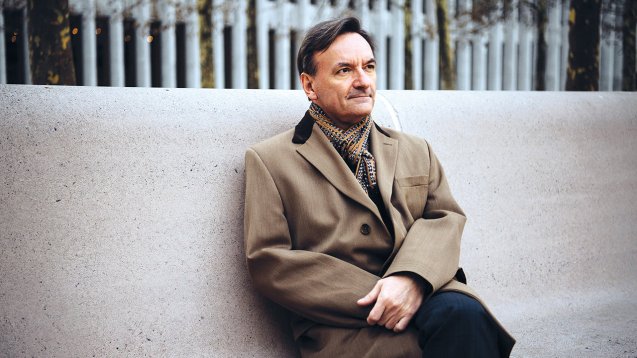
The word “polymath” is nearly always uttered in the same breath as “Stephen Hough” – concert pianist, composer, writer, artist, teacher, thinker –  but Hough wears the title modestly. Articulate and highly communicative on and off the concert stage, he is charming and natural when you meet him after a concert, and his lively Twitter presence reveals a penchant for the good things in life – fine food, perfume, hats – combined with an intelligent, open-minded approach to the challenges of our modern world. While other internationally-renowned concert artists may hide behind their reputation, Hough is happy to engage with his audiences, online and in person, and this warm-hearted, genuine approach, alongside his thoughtful suggestions on changing the format of concerts, for example, has helped break down some of the barriers and misconceptions surrounding classical music.

Many of the essays in Rough Ideas will be familiar to those who have enjoyed Hough’s blog in The Telegraph (sadly no more – so thank goodness for this compilation!) and writings elsewhere. As befits a Living Polymath, Hough’s writing net casts wide, and while the bulk of the volume focuses on musicians and music – the exigencies of being a professional musician, the piano and those who play it, concerts (giving and going to them) – there are also engaging articles on art and culture, and more challenging and philiosophical reflections on religion and the difficulties of being a gay Catholic.

Most musicians communicate best via their music, but Hough, himself a deeply communicative and intellectually acute pianist, is also an eloquent and intelligent writer, whose words are as carefully crafted and colourfully nuanced as his playing, and the phrasing, cadence and pacing of his writing pleasingly mirrors musical shaping.

Hough illuminates the pleasures and challenges of being a concert pianist and offers readers an intriguing view “beyond the notes” and the concert stage into this sometimes masochistic, often lonely profession, while never quite dispelling the mystique of the professional musician. There are thoughts on those sacred, church-like spaces where music is performed and heard (a lovely appreciation of London’s Wigmore Hall opens the book), ageing audiences (be kind to them – they populate and support concerts), dealing with creative block and performance anxiety, page-turners, the joy of making mistakes, and what happens when musicians “lose it” on stage (in the best possible way).

In the section entitled Studio, he discusses the musician’s “tools” – practicing, fingering schemes, scores, trills, pedalling and more – sharing his wisdom and offering encouragement and inspiration to pianists, whether amateur or professional. Later sections ‘….and More’, ‘…..and Religion’ reveal Hough as a profound thinker, always curious and questioning, never accepting nor complacent, and the entire volume is a wonderful insight into the mind of one of our greatest living pianists and a significant cultural figure in his own right.

This generous, varied compendium is intriguing, engaging and thought-provoking, always readable and elegantly written. Dip in and out of the chapters or read from start to finish, Rough Ideas is an ideal volume for the serious musician or keen amateur, music lovers in general and anyone who enjoys well-crafted, intelligent prose on a broad range of subjects.

Highly recommended


Rough Ideas is published in the UK on 1 August by Faber & Faber in hardback and e-book editions

Meet the Artist interview with Stephen Hough