
Guest review by Magdalena Marszalek
Grigory Sokolov – Meesterpianisten series recital, The Concertgebouw, Amsterdam 7th May 2017
Programme
- Mozart – Sonata in C, KV 545
- Mozart – Fantasie in c, KV 475
- Mozart – Sonata in c, KV 457
- Beethoven – Sonata no.. 27 in e, op. 90
- Beethoven – Sonata n0. 32 in c, op. 111
- Schubert – Moment Musical in C, D 780, No. 1 (encore)
- Chopin – Nocturne in B (from ‘Deux Nocturnes’, op. 32) (encore)
- Chopin – Nocturne in As (uit ‘Deux Nocturnes’, op. 32) (encore)
- Rameau – 4e Concert : No. 2 L’Indiscrète (from ‘Pièces de clavecin en concert’) (encore)
- R. Schumann – Arabeske in C, op. 18 (encore)
- Chopin – Prelude in c (from ’24 Preludes’, op. 28) (encore)
There is no need to introduce Grigory Sokolov to anyone interested in the piano world today. He is an implicit giant, who does not seek nor need advertising, unnecessary media attention, flash-bulbs and buzz. He is above all that, yet so powerful in his modesty. His performances do not contain obvious technical fireworks. If you like this kind of showing off, there are other names you should look to. His performance will affect you first from the inside, starting slowly, almost shyly – and then it will swallow you and possess you whole.
Sunday 7th May 2017 was Sokolov’s 19th recital in a row (!) in the famous Meesterpianisten series in Amsterdam, which this year celebrates its 30th annivcersary. He chose to present two piano sonatas by Mozart (C major K 545 and C minor K457 with the Fantasy K. 475) and two sonatas by Beethoven (E minor op. 90 and C minor op.111). The first sonata, known as the “easy one” (Sonata Facile), may be a surprising opening piece. Heard so (too) many times, performed by all manner of child prodigies, only when under the fingers of a mature pianist does it bloom to its fullest. Still, I would consider it as a warm up before the Fantasy, where Sokolov visited every dark corner there was and brought to light every nuance of this piece. Cruising between the different moods, emotions and styles of this work, he immersed the audience in his mystical world. His natural transition to the sonata invoked the feeling of some unspoken deep, dramatic questions. Yet, his interpretation was not overly dramatic, which left the listeners even more emotionally disturbed and intrigued. It made me realized how this classical piece, decorated with almost baroque fugue elements, shyly and unintentionally hints towards a new era. Nevertheless, the genius of Mozart transcended his own time, just as the genius of Sokolov eclipses other performances.
After the first standing ovation and a break, the pianist came back to present the two sonatas by Beethoven, op. 90 and op. 111. My overall impression of the tone and colour was that the Steinway concert piano sounded much better in this repertoire. Multi-dimensional, Beethoven’s voice sounded much broader and bloodier than the rather flat and crystalline Mozart. Sokolov played the sonata E minor in a more contemplative way than I knew it and throughout his performance I realized that slowing down the tempo, even a little bit, might lead to great discoveries. Again, this sonata – like the Sonata Facile which opened the concert – was more like a prelude for the op. 111. A beautiful second movement resembled a ray of sun before the serious C minor piece commenced. Sokolov played the first movement of op. 111 so meditatively that the audience grew a little uneasy, guilty about barging into such a deep and intimate conversation he was having with a piano. But it was so compelling you simply want to be a part of it… I was curious how Maestro Sokolov would interpret the “rag-time”/syncopated elements of this sonata and I really liked the elegant, understated way in which he handled these rhythms with a little swing in a more playful way.
One can only guess at the maestro’s intention in building such a programme, but for me it was a beautiful journey, using the definition of a classical sonata as its point of departure. Sokolov presented the evolution of the form beautifully, and he chose pieces where the composers, even though firmly grounded in the aesthetics of their respective times, were already emotionally climbing on their tiptoes to see and feel what the future could bring. As a performer, he cleverly highlighted these musical fast-forwards and truly let the music shine. And by doing this he actually could not confirm any more strongly the impact that his personality exerts on the music. He shows so much respect to the music that when he touches the keys he gives the impression that he has disappeared and the only thing that is left in the hall is a beautiful, omnipresent sound. And yet this is not true – because he is everywhere, in every soul who is privileged to sit in the room with him.
The Concertgebouw audience cherishes and almost worships Maestro Sokolov, so a great set of encores was obviously going to follow a thundering standing ovation. He started with Schubert’s Moment Musical no. 1 in C major, and then went on to play two Nocturnes op. 32 by Chopin. He played them last year in the Concertgebouw, and I was not the only one with tears in my eyes, especially after the first Nocturne. That was the most emotional moment of the evening and it unlocked a new, deeper level of emotions in many listeners. He then played L’Indiscrete by Jean-Philippe Rameau and Schumann’s Arabeske in C major op. 18, which I also remember from last year. Again, a lesson should be learned that it does not necessarily pay to show off with tempo, even with a relatively easy piece like this, because one can overlook small pearls and diamonds in this charming work. The final encore was the Prelude op. 28 no. 20 (“Funeral march”) and it is impossible to describe what he did with this short piece! Sokolov turned that prelude into a musical haiku, and through masterful use of dynamics he evoked the weight of death with just the faintest shade of hope. No one else is capable of doing that.
Magdalena Marszalek
Amsterdam 8th May 2017
Magdalena Marszalek is an amateur pianist. She taught herself how to play and read music when she was 5 and then graduated to a primary music school in Poland. She did not pursue a professional career in music and went on to become a scientist (PhD in chemistry), however, piano music has accompanied her and inspired her all along. Currently residing in Amsterdam, when not working on new types of solar cells, she spends many hours at the piano practising and playing for pleasure – mostly Chopin, because he was a Polish emigrant, too. Very often she hops on her bike and in 10 minutes she is in the Concertgebouw, enjoying stellar performances by the finest musicians in the world. Realizing how lucky she is, she wants to share her passion for piano music with everybody.
Magdalena’s piano story on instagram: @princess_mags_piano
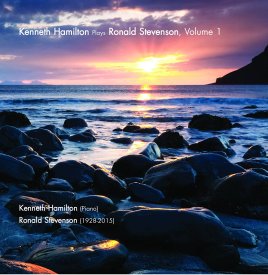 The Scottish composer Ronald Stevenson died in March 2015. He was one of the most important composers of our time, a composer-pianist in the grand tradition of Beethoven, Chopin, Liszt and Rachmaninov, probably best remembered for his monumental Passcaglia on DSCH, his tribute to Shostakovich composed in 1962. Stevenson has been compared to Liszt and Busoni: he transcribed many works for piano, and he was also a generous supporter of other musicians and students. His musical language is also redolent of these composers, as well Chopin and Alkan, but always with its own distinctive voice and an awareness of his adopted Scottish heritage.





 The Cross-Eyed Pianist