YCAT, the Young Classical Artists Trust, which identifies, supports and nurtures early in their professional careers, has put together some very useful resources in its 21cMusician toolkit – a brand new series of micro-courses, videos, interviews, blogs and live events, each with a different monthly focus, to help young musicians kickstart their careers.

In the crowded, highly competitive market that is the classical music industry, it can be hard for young musicians to get started and make a mark – and never more so now, at a time when the industry and the arts in general, are in extremely straitened circumstances due to the government’s response to the coronavirus pandemic – young musicians need good advice and practical support, which YCAT seeks to offer with its resources.

In the first of its monthly series, #21cMusician toolkit, the power of programming is explored with a number of leading music writers, critics and reviewers, myself included – plus advice on designing inventive and intriguing programmes.

Visit the YCAT website to read more


Photo by Kilyan Sockalingum on Unsplash

At the risk of sounding clichéd, the coronavirus pandemic has thrown into sharp focus the precarious nature of most professional musicians’ lives. With concert and opera venues closed – and only now beginning to reopen cautiously – many musicians have been faced with the very frightening situation of being without any means to earn money. This survey by Encore, the musicians’ booking platform, reveals the current dire state of the UK music industry.

The profession has always been unstable. Most musicians are self-employed and many combine performing with teaching to supplement meagre concert fees – high salaries are reserved only for the ‘celebrities’ at the very top of the tree. For most, concert and teaching fees are not truly commensurate with the amount of time and commitment musicians must put in to sustain their careers. There are few jobs in the developed world which are so highly skilled yet so poorly remunerated, and many musicians are simply not economically resilient. The events of this year have highlighted this to an even greater extent, and there is absolutely no guarantee that life will return to “normal” for musicians when venues do re-open. Added to this, there exists a certain societal misunderstanding, sometimes bordering on contempt, for people who make a living in non-standard ways – musicians, writers, artists, actors. The inference is that these people should get “a proper job” and quit moaning.

During lockdown, and its aftermath, those musicians for whom teaching provides a significant part of their income have fared better than those for whom concertising is the only source of making money. But for the professional performer, the lack of concert engagements can feel like the loss of a limb because for many musicians their very identity and raison d’être is defined by performing.

We’re going to have to be a lot less fancy in future” remarked a concert pianist friend of mine, when we were talking about the effect of the pandemic on concerts and concert-going in the early days of the UK lockdown. He means, to be brutally frank, “beggars can’t be choosers“. Venues and concert organisers/music societies will have less cash to spare and musicians will be chasing fewer engagements; an already competitive profession is likely only to become even more cut-throat. As a consequence, musicians will have to take the work when the opportunity arises without worrying about the prestige of the orchestra, ensemble, or venue.

To accept that the profession, for which one has spent many years training and honing one’s craft and one’s skills, putting in hundreds of hours of practicing and, as a consequence, giving up many aspects of life which other people outside of the profession would consider “normal”, can no longer be one’s primary source of income comes as a bitter blow to many musicians. When one’s identity is defined by one’s music-making and one’s very personal attachment to one’s chosen instrument, it can feel like an attack on one’s very body and soul.

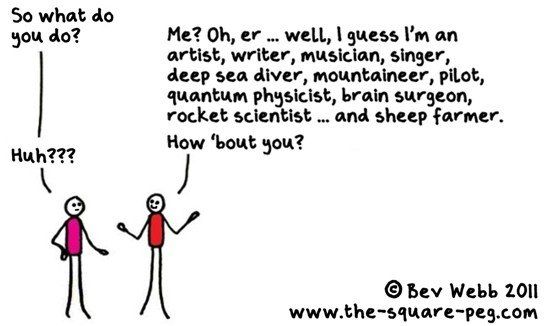
“Portfolio career” is a fashionable term for “doing a variety of jobs” and musicians are masters of the peripatetic working life. Now more than ever, a willingness to be adaptable is crucial – and that may mean drawing one’s main income outside of music.

Some musicians regard this as a sign of failure, but why should there be shame in taking work outside of the profession? Maybe now is the time to be less squeamish about “non-musical” jobs? In straitened times, pragmatism must come before art, and if that means taking a job outside the profession, there should be no shame in doing this: you are no less a musician just because it is not your main source of income.

Unfortunately, the musician’s training tends to discourage looking outside of the profession for work. Sure, you might have worked in a bar or helped with front of house duties at a concert venue when you were a student, but very few conservatoires and music colleges offer specific courses in business skills and entrepreneurialism for musicians – from the basics of setting up a personal website to more sophisticated self-promotion, marketing and PR. In addition, they do not necessarily encourage students to consider other careers within music, such as arts administration or orchestral management, publicity/PR/marketing, music publishing, or working for a venue or recording label. Conservatoires train musicians to be performers and many continue to peddle the idea that a career as a performer is a sustainable one.

Of course, working outside the profession comes at a cost to one’s practice regime: if you’re doing a 9 to 5 job elsewhere, you still have to find the time to practice – and that’s a full-time job even without concerts.

I’ll close with some thoughts from musician friends and colleagues:

I really never want to give it up as a profession. After a few days not practicing I lose a lot of mechanism, so going into a 9-5 job would devastate everything I’ve worked for. But undoubtedly this will see people off…..There never was a “career”. I still don’t really know how it’s meant to work, I just got called for random things that all added up. I had an amazing last 10 years and I hope to God it’s not over. There’s always playing but it wouldn’t be the same. A lot of us have been very, very lucky to get to do this. (RS)

I am a great believer in turning everything to one’s advantage, and I feel that this could be a very liberating time in which musicians can feel that they have permission to explore other interests and career paths which they may have otherwise put on hold. As a pianist, I feel that I identify so strongly with that vocation that to choose any other direction would be a betrayal of that identity, and deemed by others to be a strange decision or even a sign of a lack of success in that area. Musicians are under huge pressure to always look busy with their music, and even made to feel guilty when doing something other than practising(!) – there is no shame in admitting that music isn’t actually the *only* thing which makes you tick. (LKP)
portfolio20careers_vcl5hvvqwwkjgavujdsg-544x326-640w

Cast your mind back to the end of March. It seems like another time now, doesn’t it – a period of great uncertainty and anxiety for all of us. For many musicians, whose busy lives up to that point were dominated by full diaries of rehearsing, performing, teaching, recording, initially it felt like an opportunity – to pause, reflect, rest and reset. And with the venues shut and performances cancelled, it was a chance to spend valuable time with the music.

At first it felt like a great gift – to have so much time, free of punishing rehearsal and teaching schedules, tiring travel and late nights, post-concert. Here was an opportunity to learn new repertoire, music one had had on one’s “to do” list for years (a pianist friend of mine enthused about learning Beethoven’s ‘Hammerklavier’ sonata for the first time, in a professional career of over a quarter of a century); or to revisit previously-learnt works – an experience akin to reacquainting oneself with an old friend – and discover new details.

But soon the time became a curse – because the more time one had, the more it confirmed that there would be no swift return to “normal life”. The venues remained shuttered; there were no performances, beyond livestreams from living rooms, and an enervating weariness set in. Why practice when there was nothing to practice for? My pianist friend admitted that the ‘Hammerklavier’ had mostly lain unopened on his music desk….

The situation has been rather different for amateur musicians, who have revelled in this gift of time. Working from home or furloughed, these months have provided hours of pleasure. Practising is no longer shoe-horned into one’s busy daily schedule, no need for precious moments to be snatched amongst the responsbilities of work or family life. Oh the joy of guilt-free practising and playing for the sheer pleasure of it (something which professional musicians often envy in amateurs).

Focus, and having something to work for, is so important for the professional musician. It provides motivation and fuels intent. Without it, one can feel stranded and unsettled, dislocated and depressed. Routine is also crucial, and the self-discipline of a daily routine not only gives structure to one’s time, but also feeds creativity. In addition to solitary practice, musicians find stimulation and structure in rehearsal with colleagues and ensemble work – all of which has been, until very recently, put on hold.

Perhaps the worst part, the most draining aspect of this situation, was the not knowing: not knowing when it would end, or how the industry would look as we emerge from this grand fermata. Not knowing if one would still be able to sustain a career in music (the subject of a future article). The government sent out confusing messages, or retreated on previous announcements, offering crumbs of hope and then retracting at the eleventh hour, only adding to the uncertainty and frustration. We looked at our European counterparts, many of whom had endured even more severe restrictions than us, with a degree of envy as it appeared most were getting back to normal life far more quickly than us, with venues opening up, albeit with smaller, socially-distanced audiences, and some festivals running, scaled down but, importantly, with real, live audiences.

Now UK concert life is beginning to re-emerge from the great hibernation as venues prepare to reopen and admit audiences once again, with restrictions. There’s a renewed energy as musicians shake off the debilitating ennui of the past five, yes, five months, and return with renewed focus to their practice schedules and rehearsals. Diaries are open again. It’s a time of relief, tinged with trepidation: musicians are pleased to be getting back to doing what they do best, but there’s caution too, about what the future holds….


Photo by Aron Visuals on Unsplash

The coronavirus is forcing us to practice social distancing and self-isolation. As I joked on Twitter the other day, musicians, and especially pianists, have been self-isolating for years!

The pianist’s life is, by necessity, lonely. One of the main reasons pianists spend so much time alone is that we must practise more than other musicians because we have many more notes and symbols to decode, learn and upkeep. This prolonged solitary process may eventually result in a public performance, at which we exchange the loneliness of the practise room for the solitude of the concert platform.

However, despite the need for frequent sequestration to get the work done, regular interaction with colleagues and students alleviates the loneliness and reminds us of the life beyond the keyboard and the importance of forging musical partnerships, professionally and socially. And in concert-giving, there is also the important connection and interaction with audiences.

With coronavirus sweeping the world, the concert halls and conservatoires are closed and we are being told to exercise social distancing and self-isolation to protect ourselves and our families and friends from this virus. Around my social networks in the days since the UK government ordered that we “stay at home”, many of my musician friends and colleagues have been posting details of how they intended to cope with this new way of making and sharing music. Some are excited about the prospect of weeks, maybe months, of enforced isolation as an opportunity to learn new repertoire, ready for when the concert halls and venues reopen and the music can be shared with live audiences once more. Others are exploring ways to give concerts online via platforms like YouTube. Unfortunately, neither of these activities make money and the sad truth of the musician’s working life is that it is very fragile. Most musicians are self-employed and many live almost hand-to-mouth, meagre concert fees (only the most internally-renowned musicians can command large fees) often supplemented by teaching which offers regular income.

Without concert bookings, many musicians feel marooned as the main focus of their daily lives is removed in one fell swoop. It’s all very well saying you’re going to learn the Saint-Saens Piano Concerto or the complete Liszt Transcendental Etudes, but without concert bookings it’s very hard to feel motivated.

“You’ve got more time to practice now!” people outside the profession might declare, and while this may be true, it’s not very helpful as musicians face the prospect of months without work, no fees, and the attendant anxiety which this brings.

For the amateur musician, by contrast, this is a time for extra, guilt-free practising; but for the professional musician it is rather more problematic. “I’ve really only dabbled at the keyboard” wrote one of my clients, a concert pianist, in an email a couple of days ago. The week before all this kicked off, he and I were discussing the next round of promotion for his concerts, which will, in all probability, be cancelled. And without concerts, the professional musician loses a significant motivation to keep working.

I think it’s important to exercise some self-care and not feel guilty about not working (by which I mean practising) as much during these strange, surreal and uncertain days, and especially not to compare oneself to others who may be busy with livesteam concerts, videocasting and daily broadcasts of Bach…. This time may serve to remind musicians how their lives are often lived at full tilt, and so perhaps this is an opportunity to slow down, pause and reflect?

In the meantime, stay safe and well.

ETkJ4QJWoAUZeZv


