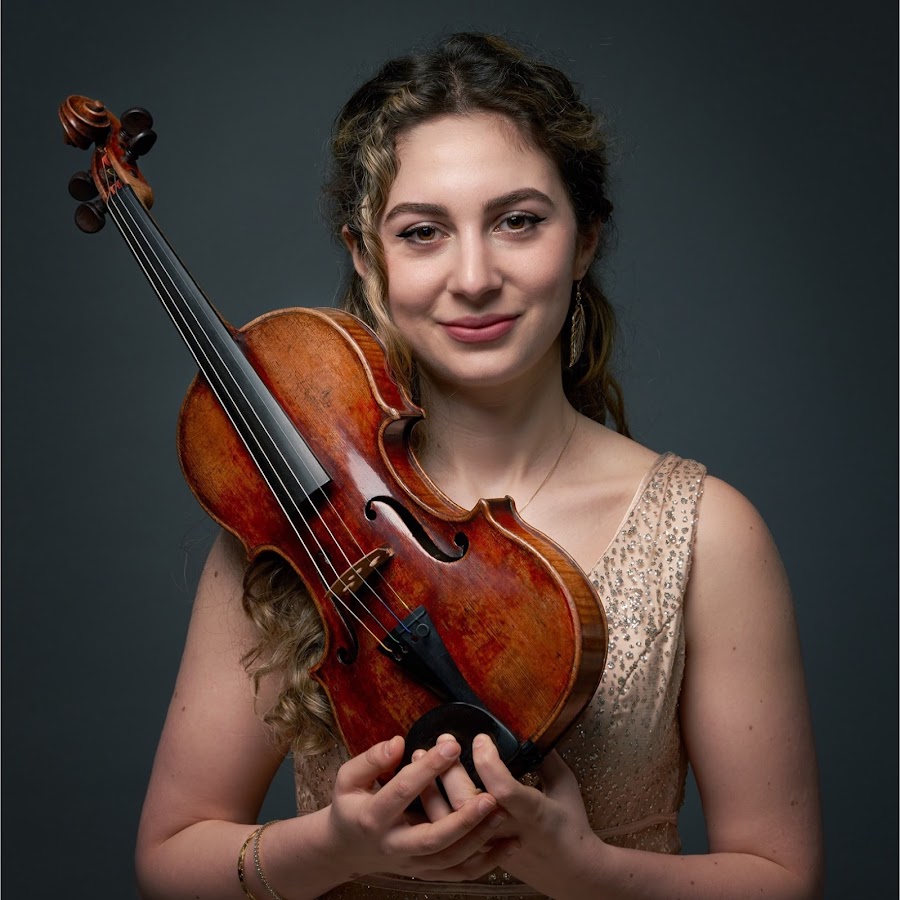
Duncan Honeybourne (piano) & Leora Cohen (violin)

This interesting new release from British pianist Duncan Honeybourne, with British-American violinist Leora Cohen, introduces the hitherto little-known music of Jessy Reason, known somewhat cryptically during her lifetime as “J. L. Reason”.

A long-forgotten, enigmatic figure, Jessy Lilian Reason, née Wolton, was born in London in 1878, the daughter of a wealthy hop merchant. In 1902, in Cornwall, she married a gentleman of private means twenty years her senior, with whom she settled firstly in Devon and later in Tonbridge, Kent. In the late 1920s the couple made a final move, to Reading, where Jessy died in 1938.

In May 1992 a writer called Alan Poulton discovered a large stack of handwritten music manuscripts in a second-hand bookshop. He purchased the collection and during the 2020 Covid lockdown, now retired and with time on his hands, he set about exploring and cataloguing the manuscripts, and researching the life of the woman who had composed 70 handwritten works in the early decades of the twentieth century. The paperwork accompanying the collection reveals that Mrs Reason studied composition with the renowned composer and conductor Eugene Goossens; she was then in her mid-40s, her tutor some 15 years younger. How much of Reason’s music was performed during her lifetime remains unclear: all that has come to light so far is a performance of a single song at London’s Wigmore Hall and a song cycle given at a minor concert in West London, all in the early 1920s. (The current catalogue of Reason’s music, compiled by Alan Poulton, can be found on the British Music Society website.

Pianist Duncan Honeybourne is a passionate advocate for lesser-known and rarely-performed music, and this new release by Prima Facie Records reflects his unerring ability to unearth really fine music and bring it to a wider audience by recording and performing it (see also his release, also on the Prima Facie label, of piano music by William Baines). On this recording he is joined by young British-American violinist Leora Cohen. She brings a wonderful range of colours and nuance to the Three Poems for Violin and Piano, matching Honeybourne’s playing with a remarkable sure-footedness, sensitivity and musical maturity.

This disc presents Jessy Reason’s entire output for solo piano, together with the Three Poems, and as such is a wonderful introduction to Reason’s writing. She was clearly a highly-skilled yet largely self-taught composer and musician (her writing for piano reveals an intimate knowledge of the geography of the keyboard): in his biography of his mother, Richard Reason describes her as “an ardent musician, with a fiery style of violin-playing . . .teaching herself the whole technique of writing for full orchestra”. Her scores, some of which I have seen, thanks to Duncan Honeybourne, are elegantly crafted and neatly laid out.
By turns richly romantic, impressionistic, darkly lyrical, sensuous and harmonically complex, there are hints of late Brahms, Debussy, Ravel, even early Messiaen in Reason’s sophisticated, inventive music. This inspiring legacy of work is brought vividly to life by Duncan Honeybourne on a piano contemporaneous with the music, a 1922 Bösendorfer.

Piano and Chamber Music by Jessy Reason

Duncan Honeybourne (piano) with Leora Cohen (violin)
Prima Facie Records, July 2024

leoraviolin.com

duncanhoneybourne.com

Two contrasting new releases today

Duncan Honeybourne plays the 1873 Bevington organ at Holy Trinity parish church, Bincombe, Dorset (Prima Facie records PFCD220)
Bincombe is “a tiny place, comprising a few cottages, fields, farms and an ancient church nestled against a verdant hillside in sight of the sea. The lush meadows provide an inviting backdrop whilst, on the sightline, the English channel sparkles in the summer sunshine and shimmers mysteriously at night.” (Duncan Honeybourne). Part of the church dates from the twelfth century, with most of the remainder having been constructed in the fifteenth. The single manual organ was built by the London firm of Bevington and Sons in 1873 and supplied at a cost of £105 to the neighbouring parish of Broadwey. It was moved to Bincombe in 1903. (Bincombe is famous for its “bumps”, a cluster of round barrows which are visible from the Weymouth Relief Road.)

I was lucky enough to have a little preview of this album when Duncan gave a concert on the organ at All Saints’ church, Wyke Regis, in September. This album includes works by those masters of organ writing, Buxtehude and J S Bach, together with works by John Bull, William Byrd and Maurice Durufflé, as well as a nod to Wesssex composers, with works by Exeter-born Kate Boundy and Kate Loder of Bath. There is also a Dorset connection with Greville Cooke’s tranquil Threnody, recorded here for the first time. Cooke, a pianist, composer, poet, priest and professor at the Royal Academy, lived in north Dorset in his last years, although this piece was written during his time as Rector of Buxted, East Sussex. The album closes with John Joubert’s Short Preludes on English Hymn Tunes, composed for the new chamber organ at Peterborough Cathedral in 1990. 

An enjoyable and highly varied disc which reveals the myriad colours, moods and warmth of the Bincombe organ. As a Dorset resident myself, I am particularly taken with the album’s connection to the local area near to where I live.


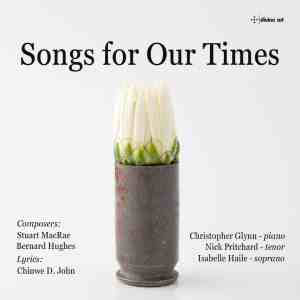
Songs for Our Times

Christopher Glynn (piano), Isabelle Haile (soprano), Nick Pritchard (tenor)
Settings of lyrics by Chinwe D. John by Bernard Hughes and Stuart MacRae

(Divine Art Records DDX 21113)

I first encountered poet and lyricist Chinwe D John in spring 2022 when she contacted me about an EP of settings of her poetry (read my interview with her here).

This new release, like the previous EP, is an affirmation of Chinwe’s belief that in order to keep classical music thriving and to bring in a new audience, the work of present day composers needs to be supported. Commissioning contemporary day composers, to set music to lyrics directly reflective of our current times, is one way of accomplishing this. Chinwe herself sought out composers who shared her vision to set her words to music.

The album features two premiere recordings Kingdoms and Metropolis, whose stories will be familiar to many with their universal subjects, including the need for wisdom within the halls of power; transcendent love; an immigrant’s homesickness; the search for inner peace; all flow through the album evoking the spirit of our day and age. Despite our current turmoil, the overall tone of the album is a hopeful one, making it a welcome balm during our turbulent times.

With music by leading British composers Stuart McRae and Bernard Hughes, this is an intimate and ultimately uplifting album, with a wonderfully varied selection of very beautiful, arresting music.


Both albums are available on CD and via streaming

Piano music commissioned and recorded during lockdown to support musicians struggling during the Covid-19 crisis

There have been many initiatives to keep the music playing and support musicians during these difficult times. What all of these initiatives demonstrate is that musicians are, despite straitened circumstances, determined to keep playing and to continue to share their music with audiences. It also sends a powerful message to government that the industry is determined to survive, to let the music play, come what may.

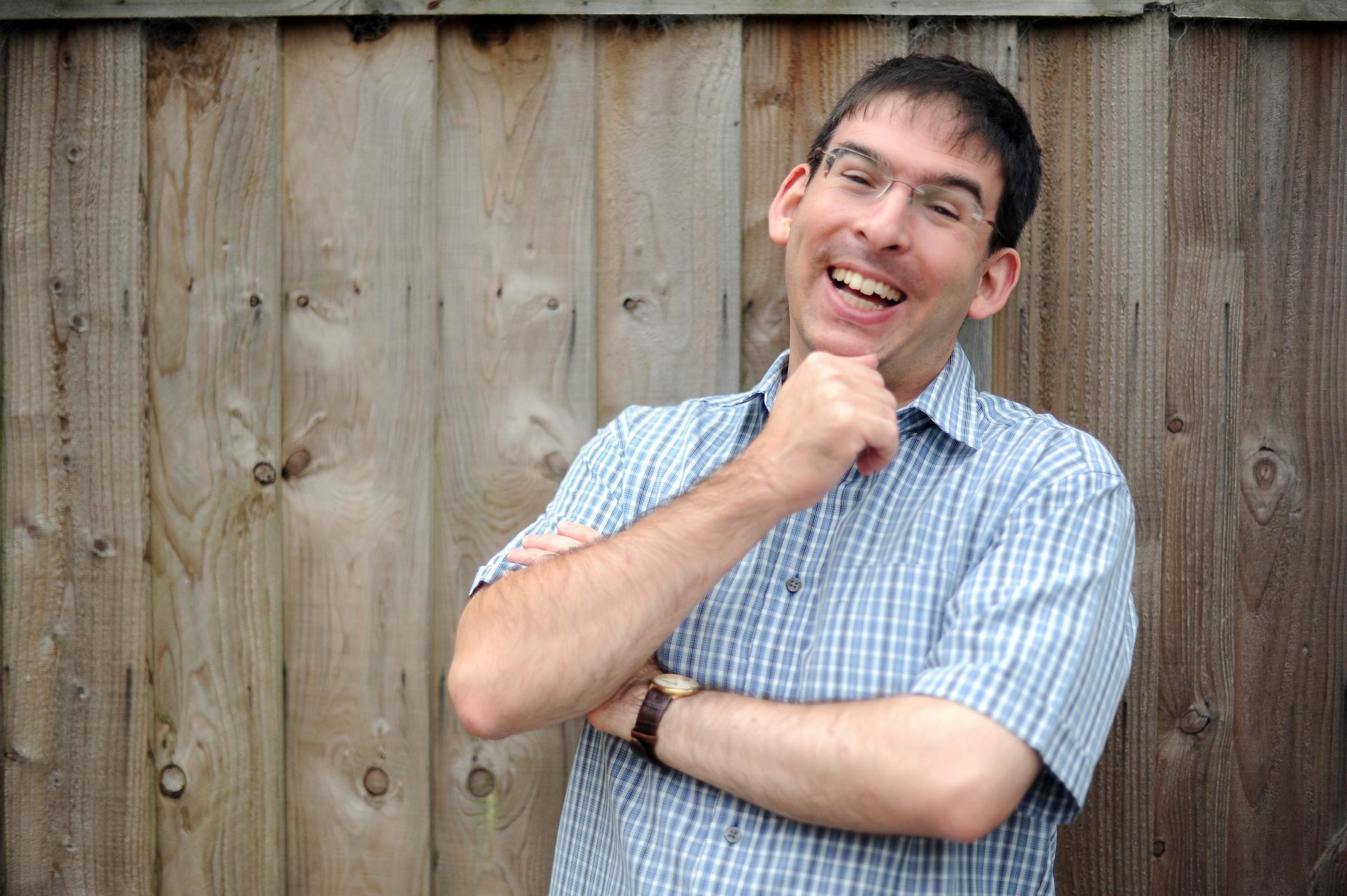
I have a personal interest in this wonderful project by pianist Duncan Honeybourne: Duncan and I are friends, and also colleagues – together we run a lunchtime concert series in Weymouth.

During the UK lockdown, Duncan decided to offer short video recitals from his home every day. He called them ‘Piano Soundbites’. The series proved very popular and within a few weeks, Duncan had the idea to approach composers to ask them to write new piano pieces for him, to be premiered as ‘Contemporary Piano Soundbites’ in his video recitals. Alongside this, Duncan set up a Just Giving page to raise funds for Help Musicians UK (formerly the Musicians’ Benevolent Fund). The response was incredible – the project, which was ranked in the top 10% of Just Giving fundraisers nationally during April 2020, has already raised well over £2000 for Help Musicians UK, supporting musician colleagues struggling in the current situation.

‘Contemporary Piano Soundbites’ celebrates the diversity of styles embraced by a broad cross-section of professional composers working today. Featured composers include Sadie Harrison, Graham Fitkin, John McLeod, David Lancaster, Francis Pott, Luke Whitlock and John Casken, as well as younger and emerging composers, and each piece is no more than 6 minutes long at the most. These piano miniatures represent an important contribution to the ever-expanding repertoire for the instrument, to be enjoyed by amateur, professional and student pianists alike.

pianist Duncan Honeybourne

“….it was an invigorating experience to record an entire disc of pieces which hadn’t existed less than four months earlier! Especially stimulating and exciting is the juxtaposition of several leading senior composers with some of their most gifted younger colleagues. Several young composers make their first appearances on disc.

My objective, as I stated in my invitation to composers, was fourfold: to imaginatively harness the zeitgeist of our present situation: to bring comfort and enjoyment to a large ready-made audience stuck at home, to aid musicians badly affected by the “cultural lockdown” and to add to the contemporary repertoire, creating an artistic keepsake of this extraordinary phase in our history.

My long term plan is that, as well as helping our colleagues at a time of need, the collection will provide a snapshot of reflections and musings by some of the finest and most distinctive composers of our time at a unique and unprecedented moment in our history. I hope the disc will make for a refreshing, enriching, stimulating and quirky listening experience too!”
Duncan Honeybourne, September 2020

The music was recorded in late July 2020 in the new Gransden Hall at Sherborne Girls School, Dorset.

The disc is released on the Prima Facie label and is available to order now

For review copies, sample tracks, interviews with Duncan and other press information please contact Frances Wilson


Meet the Artist interview with Duncan Honeybourne


This site is free to access and ad-free, and takes many hours to research, write, and maintain. If you find joy and value in what I do, please consider making a donation to support the continuance of this site

Make A Donation

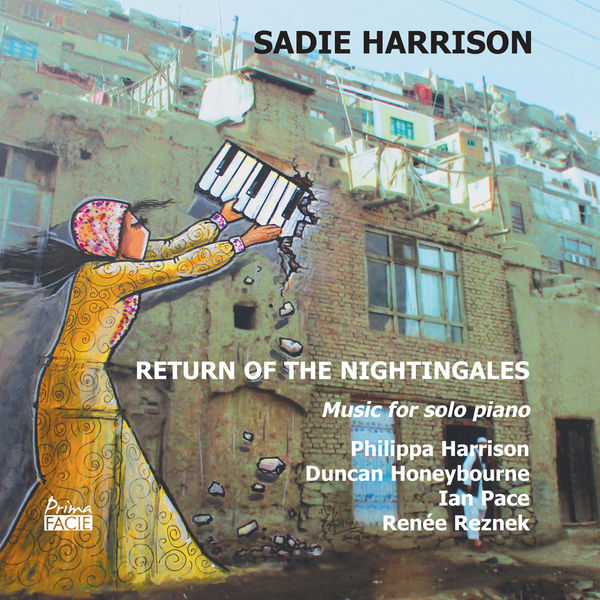
0712396065227_600When I put ‘Return of the Nightingales’ (Prima Facie records) into my CD player, my cat Monty immediately dashed into my office and up onto my desk to find the birds that sing so sweetly at the start of the title track of this new disc of music by Sadie Harrison. The piano enters, delicately yet brightly, imitating the twittering birdsong before moving into a lively, rhythmic passage. Ian Pace, the pianist for this track, is very much at home in contemporary and new music for piano, and it shows in the ease with which he handles technical difficulties and his vivid, immediate sound.

The variety of writing in just a few minutes of this piece signals the theme for the entire disc: it’s a wonderful example of Sadie’s compositional breadth and rich imagination and a lovely introduction to her colourful and accessible music. Not only does the disc demonstrate the range of Sadie’s compositional palette but it also showcases the talents of four excellent pianists – Ian Pace, Renée Reznek, Duncan Honeybourne and Philippa Harrison, all of whom have considerable experience in this type of repertoire and who bring myriad colours, timbre and musical sensitivity and individuality to each work on the disc.

Composed between 2011 and 2017, the pieces on this disc reveal the many contrasting styles within one composer’s output, reflecting Sadie’s wide-ranging musical and cultural influences, including the music of Bartok, Berg, Chopin, and Debussy, jazz legends Bill Evans, Fats Waller and Thelonius Monk, Methodist hymns, vintage film music, her passion for the cultures of Persia and Afghanistan (Sadie is Composer-in-Association of the Afghanistan National Institute of Music), and the natural world. In ‘Return of the Nightingales’ (the title is drawn from the translation of a Persian poem), near-Eastern folk idioms are woven into the starkly modernist suite of pieces Par-feshani-ye ‘eshq (played by Renée Reznek), while in Lunae ‘Four Nocturnes’ Duncan Honeybourne sensitively and sensuously illuminates the tender, intimate lyricism and delicate traceries of these delightful and arresting miniatures (I purchased the sheet music on the strength of this performance in order to learn the pieces myself). Philippa Harrison brings the requisite vibe and swing to the Four Jazz Portraits, capturing the style of each jazz great to whom they are dedicated; while in Shadows ‘Six Portraits of William Baines’ Sadie takes small quotations from Baines’ piano works and reflections on his diary entries to create intriguing miniatures, masterfully presented by Duncan Honeybourne. The Souls of Flowers recalls Chopin in its long-spun melodic lines and shimmering trills, while Northern Lights uses harmonies and idioms redolent of folksong and hymns. The final work, Luna…..for Nicola, is a tiny yet meaningful hommage to Nicola le Fanu, with whom Sadie studied for three years, and was written in response to hearing the premiere of Nicola LeFanu’s orchestral work ‘The Crimson Bird’. in February 2017.

The song of the nightingale is the unifying thread on this disc – in the third of the four Lunae, the evocation of Alabiev–Liszt’s ‘Le Rossignol’ as played by William Baines, and in the fluttering wings of Par-feshani-ye ‘eshq, but also less obviously in the use of trills, sparkling runs, chirruping note clusters and tremolandos.

This is wonderfully rewarding, varied and enjoyable disc, proof that contemporary piano music can be tuneful, attractive and entirely accessible. There is much to delight and challenge the pianist too: the pieces are generally within the capability of the intermediate to advanced player, and are available to purchase as scores (from University of York Music Press). I particularly like Sadie’s treatment of melodic fragments and her jazz-infused harmonies.

Highly recommended