One of my best friends is a published author. With two popular and successful books under her belt, she gave up her day job to write full time. When we meet, she and I often end up discussing creativity, for the life of the writer and the musician are not dissimilar. We share similar processes – for example, the need to keep to a regular routine, as this fosters more consistent creativity and output –  and we both appreciate the need to feed the muse: as my friend would say “what comes out must be put back”, and when our creative forces are depleted, we must stoke up further reserves of inspiration. She and I both also see value in accumulating experience and wisdom as we progress through our daily lives.

Just as writers have days when the creative juices seem to dry up, so too do musicians. We may rail against an unproductive practice session, frustrated that nothing seems to go right, the brain willing but the fingers sluggish and unresponsive – or vice versa. This can be seen as “wasted time”, pointless because you achieved nothing but, apparently, a slew of errors. It can be disheartening and demoralising to walk away from the instrument with the feeling that you have achieved very little.

In fact, nothing is wasted, and if we treat each practice session with curiosity and an open mind, it is possible to find useful nuggets in everything we do. Reflection is a significant aspect of deep practising, and it is important to consider why a practice session didn’t go as planned and to explore ways in which it could go better the next time. All errors should be regarded as learning opportunities (I used to tell my students “there’s no such thing as a wrong note”) and should be examined carefully: maybe that slip was due to a poor or improperly-learnt fingering scheme.

Students in particular also believe that they should only be practising the music they have been assigned to practice by their teacher. Wrong. Any time spent at the piano is useful, even if you’re just noodling, messing around with some chords, improvising, or simply playing through some pieces which you enjoy playing. One of my students actually apologised to me for having learnt the first section of Debussy’s Clair de Lune during the Christmas break. “Why are you apologising?” I asked her. She said she thought I would be “angry” that she had practised something I hadn’t assigned to her. What she hadn’t realised was that by taking the initiative to learn some music without me, she had taken a first step towards a goal which is imperative for a musician: autonomy.

Time spent away from the instrument is also beneficial. Our daily lives feed the musical temperament and contribute to our music making, and it is simply unhealthy, and often unproductive, to spend hours locked away in the practice room. We draw on life experience to inform our artistry and activities which may seem divorced from our musical lives can actually inspire and inform. Don’t feel guilty about spending time reading a book or watching a movie: this is not “wasted time” for the musician, and nor is “down time”, for body and mind need time to rest and unwind to be ready for the next practice session or performance.

As musicians we should cultivate curiosity, not only in practicing and performance, but in our daily lives, and just as the writer may squirrel thoughts away in a notebook, so we too should store ideas. This way we ensure that nothing is wasted, and everything contributes to the richness and variety of our musical lives.
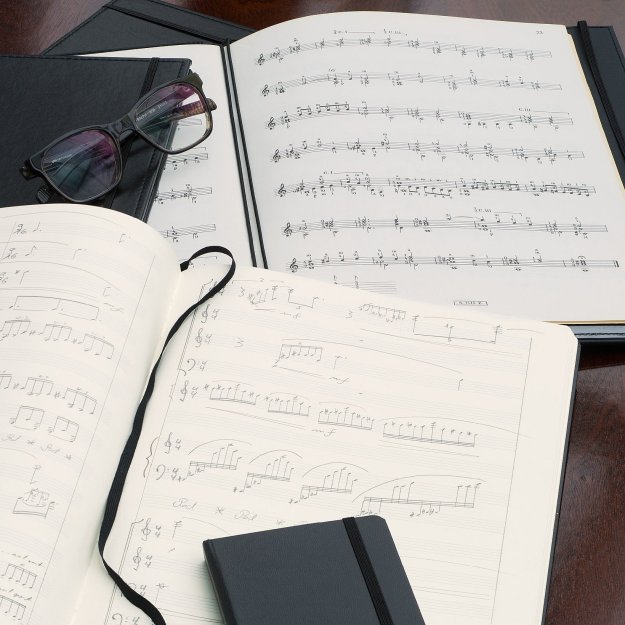

notebook-master-slim-a4-with-staves-hardcover-121-numbered-pages-black-3_2048x


Advice from pianist Beth Levin

1. brew coffee

2. consider learning new repertoire

3. visualize a recital you would have given before the venues closed – imagine 4, 5, 6 encores! well with a little luck it might have gone that way!

4. imagine the dress you would have worn – consider it with different earrings

5. go to your music stacks, pick anything and start sight-reading (hopefully it won’t be Islamey!)

6. listen to a recording of yourself in recital to remind yourself that yes, you know how to play

7. brew more coffee

8. consider learning new repertoire

9. daydream about a tour of China when this is all over

10. brew more coffee


Brooklyn-based pianist Beth Levin is celebrated as a bold interpreter of challenging works, from the Romantic canon to leading modernist composers. The New York Times praised her “fire and originality,” while The New Yorker called her playing “revelatory.” Fanfare described Levin’s artistry as “fierce in its power,” with “a huge range of colors.”

Read more

Bach’s Goldberg Variations caused me misery – but I still can’t get enough

– Jeremy Denk, pianist


Our relationship with our repertoire is personal and often long-standing. Connections with certain pieces and composers may be forged in our early days of learning our instrument, which remain with us throughout our musical lives. Many of us can clearly remember some of the earliest pieces we learnt as children, and returning to repertoire learnt in childhood and during student years can bring an interesting, and sometimes uncomfortable rush of memories. Opening the score of the first book of Bach’s Well-Tempered Clavier, I saw my teacher’s markings, her explanation of the structure of a fugue, and for a moment I was transported back nearly 40 years to her living room and the big black Steinway grand piano on which she taught me.

Sometimes these repertoire relationships forged during early study can be detrimental to our learning as mature players. Bad habits from childhood and student days are deeply ingrained, and all too easily recalled, and thus very hard to shift later on. This is interesting in itself as it demonstrates how carefully (or not) one has learnt the music previously, and sometimes the only way to step aside from these habits is to buy a new score and start the music afresh, as if learning it for the very first time.

Jeremy Denk’s comment on the Goldberg Variations is interesting and will resonate with many musicians, I’m sure. We all have pieces which have a particular hold over us, which fascinate and compel us to revisit them over and over again. Yet their technical and musical complexities make the learning and practicing process difficult and sometimes less than rewarding. Some repertoire, however beautiful, satisfying or intriguing, is simply a slog, and the more progress one makes, the more “just out of reach” it seems.

Other works, in comparison, feel relatively easy, the music flows in practice and performance, gives satisfaction to player and audience, and enters into one’s personal catalogue of “favourites”.

However, “easy” can be a myth, because everything, even the simplest little prelude by Bach, can be taken up a level each time we revisit the music. This setting aside of and returning to repertoire also affects our relationship with it, and we may observe how that relationship changes over time and with the benefit of artistic maturity. I have gone back to previously-learnt works and wondered what I found so difficult before. The passing of years, and accumulated experience and wisdom make the process of reviving repertoire stimulating and enjoyable. We are reminded of what attracted us to the music in the first place, while also continually finding new aspects to it. This curiosity also helps to keep alive our relationship with the repertoire.

Then there are pieces which we may never play, but, rather like the books you haven’t read, and may never read, remain special. Just knowing the score is there, on the bookshelf, can foster a particular relationship with that music (I often buy scores of music I know I will never play simply for the pleasure of reading the music or admiring the organisation of it on the page), and maybe one day you will open it, set it on the music stand, and start the process of learning it….


Too often it seems that we view learning, studying, practising and performing music as a kind of fight. People talk about “doing battle with Beethoven” or “fighting the fear” (of performing) as if one must take up arms against unseen, powerful forces.

It’s true that learning new repertoire can be a Herculean task, and practising can feel like a form of captivity, the same page of music confronting one day after day, coupled with the sense that one has hardly moved forward from the previous day’s practising. It is also true that in order to learn any repertoire properly, and deeply, we must spend inordinate amounts of time sweating the small stuff – all the details in the score, the directions and signposts the composer gives us to navigate the keyboard and produce a coherent path of sound to take the listener on a unique journey into the composer’s own inner landscape, while also to enabling us to make our own interpretative choices about how we will perform the music.

There is no alternative to the hard graft of learning new work in depth: working, with pencil and score, cutting through the music to the heart of what it is about. Living with the piece to find out what makes it special, studying style, the contextual background which provides invaluable insights into the way it should be interpreted and performed. The endless striving to find the emotional or spiritual meaning of a work, its subtleties and balance of structure, and how to communicate all of this to an audience as if telling the story for the very first time.

Studying, practising performing and ultimately sharing music, the musician’s “work”, should not feel like a battle or a mountain summit that must be conquered. I know many musicians, professional and amateur, who have personal strategies to prevent this sense of struggle. Spending time with the score away from the instrument can be particularly helpful, familiarising the shape and architecture of the music on the page, and imagining the sound in one’s head, without the added distraction of the geography of the piano keyboard, for example. For very complex music, I like to leave the score, or copies of the score, around the house – on the dining table, by my bedside, so that I see the score regularly, often many times during the day. When I come to place it on the music desk, it already feels comfortable, even if I have yet to touch the piano’s keys

Practising is an act of doing, creating, living with the music. It defines who we are as musicians and gives us a reason for being. A positive, open minded approach to practising can remove the feelings of toil and travail. Making friends with the music brings joy, pleasure and excitement to practising. We should live and breathe our work, beginning every practise session with the question “What can I do that’s different today?”.

Our excitement and affection for our music is very palpable when we perform – audiences sense and appreciate it – and it brings the notes to life with vivid colour and imagination.

