
Guest post by Jessica Yeartie
To our benefit, there are usually several paths one can choose to arrive at the same end result. Doing so in the traditional way or manner, and the unconventional way. Whichever decision you make is incumbent on the most comfortable way for you in accomplishing something.
To me, I am always seeking the easiest and most convenient way to do something, however I would not perceive myself as lazy. I am just conservative and selective with how I spend my energy. The only thing I exercise to the brink of exhaustion on a daily basis is my brain and thought processes. I can usually just take a nap to recuperate when necessary.
When I had decided I wanted to learn the piano, I knew seeking out a professional teacher to personally instruct me was out of the question, financially and time-wise. My mentors and research consisted of pianists who posted helpful videos on YouTube for beginners and affordable piano books and exercises I could purchase from Amazon.
Due to my circumstances, these choices suited my situation best and I made the best with what I had at my disposal. If aspiring pianists have the funds to hire a personal instructor, I would highly encourage you to do so.
Many tactics I did not learn until much later would have been made aware to me had I had someone to overlook my practice sessions and provide instant feedback I could apply on my own time. Though I think I have gotten on fine enough considering the circumstances.
Like everything in this universe, there are pros and cons when we make these choices. When we choose one thing over the other, we are knowingly sacrificing what could have been had we chosen differently. Sometimes the fear of ¨what could have been¨ can cripple us so much that we just do not make a choice at all.
Some have the opportunity to experience both but I cannot say if that is the default when it comes to decision-making. Although, I can say that hard work can certainly aid with filling in the gaps where personal instruction could have been well-utilized.
Pros
Learning anything outside our immediate area of expertise is a struggle, to say the least. Fortunately the individuals who would consider themselves to be of a more independent nature could definitely benefit from the self-taught avenue.
Adhering to Your Own Schedule
Going solo means you do not have to refer to someone else for when a task should be completed. Finding ways to manoeuvre around each other´s, sometimes very busy, schedules can be time-consuming and hard to negotiate.
Also, life is still going on around us. Many of us have outside responsibilities that come first before giving precious time to what most would consider a hobby. Things like family, relationships, work, household duties, etc. are more than enough to keep the average citizen occupied for the majority of their week.
Of course we definitely need sleep as well, especially me. We are not machines that only need to be recharged when we are feeling fatigued at the end of a long, busy day. Being self-taught can eliminate some of these issues.
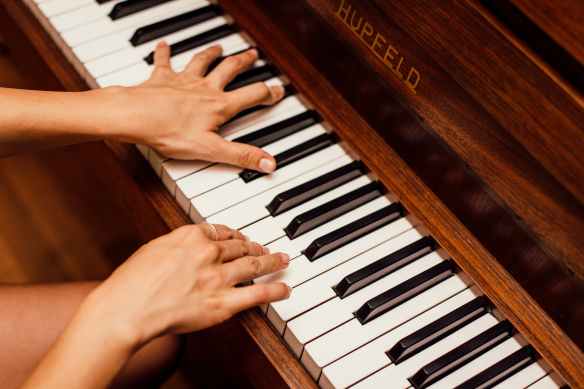
No Time Constraints
Typically, teachers expect you to have practiced a certain amount during the week and present that to them when you see them next. Sometimes, the pressure of performing and getting in the required time for a full practice session can be tiresome and anxiety-inducing.
While I immensely enjoyed taking a piano close as a Junior in high school, I hated the weekly tests the teacher would grade us on for the song he selected. I always performed so much worse during the exam than when I was practicing and it frustrated me to no end.
Also, my school did not have enough pianos for each student to have their own so our allotted time slot was much shorter time to accommodate our larger than average classrooms. Now that I practice in the comfort of my own home, I can take as much time as I need to make sure I fully understand a concept.
Working at Your Own Pace
Slow-learners and fast-learners are the bane of the other´s existence. We all have that one subject or skill we excel in and get mildly irritated when others are not. At least that was the case for me in the past. I was even more irritated when I did not understand something and everyone else did, leaving me behind while I struggled.
Some concepts take longer to comprehend than others so rushing them can exacerbate their feelings of inadequacy, leading them to eventually quitting.
On the contrary, moving too slowly can lead to boredom. It is hard for a professional and newbie to come to terms with their individual skill levels and find a way to move forward that satisfies both of their needs.
Working alone means you can work as fast or slow as you need. You can speed up when something comes easier to you or take additional time for more difficult roadblocks without feeling like you are infringing on someone else´s time while still moving forward.
Cons
On the other side, there are some hiccups one should take into consideration before taking the plunge. While there is a considerable amount of freedom that comes with being self-taught, there are also some factors one should think about. Determine whether or not these possible setbacks are something you are willing to take on during your progression.
Lack of Support
One thing that makes starting a new hobby so exciting is meeting new people who have the same passion as you. This can be said about starting a new sport, joining a club at school, or attending weekly community gatherings for a specific project.
What all of these activities have in common is a group of individuals that are physically present. You have others you can converse with as the two of you are working while establishing a relationship.
In the beginning stages, learning an instrument can be kind of isolating if you are teaching yourself. Having a teacher present can remind you that they are there to help and support you when you eventually hit a wall. We can sometimes lose motivation when we have no one holding us accountable.
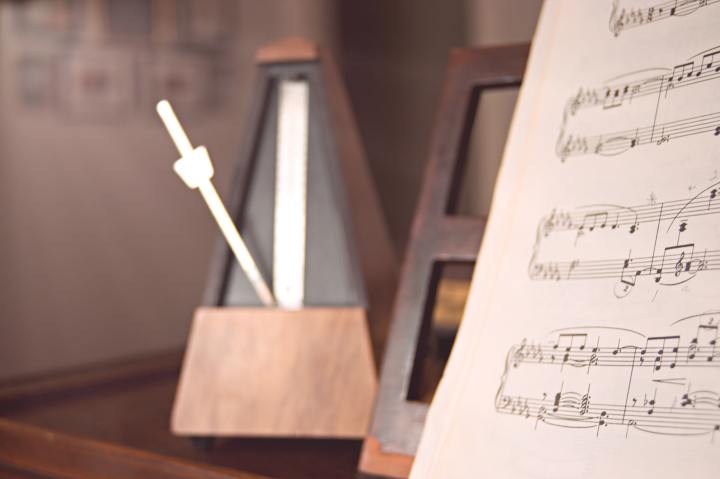
Lack of Foundation
If you are anything like me, you tend to want to skip the ¨boring¨ stuff and tackle the more exciting lessons. The problem with this is you hit a plateau much quicker due to a lack of knowledge in basic strategies you should have focused on to begin with.
We all have songs in our heads we really want to learn so we convince ourselves, prematurely, that we can learn it at our current level only to receive a slap in the face when you realize you cannot even play both hands at the same time without being out of time.
It takes a responsible person to stave off instant gratification and spend time on the more mundane, but important, aspects that are the very foundation of what they can accomplish in the future.
Little to No Feedback
Unless you asked someone to watch over you who is well-versed in piano and the proper form, you do not have much immediate feedback so you would have to refer to second-hand resources for clarity.
Playing in front of someone can be extremely nerve-wrecking but it is worth it to learn in the early stages which behaviours need to be corrected so they do not turn into bad habits that are nearly impossible to break further down the line.
Don´t shoot yourself in the foot by relying on your intuition in unfamiliar territory. There are lots of resources and videos out there that will inform you on better ways to play arpeggios or the perfect posture to maintain when practicing.
In Conclusion
We are all different. Some thrive in solitude while others, in the company of others. I do not regret that I chose to be self-taught however I definitely believe I could have benefited greatly from having a stable authority present to help me when I struggled.
Ideally, I think the best situation would be to experience both. Have a teacher as a novice player then gradually become more independent as you improve. That is just my opinion, though.
Whatever decision you choose is ultimately up to you unless you have parents who insist on paying for your lessons. I hope whatever path you choose leads you to victory.
Keep playing!
Jessica Yeartie is a US-based writer and blogger.

 Brooklyn-based pianist Beth Levin is celebrated as a bold interpreter of challenging works, from the Romantic canon to leading modernist composers. The New York Times praised her “fire and originality,” while The New Yorker called her playing “revelatory.” Fanfare described Levin’s artistry as “fierce in its power,” with “a huge range of colors.”



 The Cross-Eyed Pianist