Guest post by Jennifer Griffin Gaul

My mom used to tell a story about me. She said that she would lie in the bathtub at night and listen to me practice piano.

I find this story strange because I honestly have very, very few recollections of practicing. I know I played because I remember the irritation I would feel at competing with the blare of the TV, or my angry older brother yelling at me to stop making a racket. But then there was the idea of “practice”, which was a bit of a fuzzy concept for me. Was it playing things over and over again until I could play it perfectly? Or was it something else altogether? I didn’t really know and there was no one at home who understood it either.

I didn’t start piano until I was 9 years old. We didn’t own a piano and my parents only
experience with music lessons was my brother’s aborted attempts at trumpet, which
left them unenthusiastic about investing in lessons for me. The subject of piano only
came up because they received a call from my best friend’s mother. Mrs. Kim had
called to say that I seemed to spend a lot of time around her piano and she thought
they should have me start lessons. My father balked at the idea of purchasing a piano
for an 8-year-old so I was given a plastic recorder and signed up for recorder lessons. I played recorder for a year and when it became clear that I loved music, they figured
out a way to get a small spinet piano.

I adored my first piano teacher, Mr. Erikson. He was a tall, gangly, bearded man with a
raspy voice. He started me off and we worked together until I was nearly 16 years old.
Every week when my lesson rolled around I’d feel a flurry of emotions. Anticipation was usually the biggest one. Sometimes a bit of shame for not doing the music worksheets he would assign. And also for not “practicing”. I didn’t like to let him down and I knew that practicing was important. I just wasn’t sure how to do it. But I also didn’t want to ask him what it meant because it seemed like I should understand it already.

Something magical always happened in those lessons with Mr. Erikson. Our work
together would absorb me completely. The lesson would flash by as I immersed myself in each new intricacy of music-making and sound. I progressed steadily. I must of practiced, right? How do you progress without it? And yet why didn’t I understand
what it was?

My musical life stumbled after a tearful parting from Mr. Erikson when he moved to
California. Limited for competent piano teachers in my small town in Rhode Island I
had begun lessons with a music professor at the local university. That relationship was life-changing. My weekly lessons became agony. There was no flow or understanding during lessons. Just a series of orders of what I was supposed to do. I was unable to focus because I was so frightened of this teacher. My ability to immerse myself in the music and grow and learn evaporated. Each week became worse as I was berated over and over again with my musical (and perhaps personal) deficiencies.

By this point, I had been accepted into the university at age 16 to pursue a Bachelor of
Music. He was the teacher I needed to work with in order to get my degree. He was
annoyed with me for this early acceptance, which he had been against. He said I
wasn’t mature enough. He was also annoyed with me for being accepted into the
Young Artist Piano Program at Tanglewood over the summer before I started at
university. He had told me I would be wasting the time of the audition committee if I
applied and would never be accepted. I auditioned anyway and spent a month
studying with Robert Taub, surrounded by amazing young musicians who were far
better than I was. They practiced! I was starting to get the concept.

And I DO remember practicing for him. I practiced a lot! But I just couldn’t seem to
progress. I couldn’t connect with the music. And each time I sat down to practice,
determined to show him what I could accomplish, I would just become more
discouraged. I ran scales. I did technique exercises. I worked on the assigned music.
Joylessly and with trepidation, driven by a sense of his seemingly endless disapproval.
It all came to a head during a lesson when I was mucking up the Mozart Sonata he had
assigned. By this point every time I played for him my hands would shake, my eyes
would have trouble focusing and my brain would go blank. In a fit of irritation he told
me that I had no capacity for hard work and I was just someone who liked music but
would never be a musician. He then told me to play it again for him. I couldn’t because
I was crying so hard I couldn’t see the music. He sighed and said “This proves what
I’ve said. Go home.”

I was devastated. My teacher Mr. Erikson came back for a visit that fall. I played for him and he just stared when I finished. “What happened?” he said weakly. Not only could I not play fluidly or with any musicality, I had developed so much tension that I was losing the feeling in my arms and hands. All that practice had done significant damage.

Before he returned to California, Mr. Erikson helped me to make some changes. I
altered my program from a Bachelor of Music to a Bachelor of Arts in music because
that allowed me to drop piano lessons.He had a long consultation with a friend who
had a D.M.A. from Eastman School of Music and set me up with this new teacher. I
began commuting to Boston every Saturday for lessons. I had to relearn how to play
again. Gradually I began to heal. Gradually I started to play again (or was it practice?). I adored my lessons with my new teacher. The sense of ultra focus and immersion
during lessons returned and I made enough progress to be accepted into University of Texas at Austin’s music program where I earned a Master of Music in piano.

So how does this impact my own teaching and the advice I give to parents and
students about the importance of practice?

In my opinion, at every level students need help understanding what they’re trying to
achieve when they practice. That understanding needs to be age appropriate. And it all springs from the quality of the teacher/student engagement during lessons. Working together in a way that feels collaborative, exploratory and uncovers each student’s connection to the music sets students up for better success on their own. Lessons that include regular, honest, and non-judgmental conversations between a teacher and a student about what (if anything) the student achieved in the week. We all know lesson time is precious because there just isn’t enough of it. But it is time well spent for students. Learning to self-reflect. Learning how to engage with sound. Learning to recognize how technique is tied to the sound produced. Learning to immerse themselves in a process that, when it goes well, can make an incredible difference.

Many years ago, I heard a friend joke that “you don’t need to practice if you just play
every day.” And I realized I finally had my answer to how I had made my progress.
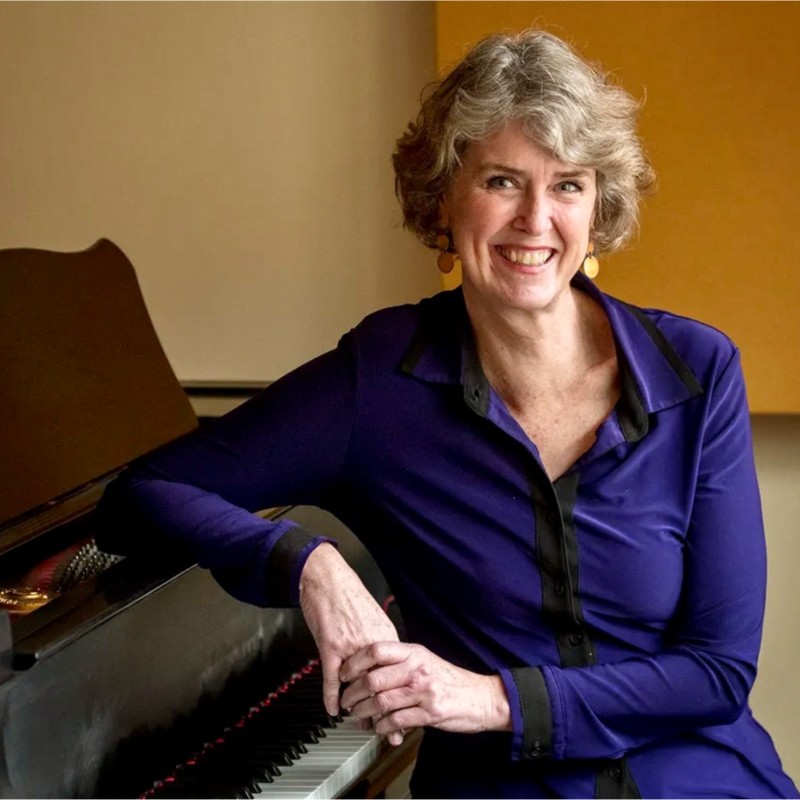

Jennifer Griffin GaulJennifer Griffin Gaul is a US-based pianist and educator. She holds a Master of Music in piano pedagogy and performance from the University of Texas at Austin.

Find out more

I first heard this work live over 10 years ago at a concert given by the American pianist and noted Mozart specialist Robert Levin, with the Orchestra of the Age of Enlightenment. Played on a fortepiano, whose relatively modest voice spoke so elegantly in the Queen Elizabeth Hall, from the opening measures I was completely hooked. The next day, I purchased the music and started to learn it. It took at last three attempts to learn it “properly” – it’s one of those pieces which benefits from being put aside for a few months and then revisited, not once, but time and again to reveal its details and many layers of meaning and emotion. It’s a piece that keeps surprising both listener and performer.

Composed in the spring of 1787, after Mozart returned from Prague, it has been suggested that its composition was in response to the news that one of the composer’s closest friends, Count August von Hatzfeld, had died, and may therefore be a rare example of a personal event in Mozart’s life prompting a composition. The piece is introspective and private, freighted with melancholy and sadness, with a thoughtful, measured elegance throughout. It is touching and beautiful, simple and perfect; but its deceptive transparency offers no place to hide. It requires great clarity and preciseness in order to express its overriding melancholy, and its poignant charm.

The Rondo theme is a pensive melody which looks forward to Chopin – and has even been mistaken for Chopin by a naive listener when I’ve played it. A rising theme, yet it hardly seems to move forward, and with each weary semitone step, there is a dying fall, almost sigh or a painful intake of breath, emphasised by the quaver rests. The dissonance, created by the first ornament (which reappears regularly throughout the piece) further enhances the sense of tragedy.

Each reappearance of the theme is treated slightly differently, further emphasising its pathos and poignancy. The C major phrase is somewhat less painful, but, tinged with poignancy, it is hardly hopeful.

The first subsidiary theme (‘B’), beginning at bar 31, harks back to J S Bach in its use of counterpoint and chromaticism, while the texture is suggestive of string quartets with its different voices. As the new theme pours forth, the mood is now more hopeful and consoling, with a lovely LH cello line which is very different to the haunted bass of the opening melody. There’s an almost operatic grandeur through these measures, immediately dispelled when the music lurches unexpectedly into D-flat major at bar 46. The music then creeps chromatically, recalling the opening theme, and, after an episode marked by plaintive descending and ascending chromatic figures, the earlier ‘B’ material returns, building to a climax in bar 59, marked by the octave figures in the LH. A greater, more full-toned climax at bar 63 is carried through to bar 69 with a grand, energetic arpeggiated figure in the RH. From bars 69-75, the long chromatic notes hark back, once again, to the chromaticism at the beginning of the piece, while from bars 74-80, the music seems hang in suspense in the dominant, in anticipation of the rondo theme, which returns at bar 81.

The second statement of the theme is stripped of its C major sentence, and is even more haunting, with its sobbing, breathless syncopations in bars 86-87, a kind of written rubato, which needs no additional increase or decrease in tempo in the bass line (prefiguring Chopin). The quaver rest in bar 88 can be lengthened in readiness for the A major section (“C”).

Now, we are in more familiar, comfortable territory, for here is Mozart at his most charming and elegant, before a brief shift into B minor, with dissonance created by the ornaments. A more hopeful D major passage (I read somewhere once that Mozart declared D major “the happiest key”) begins at bar 101, reprising some of the material from the A major interlude. At bar 116, the chromaticism in the bass again recalls the opening motif, leading into further chromatic surges and grinding diminished seventh harmonies. The thematic material of the opening is never really forgotten, thus further reminding us of the prevailing sense of sorrow.

At bar 129 the rondo theme returns in its original form, but with more elaborate ornamentation this time, tortured rather than decorative. There’s a real sense of desolation at bar 155, while the repeated A’s and chromaticism in bars 155-157, evoke almost a wailing, grief-laden lamentation.

The Coda, beginning at bar 163, heartbreakingly recapitulates all the elements that have gone before and all the motifs return in a grim, Bachian setting. It is highly emotional, mixing tragedy and frustration, with a final, whispered statement of the opening theme in the closing measures.

More a Fantasia than a strict Rondo in the organisation of its thematic material, the K511 offers many technical challenges, and, as stated earlier, requires absolute clarity in its delivery. Overly fussy playing will only obscure the deeply emotional nature of this work – and this, to me, is the real heart of it. Conveying that sense of melancholy, sadness and grief is the hardest part, while always maintaining honesty and fidelity to the score. For those of us whose early pianistic encounters were with the early works of Mozart, the pieces with the lowest ‘K’ numbers, all smiling childlike innocence and playfulness, the Rondo K511 represents a work of great maturity and profound expression.

The piece contains all the subtleties of Mozart’s music in microcosm: its chiaroscuro, its many moods, some fleeting, passing in the space of a single bar, its storms and its sunshine. Leonard Bernstein said “Mozart combines serenity, melancholy, and tragic intensity into one great lyric improvisation“, a quotation which perfectly sums up the enduring fascination and appeal of the K511.


If you would like to contribute an article to the Repertoire in Focus series, please get in touch via the contact page


This site is free to access and ad-free, and takes many hours to research, write, and maintain. If you find joy and value in what I do, please consider making a donation to support the continuance of this site

Make A Donation

I was recently asked for some tips on returning to the piano after a long absence.

I stopped playing the piano at the age of 18 when I left home to go to university and I didn’t touch the instrument again seriously until I was in my late 30s.

It may be two years or twenty since you last touched a piano, but however long the absence, taking the decision to return to playing is exciting, challenging and just a little trepidatious.

Here are some thoughts on how to return to playing:

Stick with the familiar and play the music you learnt before

To get back in to the habit of playing, start by returning to music you have previously learnt. You may be surprised at how much has remained in the fingers and brain, and while facility, nimbleness and technique may be rusty, it shouldn’t take too long to find the music flowing again, especially if you learnt and practised it carefully in the past.

Take time to warm up

You may like to play scales or exercises to warm up, but simple yoga or Pilates-style exercises, done away from the piano, can also be very helpful in warming up fingers and arms and getting the blood flowing. This kind of warm up can also be a useful head-clearing exercise to help you focus when you go to the piano.

You don’t have to play scales or exercises!

Some people swear by scales, arpeggios and technical exercises while others run a mile from them (me!). As a returner, you are under no obligation to play scales or exercises. While they may be helpful in improving finger dexterity and velocity, many exercises can be tedious and repetitive. Instead try and create exercises from the music you are playing – it will be far more useful and, importantly, relevant.

Invest in a decent instrument

If you are serious about returning to the piano, a good instrument is essential. It needn’t be an acoustic piano; there are many very high-quality digital instruments to choose from. Select one with a full-size keyboard and properly weighted keys which imitate the action of a real piano. The benefits of a digital instrument are that you can adjust the volume and play with headphones so as not to disturb other members of your household or neighbours, and most digital instruments allow you to record yourself and connect to apps which provide accompaniments or a rhythm section which makes playing even more fun!

Posture is important

You’ve got a good instrument, now invest in a proper adjustable piano stool or bench. Good posture enables you to play better, avoid tiredness and injury

Little and often

Your new-found enthusiasm for the piano may lead you to play for hours on end over the weekend but hardly at all during the week. Instead of a long practice session, aim for shorter periods at the piano, every day if possible, or at least 5 days out of 7. Routine and regularity of practice are important for progress.

Consider taking lessons

A teacher can be a valuable support, offering advice on technique, productive practising, repertoire, performance practice, and more. Choose carefully: the pupil-teacher relationship is a very special one and a good relationship will foster progress and musical development. Ask for recommendations from other people and take some trial lessons to find the right teacher for you.

Pianists at play at a summer piano course in France

Go on a piano course

Piano courses are a great way to meet other like-minded people – and you’ll be surprised how many returners there are out there! Courses also offer the opportunity to study with different teachers, hear other people playing, get tips on practising, chat to other pianists, and discover repertoire. I’ve made some very good friends through piano courses, and the social aspect is often as important as the learning for many adult amateur pianists.  More on piano courses here

Join a piano club or meetup group

If you fancy improving your performance skills in a supportive friendly environment, consider joining a piano club. You’ll meet other adult pianists, hear lots of different repertoire, have an opportunity to exchange ideas, and enjoy a social life connected to the piano. Piano clubs offer regular performance opportunities which can help build confidence and fluency in your playing.

Listen widely

Listening, both to CDs or via streaming, or going to live concerts, is a great way to discover new repertoire or be inspired by hearing the music you’re learning played by master musicians.

Buy good-quality scores

Cheap, flimsy scores don’t last long and are often littered with editorial inconsistencies. If you’re serious about your music, invest in decent sheet music and where possible buy Urtext scores (e.g. Henle, Barenreiter or Weiner editions) which have useful commentaries, annotations, fingering suggestions, and clear typesetting on good-quality paper.

Play the music you want to play

One of the most satisfying aspects of being an adult pianist is that you can choose what repertoire to play. Don’t let people tell you to play certain repertoire because “it’s good for you”! If you don’t enjoy the music, you won’t want to practice. As pianists we are spoilt for choice and there really is music out there to suit every taste.

Above all, enjoy the piano!


This site is free to access and ad-free, and takes many hours to research, write, and maintain. If you find joy and value in what I do, please consider making a donation to support the continuance of this site

Make A Donation

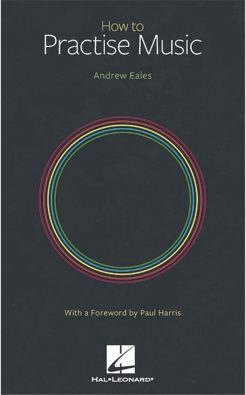
The expression “small but perfectly formed” is rather over-used, but in the case of Andrew Eales’ new book How to Practise Music (Hal Leonard) it is entirely apt. This pocket-sized volume is the perfect companion for every musician, packing a punch in less than 100 pages with its wealth of supportive, imaginative, practical and thoughtful suggestions to keep the musician, whatever their age or ability level, focused and motivated.



Practising is the musician’s “work” and too often, especially for younger or early to intermediate level players, practising can really feel like hard work. An influential music educator and piano teacher, Andrew Eales understands the challenges facing players – that the necessary rigour and self-discipline of the practice room can “potentially steal our joy and rob us of our potential” – and he responds to those challenges with this succinct guide to assist musicians of all levels and ages to become confident, self-motivated players, while also recognising the need to set realistic, achievable goals in the practice room, and to be kind to oneself.

The book is arranged in sections which cover everything from reasons for practicing and organising your practicing (it’s remarkable how many musicians, even more advanced ones, struggle to organise their practice time intelligently!) to warming up and how to practice core skills (scales and arpeggios, studies and exercises, reading music and sight-reading). Later sections give sound advice on selecting repertoire, background research, listening and “chunking” – intensive work on short sections of the music – as well as mindfulness in practising and sensible advice on how to practise for performance, including thoughts on interpretation, authenticity, memorising and managing performance anxiety. The author manages to be both authoritative and accessible in his suggestions – a rarity in a world still riven with didactic instructions and ingrained attitudes – making the text engaging and interesting to read. Throughout, there is emphasis on playfulness in practising, as well as mindfulness, reminding the player that practising need not be a chore and that one should always find joy in one’s music making – and this is the closing message in the epilogue of the book.

This nugget-filled, little book of practise wisdom is small enough to keep by your side or in your pocket as you navigate your personal path through music. You may wish to read the book from cover to cover, or to simply dip into it; either way, you will find it an invaluable resource. Teachers too will find much useful information in finding creative ways to encourage students to practise.

A valuable addition to the practice room and the musician’s resources.

Recommended

How To Practise Music by Andrew Eales is published by Hal Leonard (£7.99)


Andrew Eales is a widely respected and experienced music educator and piano teacher based in Milton Keynes UK, where he runs a successful teaching studio. He is a published composer and author, and his piano recordings have been streamed more than a million times worldwide. Andrew runs the piano website/blog Pianodao.com