Ailsa Dixon’s sonata for piano duet Airs of the Seasons, is the latest work to be published by Composers Edition, in a new edition by pianist Waka Hasegawa. This is part of an ongoing project to bring Ailsa Dixon’s music to a wider audience; the publication of scores of her music coincides with the release of The Spirit of Love, a landmark recording of her chamber music and songs on the Resonus Classical label. (Find out more here)
Airs of the Seasons is in four movements, each prefaced by a short poem, evoking in turn the magical stillness after a winter snowfall, the first stirrings of spring, a dragonfly darting over the water in summer, and finally amid the turning leaves of autumn, a retrospective mood which recalls the earlier seasons and ends with the hope of transcendence in ‘Man’s yearning to see beyond death’.
The sonata was unperformed in Ailsa’s lifetime, but in the months before she died in 2017 the score was sent to pianists Joseph Tong and Waka Hasegawa, who would give the work its posthumous premiere at St George’s Bristol in November 2018. A week before her death, Tong wrote with the news that they were already rehearsing: ‘It is a beautiful set of pieces and each of the movements evokes aspects of the seasons suggested in the poems in an original and imaginative way – the musical language itself and the way in which Ailsa creates four-handed piano textures are absorbing and distinctive.’ For a composer who received very little recognition in her lifetime, it was a poignant indication that her music would survive her.
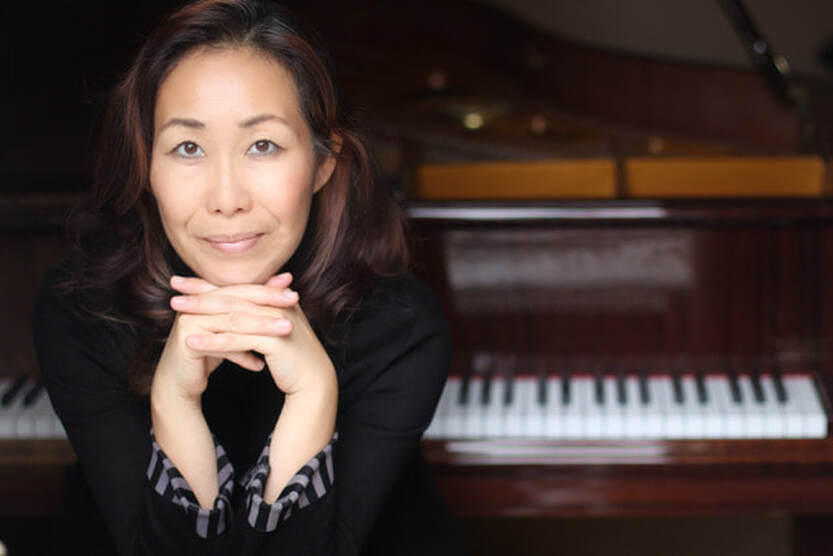
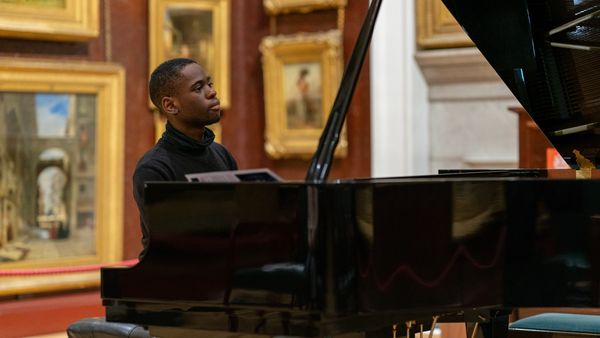
Waka HasegawaJoseph Tong
In a review of the premiere, Frances Wilson (AKA The Cross-Eyed Pianist) wrote ‘The opening chords of the first movement are reminiscent of Debussy and Britten in their distinct timbres, and the entire work has a distinctly impressionistic flavour. Ailsa’s admiration of Fauré for his “harmonic suppleness” is also evident in her harmonic language, while the idioms of English folksong and hymns, and melodic motifs redolent of John Ireland and the English Romantics remind us that this is most definitely a work by a British composer with an original musical vision. The entire work is really delightful and inventive, rich in imagination, moods and expression.’
Airs of the Seasons has subsequently been performed for Wye Valley Music in 2019, for Wessex Concerts at St Mary’s church in Twyford near Winchester in 2022, and in a concert in 2024 celebrating Ailsa Dixon’s musical legacy at St Mary’s College, Durham University where she studied in the 1950s.
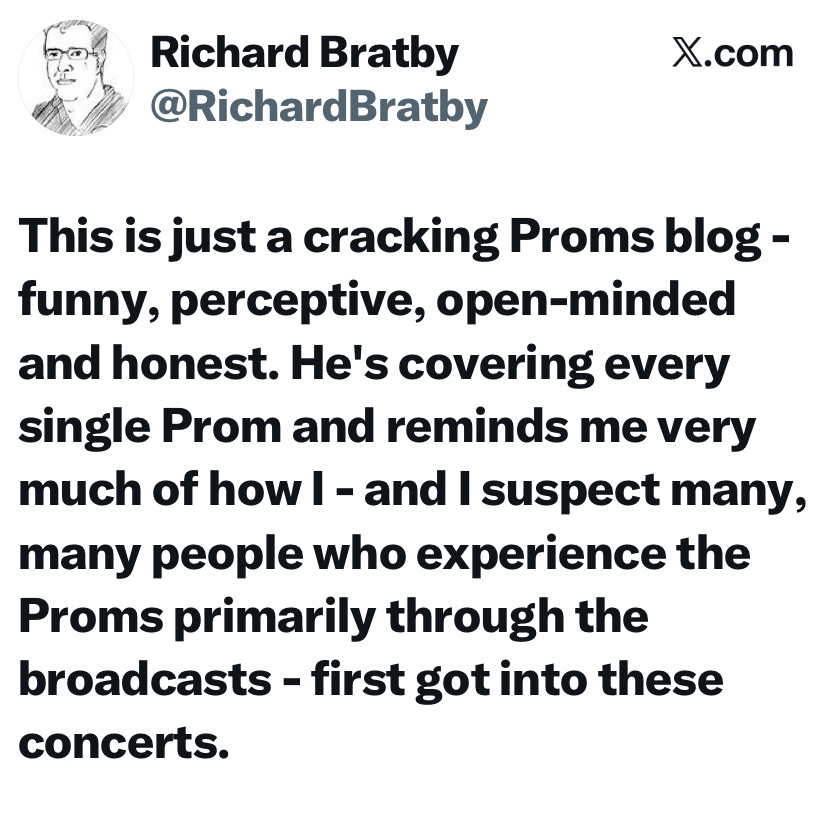
Social media, for all its faults, is also a force for good and can throw up unexpected encounters and delights. One such gem is Andy Lewis’s Proms blog, which I discovered via the music critic of The Spectator, Richard Bratby.
Andy Lewis is blogging about every single Prom of this year’s season, mostly via the broadcasts on BBC Radio 3. He hasn’t missed a single one and is now in the home straight, as it were – the final week, and the close of this year’s at the Last Night of the Proms.
What is so wonderful about Andy’s blog is that it’s not trying to be a serious critique or dry academic appraisal of each concert, but rather a personal reaction to and reflection on the music. He publishes his posts soon after each concert has taken place and as a consequence, his writing is fresh and spontaneous, entertaining, engaging and intelligent (and it reminds me of how and why I started blogging, back in 2010).
“And the Sibelius doesn't go wrong. At one point I'm transported to that spinning shed on the Wizard of Oz, and for that evocation alone he earns his stripes with me.”https://t.co/mfMuA5beI9pic.twitter.com/M2VHOTStzT
I caught up with Andy to find about more about his motivation for writing about the Proms and what he’s enjoyed in this season’s programme….
What made you decide to blog about every single Prom of the 2025 season?
It came about for a few different reasons. I was taken with the premise of the Proms; the fact that it is still possible to buy a ticket on the day for just a few pounds. I used to think to myself, ‘I’d be at the box office every morning if I lived around here.’ This triggered an ambition of one day attending every Prom at the Albert Hall, and this idea has laid dormant in my mind for years. I like to keep myself occupied, and this year my diary was nearly empty for the eight or so weeks when the Proms were happening. To fill my free time, I decided I would ‘attend’ every Prom, whether it be watching it on TV, listening on the radio, or actually getting down to the Royal Albert Hall in person. To make it more meaningful, I decided to create a record of it – hence the idea of the blog. As the weeks have progressed, the blog has also evolved into including little diary snippets from my daily life. If I’m still alive and well in thirty years, it will hopefully be interesting (for me) to read it back. Maybe my opinions on things will have changed by that time. Maybe I’ll be living a completely different life.
Have you attended/followed the Proms before this year?
I had only ever attended one Prom before, and I can tell you exactly which one it was!
It was Prom 48, Sunday 21st August 2016. The programme was Reflections on Narcissus by Matthias Pintscher to start, and then the second half was Mendelssohn’s theme to A Midsummer Night’s Dream. As I remember it, the music was blended with pop-up dramatic performances in different areas of the hall. Going to this Prom was what initiated my desire to see all the acts in one given year, but I had not gotten round to it until now.
What have been the challenges and pleasures of this project?
The pleasure has been discovering new composers, and getting a deeper understanding of composers I only half-knew before. Additionally, looking up the history and origins of the Promenade concerts themselves has been fascinating. In terms of challenges, it has often been exhausting to keep up with the schedule on a daily basis. Early in the run, I was having doubts as to whether I would be able to keep up with it all. If I miss a Prom one day, the momentum will very quickly snowball against me, so I need to make sure I am on top of blogging every day; trying to keep my writing fresh, avoiding repetition where possible, and keeping my grammar in reasonable check against a tight schedule.
And what have been the stand-out moments/performances for you?
It has honestly all been great and varied, but if you really tortured me I think I would say that the best Proms, for me, have been the ones that took me by surprise – those Proms that I thought were going to be boring and difficult to document, but turned out to be the exact opposite. Who would have thought that ‘100 Years of the Shipping Forecast’ would turn out to be so contemporary and engaging? There were packets of surprises hidden in the ‘Bruce Liu plays Tchaikovsky’ Prom – I was gleeful at the inclusion of Maple Leaf Rag amongst others. And Joe Hisaishi’s Proms debut introduced me to music I already knew. Music in the Studio Ghibli productions such as My Neighbour Totoro offer something gorgeously meditative.
Why do you think the Proms is “the world’s greatest classical music festival”?
I think it’s a combination of accessibility, variety, diversity, and longevity. The fundamental idea of the festival is that it opens up classical music to your ‘average Joe’ like me. I can grab a ticket for £8 (in 2025) and enjoy an evening of world-class entertainment. The variety of the performances across the summer weeks makes sure there is something for everyone. The diversity on the stage has ensured the Proms have kept up-to-date with the world around us, and this in turn has kept the Proms running for as long, and successfully, as they have been.
What would you say to people who are unsure about classical music or who have never attended a Prom before?
I would say, ‘don’t be afraid of getting classical music wrong’. If you enjoy what you hear, go and see it played live, just like you would a pop or rock act. Even pass comment on it if you dare to do so. There may well be a bunch of Oxbridge academics looking back at you like that Leonardo DiCaprio meme, but the truth is that music is subjective and – when offering an opinion on it – they are as clueless as the rest of us.
Would you do it all again in the same way for next year’s Proms?
Right at this moment I would say absolutely not! However, I do think I have opened a new relationship with the Proms, and in future years I will be more liable to be looking through the catalogue, choosing which Proms I would like to watch, listen to, or attend.
With regard to my writing, this is likely to be a one-off. But I would never say never. It would be nice to do something with a similar twist. For example, another one of my cultural challenges has been to watch every Shakespeare play, performed live. At time of writing I am on thirty-one plays, seen at different venues around the country. Given the number of operas based on Shakespeare and his characters, it could be an idea to review them with an amusing twist, comparing a production at the Royal Opera House to, say, the time I saw the same play at Gordale Garden Centre.
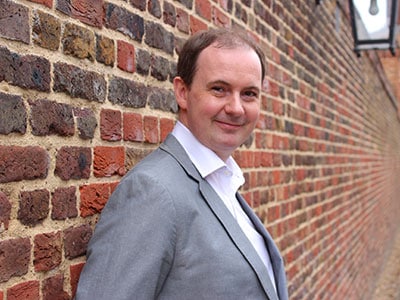
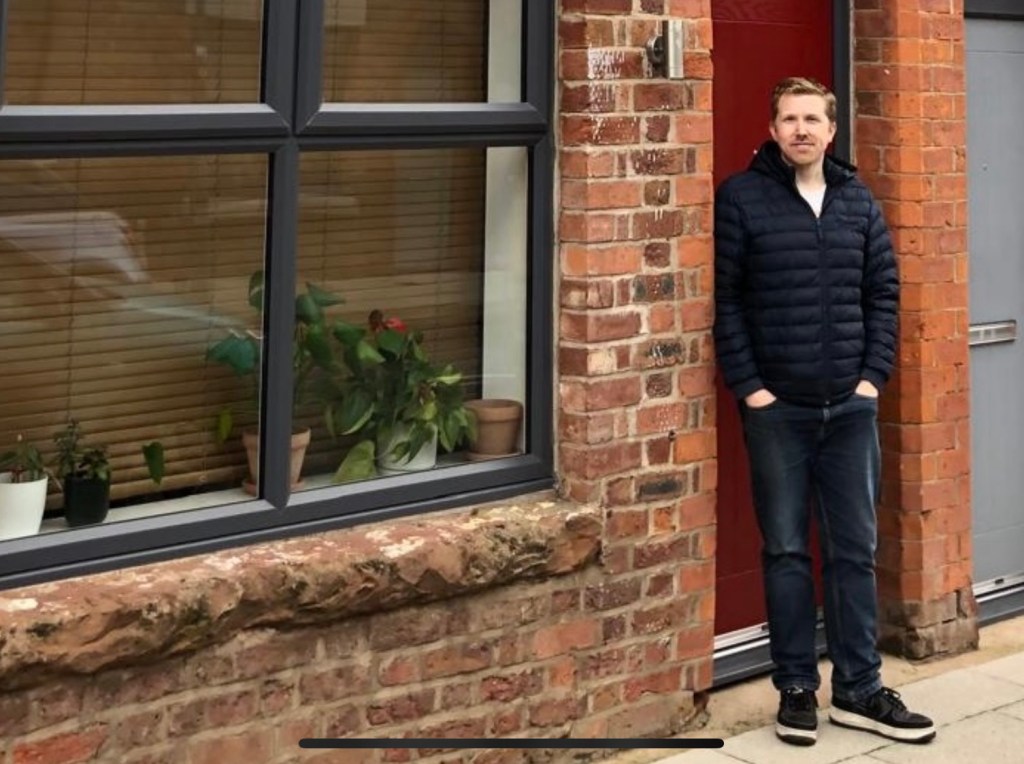
My name is Andy Lewis, I am thirty six years old. From the Wirral but living and working in Runcorn. I work in Medical Information for a multinational healthcare company, and in my spare time I like to attend rock concerts and theatre. I also play guitar, piano and harmonica. I am a music lover with my main genre being blues-rock, but I do also love classical and orchestral music.
The fifth Young Artist Showcase concert, hosted by Chamber Music Weymouth (formerly Weymouth Lunchtime Chamber Concerts) took place at St Mary’s Church, Weymouth, on Sunday 6 July.
Devised by CMW Artistic Director and concert pianist Duncan Honeybourne and Concerts Manager Frances Wilson, these events offer young musicians who are still in full-time education or are just embarking on a professional career the opportunity to perform in a formal concert setting. They also offer audiences a chance to enjoy a range of music, performed by these talented young people.
This year’s concert included a varied and impressive range of music and talents. Opening with Michael Howell, a composer and singer from West London who was a finalist in Channel 4’s The Piano (season 2), the audience were treated to Michael’s own compositions, which blend influences from both classical music (especially Bach) and jazz, together with his extraordinary, other-worldly countertenor voice.
The Alma Trio from Poole/Bournemouth impressed with their confidence and musical maturity in Rachmaninoff’s Trio élégiaque No. 1. It was especially fitting that this work, written when the composer was just 18, yet already showing immense talent and emotional depth, was performed by a trio of very poised young musicians of a similar age and equal talent. All three are heading to music college in the autumn.
Edie Wells, a pianist studying with Duncan Honeybourne at the University of Southampton, treated us to her Diploma programme, which presented a range of music, from Bach to Gershwin, and allowed Edie to showcase her ability to handle works of different styles and eras. I particularly enjoyed her Beethoven (Piano Sonata in E major, Op 14, No 1), but the highlights were the two pieces by George Gershwin: the romantic The Man I Love followed by I Got Rhythmn, which got the audience’s feet tapping!
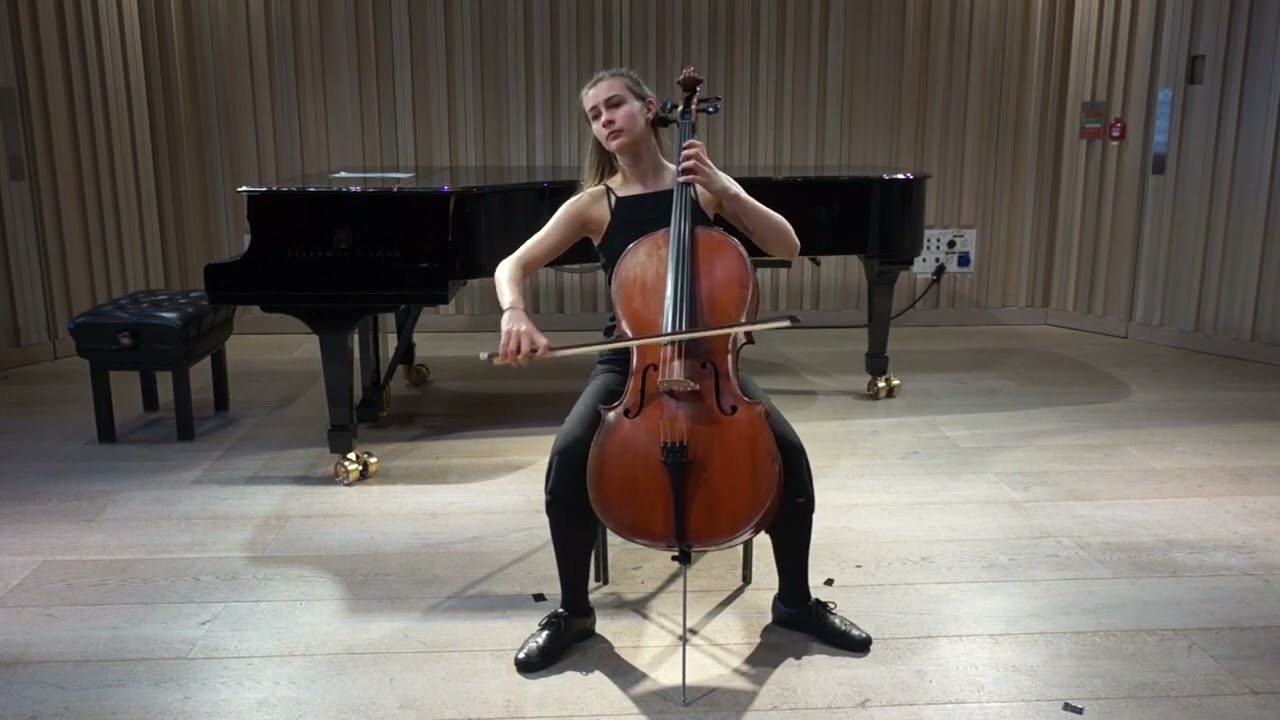
Finally, Lia Matos Wunderlich, a prize-winning teenage cellist who performed in the CMW Young Artist Showcase in 2024, gave a vibrant, heartfelt performance of Schumann’s Adagio and Allegro op.70, accompanied by Duncan Honeybourne (with whom she studies piano at the Junior Royal Academy of Music). Ending with a spirited flourish, Lia brought this splendid recital to a close.
Michael HowellLia Matos Wunderlich
Chamber Music Weymouth was founded in 2002 by Duncan Honeybourne. Monthly lunchtime concerts take place in St Mary’s Church in the centre of Weymouth, together with a short summer season of Sunday concerts. Find out more here
Tuesday 24 June at 1.15pm St Bride’s Church, Fleet Street, LondonEC4Y 8AU
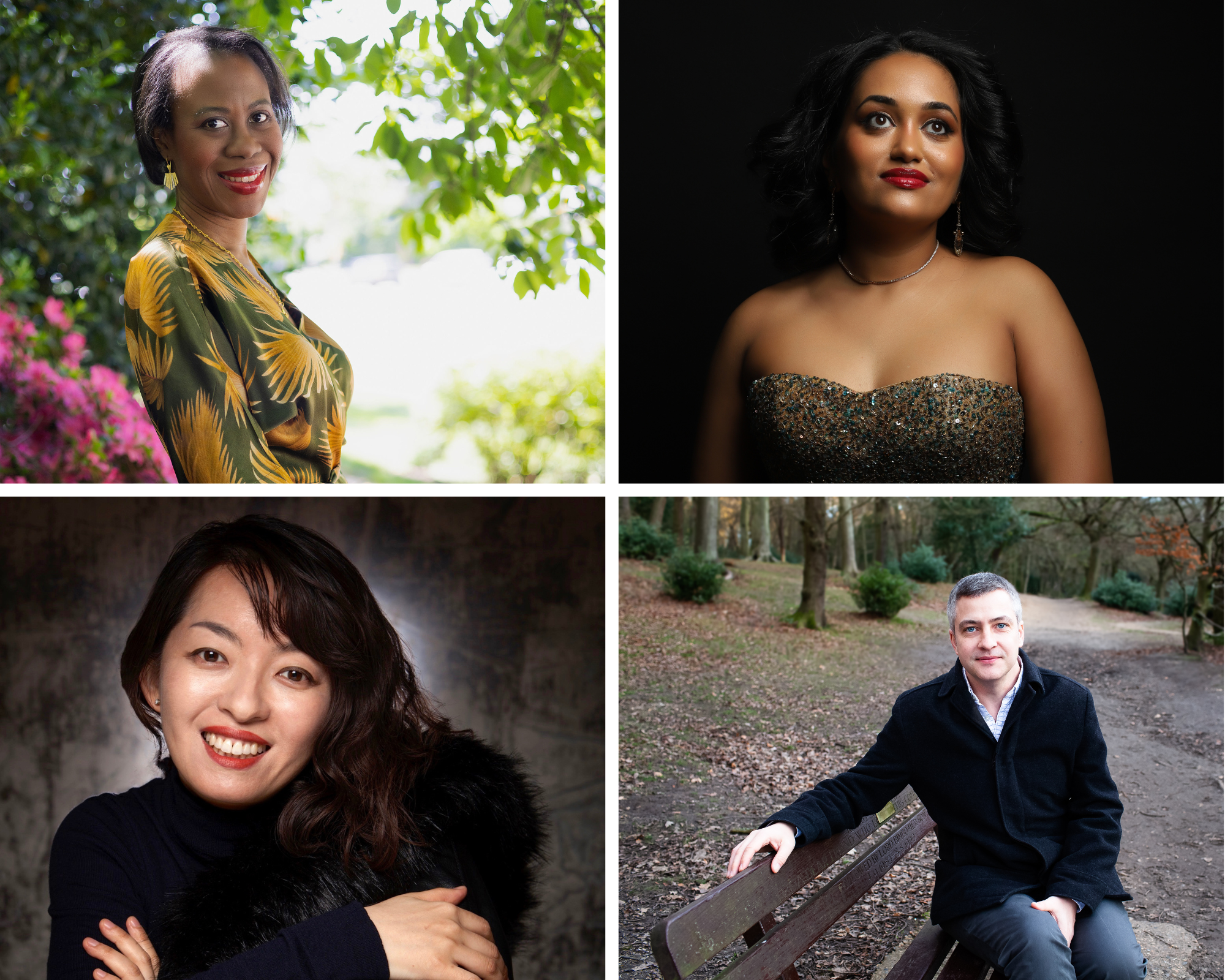
World premiere performance of ‘Metropolis’, six songs by British composer Bernard Hughes and lyricist Chinwe D John that capture the pulse of a modern metropolis. These songs, which explore aspects of urban life, romantic love, and resilience, bring the emotional essence of our shared experience into stark and beautiful view. Soprano Isabelle Haile and pianist Asako Ogawa infuse their sublime artistry through the songs, creating an unforgettable musical experience.
This free lunchtime concert also includes music by Francis Poulenc, chosen to complement the songs. Find out more here
Metropolis appears on the album ‘Songs for Our Times’, released to critical acclaim in 2023 on the Divine Art label. ‘Songs for Our Times’ features composers Bernard Hughes and Staurt MacRae, lyricist Chinwe D John, pianist Christopher Glynn, soprano Isabelle Haile and tenor Nick Pritchard. The project, from its conception by Chinwe D John to the enthusiastic participation of the artists, exemplified by the premiere organised by soprano Isabelle Haile and pianist Asako Ogawa, speaks to the spirit of collaboration and shared interest in engaging current and future listeners.
Composer Bernard Hughes says, ‘I hadn’t written any solo songs when the opportunity to work with Chinwe came up. It was really interesting to work with lyrics by someone from such a different background to me. She pointed me towards some music styles I wouldn’t have otherwise encountered, and these formed the inspiration for the piano parts of several of the songs. It was a very collaborative process…I liked working on the songs as a cycle: there is a definite thread running through them. It was a delight working with Isabelle Haile on the recording. She is an exceptional talent and I’m so pleased she is giving the live UK premiere of Metropolis.’
Praise for Songs for Our Times – Metropolis
‘As a poet writing texts for songs, John has a very clear, direct voice, with the ability to craft memorable, evocative phrases and use short bursts of lyricism. Rarely do her texts feel too wordy or too over-written, there is space for the music….. Haile sings with a lovely bright, focused soprano tone’ – Robert Hugill
‘Here is music to enjoy but to make you think as well!’ – British Music Society
‘This is a capable and sensitive player who is intelligently inside the music, and quite capable of drawing us into it.’ – Early Music Review on Asako Ogawa
The Cross-Eyed Pianist is free to access and ad-free, and takes many hours every month to research, write, and maintain.
If you find joy and value in what I do, please consider making a donation to support the continuance of the site





 The Cross-Eyed Pianist