Following one of those wonderfully serendipitous encounters on the internet, I am delighted to present “Notes from the Keyboard”, a series of articles for adult amateur pianists, by Dakota Gale, chronicling his own experiences of learning the piano as an adult.


Four years ago, my wife surprised me with a digital piano for my birthday. I’d mentioned my desire to learn a few times and, ever the muse, she called my bluff.

I couldn’t read music. Finding middle C was a quest. I was a B-E-G-I-N-N-E-R.

And yet…she was right. At 38 years old, I tumbled rapturously into the world of piano. 

Four years later, the honeymoon phase is over, and yet I remain motivated to play every day and am still loving the journey. (<–understatement: I’m head-over-heels for it.)

I even do stuff like learning to do portraits by drawing musicians! (My wife tells me that’s eccentric…) 

I’m playing pieces by Chopin, Debussy, Beethoven, Liszt, and other famous composers that I thought were a decade off. Even facing the inevitable frustrations of piano study, I’m finding joy in piano every.single.day.

Learning piano transcends fun – I feel like I’ve unearthed a gift, a path to access some of the most beautiful music ever written. Accessing the pieces revealed a fountain of satisfaction that isn’t tied to money or achievement, a much-needed oasis of play as an adult.

In fact, I’ll often drop into a flow state for 30 minutes and be surprised when my timer goes off. Where else do we get that feeling once we’re done playing with Legos or mud pies?

You, mega-savvy adult reader, can do it too!

Adults CAN learn to play piano

I share my achievements not to brag (many pianists young and old far outshine my abilities), but to offer hope to adult learners. If you’re telling yourself, “Oh, I could never learn to play” or “I’m not musical” or “only kids can learn piano,” let me persuade you otherwise.

I’m shocked how many people tell me only children can learn. Well, kids are “naturals” at learning because:

  1. They don’t over-complicate things, focusing on foundational blocks that are small and approachable. (Be it music, language, or other skills.)
  2. Kids are able to practice more undistracted hours because an adult provides housing, food, and does their laundry. Their job is to be curious sponges; our Adult Role is often yawn-tastic Tuesdays, repeated.

Adults lack those luxuries. We put pressure on ourselves, try to play songs that are too hard for us, question if the time investment is worth it, and simply don’t have as much time to practice.

I’m an adult. (It snuck up on me.) On top of all the typical adult stuff, I have far too many hobbies. Sometimes friends do annoying things like interrupt my piano reverie to invite me to dinner or on bike rides. *sigh* The inconsiderate louts, I must practice!

And yet by carving out time each day to study piano, in a few months I reached a deeply satisfying level of proficiency that kept me coming back. After four years, I’m frankly astonished sometimes at what my fingers can do.

As a bonus, it’s beautiful for people to listen to (or so they pretend). A skill I’ll enjoy and develop for a lifetime, long after I’m done taking irresponsible risks on my mountain bike.

Beyond that, I’m fired up! I look forward to enjoying creating music the rest of my life and only wish I’d started earlier.


Dear reader, welcome to “Notes from the Keyboard: Adult Piano Chronicles” on The Cross-Eyed Pianist. This will be an ongoing series about my journey learning piano as an adult. I’ll share my journey (ups and downs!) and headaches with pieces and how I resolve them. I promise to absolutely not take myself too seriously—after all this is a hobby, not a vocation.

If you have ideas for topics you’d like to hear about from a dedicated amateur student of classical piano such as myself, please don’t hesitate to reach out. I’m looking forward to sharing this journey with you!


Dakota Gale

When he isn’t playing piano, Dakota Gale enjoys learning languages (especially Italian) and drawing. He also writes about reclaiming creativity as an adult and ditching tired personal paradigms in his newsletter, Traipsing About. He can often be spotted camping and exploring mountain bike trails around the Pacific Northwest.


This site is free to access and ad-free, and takes many hours to research, write, and maintain. If you find joy and value in what I do, why not

I admit it, I’m a fervent auto-didact, a “self-teacher” whose answer to “how do I do that?” is to either reach for a book or more likely these days, look it up on Google or YouTube.

For me, self-teaching goes hand-in-hand with mastery as both require a willingness to stick to the task with a deep sense of purpose and intent.

Self-teaching – the process of educating oneself without the guidance of a formal teacher or instructor- is a powerful tool that can be used to acquire new skills, deepen existing knowledge, and pursue personal interests. One of the main benefits of self-teaching is that it allows for a customised learning experience. Traditional music education often follows a one-size-fits-all approach, which tends not to treat each student as an individual, with their own strengths and weaknesses. With self-teaching, you have the freedom to choose the materials, resources, and speed of progress that work best for you. This can make the learning process more engaging, effective and, importantly, interesting.

Why is self-teaching important for the musician? Self-teaching can be a great way to build self-motivation and self-discipline. When you take responsibility for your own learning, you develop a sense of ownership and pride in your achievements. This can be a powerful motivator and can lead to increased confidence and self-esteem. More importantly, self-teaching encourages creative thinking, problem-solving, and curiosity – all useful skills for the musician.

My own experience of self-teaching has been extremely positive and motivating. When I moved away from London five years ago, I left behind several very important teachers and mentors, who had supported, encouraged, and inspired me while I was studying for professional performance diplomas, having returned to the piano after an absence of nearly 25 years. Having studied with two master teachers for nearly 10 years and received mentorship from several other significant pianist-teachers, I felt ready to “go it alone” and cease piano lessons altogether. I would not have felt sufficiently confident to do this had my teachers and mentors not instilled in me a sense of trust in my own musical instincts, secure technique, and a strong awareness of my own interpretative choices and artistry as a musician. Thus, I had firm foundation on which to continue my musical studies on my own.

It may take me longer to work out certain technical issues at the piano, but the process of self-teaching encourages one to find a way through a problem, which in itself becomes a useful learning tool. I also feel liberated from the sense that there is a “right way” to play certain repertoire; interpretative choices are down to my own knowledge and appreciation of the music.

Self-teaching does come with its own set of challenges, one of the biggest being staying motivated and on track. Without the guidance of a teacher, it can be easy to lose focus or become discouraged. To overcome this challenge, it is important to set clear goals, create a practice schedule, and seek out trusted friends and colleagues who can provide feedback and encouragement.


This site is free to access and ad-free, and takes many hours to research, write, and maintain. If you find joy and value in what I do, why not

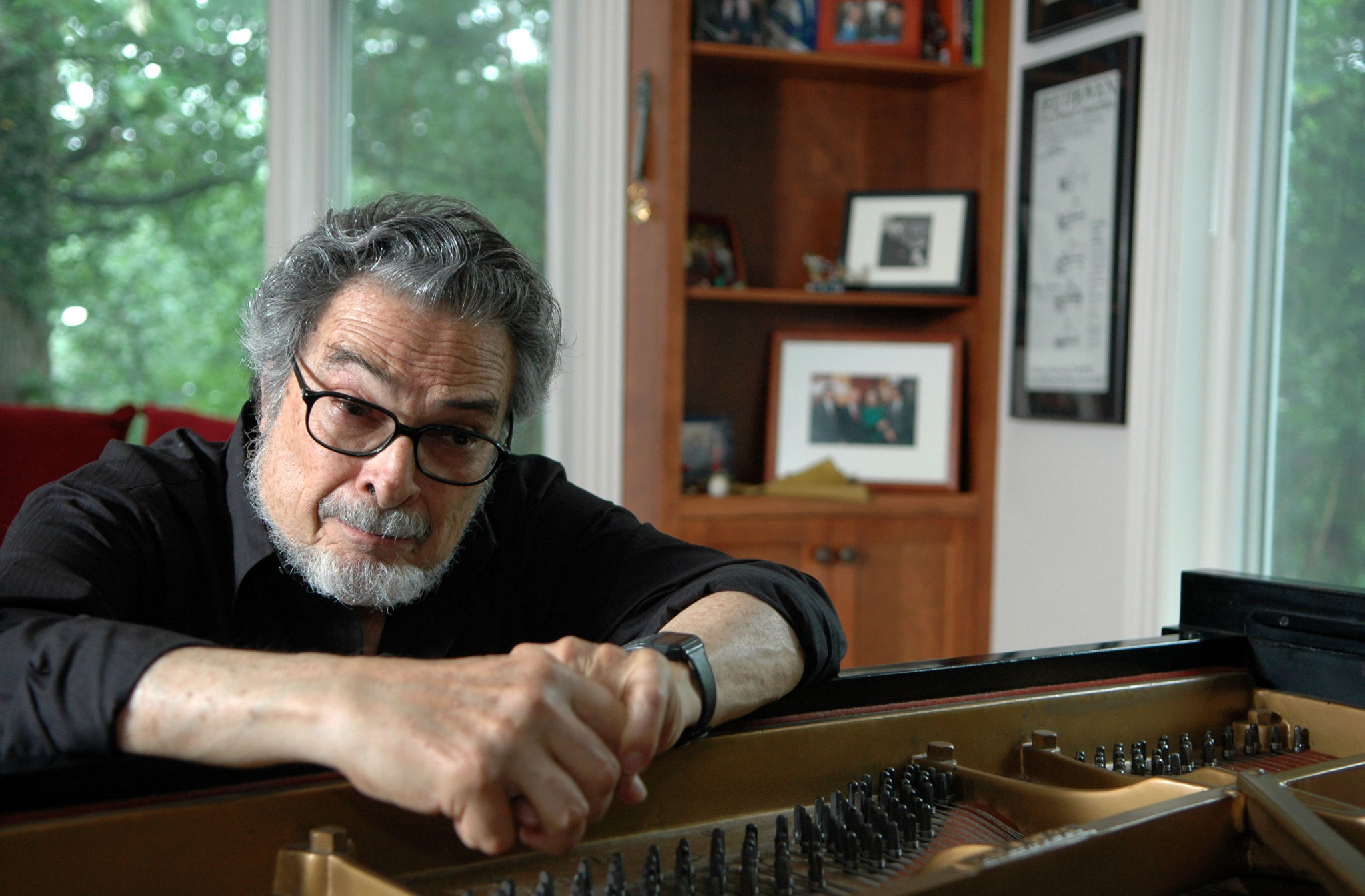
The quote in the title is from celebrated pianist Leon Fleisher, who died in August 2020 at the age of 92.

Leon Fleisher New York Times

In the many tributes to him, his wisdom and good sense, as a musician and a human being, and his rich legacy will live on in the memories of his performances, his recordings, his pupils (who include Jonathan Biss and Yefim Bronfman), and teachers, who pass on his wisdom on to their own students.

Back in 2008, in an interview with The Times newspaper, Leon Fleisher said of pianists: We are athletes, but we’re athletes with small muscles. There is a limit. Now you get kids who can do things with such extraordinary brilliance on the keyboard that they belong in the circus. But it ain’t got nothing to do with music-making.”

Fleisher was primarily referring to practising and the habit of pianists to work themselves too hard, to the point where practising becomes harmful rather than helpful. But I find his comment about the circus and keyboard athletics, and the artistry of musicians interesting too.

How many of us have marvelled at the fleet fingers of young pianists, some as young as 10 or 11 (and the internet is awash with videos of these mini ‘virtuosi’)? The ability to play very fast, very accurately is, for many, both inside and outside the profession, a mark of the pianist’s facility and executive function. For those less versed in the true exigencies of the profession, it is a sign of brilliance – and the younger, and faster, the player, the more we exclaim “genius!”.

And in addition to all those videos of fleet-fingered would-be Ashkenazys and Argerichs, there are any number of tutorials offering advice on how to achieve such velocity: finger drills and exercises to train muscles and reflexes, while simultaneously numbing the mind.

Fleisher is right: keyboard circus tricks have nothing to do with music-making. Pianists are not performing dogs – because the craft of the musician, and the art of music-making, goes far, far beyond mere piano pyrotechnics. It doesn’t matter how fast you can play, if you cannot communicate the deeper message of the music, its emotion and its truth, then you are nothing more than a circus showman, a mere typist albeit with executive function, and what you present in the music is merely surface artifice. The pianist’s repertoire contains plenty of music written to test the player’s facilities and display astonishing keyboard athletics, but pure virtuosity should never take precedence over artistic vision, tone quality, and a proper appreciation of the narrative structure and architecture of the music. Add to this one’s musical knowledge, accrued through training and experience, and a broader discernment of what music-making is truly about, and at this point the music is truly brought to life, with integrity, honesty and communication.

From healthy technique to natural artistry


Not so long ago a book as comprehensive and user-friendly as this would not be possible. It would require essential supplementary materials – DVDs and CDs – to cover all the ground. But with ease of access to the internet and smart phone technology at one’s fingertips, The Complete Pianist is exactly what it says it is: a comprehensive, generous guide to playing and teaching the piano, and one of the most significant volumes on piano technique to appear in recent decades. The benefit of technology means that pianists, whether professional or amateur, teachers and students can access some 300 video demonstrations via QR codes within the text, all of which have been recorded by Penelope Roskell herself to demonstrate a specific exercise, aspect of technique or musical point described in the pages of the book.

The Complete Pianist is the result of a lifetime of piano playing, teaching and research, and in it Penelope Roskell, renowned pedagogue and concert pianist, aims to help pianists of all levels improve their playing from the very earliest stages of learning a piece, through all the technical challenges and interpretative decisions to finding inspiration in the act of performance itself. Throughout, there is a strong emphasis on healthy technique and playing without tension, and Penelope continually reiterates that technique should serve the music, that it is a means to enable the player, whatever their level of expertise, to play with expression, vibrant colour and confidence.

Penelope Roskell’s approach to technique grew out of personal experience. As young pianist she experienced unpleasant physical symptoms while practising Liszt’s second piano concerto, and found that physical tension adversely affected her sound. She set out on a lifelong mission to develop a healthier approach to piano playing, drawing on yoga, Alexander Technique, Tai Chi and Feldenkrais, an understanding of anatomy, and her own research, often trying out exercises and techniques with her students to establish what worked or was most beneficial, both to the physical body of the pianist and the production of expressive sound.

Anyone who has studied with Penelope Roskell will be familiar with her technical and musical exercises, such as Empty Sleeves or The Hot Air Balloon and Parachute Touch, which aim to balance and relax the body or simplify and explain the physical movements required to create a particular sound or effect on the piano. Such descriptive, easily understood exercises can be particularly appealing to young people or early students who may find visual cues more helpful than verbal explanations. In addition, many of the exercises which Penelope advocates are based on the naturally flowing bodily movements we use in everyday life, thus making them relevant and more easily put into practice at the piano. The Complete Pianist contains 250 exercises, newly-devised by the author.

This comprehensive book covers all aspects of piano technique including posture, finger touch and tone production, chords, octaves, rotation, and lateral movements. There are also sections on mental preparation, effective practice, sight reading, memorisation, phrasing, rhythm, articulation, sound production, pedalling, injury prevention and understanding and managing performance anxiety.

The emphasis on preventing and managing injury is particularly important: until fairly recently, musicians’ health and wellbeing were rarely discussed and hardly touched upon in their teaching and training. Injury was regarded as a taboo subject, not to be mentioned for fear of revealing a weakness that may lead to loss of work, and musicians tended not to seek specialist help for health issues such as RSI or tendonitis. As the UK’s foremost piano teacher specialising in pianists’ injuries, and Piano Advisor for the British Association for Performing Arts Medicine ((BAPAM), Penelope Roskell offers highly informed, but straightforward and pragmatic advice for pianists of all ages and levels to encourage healthy technique. The Complete Pianist includes sections on injury recovery, rehabilitation and prevention, developing hand and finger strength, and hypermobility (double-jointedness) and specific issues relating to this for the pianist. In addition, section 22 (The Inspired Pianist) debunks many of the myths and obstacles of piano playing and performance, and offers intelligent suggestions to encourage motivation, set realistic goals and build confidence to maintain one’s interest in and enthusiasm for the piano. There is also a lengthy section on understanding anxiety, a significant issue for many pianists, professional and amateur. Once again, Penelope offers sensible, sympathetic advice – from understanding the physiology of anxiety and the effects of the release of adrenaline to dealing with perfectionism and negative thinking.

In addition to the many videos throughout the book, which range from simple piano pieces to concert repertoire, there are detailed appendices on anatomy and a glossary of terms which occur in the text.

In sum, The Complete Pianist is a remarkable achievement, a comprehensive manual for pianists and teachers, packed with invaluable accumulated wisdom and intelligent advice, and excellent supporting materials. Penelope Roskell simplifies the craft and art of piano playing, without ever devaluing musical ability, talent and artistry, and provides pianists with the tools to practice and work independently, yet with the sense of a supportive, sympathetic teacher always at one’s side, encouraging one to continually develop one’s artistic skill.

Highly recommended

The Complete Pianist is published by Edition Peters UK and retails at £44.95


A postscript….

I took private lessons with Penelope Roskell for six years from 2008, a few years after I had returned to playing the piano seriously after an absence of some 20 years. I went to her initially with a hand injury – tenosynovitis which had developed as a result of attempting to play the octave passages in Schubert’s first Klavierstück, D946, too quickly, too loudly and with poor technique. In the space of 6 months, she had transformed my technique, filling in the gaps which were missing from my piano studies as a teenager, and built my confidence to such an extent that I felt able to attempt a professional performance diploma, which I passed with distinction in 2011 (I subsequently took my licentiate diploma just 14 months later, with Penelope’s encouragement, also achieving a pass with Distinction).

Returning to the piano as an adult was not easy, but Penelope’s intelligent, sympathetic and respectful approach made a huge difference, not only to my own playing but also to my fledgling teaching career. She was always generous with her advice and suggestions, urging me to try her exercises with my own students and report back to her. Her weekend piano courses were stimulating events and through them I discovered new repertoire and met other pianists, a number of whom have become close friends.

Her new book is a comprehensive and inspiring distillation of her experience and wisdom.

(Frances Wilson, The Cross-Eyed Pianist)

peneloperoskell.co.uk

Meet the Artist interview with Penelope Roskell
