Guest post by Frances Jones

I’ve never found it easy to keep New Year’s resolutions. Often, they are admirable but just not sufficiently motivating and are inevitably dropped before ever really achieving anything. Last year, though, I decided I would practice the piano more often and also give a concert, however low-key, for my students, most of whom were under the age of 10. One of the pieces I re-learnt and performed was Germaine Tailleferre’s Impromptu, a wonderfully spirited piece with an oft-repeated motif that ducks and dives through many keys before finally coming to rest with a ritardando and arpeggiated passage alighting on the tonic.

Rediscovering this piece led me to think of Tailleferre’s First Piano Concerto. I say rediscovering because Germaine Tailleferre’s music was the subject of my undergraduate thesis, back in 2005. It wasn’t long before I was listening to the concerto, now much more easily available on Youtube, and recalling an afternoon spent poring over the score in the dimly lit depths (or so it seemed to me) of the British Library.

Tailleferre wrote her first piano concerto in 1924 and, in a departure from the Romantic style of her earlier pieces for piano, embraced the neo-Classicism that had been emerging in France in the early years of the 20th century and that she had deployed in her string quartet of 1919. As far as I’m aware, there has been just one recording to date, by the University of California Santa Cruz Orchestra:

The first movement is in sonata form, but foreshadows the neo-Classical style of Stravinsky in his Dumbarton Oaks Concerto with its similarity to concerto grosso. The instrumentation, too, is reminiscent of earlier times, with strings, trumpet, horn, oboe, bassoon, flutes and timpani. The piano and orchestra start together in the first bar, and the musical themes are shared in a joyful back and forth full of counterpoint and syncopation. The opening theme, a descending melody with a repeated rhythm, is heard over a staccato bass which really bounces along and immediately conjures up a sense of exuberance. Later on, the harmonies are more Romantic and the piano is more obviously accompanied by the orchestra, but the melody is still propelled by a driving rhythm. The joyous, energetic character returns as the opening material is repeated, exchanging fragments of melody, overlapping and answering, until the final bars.

The second movement has a different feel. Indeed, when I was researching this work for my thesis, I was so struck by the similarity of the slow movement to the slow movement in Ravel’s Piano Concerto in G, that it led me to consider the influences that this concerto may have had upon Ravel. (Ravel wrote his concerto in 1934, and the two composers were good friends). This is a subject for another time, but it makes for an interesting discussion. The movement starts with solo piano, and a continuously evolving melody which defies a clear sense of beat and only becomes clearer when the flute enters in bar 4. This emphasis on melody harks back to the earlier style of her piano works, in which melodies evolved over a more static bass line. It’s a beautiful movement, wistful and yearning; it builds to heavy chords, anguish almost palpable in each, and subsides, the strings accompanying the piano to resolve onto a major chord, the sun shining again on the rain-soaked pavement (if you’ll excuse the weather analogy).

We return in the third movement to the uplifting character of the first and indeed, to a more obviously neo-Classical style. But it’s not without its individualism. The themes are characterized by off beat rhythms that cut through the texture but there is lyricism, too, always urgent, pushing forward, both orchestra and soloist involved in an intense communication. There’s a joyful, ascending

piano melody, followed by a conversation with the flute and oboe and, finally, a cadenza where the pianist emerges into the limelight. However it’s the interweaving of the melody through the orchestral parts, specifically flute, oboe and trumpet, that I really enjoy in this movement. Towards the end, the syncopated motif is shared around the orchestra, the soloist running up and down the piano in scalic passages until the trumpet breaks through the texture to end with a triumphant flourish.

Tailleferre’s Piano Concerto was premièred in London by Alfred Cortot in 1924. Although performed many times in the decade following its publication in 1925, the work has not since achieved a fraction of the commercial success enjoyed by other 20th century concertos. It perhaps just doesn’t quite have that level of virtuosity attained by other composers, such as Ravel in his Piano Concerto in G, or Shostakovich in his First Cello Concerto. Its neo-Classical style and lack of a really prominent part for the soloist may also have contributed to its gradual disappearance from the concert platform. However, the more I (re)listen, the more I’m drawn to this work which appears like a burst of musical sunshine from the Paris of the 1920s. I’d love to hear it performed live. Perhaps now, 100 years on, might be the time for its renaissance.


Frances Jones read music at York University, followed by a PGCE at Cambridge. She is Music Lead at a school in West London and also teaches piano. 

The concerto is one of the greatest corners of the pianist’s repertoire. A showcase for performer and instrument, it’s an opportunity for the composer to capitalise on the combined forces of soloist and orchestra, often with thrilling and highly expressive results. The concerto format inspires great music and is a spectacle for the audience, and the genre continues to tempt composers today. The romantic image is of the soloist doing battle with the orchestra, but in most instances piano and orchestra are collaborators, creating wondrous musical conversations and exciting contrasts of sound, texture and mood. Instruments may have changed since Mozart’s day, but the genre itself is perennially popular with musicians, composers and music lovers alike. For performers, the biggest challenge in playing these very popular concertos is breathing new life into very well-known and much-loved music.

Careers are made with concertos, and for the professional pianist, playing concertos represents a significant part of one’s working life. Most pianists will aim to have several concertos “in the fingers” from an early point in their career, with some retaining over 50 by the time they are established. Competitions require concerto playing too, and certain works have become staples in the competition and international concert repertoire, a sign of their enduring appeal and ongoing challenges to pianists – and their popularity with audiences.

Here are 6 great piano concertos which are regarded as the “must learns” for soloists, and “must haves” for concert programmes.

Beethoven – Piano Concerto No. 5 in E flat – the ‘Emperor’

A heroic nickname for a heroic concerto. Composed from 1809 to 1811, the work is poised on the cusp of romanticism in its scale, virtuosity and richness of expression while also harking back to its classical antecedents in Beethoven’s skilled handling of the piano concerto form. Two dynamic outer movements bookend a slow movement of infinite beauty and ethereal serenity, which inspired Schumann in the last movement of his Fantasie, Op 17.

Grieg – Piano Concerto in A minor

This is Grieg’s only piano concerto but it has justly joined the rank of “great” and “must learn”. Composed when he was only 25 and inspired by a performance by Clara Schumann of her husband’s concerto, the influence of Schumann is clear from the outset in its sweeping gestures, emotional contrasts and lyricism. But while Schumann’s writing is sophisticated and romantically introspective, this is the work of a young man making his mark with a grand musical statement, weighty and serious. There are high virtuosic elements and adventurous piano writing, inspired by Liszt and Tchaikovsky (big octave passages, for example), but the work has a naturalness too (the finale is a Norwegian folk dance!). Assured and commanding, its anthemic outer movements combine vitality and poignancy while the middle movement is a graceful, soaring Adagio which overflows with heart-warming loveliness.

Mozart – Piano Concerto No. 27 in B flat, K595

Mozart’s final piano concerto inhabits quite a different world from the powerful and bold concertos of the 1780s when Mozart enjoyed a golden time as a concert pianist. Compared to its predecessors, the K595 is pared down, but with a harmonic language that is sophisticated and daring. Full of muted colours and supple textural interweaving of solo instrument and orchestra, its beauty and melancholy looks forward to the romantic lyricism of Beethoven’s fourth Concerto and beyond. With fewer virtuosic frills and extrovert gestures than Mozart’s earlier concertos, the challenges the pianists lie in its restrained character and elegant simplicity of expression.

Rachmaninov – Piano Concerto No. 3 in D minor, Op 30

Composed in 1909, Rachmaninov’s third piano concerto is considered one of the greatest and most challenging in the standard repertoire and is respected, and feared, by many pianists. Monumental and treacherous in scale, gorgeously romantic and highly expressive, the pianist to whom it was dedicated – Josef Hofmann – never performed it in public. Instead, it was premiered by Rachmaninov himself in New York, and its fearsome technical difficulties reflect the composer’s own transcendent prowess at the keyboard. With forty-five minutes of almost continuous playing for the soloist, the renowned English pianist and teacher Cyril Smith likened the sheer physical effort of playing it to shoveling several tonnes of coal! For many pianists, this concerto represents the ultimate “trophy” performance.

Ravel – Piano Concerto in G major

The piano was Ravel’s favourite instrument, and while the Piano Concerto for the Left Hand is profound and significant, his G major concerto was intended to satisfy the box office, the frivolous showpiece could he take on tour. Opening with the famous single “whipcrack”, it contains all the elements fashionable and clichéd at the time of writing – jazz idioms and harmonies, dissonance, neo-classicism and mechanical moments – but it’s brilliantly done and finely-crafted. Written “in the spirit’, Ravel said, ‘of Mozart and Saint-Saëns”, the exuberant, jazz-infused outer movements are offset by a slow movement of serene beauty and transparency.

Tchaikovsky – Piano Concerto No.1

The triumphant opening chords of this concerto followed by the first theme are amongst the most famous bars in all of classical music, heralding a work of sublime romanticism, dramatic expansiveness, invention and emotion, full of memorable themes and glorious textures. Composed in 1874 during a very productive period in the composer’s life, the concerto was premiered in Boston in 1875 by Hans von Bulow (Nikolay Rubenstein, Tchaikovsky’s favoured pianist, rejected the work as badly written and refused to play it). Tchaikovsky later revised the work in 1888 and it is this version which is most commonly performed today. In 1958 it became the first piece of classical music to sell a million records when the pianist Van Cliburn made an impassioned recording of the concerto. After the grandiose opening movement, the middle movement serves as a lyrical slow movement and a scherzo, while the finale is a breathless rondo based on a Ukrainian song. The works succeeds on every level: the virtuosity of the piano part is matched by vivid orchestration while the intricacies of the work are balanced by Tchaikovsky’s beautiful melodies.


This article first appeared on the Interlude HK website

Concerto night is a regular feature of the Chetham’s International Summer School and Festival for pianists, and on Sunday 19th August, we were treated to four concertos, performed in the magnificent Stoller Hall by members of the Chets teaching faculty, who also happen to be international concert pianists.

The concerto is one of the greatest corners of the pianist’s repertoire. A showcase for performer and instrument, it’s an opportunity for the composer to capitalise on the combined forces of soloist and orchestra, often with thrilling and highly expressive results. The concerto format inspires great music and is a spectacle for the audience and the genre continues to tempt composers today. The romantic image is of the soloist doing battle with the orchestra, but in most instances piano and orchestra are collaborators, creating wondrous musical conversations and exciting contrasts of sound, texture and mood – very much the case in the four works performed in this concert.

The soloists in these concerts were accompanied by the Stockport Symphony Orchestra, an amateur orchestra of considerable talent and stamina, conducted by Stephen Threlfall, who is a member of staff at Chetham’s School.

Seta Tanyel gave a committed and colourful account of Richard Addinsell’s Warsaw Concerto, a one-movement work of grand romantic gestures and post-Rachmaninov melodies. Written as part of the soundtrack for the 1941 film Dangerous Moonlight, the music has a dramatic narrative, rich in nostalgia and sweeping climaxes. This was followed by Tchaikovsky’s Piano Concerto No. 2 in G Major, played by Leslie Howard, always a popular member of the Chets team (and a regular behind the bar during the piano summer school). Not as popular, nor as satisfying as Tchaikovsky’s first concerto, Leslie Howard nonetheless gave a masterful and enjoyable performance, at times pushing the orchestra to the limit with tempi. The Stockport Symphony Orchestra rose impressively to the challenge and one felt them begin to catch fire in this work.

In the second concerto concert of the evening, Dina Parakhina played Rachmaninov’s Rhapsody on a theme of Paganini with an exquisite sound, rhythmic vitality and musical imagination, matched by the orchestra who clearly enjoyed this piece.

This was followed by a highly imaginative rendering of Grieg’s Piano Concerto by Philip Fowke. The interaction between soloist, conductor and orchestra was clear throughout (and especially evident for those of us seated in the choir stalls with a view down to the pianist and conductor). Philip’s compelling and generous performance was rich in interesting voicings and a rare improvisatory quality, which brought renewed vigour and colour to this much-loved work.


Photographs by Martin Lijinsky

5f3e69_e385f87332164cdbbb4075d6aa12adf3Guest post by conductor and artistic director Tom Hammond
Two of my ambitions as a conductor are to maximise communication within ensembles (sounds simple, but isn’t), and to make concerto soloists feel like they are being accompanied by their own musical shadow.

If I can see the eyes, face, bows and fingers of the soloist I and the orchestra are accompanying, I can go with breath, speed of bow, a nod of a head or other subtle physical gesture… but when it’s a piano concerto, this is often impossible.

Nine times out of ten there’s no chance to see the fingers on the keyboard, I’m not close enough to hear inbreaths (which not every pianist makes audibly anyway) and if I try to lock on to eyes for an extra mode of communication – I can lose the connection with the orchestra. Basically – it’s all behind me!

In a recent performance of ‘Rhapsody in Blue’ I even had the acoustic challenge of a piano that was (on the biggest stick) projecting beautifully into the hall, but away from my ears and couldn’t necessarily hear every note. Quite scary when picking up ends of cadenzas, I can tell you….

My solution is often simply not to even try more than a little eye contact for starts and ends of movements, and then rely totally on my ears. That’s sometimes harder than it might sound, as piano concerti often contain the trickiest technical moments for conducting; bringing in a tutti or a solo instrument off the back of a cascade of rapid notes when, with a string concerto for example, you can also use visual contact as well as aural. Moments in the Rachmaninov Paganini Variations and indeed ‘Rhapsody in Blue’ can really sort the men and women from the boys and girls in conducting terms…

All this led to me wondering how pianists feel about working with orchestras and conductors, and what factors might help make a performance comfortable at the very least, and something special at best. Two pianists I am accompanying in the coming weeks – Stephen Hough and Alissa Firsova – took time out of their hectic schedules to answer a few questions.


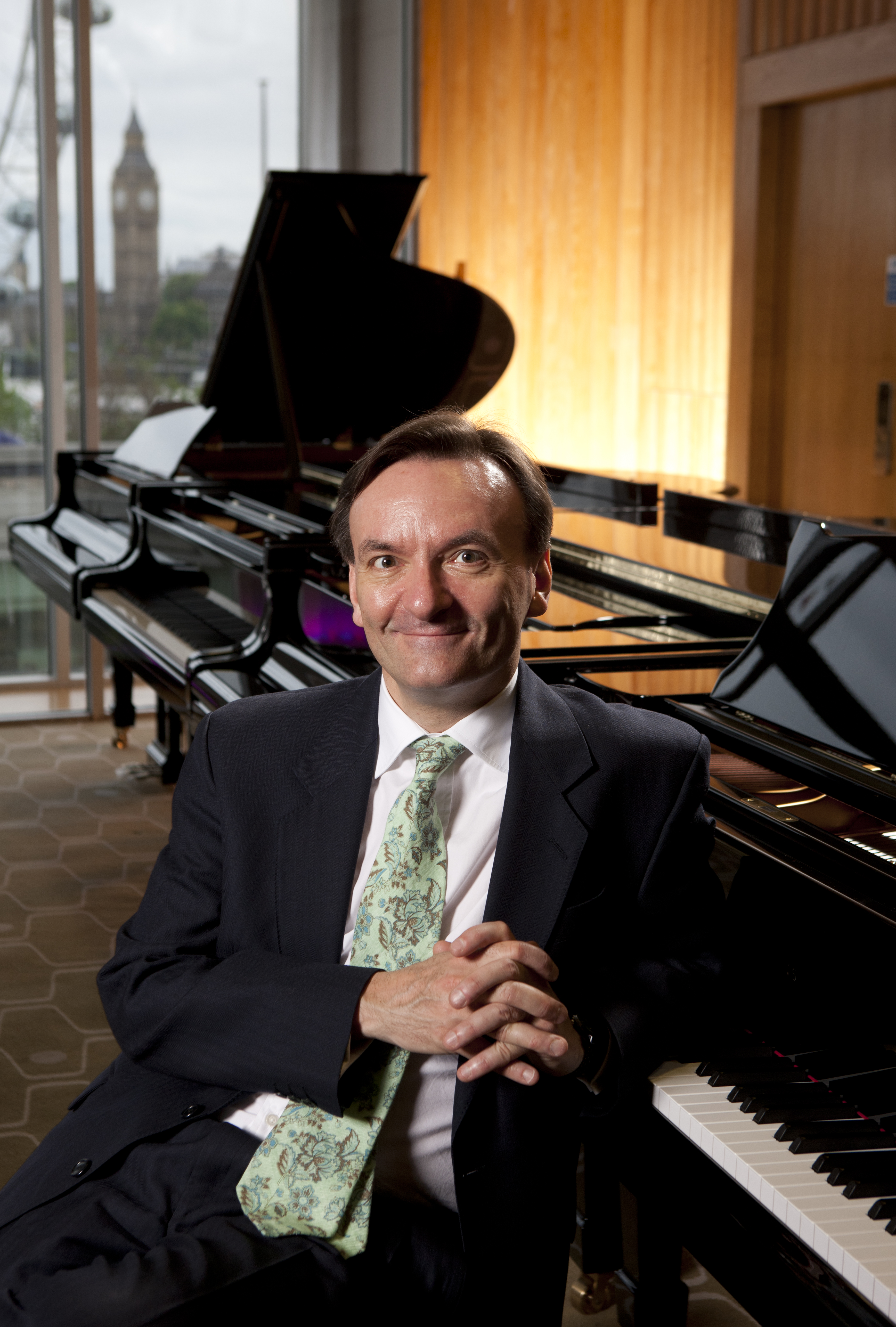
May0031407 Stephen Hough for DT ArtStephen Hough

What worries you most before a new concerto project? Is it the instrument, the orchestra, the conductor or the piece of music?
I never worry about the instrument until I see it. But with a new piece there is the uncertainty of how it will actually sound (or rather feel) in that first rehearsal. No amount of preparation prepares you for the oboe or horn or violas coming at you from that particular angle on stage. And because a collaboration with a conductor is like a blind date well … when the mask comes off who knows what to expect!
Have you ever found the ‘perfect’ position on stage for being able to communicate with a conductor during performance? How much is eye contact desirable?
I normally have a good view of the conductor’s buttocks which doesn’t help much … No, but seriously I don’t need eye to eye contact but out of the corner of my eye I’m taking in body language all the time and at certain crucial moments THE STICK!

How much rehearsal time do you like to have?
As much as we need is nice, but not more. I don’t like thrashing the details out until everyone’s exhausted. A little spontaneity is essential. But with certain pieces decisions have to be made, especially with the great works, the Brahms and Beethoven concertos for example.

Which concerti would you like to direct from the keyboard, but have never had the chance?
I’d be curious to try the two Brahms sometime, if only to decide that it didn’t work.


5f3e69_d3be6bedc9d64af0897015aab598ebdcmv2-1Alissa Firsova

What worries you most before a new concerto project? Is it the instrument, the orchestra, the conductor or the piece of music?
“Worry” is not a feeling that comes to mind when embarking on a new concerto project, but rather “excitement”, “curiosity”, “joy” and “gratitude” for the opportunity to take on a challenge and join forces with the conductor and orchestra to explore a remarkable piece of music. However out of the 4, the greatest achievement and dedicated work lies in the process of learning the piece and trying to master it to the best possible ability. Then when meeting the conductor and orchestra for the first time, it becomes a celebration. A bit like a process of making a cake: taking good care of all the ingredients, cooking it at the right temperature and for the right amount time, and then, eating it – the party begins! What I love about musical interpretation is that it is endless. It is so interesting to be able to get to know a new conductor and their personality and see what their ideas are about the piece, when there is a chance to play though sections and explore different ideas, this is gold-dust. I think it’s always important to have an open approach, to try new things, to be flexible in being able to adapt to a different acoustic or instrument or time of day.

Have you ever found the ‘perfect’ position on stage for being able to communicate with a conductor during performance? How much is eye contact desirable?
I think it is ideal to have the opportunity for eye-contact, for those few “magic moments”. Other than that, the most important thing is the listening. When that is completely in sync and focus with everyone, then we might as well be blind-folded. But sometimes it’s nice to be able to communicate visually, to bring that other dimension and to respond to each other. I’ve always felt at home having the orchestra around me. It gives a great support and warmth, a feeling of being all in it together, and the conductor marries the soloist with the orchestra. The priceless moments are those spontaneous ones during the concert, where everyone suddenly takes time or creates a new nuance that didn’t happen in the rehearsals. Thats when you know total ‘oneness’ has been reached.

How much rehearsal time do you like to have?
Even though ideally one would like to have as much rehearsal time as possible, in order to keep trying different things and perfecting corners as well as getting used to the overall structure and pacing of the piece, it’s also important to leave room for the spontaneity and freshness for the concert. I like to have one rehearsal before the day of the concert, and one on the day, an extra rehearsal could be a bonus.

Which concerti would you like to direct from the keyboard, but have never had the chance?
 Mozart Piano Concertos No. 21 in C and No. 27 in B flat
Tom Hammond conducts piano concerti by Beethoven and Brahms, with Stephen Hough and Alissa Firsova respectively, on 18th March and 6th May. Full details here