The crescendo to the final of the 2018 Leeds International Piano Competition has been abuzz with activity, commentary and interviews, concerts and masterclasses, and has created a wonderful sense of a shared celebration of all things piano. Many of these activities are the initiative of the new Artistic Directors of the Leeds competition (Adam Gatehouse and Paul Lewis) in a bid to give the competition a wider reach beyond the confines of the concert hall, and even experiencing them at arm’s length, via social media and the broadcasts on MediciTV, I’ve sensed the excitement surrounding the revamped Leeds competition. The addition of a chamber music element to the competition is a very welcome one too, in my opinion, and I agree fully with Adam Gatehouse’s assertion that if one is able to play, connect and communicate with other musicians in a chamber music setting, one is also able to connect and communicate with an orchestra – as the finalists must do in their concerto performances.

MediciTV’s live stream of all the performances has brought an immediacy to those of us who didn’t make it to Leeds in person – the broadcasts are no longer consigned to a discreet evening slot on BBCFour – and also makes the competition feel truly international: anyone can tune in from around the world.

Performances by Aljoša Jurinić (Croatia, aged 29), Anna Geniushene (Russia, aged 27) and Mario Häring (Germany, aged 28) comprised the first evening’s finals concert, and here I offer my brief thoughts (from notes made while watching the live stream broadcast) on the three competitors:

007-Aljosa-Jurinic-SQUARE
Aljoša Jurinić

Aljoša Jurinić – Mozart Piano Concerto in C minor, K491

It’s really cheering to see a Mozart concerto in a piano competition final. And this year there are, unusually, no concertos by Rachmaninov or Tchaikovsky. A shot of Aljoša Jurinić backstage, chatting to conductor Edward Gardner, showed a young man who looked incredibly chilled and relaxed ahead of one of the most significant performances of his career. This easefulness was translated into his playing which was natural and poised. The first movement had a lovely clarity of articulation and shading, with a good sense of synergy between soloist and orchestra. Jurinić seemed sensitive to the drama and muscularity of this opening movement, creating a sense of spontaneity and improvisation, particularly in the cadenza. The second movement was elegant and good-natured, but the finale felt a little too polite/safe for me. Given that this concerto was completed just before the premiere of The Marriage of Figaro, I felt more operatic drama was needed. But overall, this was a very mature, confident and engaging performance.

Anna Geniushene – Prokofiev Piano Concerto No.3 in C major, Op.26 

025Anna-Geniushene-SQUARE
Anna Geniushene

This for me was a really fine performance – assured, confident, with soul and personality, and a wonderful sense of freedom. My husband, who was half watching in between following la Vuelta (tour of Spain cycling race on his laptop), remarked, without any prompting from me, that he playing was “singing and colourful”. I last heard this concerto performed by Martha Argerich at the Festival Hall in 2016, and I felt Anna brought some of the same excitement, colour and spontaneity to the work, as well as a clear sense of ownership. Her communication with conductor and orchestra was excellent, and the passages where the piano part seems to take flight into its own world were very convincing.

Noriko Ogawa deemed it “a dream concerto!” after the performance – and I agree with her: it was!
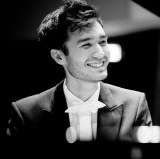
063-Mario-Haring-SQUARE
Mario Häring

Mario Häring – Beethoven Piano Concerto No. 1 in C major, Op. 15

A warm, generous and joyous performance by Mario Häring, with excellent communication with conductor and orchestra. I felt the conductor in particular was really enjoying this work and the pleasure came through, with Mario responding equally in a performance that was lively, precise, colourful and engaging with great clarity and musical sense.

Tonight’s concert features performances by the other two finalists, Eric Lu and Xinyuan Wang.

Follow the Leeds Competition on MediciTV and on Twitter via #LeedsPiano2018


More on the Leeds on this blog:

Leeds preview – in conversation with Jon Jacob

Podcast with Adam Gatehouse

The Leeds International Piano Competition has announced the five pianists who have made it through to the Finals of the world-famous Competition this weekend.  Each Finalist plays a concerto with the Hallé conducted by Edward Gardner at Leeds Town Hall, broadcast live by BBC Radio 3 and medici.tv.

They are:

Aljoša Jurinić (Croatia, aged 29).

He will play Mozart Piano Concerto in C minor, K491 (Friday 14 September, 7pm)

Anna Geniushene (Russia, aged 27).

She will play Prokofiev Piano Concerto No.3 in C major, Op.26 (Friday 14 September, 7.50pm)

Mario Häring (Germany, aged 28)

He will play Beethoven Piano Concerto No. 1 in C major, Op. 15 (Friday 14 September, 9pm)

Eric Lu (USA, aged 20)

He will play Beethoven Piano Concerto No.4 in G, Op.58 (Saturday 15 September, 7.50pm)

Xinyuan Wang (China, aged 23)

He will play Schumann Piano Concerto in A minor, Op.54 (Saturday 15 September, 7pm)

Meet all five competitors here

All performances will be live-streamed via MediciTV

The prize winners will be announced at 9pm and presentations made by Lang Lang at 9pm on Saturday 15 September.

This slideshow requires JavaScript.

The Competition began in April, with 68 pianists of the world’s best young pianists, aged between 20 and 29 years old, with international First Rounds in Berlin, Singapore and New York. The five Finalists were chosen from among the 24 who have been participating in Leeds since 6 September.

They are competing not just for generous cash prizes, worth over £90,000, but for a career-changing prize package which has redefined what a competition can offer young artists, and which has helped to attract young international pianists of the very highest calibre promising a thrilling Competition.

The portfolio prize includes artistic management with Askonas Holt, one of the world’s most renowned music management agencies; concerts and engagements with some of the world’s premiere venues and orchestras, including London’s Wigmore Hall and Southbank Centre, the Hallé, Royal Liverpool Philharmonic and Oslo Philharmonic Orchestras; concert and recording engagements with BBC Radio 3, broadcast partner of The Leeds. It also includes a major European tour organised with partners Steinway & Sons; a solo CD with a major label; a programme of recital engagements in Yorkshire and other UK venues; and mentoring from Co-Artistic Director Paul Lewis, Patron Murray Perahia and other members of the performer-led jury, chaired by Paul Lewis, and comprising Sa Chen, Imogen Cooper, Adam Gatehouse, Henning Kraggerud, Thomas Larcher, Gillian Moore, Lars Vogt and Shai Wosner.

www.leedspiano.com

@leedspiano


source: Albion Media

A conversation with Jon Jacob…..

I love the opportunity for interesting interactions and conversations which social media creates, and I have made a number of significant friends in real life through the blogosphere. One is Jon Jacob, a fellow classical music devotee and blogger, and very much a kindred spirit.

We have enjoyed a number of joint projects over the past year, including two podcasts (the most recent with Adam Gatehouse, joint Artistic Director of the Leeds Piano Competition) and our latest – a conversation (by email) ahead of the finals of the Leeds Piano Competition which you can read here on Jon’s blog.

Jon will be attending the Leeds competition finals (sadly, I can’t make it) so do look out for his bulletins via Twitter and follow the competition updates with the hashtag #LeedsPiano2018.

All the performances are being live-streamed by MediciTV – a very welcome innovation as part of the revamped Leeds Competition coverage.


Podcast with Adam Gatehouse

Podcast with composer Thomas Hewitt Jones

krpan

Winner of the 61st Ferruccio Busoni International Piano Competition, Ivan Krpan shares his thoughts on influences, inspirations and performing

Who or what inspired you to take up the piano, and pursue a career in music?

My parents inspired me to start learning about music when I was a child. My father is a violinist and my mother a musicologist so I have been surrounded by music my whole life. When I was six years old I started to go to Blagoje Bersa music school in Zagreb and for some reason I liked the piano more than other instruments so that’s how it started.

Who or what have been the most important influences on your musical life and career?

My parents had a big influence on me especially during the first years of music school. My first teacher, Renata Strojin Richter, taught me all the basics of piano playing and music in general so I am really grateful to her. And of course, my current teacher, Ruben Dalibaltayan, taught me a lot during our piano lessons in the Music Academy in Zagreb.

What have been the greatest challenges of your career so far?

I cannot really say but I think that the greatest challenge in life of any artist is to pursue and develop your ideas every day.

Which performance/recordings are you most proud of?

When I look back I see that every performance has its own place in my musical development and that every performance is a representation of my state of mind at that point. All my performances make a big picture for me so I appreciate them all.

Which particular works do you think you play best?

I like to think that I play best any work I am currently playing.

How do you make your repertoire choices from season to season?

I play works I like or works I am interested in. And when I play works I am interested in, I start to like them. Also, I am still studying so I have to play what is required for exams.

Do you have a favourite concert venue to perform in and why?

No, I don’t have a favourite concert venue. I enjoy playing in lot of different places. Also, I think that people who I play for are more important than the hall itself.

What is your most memorable concert experience?

I don’t know because every concert is different, so I remember them because of all those different things I encounter. For example, I remember some concerts because of the beautiful pianos I played and some because the awful pianos that I played on! Also I remember some when the audience was very noisy during the concert and at some other concerts I had the feeling that people were really interested in what I was trying to give them.

As a musician, what is your definition of success?

I think that you are successful if you are going forward following your ideas. The most important thing in art and in life in general is that nothing ever stays the same. Everything is changing and so we should also change and evolve. It is not easy but if you manage to do it then you are really successful.

What do you consider to be the most important ideas and concepts to impart to aspiring musicians?

The most important thing for anyone is to be yourself without pretending and to do what you love to do.

What is your idea of perfect happiness?

Perfect happiness is when you do what you love to do and when you can help others live that way.


Ivan Krpan’s debut recording is available exclusively on IDAGIO and juxtaposes two giants of the Romantic era: Robert Schumann and Frédéric Chopin. 

Listen here


Ivan Krpan was born in Zagreb in 1997. He began studying the piano at the age of 6 at the Blagoje Bersa Music School in Zagreb, under the tutelage of Renata Strojin Richter. From 2013, he has been studying piano with Ruben Dalibaltayan at the Music Academy in Zagreb. He has won several first prizes in national and international piano competitions: first prize in the EPTA International Piano Competition in Bruxelles in 2014, 1st prize in the International Piano Competition Young Virtuosi in Zagreb in 2014, 2nd prize in the International Danube Piano Competition in Ulm (Germany) in 2014 and 1st prize in the International Piano Competition in Enschede (The Netherlands). In 2015 he won 4th prize in the 1st International Zhuhai Mozart Competition in Zhuhai (China). Recently he won the annual Ivo Vuljević prize awarded by the Jeunesses Musicales Croatia for the best young musician in Croatia in 2015. He has participated in masterclasses of Dalibor Cikojević, Siavush Gadjiev, Ruben Dalibaltayan, Djordje Stanetti, Kemal Gekić, Pavel Gililov and Klaus Kaufmann. He won a special prize from Dean of Zagreb Music Academy in 2014.


