Watching Masterchef The Professionals, a series to which I am rather addicted (mainly because my son is a professional chef), I have noticed a certain expression from chef Marcus Wareing during the preliminary Skills Test section of the competition.

In this round, contestants’ culinary skills and nous are tested with a set of technical challenges, most of which should be second-nature to any well-trained chef – filleting fish, shucking oysters, boning out a joint of meat, making meringue or hollandaise sauce, for example. For some, this is a daunting round where weaknesses are exposed or nerves get the better of the contestant. For others, it proves their mettle and demonstrates that not only have they been properly trained (and keep their skills well-honed), but also that they are able to adapt their skillset and intuitive culinary common sense to an unfamiliar recipe or set of ingredients. When a chef succeeds in this, Marcus Wareing will often say, with an approving nod, “Chef’s head“.

So I’m coining the expression ‘Pianist’s Head’ to apply to those situations when we might encounter music which is unfamiliar or outside our comfort zone, which might at first appear daunting, challenging or even almost impossible, but which, with some consideration, drawing on our musical knowledge, experience and intuition – our Pianist’s Head – is achievable. Having a good Pianist’s Head upon your shoulders will stand you in good stead for successful sight-reading and the ability to learn music more quickly.

No repertoire is ever learnt in isolation – or at least it shouldn’t be – and everything is connected. Musical skills, just like culinary skills, once learnt and practiced, can and should be applied to different situations. No learning should ever be done in a vacuum: a single piece of music is not just that one piece, it is a path to other pieces via accrued technical proficiency, musical knowledge and artistry. Early students and less advanced pianists often see the pieces they are learning in terms of stand alone works which have little or no relevance to other music they are working on, or are going to learn. This is also particularly true of scales, arpeggios and other technical exercises which may be studied in isolation instead of appreciating their relevance not just in understanding keys and key relationships, but also in actual pieces of music. This was something I was not taught when having piano lessons as a child, and it’s the fault of the teacher, not the student, if the usefulness and relevance of such technical work is not highlighted.

Chopin knew this: it is said that he studied Bach’s Well-Tempered Clavier every day, appreciating the music’s relevance to his own musical development, his composing and his teaching. If you can successfully manage Bach’s ornamentation, for example, your Pianist’s Head should allow you to cope with Chopin’s trills and fioriture.

Your Pianist’s Head skills will develop the more time you spend with varied repertoire and your willingness to take an open-minded, lateral thinking approach to learning and playing music to an point where these skills become intuitive and you won’t even know you’re applying them!

To develop and maintain your Pianist’s Head, approach each new/unfamiliar piece of music with the thought, “what do I know already and how can I apply experience from other repertoire to this piece?“. For example, if you’ve encountered a similar passage or technical challenge elsewhere you’ll know how to approach it this time.

Understand and appreciate the composer’s particular stylistic characteristics, idioms, soundworld, and quirks. This can be developed not only through playing other music by the same composer but also by listening and studying scores away from the instrument. And as your Pianist’s Head develops, you’ll find yourself making intuitive decisions about how to approach repertoire based on sound technical knowledge and musical insight.


Support The Cross-Eyed Pianist

This site is free to access and ad-free, and takes many hours to research, write, and maintain. If you find joy and value in what I do, why not
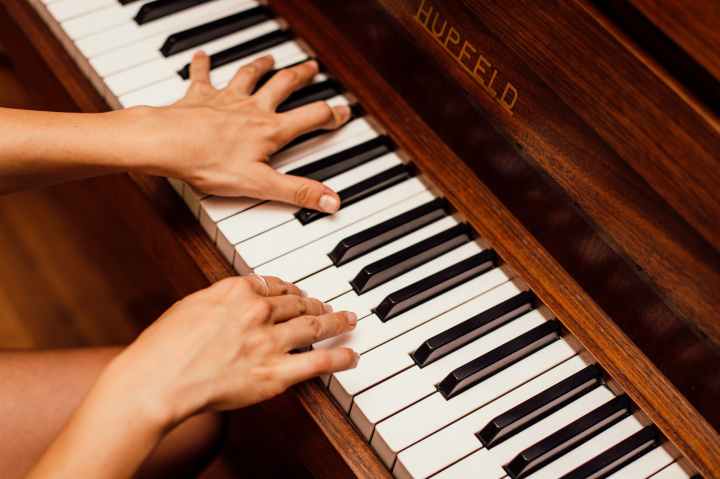
 

Photo by Juan Pablo Serrano Arenas on Pexels.com
 

Guest post by Howard Smith


4 pianists, 4 passions

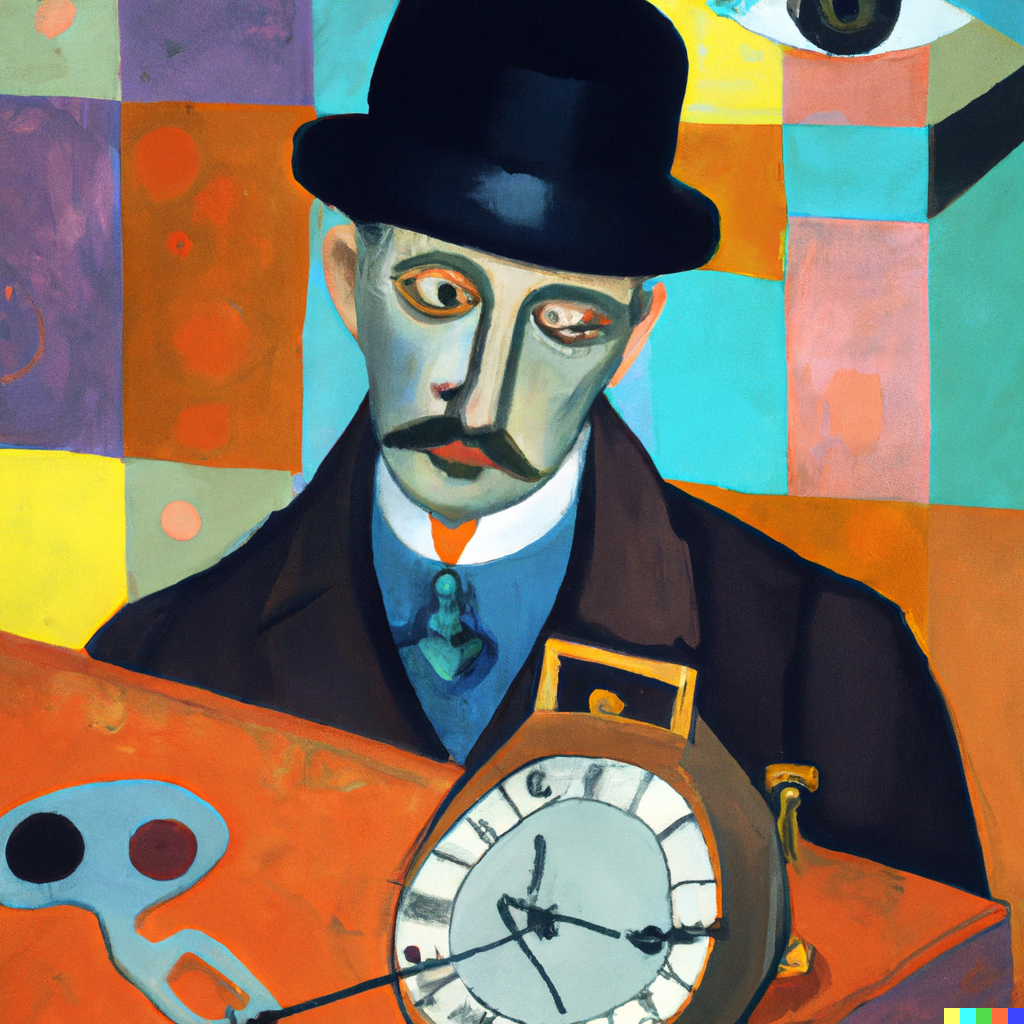
Two hours of piano music, accompanied by GenAI art projection and a smattering of poetry. Performers: Elena Toponogova, Ophelia Gordon, Howard Smith and Matthew Baker Music by Frank Bridge, Nikolai Medtner, Erik Satie, Francis Poulenc, Claude Debussy, Maurice Ravel & Nikolai Kapustin.

What’s behind our forthcoming event Personal Passions? Two years ago I had completed study of several works by Erik Satie, specifically, the Gnossiennes, the Gymnopedies and the Ogives. I had also  ‘composed’ a series of short sequences to sit between the pieces. Each of these rests on the tritone from the preceding key and acts to ‘reset the ear’ prior to the following piece. This helps clarify the transition. I felt this was necessary because the beguiling pieces are similar in character. I call each of these brief improvisations an ‘hiatus’. The concept was performed in fragments at various piano meetup groups. On April 5th this year, at October Gallery, I shall perform the full sequence and will be joined by Elena Toponogova, Ophelia Gordon and Matt Baker – three wonderful pianists and friends. We shall each play for around 30 minutes.

Elena Toponogova will play ‘Forgotten Melodies’ by Frank Bridge and Nikolai Medtner.

Matthew Baker will surround us with ‘Impressionism’, playing the music of Francis Poulenc, Claude Debussy and Maurice Ravel.

Ophelia Gordon will introduce her forthcoming CD: KAPUSTIN – Between The Lines, to be released on the Divine Arts label later this year. Ophelia will play 30 minutes of the CD. 

To add to the event, and based on my experience in the IT industry with GenAI (Generative Artificial Intelligence), we will be projecting sequences of images to support each of the four segments of the concert. Each has been themed around our ‘Passions’. The October Gallery space is ideal for this with its projection system and lighting.

We look forward to welcoming you to this unique venue. If successful, we hope the 4×4 format will be liked and can be repeated for other artists – both professionals and advanced amateurs from active piano circles in and around London, over the coming years. No promises but watch this space!

Event details:

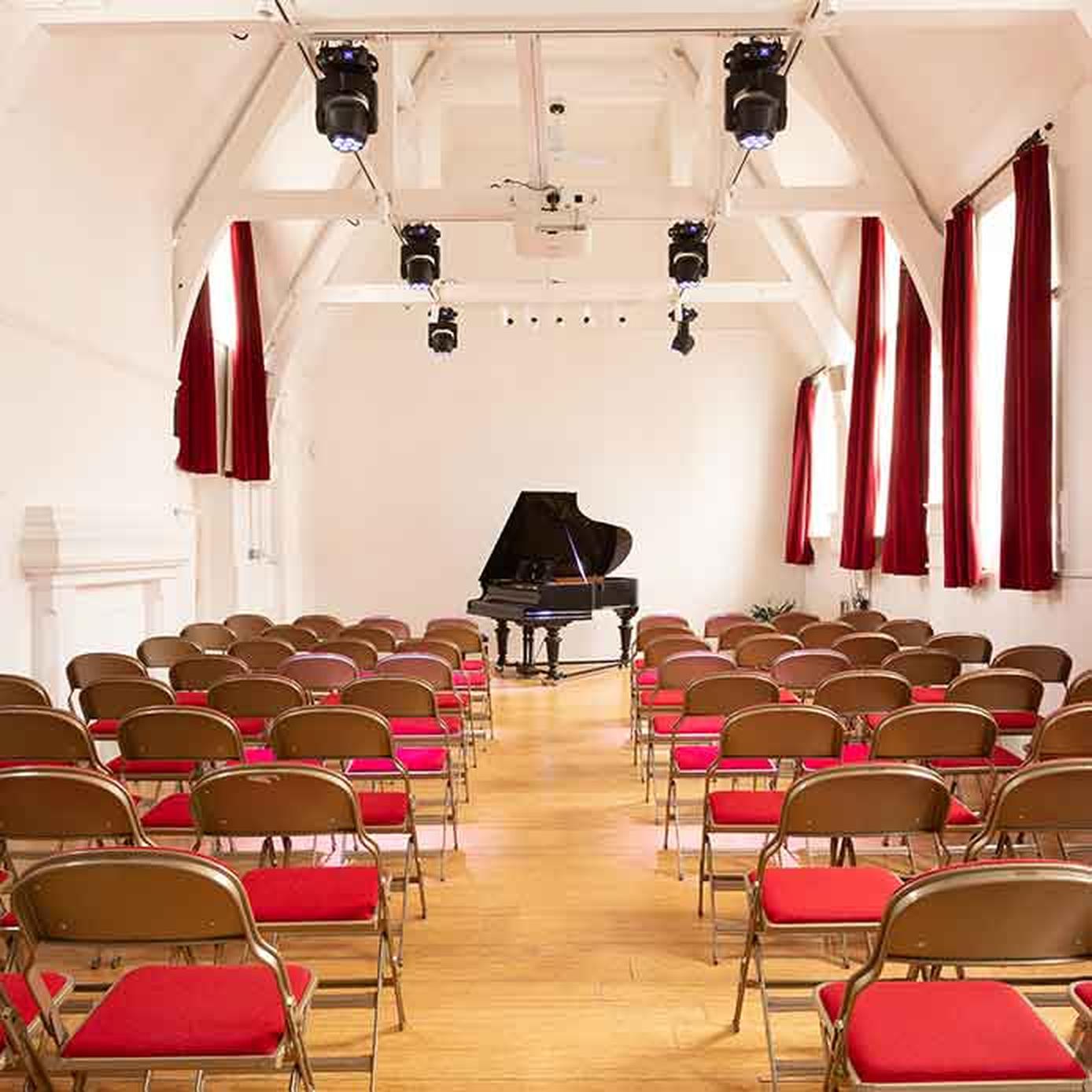
Saturday 5th April 2025 at October Gallery, 24 Old Gloucester St, Bloomsbury, London, WC1N 3AL

Doors 7pm, Performances 7:30 until 10pm, 20 minute interval

Tickets £19. Book tickets at: https://billetto.co.uk/e/personal-passions-october-gallery-london-tickets-1098829

Reviews:

‘Her performance was mesmerizing!’

‘Serious, deep and rarely-performed pieces played with understanding and verve’

Poetic playing which draws the audience into her sound world’

‘Her captivating performance motivated me to aspire to her level. Having been a keen pianist myself in the past, I felt inspired to dive in and play the instrument again’

Programme

Satie, Erik – Gnossiennes: nos. 1 – 3
Satie, Erik – Ogive no. 1
Satie, Erik – Gymnopédies: nos. 1 – 3

Bridge, Frank – 3 Sketches, H.68
Medtner, Nikolay – Fairy Tale, Op.26 no.3

– Interval –

Poulenc, Francis – 3 Novelettes, FP 47/173
Poulenc, Francis – 8 Nocturnes, FP 56
Debussy, Claude – Ballade
Debussy, Claude – Suite Bergamasque: III, Clair de lune
Ravel, Maurice – Sonatine

Kapustin, Nikolai – programme to include the Concert Etudes, Op.40


Founded in 1979, October Gallery is a charitable trust which is supported by rental of the Gallery’s unique facilities, grants from various funding bodies and the active support of dedicated artists, musicians, writers and many friends from around the world. The Gallery promotes contemporary art from around the planet, as well as maintaining a cultural hub in central London for poets, artists, intellectuals, and hosts talks, performances and seminars.

Guest post by Dakota Gale, the latest article in his series aimed at adult amateur pianists


Not gonna lie: I had no idea what to write for this month’s Notes from the Keyboard.

Why? Well, honestly, for a lot of December and much of January, my enthusiasm for piano was lower than a gopher’s interest in sunbathing. 

Not that I wasn’t still playing consistently. I was, if less each day. I just didn’t feel that spark, the deep joy that I usually get from sitting down and banging on lovingly caressing the black and white keys.

Spoiler alert: I’m feeling much better now, back in the piano groove.

What changed?

Simple: my repertoire.

At the beginning of December, before a 6-week winter break from lessons, my teacher recommended – ok, convinced me – that it was time to learn a fugue. Specifically, Bach’s Cm Fugue from the Well-Tempered Clavier

I’d managed to mostly avoid Bach’s work, if only because I’m hard-headed and bring my own pieces to my teacher for study. (He does choose pieces for me, just not that often. The recent Beethoven sonata I wrote about, for one.)

Anyway, The F**kin’ Fugue. Out of the gate, I enjoyed it. Finding the theme, the left and right hand conversation, the different voicing. I dug the intellectual challenge.

Then… I stagnated with it. But I wanted to play it and knew it was good for my hand independence, among other things. My future piano self would be so.damn.grateful. I must persevere!

I’ve done this before, but (wisely) realized when I needed to back off and just enjoy myself. This time, I pushed too long and started skipping my morning piano session, only sitting down for a lackluster few minutes in the evening.

We all know what happens when you push the day’s exercise or homework or piano to the evening. Quality suffers and dogs yowl forlornly at the sky, that’s what!

For me, the former for sure happened, and I’m quite sure our elderly cat eyed me with disdain a few times too. That was enough: I realized I was in a slump and clawed my way out of the piano slump. 

You know what I did instead of the dang fugue? I went back to the repertoire I love. Chopin. Alexis Ffrench. I retackled a samba version of Happy Birthday. I even played the much-maligned LUDOVICO EINAUDI! (I’ve written about him before.)

My energy changed overnight. Revisiting older works and fun, lighter new pieces reinvigorated me. And it drove home a big reminder:

I’m an amateur. I’m doing this FOR FUN. I don’t have to learn anything on a deadline. That means it can be – should be – fun. 

We pianists know it’s a lonely pursuit filled with hours of solitude. It’s necessary to enjoy the scales, the sightreading practice, and the brain-melt of a new piece. Otherwise, this hobby isn’t happening. That’s like aspiring to run marathons, but hating the morning 5-mile jaunt!

And so I end this post, dear reader, with a reminder. If you find your interest flagging in piano (or any hobby), ask yourself “How could I make this more fun?” 

Perhaps it’s as simple as switching repertoire, or maybe it’s setting up a digital piano outside to mix things up. Playing with other people. Taking a break from the keys to strum a guitar? 

For me, the primary goal is enjoyment, personal fulfillment and being able to play Happy Birthday (samba version!) for a good friend. If I feel like digging a hole and chucking my piano deep into it, then I’m doing something wrong.

Now I just need to remember that next time I’m wrestling for too long with a difficult piece. For now, my love affair with piano continues.


Dakota Gale

When he isn’t playing piano, Dakota Gale enjoys exploring the great outdoors, learning languages and drawing. He also writes about reclaiming creativity as an adult and ditching tired personal paradigms in his newsletter, Traipsing About. He can often be spotted camping and exploring mountain bike trails around the Pacific Northwest.

Read more articles in his Notes from the Keyboard series here

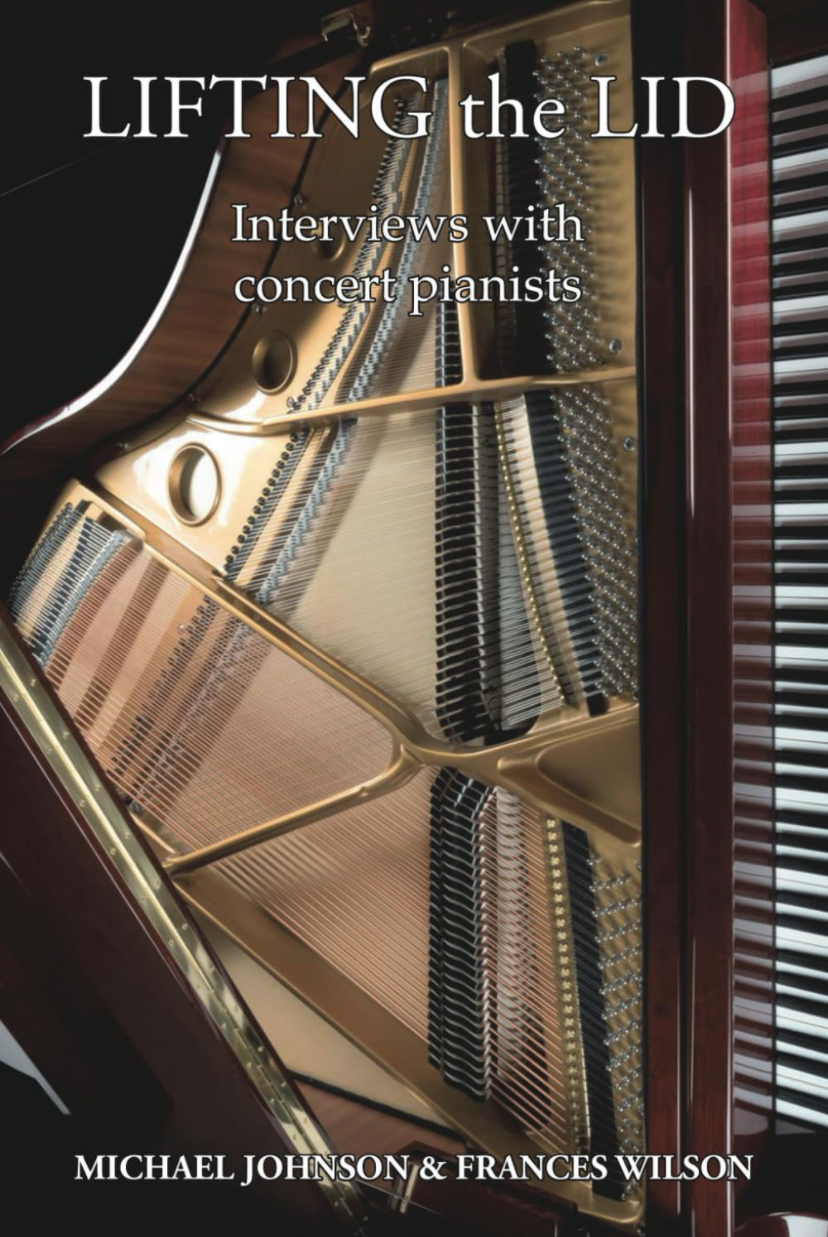
Lifting the Lid: Interviews with Concert Pianists – Michael Johnson & Frances Wilson (AKA The Cross-Eyed Pianist)

Pianists have an aura of mystique. More often than not, alone on the stage with just that box of wood and wires for company, stretched before the performer like a sleek black limousine, pianists seem more removed, almost other-worldly, than other classical musicians.

There is a great curiosity about what classical musicians do, not just life on the concert platform – the visible, public aspect of the profession – but ‘what musicians do all day’, as it were. A certain urban mythology surrounds the working life of the concert pianist; we may imagine pianists slaving away at their instrument for hours on end, cut off from family, a social life, or the normal activities of daily life. For how else could these people learn and finesse so many notes, so many details, in order to bring the music alive for us in performance and on countless recordings?

In reality, the life of the concert pianist today is rather different from the clichéd image of the wild-haired virtuoso, confined to their practice room or studio with only the instrument and its literature for company. A startling level of commitment and executive function is required to learn, memorise and perform complex music; added to that, the profession today is highly competitive, tough, often lonely – yet as these interviews reveal, the instrument and its repertoire exert a strong attraction, seducing would-be professionals from a young age and continuing to bewitch, delight, frustrate and excite.

The interviews in this book offer remarkable and often surprisingly honest insights into life as a professional pianist today – from years of intense study with some of the leading pianist-teachers and pedagogues of our time to practicing and performing, repertoire and recording. There are also more esoteric reflections on the nature of “success” as a musician, and advice for young musicians who are considering a professional career.

I must bore some people because I don’t move around when I play. Some people take this as emotional detachment but my contention is that one should come to concerts to listen, not to watch… Reproducing my gestures just wouldn’t work. (My plain) always looks effortless, like I’m just brushing the keys, but there is force at work, a lot of force.

Marc-André Hamelin

Some of the world’s greatest living concert pianists are included here – amongst them, Marc-André Hamelin, Angela Hewitt, Gabriela Montero, Stephen Hough, Joanna Macgregor, Rudolf Buchbinder, Francois-Frederic Guy and Tamara Stefanovich – but we have also included interviews with lesser-known pianists and younger artists too, who are beginning to make their mark on the international stage.

Think about what the role of a musician is today and how you can be at best useful for today’s society – for me certainly not playing only older repertoire, but thinking how to link music of all times to extraordinary creations of today. Challenge yourself by not copying someone else’s path …In short, less image, more substance

Tamara Stefanovich

The interviews have been selected from face-to-face interviews conducted by Michael Johnson before and after concerts and at music festivals, and from Frances Wilson’s popular Meet the Artist series, launched on this site in 2012 and now comprising a significant archive of over 500 interviews with musicians, composers and conductors active today.

If we are still going to persuade people to come and hear live music, we have to find ways to make that experience more meaningful and relevant, be it collaborating with other genres such as dance, the visual arts or theatre, working with living composers, or simply being able to talk to your audiences in an engaging manner.

Margaret Fingerhut

Following in the footsteps of titles such as Dean Elder’s Pianists at Play and David Dubal’s Reflections from the Keyboard, Lifting the Lid is an important survey of the thoughts and attitudes of today’s professional pianists and a significant resource for all those who are fascinated by the piano and those who play it.

Lifting the Lid is available in paperback from Amazon.com


Frances Wilson writes….. It was one of those serendipitous moments when journalist Michael Johnson contacted me in spring 2020 to suggest a collaboration project. Michael had contributed articles to this site, and I knew Michael’s writing for International Piano and Facts and Arts. It was his idea to pool our joint resources and collaborate on a book of interviews with concert pianists. I probably wouldn’t have agreed to the project had we not been in the grip of the first Covid-19 lockdown; I had very little work at the time, and desperately needed a focus and a distraction from the monotony of lockdown.

We had plenty of material, too much in fact, and so this book represents just a small selection of the many interviews we originally proposed for inclusion. While we have included some of the “big names” of classical piano, the interviews were chosen more for their interesting qualities rather than the reputation of the interviewee. I hope that readers will find these interviews insightful, giving a glimpse “beyond the notes” and the concert stage to the daily exigencies of “being a pianist”.

Frances Wilson, March 2024

“Few people ask musicians more pertinent or revealing questions than Frances Wilson…..and so the answers of her interviewees are always interesting.” – Sir Stephen Hough, concert pianist

“Frances Wilson’s Meet the Artist series is something I read every day to discover what musicians from around the world are doing and thinking. It is a fascinating behind-the-scenes glimpse into their challenges, influences and experiences via probing interviews. I highly recommend it.” – Beth Levin, concert pianist

“Not since David Dubal’s ‘Reflections from the Keyboard’ have I read a set of interviews in which music and the written word join hands so compellingly.” – Jack Kohl, concert pianist and author of ‘Bone Over Ivory: Essays from a Standing Pianist’

“Music critics have an ear. Plastic arts critics have an eye. Michael Johnson has both! This asset gives rhythm and colours to his interviews. He catches the personalities of the great pianists and reveals the little details that make them familiar to us.” – Séverine Garnier, editor of ‘Classique mais pas has been’, critic and music writer