Who or what inspired you to take up composing, and make it your career?
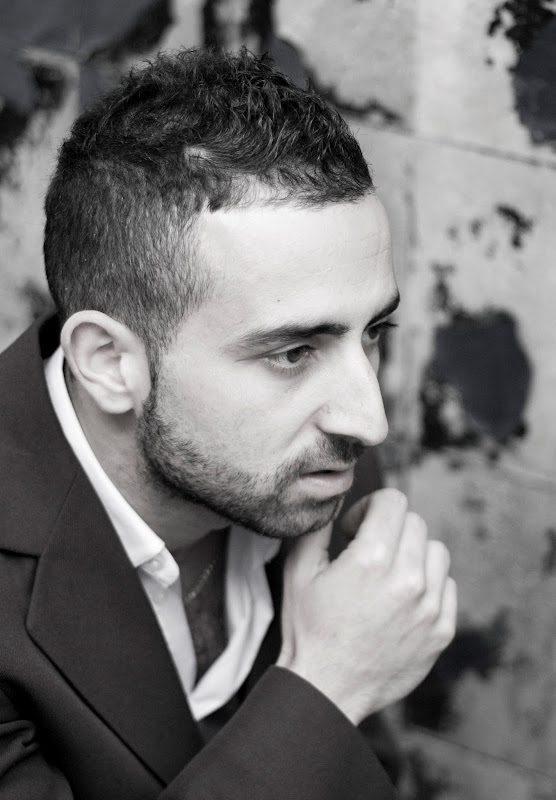
I can’t remember exactly, but I just got more and more into music as a child – hearing my mother play the piano, listening to my parents’ collection of vinyl recordings of Chopin, Beethoven etc., improvising along with my paternal grandmother on the piano: sort of soft jazzy honky-tonk type things. Before I could read music (I started lessons quite late) I would experimentally fill up music paper with random notes and try to get my mother, or my neighbour down the street in Winnipeg to try to play it for me. Eventually I figured out how to make it sound better, and started to be able to play the stuff myself. When I was about nine, I remember announcing at the dinner table to my parents and two sisters that I wanted to become a composer, if not a psychologist, which was my second choice. But I ended up becoming a pianist first.

Who or what were the most significant influences on your musical life and career as a composer?

Though I’m mostly self-taught as a composer, I received encouragement and help from S.C. Eckhardt-Gramatté and Peter-Paul Koprowski, and my musical and aesthetic grounding was greatly influenced by my piano teacher William Aide. My mother introduced me to lots of books when I was young – from ‘Wind in the Willows’ to novels by Joyce Carol Oates. I think this helped me develop creative instincts. Though I never got to meet him, Glenn Gould – with all his individuality and eccentricity – had a profound effect on me growing up. As far as the musical canon is concerned, the inventiveness, depth, and universality of Beethoven’s music grabbed me in my teenage years, and still does. I think of him as the beginning of the modern musical age. My personal interpretation of the term ‘modernism’ is that the individual voice of the composer can deliver ‘truths’ which have a value beyond their fashionability, enjoyability or marketability. There is also J.S. Bach and Mozart, of course, and Schubert, Schumann and Chopin are recurring passions. Of the more recent composers, Bartok, Shostakovich, Ives, Messaien, Xenakis, Weill, (pre-America), Ustwolskaya, Vivier, Feldman, Janacek and Mompou have all offered something special to me. Ronald Stevenson, who I am fortunate to have gotten to know in the last few years, has been an inspiration not just because of his own music (including his masterful Passacaglia on DSCH) but also through his open-mindedness to a wide range of lesser-known music which he’s shared with me – including some wonderful choral folksong arrangements by Percy Grainger.

What have been the greatest challenges of your career so far?

As a player, performing Bach’s Well-Tempered Clavier Book 2, Ives’ Concord Sonata and Beethoven’s op. 106 ‘Hammerklavier’ Sonata. Those experiences (including the task of memorising) helped develop my imagination and sense of structure – not only for composing, but for improvising. Balancing a career performing and composing has itself been a challenge, and I’m still trying to grapple with that. Improvising, besides being an artistic end in itself, has played a mediating role in this inner conflict. Perhaps one of my biggest challenges as a composer was finishing my first ‘opus’ – a piano sonata – in my last year at Juilliard, when I was also busy entering international competitions as a pianist. It was a kind of act of faith to switch gears in this way and start composing seriously. If my improvisation class teacher hadn’t taken me aside and said to me ‘look, from what I’ve heard you do, I think you should consider becoming a composer’, I may never have taken that plunge. It was the last, and practically the only thing he ever said to me in that class, and I’m still grateful for that. My first film soundtrack (Painted Angels, Jon Sanders dir.1999) scored for chamber orchestra was a similar plunge in the dark – very stressful yet exhilarating. From a curatorial perspective, the few festivals I’ve organised posed different challenges – perhaps the most hair-raising being the biggest ever Frederic Rzewski retrospective ever mounted – the first day beginning with the first (and only?) complete performance of his solo piano work ‘The Road’, lasting ten hours. His big compliment to me at the end of the two weeks was to say I was ‘one of the crazy people’.

What are the special challenges/pleasures of working on a commissioned piece?

I haven’t had many commissions, but I particularly enjoy it when there is an element of collaboration. My Viola Concerto (Night Love Song) which was premiered in Toronto last year had two collaborative angles – firstly, working directly with Rivka Golani developing the viola part and secondly working with musical and historical/mythical material from the Blackfoot – specifically the ‘Blood’ tribe in Alberta.

What are the special challenges/pleasures of working with particular musicians, singers, ensembles and orchestras?

Well, Rivka who I just mentioned was (and is) very inspiring. I also recently worked with a young Canadian pianist, now studying in Germany, Everett Hopfner who played my Preludes and Afterthoughts – fantasy-transcriptions on Chopin’s Preludes op. 28 across Canada after winning the É-Gré Competition in Brandon – Canada’s most important competition for contemporary music. To feel such enthusiasm and empathy from a young performer just starting out in his career is something that really lifts the spirit. I guess these are the positive experiences, which I tend to remember and look forward to. What I can find a bit difficult to deal with at times is when performers don’t try to read between the notes on the page – to go beyond the score and ‘interpret it’, which is after all what performers are meant to do!

Which works are you most proud of?

Usually the one I’ve just finished – in this case Three Chorales for piano (which Aleksander Szram will be recording next year as part of a CD of some of my piano and chamber music). I just hope that I can keep developing.

Do you have a favourite concert venue?

I’ve never thought about that much. But one of the worst, I think, was a place that used to be called the ‘Communist Club’ in Warsaw. I played a concert there on an abominable piano in 1980 during the Chopin Competition. I was told afterwards that Richter had just come to town a couple of weeks earlier and asked to give an impromptu recital there. That humbled me!

Who are your favourite musicians/composers?

I mentioned some earlier, but out of the myriad musicians I admire, I’ll also say Rudolph Serkin and Sergiu Celibidace.

What is your most memorable concert experience?

Hearing Jesse Norman sing Wagner’s Liebestod and Strauss’ Four Last Songs with an orchestra in London, Ontario when I was about 19. It wasn’t just the singing, which was overwhelming enough, but her stage-presence, and the magisterial slowness of her entrance.

What do you consider to be the most important ideas and concepts to impart to aspiring musicians?

Try to be open-minded. Opinions are easy to form, and aren’t worth much. But you also have to learn discernment. This might seem paradoxical, but there is a fine balance required – the kind of thing that Zen philosophy seems to be dealing with.

Be generous to others, and as far as possible disinterested in your dealings – doing things for the betterment of the art of music and society rather than entirely for your own career. I think James MacMillan shows an admirably healthy attitude in his interview for this series when he says he never thought of music as a ‘career’.

What are you working on at the moment?

A piece for erhu (a 2-stringed Chinese ‘violin’) and piano for a Canadian duo.

Where would you like to be in 10 years’ time?

Somewhere where I could experience both solitude and friendship in equal measure.

What is your idea of perfect happiness?

Solitude and friendship. And, more specifically, lying on a nice quiet beach somewhere with my wife and two daughters.

What is your most treasured possession?

Music.

What do you enjoy doing most?

Making music.

What is your present state of mind?

Tired, happy and just a little uneasy

Douglas Finch was born in Winnipeg, Canada, and began improvising, composing and performing on the piano from an early age with the help of his mother. He later continued studying with Winnifred Sim, Jean Broadfoot and at the University of Western Ontario with William Aide. After receiving a Masters from Juilliard in New York under Beveridge Webster, Douglas won several awards and was a finalist at the Queen Elisabeth International Piano Competition in Brussels.

After moving to London, he co-founded The Continuum Ensemble in 1994 and has collaborated in premiering many new works. He appears regularly with the ensemble at the Spitalfields and other Festivals and at the Southbank Centre, featuring composers such as Julian Anderson, Georges Aperghis, Henri Dutilleux, Charles Ives, Claude Vivier, Errollyn Wallen, Iannis Xenakis and many others.

He has composed for piano, chamber ensemble, orchestra, theatre and film and his score for the feature film ‘Painted Angels’ , was described in The Independent as ‘an extraordinary triumph of artistic will’.

Interview date: November 2013

Paul Badura-Skoda (Photo @ DR)
Saturday 10th May, 2014 – St John’s, Smith Square, London
Chopin
Waltzes – A minor, Op.34/2, C sharp minor, Op.64/2, D flat, Op.64/1; Nocturne, op. posth., Four Mazurkas, op. 30, Barcarolle, op. 60
Schubert
Impromptu in B-flat D935 No. 3 ‘Rosamunde Variations’

Sonata in B-flat D960

The words “great” and “world class” are all too frequently bandied about in reviews and articles about musicians (and artists and writers too). But how does one truly define these over-used descriptions? If “greatness” comes from a life spent living with, and performing and writing about, some of the finest music ever written, forming a profound relationship with it and its composers, understanding with intimate detail its structures and nuances, then Paul Badura-Skoda is a living example of this.

Paul Badura-Skoda is a pianist I have long wanted to hear live. I was aware of him more as a respected pedagogue, writer on music and editor of works by Mozart, Beethoven and Chopin and others. My teacher frequently refers to him, I have met pianists who have studied with him, and I have listened to some of his recordings (including his latest in which he plays Schubert’s final sonata on three different pianos) with interest and curiosity.

His concert at St John’s Smith Square was an opportunity for me and my companion for the evening (a fellow pianist) to share a unique musical experience – and one which will resonate with us for a long time to come. To attempt to “review” the playing, the pianism, the musical understanding and insight of such a master would be churlish.

Badura-Skoda created a special and intimate soundworld and atmosphere from the opening notes of the bittersweet A minor Waltz to the life-affirming closing cadence of Schubert’s final Piano Sonata, a place where generosity of spirit and good humour ruled, a place of great intimacy, as if we had been invited into his own musical salon for the evening. Of course, Paul Badura-Skoda is steeped in that particular European tradition of music-making, and his teacher, Edwin Fischer, connects him to an earlier golden age of music making and culture.

Despite his age (86), Badura-Skoda cuts a sprightly figure (compare his twinkling eyes and brisk gait with the frailer Maurizio Pollini at the Queen Elizabeth Hall in April, who is more than 10 years Badura-Skoda’s junior) and displayed an obvious pleasure in being at St John’s Smith Square. And if there were some smeared notes and uncertain rhythms, the overall effect was of a musician who has lived with this music for many years and whose knowledge and understanding allowed the music to speak for itself, free of ego and unnecessary gestures.

Before the Sonata in B flat, D960, Paul Badura-Skoda said a few words about the piece, how he regarded it as Schubert’s “farewell” (it was completed less than two months before the composer’s death in 1828), and how the sublime opening theme suggests the words of a hymn or prayer. The first movement had a spacious serenity in the main theme, and the range of colours and nuances which Badura-Skoda brought to the music shone a new light on a familiar work for me: for example, the bass trills were voiced differently each time which gave them a greater resonance and sense of foreboding, and the exposition repeat was observed. The slow movement’s ominous tread was relieved by a middle section of great warmth. The third movement bubbled with all the exuberance of a mountain stream, the darker Trio hardly interrupting the mood, while the finale had drive and energy coupled with wit and humour, despite one or two uneven moments. This was an engaging and entirely satisfying performance, which was met, deservedly, in my opinion, with a standing ovation.

Who or what inspired you to take up the piano, and make it your career? 

I cannot pin point where the inspiration came from, I guess I was just very passionate and still am about the piano.

Who or what were the most important influences on your musical life and career? 

My first teacher, Edvin Alamshah, who was a former student of Arturo Michelangeli, was a huge influence in my younger days.  But I think the greatest influences are the great composers, and great music.

What have been the greatest challenges of your career so far? 

I like to think of the challenges more like journeys; however I think for most pianists the greatest challenges are communication.  Once you have the ability to communicate with your audience you have overcome one of the greatest challenges.

Which performance/recordings are you most proud of?  

I haven’t recorded a CD yet but I have made many videos for YouTube and radio broadcasts. I think my favourite performances/recordings have to be the Scriabin and Janáček piano works.

Which particular works do you think you play best? 

It depends on how the coffee tastes in the morning!  There is no work I think of in that way, each piece of music has a soul and its own personality which breathes like we do, and on many occasions I’ve been proven wrong with a work I thought I could play best. However, Janáček sits very closely to me and agrees with me.

How do you make your repertoire choices from season to season? 

By reading lots and lots of music and seeing what speaks to me. I never listen to recordings to make these decisions.

Do you have a favourite concert venue to perform in and why? 

I have to say the Sydney Conservatorium of Music Verbrugghen Hall. It has lots of memories and a huge acoustic which fits my personality on stage.

Favourite pieces to perform? Listen to?  

I absolutely adore Haydn and all of his works, and I have so much fun with him while I perform.

Who are your favourite musicians? 

Really don’t have favourites, just very open/honest interpretation from many musicians young and old.

What is your most memorable concert experience? 

I think my most memorable was a recital where I performed lots of Galina Ustvolskaya’s chamber works. She was a student of Shostakovich.

What do you consider to be the most important ideas and concepts to impart to aspiring musicians? 

My friends and colleagues will laugh at this, but I always believe you must spend more time outside your practice room, meet people, go to concerts, classic or not, drink lots of whisky and take it easy.  I am not saying you should never practice – it’s very important: however some people really lose the sight of how it really is in real life. Spending 8-9 hours in a practice room can get very lonely: how are you supposed to communicate with people on stage when you can’t do that in real life?

What are you working on at the moment? 

I am working on the complete works of Janáček to perform and record in 2015.

Where would you like to be in 10 years’ time? 

Where I am now, happy and healthy.

What is your idea of perfect happiness? 

Where I don’t feel happy 24 hours of the day.

What is your most treasured possession? 

My piano scores

What do you enjoy doing most? 

Eating

What is your present state of mind? 

Panic (about to start teaching)

Vatche Jambazian performs works by Shostakovich, Mozart and Ustvolskaya at the 1901 Arts Club on Friday 16th May as part of the South London Concert Series. This concert is now **sold out**. Details of future South London Concert Series events here

Vatche Jambazian recently completed his BMus at the Sydney Conservatorium of Music and is now based in London performing many recitals in the UK and abroad. He has been a prizewinner in many international piano competitions such as The Russian Music Piano Competition in San Jose and the Australian National Piano Award. He is a highly dedicated piano teacher who aims to bring enjoyment as well as discipline to the lessons.

Vatche has recently been appointed Ambassador for the Commonwealth Piano Foundation.

An interesting programme broadcast on BBC Radio Three in which concert pianist Stephen Hough talks about the activity of practising, memory, how to balance perfection in practise with a sense of “letting go” in performance, and much more. With contributions from Nicola Benedetti, Joyce Di Donato, and Julian Bream. Many interesting insights from top international artists which have relevance to musicians of all levels.

http://www.bbc.co.uk/programmes/b03lzrsk