Paul Badura-Skoda (Photo @ DR)Saturday 10th May, 2014 – St John’s, Smith Square, London
Chopin
Waltzes – A minor, Op.34/2, C sharp minor, Op.64/2, D flat, Op.64/1; Nocturne, op. posth., Four Mazurkas, op. 30, Barcarolle, op. 60
Schubert
Impromptu in B-flat D935 No. 3 ‘Rosamunde Variations’
Sonata in B-flat D960
The words “great” and “world class” are all too frequently bandied about in reviews and articles about musicians (and artists and writers too). But how does one truly define these over-used descriptions? If “greatness” comes from a life spent living with, and performing and writing about, some of the finest music ever written, forming a profound relationship with it and its composers, understanding with intimate detail its structures and nuances, then Paul Badura-Skoda is a living example of this.
Paul Badura-Skoda is a pianist I have long wanted to hear live. I was aware of him more as a respected pedagogue, writer on music and editor of works by Mozart, Beethoven and Chopin and others. My teacher frequently refers to him, I have met pianists who have studied with him, and I have listened to some of his recordings (including his latest in which he plays Schubert’s final sonata on three different pianos) with interest and curiosity.
His concert at St John’s Smith Square was an opportunity for me and my companion for the evening (a fellow pianist) to share a unique musical experience – and one which will resonate with us for a long time to come. To attempt to “review” the playing, the pianism, the musical understanding and insight of such a master would be churlish.
Badura-Skoda created a special and intimate soundworld and atmosphere from the opening notes of the bittersweet A minor Waltz to the life-affirming closing cadence of Schubert’s final Piano Sonata, a place where generosity of spirit and good humour ruled, a place of great intimacy, as if we had been invited into his own musical salon for the evening. Of course, Paul Badura-Skoda is steeped in that particular European tradition of music-making, and his teacher, Edwin Fischer, connects him to an earlier golden age of music making and culture.
Despite his age (86), Badura-Skoda cuts a sprightly figure (compare his twinkling eyes and brisk gait with the frailer Maurizio Pollini at the Queen Elizabeth Hall in April, who is more than 10 years Badura-Skoda’s junior) and displayed an obvious pleasure in being at St John’s Smith Square. And if there were some smeared notes and uncertain rhythms, the overall effect was of a musician who has lived with this music for many years and whose knowledge and understanding allowed the music to speak for itself, free of ego and unnecessary gestures.
Before the Sonata in B flat, D960, Paul Badura-Skoda said a few words about the piece, how he regarded it as Schubert’s “farewell” (it was completed less than two months before the composer’s death in 1828), and how the sublime opening theme suggests the words of a hymn or prayer. The first movement had a spacious serenity in the main theme, and the range of colours and nuances which Badura-Skoda brought to the music shone a new light on a familiar work for me: for example, the bass trills were voiced differently each time which gave them a greater resonance and sense of foreboding, and the exposition repeat was observed. The slow movement’s ominous tread was relieved by a middle section of great warmth. The third movement bubbled with all the exuberance of a mountain stream, the darker Trio hardly interrupting the mood, while the finale had drive and energy coupled with wit and humour, despite one or two uneven moments. This was an engaging and entirely satisfying performance, which was met, deservedly, in my opinion, with a standing ovation.
Who or what inspired you to take up the piano, and make it your career?
I cannot pin point where the inspiration came from, I guess I was just very passionate and still am about the piano.
Who or what were the most important influences on your musical life and career?
My first teacher, Edvin Alamshah, who was a former student of Arturo Michelangeli, was a huge influence in my younger days. But I think the greatest influences are the great composers, and great music.
What have been the greatest challenges of your career so far?
I like to think of the challenges more like journeys; however I think for most pianists the greatest challenges are communication. Once you have the ability to communicate with your audience you have overcome one of the greatest challenges.
Which performance/recordings are you most proud of?
I haven’t recorded a CD yet but I have made many videos for YouTube and radio broadcasts. I think my favourite performances/recordings have to be the Scriabin and Janáček piano works.
Which particular works do you think you play best?
It depends on how the coffee tastes in the morning! There is no work I think of in that way, each piece of music has a soul and its own personality which breathes like we do, and on many occasions I’ve been proven wrong with a work I thought I could play best. However, Janáček sits very closely to me and agrees with me.
How do you make your repertoire choices from season to season?
By reading lots and lots of music and seeing what speaks to me. I never listen to recordings to make these decisions.
Do you have a favourite concert venue to perform in and why?
I have to say the Sydney Conservatorium of Music Verbrugghen Hall. It has lots of memories and a huge acoustic which fits my personality on stage.
Favourite pieces to perform? Listen to?
I absolutely adore Haydn and all of his works, and I have so much fun with him while I perform.
Who are your favourite musicians?
Really don’t have favourites, just very open/honest interpretation from many musicians young and old.
What is your most memorable concert experience?
I think my most memorable was a recital where I performed lots of Galina Ustvolskaya’s chamber works. She was a student of Shostakovich.
What do you consider to be the most important ideas and concepts to impart to aspiring musicians?
My friends and colleagues will laugh at this, but I always believe you must spend more time outside your practice room, meet people, go to concerts, classic or not, drink lots of whisky and take it easy. I am not saying you should never practice – it’s very important: however some people really lose the sight of how it really is in real life. Spending 8-9 hours in a practice room can get very lonely: how are you supposed to communicate with people on stage when you can’t do that in real life?
What are you working on at the moment?
I am working on the complete works of Janáček to perform and record in 2015.
Where would you like to be in 10 years’ time?
Where I am now, happy and healthy.
What is your idea of perfect happiness?
Where I don’t feel happy 24 hours of the day.
What is your most treasured possession?
My piano scores
What do you enjoy doing most?
Eating
What is your present state of mind?
Panic (about to start teaching)
Vatche Jambazian performs works by Shostakovich, Mozart and Ustvolskaya at the 1901 Arts Club on Friday 16th May as part of the South London Concert Series. This concert is now **sold out**. Details of future South London Concert Series events here
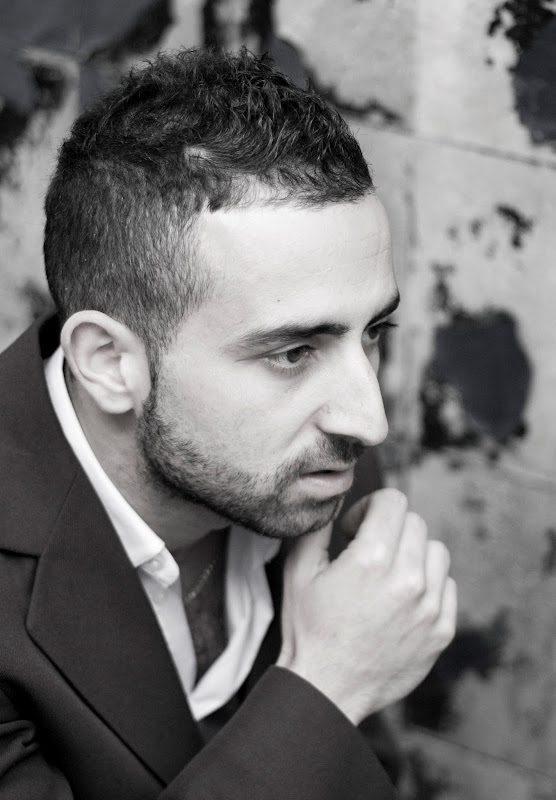
Vatche Jambazian recently completed his BMus at the Sydney Conservatorium of Music and is now based in London performing many recitals in the UK and abroad. He has been a prizewinner in many international piano competitions such as The Russian Music Piano Competition in San Jose and the Australian National Piano Award. He is a highly dedicated piano teacher who aims to bring enjoyment as well as discipline to the lessons.
An interesting programme broadcast on BBC Radio Three in which concert pianist Stephen Hough talks about the activity of practising, memory, how to balance perfection in practise with a sense of “letting go” in performance, and much more. With contributions from Nicola Benedetti, Joyce Di Donato, and Julian Bream. Many interesting insights from top international artists which have relevance to musicians of all levels.
Who or what inspired you to take up the piano, and make it your career?
Not my family, initially, although to their great credit my parents were always entirely supportive of me in any of my aspirations – and still are. A dear friend of the family, who lived round the corner from us at the time, was a great classical music lover and had a piano in her home. It was she who incited in me a real interest in classical music.
I had already begun to play the violin at my local primary school (this was by the time I was 8 years old), and she was getting in to the habit of practicing with me every day after school for 20 minutes. I remember being allowed to play on the piano for 10 minutes after my violin practice every day, and chatting to this lady about classical music: she was from Berlin, and I remember her enthusing me about the great German composers, mainly Schumann and Beethoven. Eventually I asked my Mum if I could start having piano lessons, and so they began in Elgin, the town of my birth, in 1995.
Years passed until I found myself in my third year at St Mary’s Music School in Edinburgh, working hard at the violin and keeping the piano ticking over although not taking it that seriously despite a recent victory at the Moray Piano Competition. Something happened around this time and I suddenly realised I couldn’t stand the prospect of making the violin my career – although I still maintain I had a real flair for the instrument and indeed could have succeeded as a session musician, I never found it that comfortable to play and I always felt a deeper connection with the piano. Somehow the piano suited me better: it seemed a more ‘independent’ instrument, you had total command of the music you were playing (I remember my teacher at the time, Margaret Wakeford, counselling me to ‘be your own conductor!’ when I played), and on the whole I much preferred the repertoire. It promised me a greater deal artistically, even if the career path was to be more precarious.
Who or what were the most important influences on your playing?
There are many people and many things, but one of the most important people has been Andrew Ball, whom I studied with at the Royal College of Music (London) for six consecutive years. It was his open-mindedness, his way of thinking about music and indeed his great knowledge of just about everything which has steered me in to becoming who I am artistically.
What have been the greatest challenges of your career so far?
I suppose this might be commonplace among all music college graduates in their mid-twenties, but it is the combination of attempting to make ends meet, whilst pursuing my artistic ambitions, and maintaining my artistic integrity in all that I do. Keeping up my standards of playing amidst a hectic life of teaching, rehearsing, performing and of course those interminable periods spent on trains is certainly a challenge!
Which performances are you most proud of?
Tricky! I have to say that some of my recitals as a student tend to stand out: I’m proud that I performed works by Elliott Carter and Stockhausen in the same recital, for instance, and that I felt completely involved in the music. Also, performances I gave of Reubke’s magnificent Piano Sonata in B-flat two years ago, a piece which has come to mean a lot to me. More recently, playing the Bach Keyboard Concerto in D minor with Sian Edwards in Milton Keynes in 2012 was extremely memorable. And of course, playing as part of my duo at our Wigmore Hall debut in November 2012 was very special. Being in the green room before stepping on stage was something in itself, just looking at all the signed photos of so many of ‘the greats’ gazing down on you makes you realise just what a privilege it is to be performing in that hall.
Do you have a favourite concert venue to perform in?
Favourites so far in my career have been: Wigmore Hall, for the acoustic (it’s perfect, that’s it). There have been a few stately homes and churches that were very comfortable to play in too. I really enjoyed the Pump Room in Bath
Favourite pieces to perform? Listen to?
Ask me in ten minutes and I’ll have changed my mind! These days I’m gravitating largely towards British Music. I have a real ‘thing’ for the Bridge Piano Sonata, the three Elgar chamber works too. The music of Kevin Volans interests me currently. As a performer, I strongly hope to get back in to contemporary music next season. It sounds trite, I suppose, but any music with a truly strong and vital message will surely grab me.
Who are your favourite musicians?
Glenn Gould, for his individuality, his refusal to compromise his artistic vision and integrity – I think that’s a very important thing. Whenever I hear piano rolls, or old records, of the now lost age of pianists I come away feeling totally inspired. I recently bought an LP of a piano roll of Moritz Rosenthal and some of the playing is mindblowing!
What is your most memorable concert experience?
There are many, but sometimes how people react to a performance I’ve given is what makes a concert particularly memorable. For example, after performing at the Dorking Halls in Surrey last season, a Russian lady came up to me in the foyer and gave me a little matrioska doll, as a way of saying ‘thank you’ for my performance of Scriabin’s Sonata No. 3. She was visibly moved (slightly choked), and it was the way she did it anonymously too which made the experience so potent. I keep the matroyshka on the bookshelves next to my piano: it reminds me of music’s power to enhance peoples lives, its possibilities, its importance.
What do you consider to be the most important ideas and concepts to impart to aspiring musicians?
Keep an open mind! You’re about to enter a field which is enormously competitive, a lot of people will be striving for the same goals. It pays to think outside the box a little. Try never to turn down opportunities, even if they seem irrelevant to your interests: I’ve pursued paths I never dreamt of pursuing (or particularly wanted to pursue), and I ended up with quite a few great concerts, or jobs, that I would never have got otherwise. And never lose sight of your artistic goals. Above all, have fun!
What are you working on at the moment?
The biggest project this year has been preparing the vast majority of Ronald Center’s piano music for recording. Ronald Center (1913-73) was an Aberdonian composer whose music has been incredibly neglected both during his lifetime and since his death. Aside from this, I’m preparing quite a lot of duo repertoire, namely works with violin – Sonatas by Grieg, Haydn, Hindemith and Janacek – and works with oboe – Sonatas by Poulenc and Dutilleux.
What is your present state of mind?
Positive!
Christopher Guild’s new recording of piano music by Ronald Center is available now on the Toccata Classics label. Further details including sample sound clips here
Born in Elgin in 1986 and brought up on Speyside, Christopher Guild studied piano and violin locally before entering St Mary’s Music School, Edinburgh aged 13. He returned to Morayshire one year later to take top honours in the Moray Piano Competition – a victory which sees him as the youngest ever winner to this day.
Christopher entered the Royal College of Music in 2005 as a Foundation Scholar, and remained there under the tutelage of Andrew Ball until 2011, successfully gaining a First Class BMus (Hons), and the MMus and Artist Diploma’s with Distinction. He now combines a busy schedule as a performer with extensive work as a teacher, and coaches students at Trinity Laban Conservatoire of Music and Dance where he is the Richard Carne Junior Fellow in Performance.
Christopher Guild acknowledges the following organisations for their invaluable support to his studies at the RCM: Dewar Arts Awards, the Robertson Scholarship Trust, the Alistair Maclachlan Memorial Trust, the Cross Trust, The Royal Caledonian Schools Trust, the Hope Scott Trust, the Arts and Humanities Research Council, the Sir James Caird Travelling Scholarships Trust, the RCM Foundation, a Michael Whittaker Scholarship, and an Ian Fleming Award Award administered by the Musician’s Benevolent Fund.
The Cross-Eyed Pianist is free to access and ad-free, and takes many hours every month to research, write, and maintain.
If you find joy and value in what I do, please consider making a donation to support the continuance of the site


 Who or what inspired you to take up the piano, and make it your career?




 The Cross-Eyed Pianist