Stress testing (sometimes called torture testing) is a form of deliberately intense or thorough testing used to determine the stability of a given system or entity. It involves testing beyond normal operational capacity, often to a breaking point, in order to observe the results (Source: Wikipedia)

Performing in front of others is stressful, whether it is to a group of friends at an informal gathering or to a full house at Carnegie Hall.

In order to prepare ourselves for such performances, particularly important performances such as an exam, audition or formal recital, it is crucial to “stress test” our repertoire by playing the entire programme in a variety of situations. This process is commonly used by professional musicians, who may choose to play a programme at regional venues before performing at an important venue such as London’s Wigmore Hall. Each time we perform, new things are revealed about our music which inform subsequent practise sessions and help us make our music more refined and, more importantly, secure, thus protecting us against errors, or at least allowing us to skim over slips and minor mistakes so that the “flow” of the performance is not disturbed.

This last week I and a friend have been “stress testing” our respective programmes for forthcoming concerts. I am fortunate in that I own a very beautiful antique grand piano, which piano-playing friends of mine love to come and play (and I love hearing the piano played well by others). Playing for a couple of friends, in a relaxed atmosphere with cups of tea and cake, allows one to play in a “safe zone”. In these situations, we know that our friends are not judging us, they listen attentively and offer encouragement and applause afterwards. Of course, it can be difficult playing to other pianists – but it can be a sympathetic experience too as we all understand how very hard it is to play the piano!

I played three pieces, by John Field, Schubert and Schumann, which form the solo element of a longer concert which I am giving with a singer. In practise, the pieces felt secure and well-known, but, interestingly, weak spots were revealed when I played to my friends which subsequently  enabled me to practise with care and focus.

In addition to helping us focus on practising, “stress testing” our repertoire allows us to gauge aspects of our performance, from our concert attire and stagecraft to the vibrancy and expression of our playing (and yes it is important to do a “dress rehearsal” to make sure clothing and shoes are appropriate and comfortable). It also enables us to better understand and handle anxiety and stage fright: and the more times you practise performing a programme before The Big Day, the better you become at recognising and accepting the symptoms of performance anxiety.

Of course this preparation for performance presupposes that one has done all the careful, detailed work learning the music, including being able able to work both too slowly (a musical challenge) and too fast (an efficiency challenge), one hand thinking the other and using the wrong hand (see Graham Fitch’s useful article on symmetrical inversion), working with and without the metronome, studying the music away from the piano and in one’s head, and creating a vivid, perfect interior model of the music, while all the time guarding against routine and a lack of mindfulness. It’s hard work: there’s no getting around the fact that playing the piano is very difficult, regardless of one’s ability – as Graham said to me the other day, “if it was easy, everyone would do it!”.

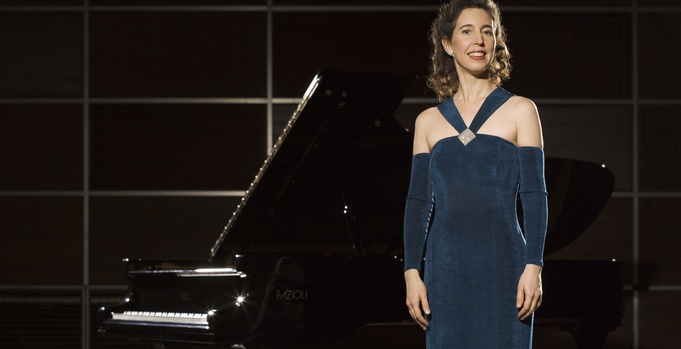
Returning to the subject of practising for a performance, I had an interesting experience with one of my more advanced students recently, a teenage girl who was preparing to take her Grade 6 piano exam. I have done a lot of work on confidence and stagecraft with her, and at the last lesson before her exam, she wanted to run through her pieces. After three false, frustrating starts to the C P E Bach ‘Solfeggio in c minor’, with me sitting quietly next to the piano, I suggested we try something different. I told her about the Canadian pianist Angela Hewitt whose stage presence suggests someone who loves performing and who can’t wait to share her music with the audience. “Channel your inner Angela Hewitt!” I suggested to my student, and then asked her to leave my piano room, wait in the hall (as if backstage at the Wigmore) and then “come on” to the “stage”. Meanwhile, I moved away from the piano and sat “in the audience” on my sofa. The transformation in her performance was remarkable: she was confident and poised and she made a wonderfully vibrant sound. She was thrilled with her performance, and when she saw me after the exam, she explained that she had done the same visualisation/acting exercise in the moments before she went into the exam room. I am delighted to report that she passed her exam with a high Merit and received very complimentary comments from the examiner about the communication and expression in her playing.
angela-hewitt_c_jpg_681x349_crop_upscale_q95
Angela Hewitt (photo Medici TV)

As performers, we have to be actors, partly to enable us to cope with the feelings of anxiety, but also to allow us to step into the character of each piece we play. All these aspects need to be practised and tested before the The Big Day. Curiously, the more of this work we do in the weeks and days leading up to the important performance, the better able we are to “let go” in the actual performance, to play in the moment and to allow the creative and artistic side of our personality (often called “right brain thinking”) to take flight.


A guest post by Nora Krohn

One night after a concert I was having a drink with a colleague who told me a bizarre story about a graduate school audition he’d taken. While entering the subway en route to the audition, weighed down by his violin case and a large suitcase, he walked through the service gate behind someone else rather than swiping his card at the turnstile. Since he had an unlimited monthly pass, he had essentially pre-paid his fare and assumed there was nothing unlawful about walking through the gate. So he was stunned when a police officer stopped him, arrested him for fare evasion, and took him to jail.

With his violin case sitting on the other side of the bars enclosing his cell, he called the audition committee to explain the situation, and then waited anxiously, not knowing when he would be released. A few hours later, the officer finally let him go with a summons to appear in court a few weeks later. He grabbed his violin, rushed to the hall, made it there 20 minutes before his audition, played beautifully, and was accepted.

When he got to the end of his story, I was astounded. “How could you possibly stay focused with so much stress and distraction? Weren’t you furious?” I asked. “ I would have been a mess.”

“I wasn’t nervous or angry, I was totally relaxed actually,” he replied with a smile. “You see, the situation was so over the top I’d already let go of the outcome. Whatever happened I knew it wouldn’t be my fault.”

My colleague could relax and allow his great talent and preparation to shine through in spite of these acutely stressful events because he knew whatever flaws that resulted from them were clearly not his responsibility. The absurdity of the whole thing disarmed him, and he let go.

For many of us it’s not so easy to hold the things that go wrong with lightness—to regard them as vicissitudes of fortune rather than as tactical errors, character flaws, or divine punishment. But as I pondered my friend’s story, I began to see that letting go of the impulse to assign blame for our past and future mistakes—whether to others or to ourselves—is crucial for our growth. Instead of defining ourselves by our missteps, we can learn to see them as vital steps toward greater wisdom.

Here is an example from my own experience.

Trying to Be Right

This past spring I arranged a play-through of my recital program for a colleague in preparation for an upcoming concert. In starting to collaborate more with piano, I’d discovered that my knee-jerk habit, honed from years of orchestral playing, is to blend with and defer to what’s going on around me, instead of taking charge. After that realization I’d worked hard to learn what it meant to fully occupy, or request, if necessary, the musical space I needed to play with the command that performing as a soloist requires.

As the pianist and I played through our program for my colleague, I started to feel that the music was tumbling by too quickly and I that didn’t have space to execute things the way I wanted to. In my frustration, I tried to slow down, but the pianist and I weren’t aligning, and my frustration persisted through the end of the play-through.

After we finished, my colleague offered us warm praise, and then gently suggested that in my efforts to play everything as exquisitely as I’d set out to, I was blocking the flow of the music. I countered that I had been trying to slow things down to give myself space and strength. But she replied that while my intention was good, it couldn’t work in performance, when the music of the moment required me to join up with a gesture or tempo that was already in motion. Her words and voice were kind, but I felt chastened and confused. I’d been trying so hard to be “right.” Now I felt I was back to being “wrong.”

But as I thought about it, I saw the wisdom in my colleague’s advice. In rehearsal, it was important to lead by communicating how I thought the music should flow. But in the moment of performance, I had to let go of all of that effort and be flexible in working with the particular demands of the situation instead of fighting them, no matter how “right” or “wrong” they might feel.

“Just Relax”

A few weeks ago I encountered another situation where my desire to be “right on” was inhibiting I was playing with a pianist in a master class at Madeline Bruser’s Art of Practicing Institute summer program, and we were trying to get the ensemble of a particular cadence just right. From my previous experiences, of first trying to follow the pianist, and then trying too hard to lead, I instinctively knew that for us to be together, the main thing I needed was to be solidly connected to myself—that if I could stand clearly in my own feelings and convictions, I could naturally connect with the pianist and she would know exactly where to place her notes. But I also knew that making a big effort to connect to myself would tie me up in knots. It had to just happen, but I didn’t know how.

When I explained this predicament to Madeline she said, “It sounds like you just need to let your mind relax.” Luckily we had been meditating for two hours a day for the previous five days, so after closing my eyes for a few moments I was able to let go and merge my mind with the sounds I was hearing and with the feeling in my body. We played the passage again, and the cadence flowed effortlessly. Buoyed with confidence, we tried the same idea at another cadence and were again completely in sync. But at the last second the pianist was so relaxed she played a glaring wrong note, and everyone in the room burst out laughing. It was a really great mistake, because it loosened us up, and brought everyone closer together for a moment.

When “Wrong” is Just Right

While I was at the summer program, another friend told me he was in the process of writing a piece for a student orchestra. The previous day he’d gone on a walk and felt very inspired, and sat down to write several minutes of music. But he went on to confess that after listening to it the next day he found it mawkishly sentimental and embarrassing. He dubbed it “The Happy Bunny Farm,” and played it for me, and we laughed about it. But the day after we talked he felt fresh and full of good ideas, and ended up finding the thread that became the piece he did write. He just had to get the Happy Bunny Farm out of his system first. One songwriter I know recently told me he asks his students to do what he calls the “Bad Songs Challenge.” They write one complete “bad” song per day for a week, and in the process they accumulate valuable insights about what works, what doesn’t, and why. And presumably they share a few good laughs.

I’ve spent the last few years trying to get more comfortable with the idea of screwing up, but the truth is it’s still hard to deal with. I’d always heard the phrases “mistakes are inevitable,” or “you learn from your mistakes,” but it’s taken a long time to start acquainting myself with the palpable meaning of those words. In reflecting on the missteps I’ve made as a performer, I’ve begun to see them not as pitfalls I could have avoided by being better or smarter, but as necessary steps on the path toward true confidence, a confidence based not on protecting myself from being wrong, but on becoming big and bold enough to welcome any experience that comes my way, wrong or right.

The word “forgive” comes from the Old English forgiefan. Another translation of that word is “to give up.” In my case, forgiving myself for my mistakes means giving up feeling any certainty about whether I’m on the right track. I often feel lost, uncertain whether my next step will take me closer to or further from what I desire, which is to communicate truth and beauty. But the alternative is to remain paralyzed by the fear of being wrong, which makes it impossible to take even one step forward into the vast and beautiful wilderness that is ours to know. Getting lost is not only inevitable, but vitally important. When we can hold our missteps with gentleness and humor, we are exactly where we need to be. The path is in the walking of it.

A versatile performer and recording artist in the New York area, Nora Krohn has performed on three continents in a diverse range of venues and styles. She is the Assistant Principal violist of the Ridgefield Symphony, section violist in the Binghamton Philharmonic, and she performs frequently with a dozen other orchestral ensembles throughout the Northeast. Her numerous recording credits include collaborations with Phil Dizack and Declan O’Rourke, and commercial projects for Budweiser and Tiffany and Co. She can also be seen in several episodes of Amazon’s web series “Mozart in the Jungle.”  

Founding member of pioneering viola duo Folie à Deux, Nora is also an avid chamber musician. As a recitalist, she has performed on the St. John’s Noontime Concert Series in Williamstown, MA, on the Turtle Bay Music School Artist Series, the Project 142 Series at The Concert Space at Beethoven Pianos, and for the inaugural Art of Practicing Institute fundraising concert. In October 2011 she was featured as a soloist in Paul Hindemith’s Trauermusik with the Chelsea Symphony. 

Nora graduated magna cum laude and Phi Beta Kappa from Brown University, where she earned a BA in Music and Spanish Literature and was the recipient of the Buxtehude and Muriel Hassenfeld Mann Premiums in Music. She received her MM in Viola Performance from SUNY Purchase College, where she studied with Ira Weller.

www.norakrohn.com

Concert

noun

1. a public musical performance in which a number of singers or instrumentalists, or both, participate.

2. a public performance, usually by an individual singer, instrumentalist, or the like; recital:

As regular readers of this blog, and friends and colleagues will know, I go to a lot of concerts, at least one a week, and sometimes two or three. I also occasionally give my own concerts or perform in recitals organised by others.

Earlier this year, I took part in a concert for a medical charity. It was held at the intimate and convivial 1901 Arts Club close to London’s Waterloo station. I’ve performed there are couple of times, and it is also where the South London Concert Series events usually take place. On this occasion, the audience was almost entirely comprised of medics. Plied with champagne before the concert, when people came down to the music salon for the concert, one had the sense of them relaxing into their seats, happy to enjoy whatever we presented to them. The programme was varied with performances by a soprano, a violinist, piano solo and piano 4-hands, and included works by Debussy, Gershwin, Saint-Saens, Rachmaninov, Grainger and Ravel. During the interval and after the concert, members of the audience expressed their delight at the music making and congratulated us on our performances. Throughout the evening, there was a very palpable sense of a shared experience and that the audience had really enjoyed the evening’s entertainment.

Which set me thinking……. Are concerts purely for “entertainment” or do they serve another more serious or different purpose or purposes?

Of course, “entertainment” needn’t be something amusing or funny (though the word is more commonly associated with humour). Entertainment is a form of diversion, an agreeable occupation for the mind, or something affording pleasure. People (including me) gain enormous pleasure from live concerts, and for many concerts offer a wonderful escape from the humdrum, the every day and the mundane. Take this a step further, and for some a concert offers something more transcendent, a near-religious experience (even for the non-religious). A concert can take the listener on a journey outside themselves, it can uplift and even heal.

Since time immemorial, people have got together to make and share music. That sense of community, of belonging, of a shared experience remains very important today. There’s a feeling of collaboration between performer, music and audience which is infectious and absorbing: witness people at the Proms – you can see the sense of engagement and absorption in their faces as they listen to the music (and of course without an audience, a “concert” would cease to be).

Live music can be really really exciting: a live concert is a “one-off”, and that excitement, spontaneity and sense of risk is what makes concerts so compelling – and something one can never truly get from a recording. I love the sense of the music being created “in the moment” (of course, I understand that the performer has in fact spent many careful hours preparing the music). The composer Helmut Lachenmann says of concerts: “Some people go bungee-jumping or climb a mountain to have an existential experience – an adventure. People should have this same experience in the concert hall.” How performers create this sense of “adventure” is discussed later in this article.

Nor do I do believe there is such a thing as a truly “bad concert”, for we each take from the performance something personal and unique, and while I may not have enjoyed a certain performance, others have and who I am to tell them they are wrong? The meaning of music is different for each individual listener, and whether it merely “entertains” or offers something deeper, it is the way music “speaks” and communicates that makes it so magical. This sense of magic is heightened when one hears live music.

For musicians, concerts are in integral part of their raison d’etre and an opportunity for them to share their musical vision with the audience. (One pianist friend of mine describes giving concerts as “a compulsion and a rather beautiful narcotic”.) Music was written to be shared and the audience share their appreciation of what is coming from the performer, thus making a concert a collaborative experience. Performing should have less to do with ego and more the musician’s desire to share the music with others.

Bringing spontaneity to one’s performance can be tricky, especially if one is playing the same programme over a series of concerts. As the British pianist Stephen Hough put it in a programme about practising for the BBC, one needs to be a “perfectionist” in the practise room to allow one to be “bohemian” on stage. By which he means if one is very well-prepared, one has the confidence to “let go” when one performs. Often the best and most memorable performances are from performers who understand the balance between being perfectionist and bohemian. At other times, it is the sense of intense concentration and profound understanding and affinity with the music which can create a moving and memorable performance. I have occasionally been moved to tears on such occasions, crying quite spontaneously at the end of the piece (notably in Messiaen’s Quartet for the End of Time and a complete performance of the Vingt Regards. On both occasions, the pianist was Steven Osborne.)

On a more prosaic/commercial level, concerts can be used to promote a new CD or related material, or launch of a recording label or similar. And for composers, concerts provide a means of getting their music out there, heard, appreciated and reviewed.

Finally, the late great Claudio Arrau on the subject of concerts:

“I don’t know what will happen, but I trust it will be wonderful”

Review of Frances Wilson & Friends, South London Concert Series at Brunswick House, 22nd January 2015

by Lucy Butler Gillick

Brunswick House
Brunswick House

The last time I visited LASSCO Brunswick House, my husband and I were looking at furniture for our house in Clapham. Back then it was the place to go for interesting bits and pieces at prices that wouldn’t break the bank. It still is. But in those days the area was very far from a prime location. In the 10 or more years since, I have occasionally looked across from a car or bus as I pass through Vauxhall Cross and noticed the isolated Georgian house, standing in defiantly Dickensian splendour, on an island surrounded by sleek riverside architecture and brutally thundering roads.

Without the encouragement of my dear friend Fran [Frances] Wilson – the energetic co-founder and Artistic Director of the South London Concert Series – I would probably never have bothered to park the car or get off the bus or tube to explore any further. But her invitation to come along to an evening of intimate piano music was far too appealing to refuse. And the venue is practically on my doorstep…

Now, apart from the occasional school event, endured for the sake of my children, or dinner at Fran’s where the piano would inevitably form part of the programme (and a welcome one at that), I have never really experienced such a concert. So it was as a complete outsider to this exclusive piano playing world that I arrived last Thursday evening and finally re-entered the pillared portals of LASSCO Brunswick House. To be frank, I was slightly fearful that my bottom would end the evening sore from a long and laborious sit, after having my eardrums assailed by music that could potentially mean nothing to me at all.

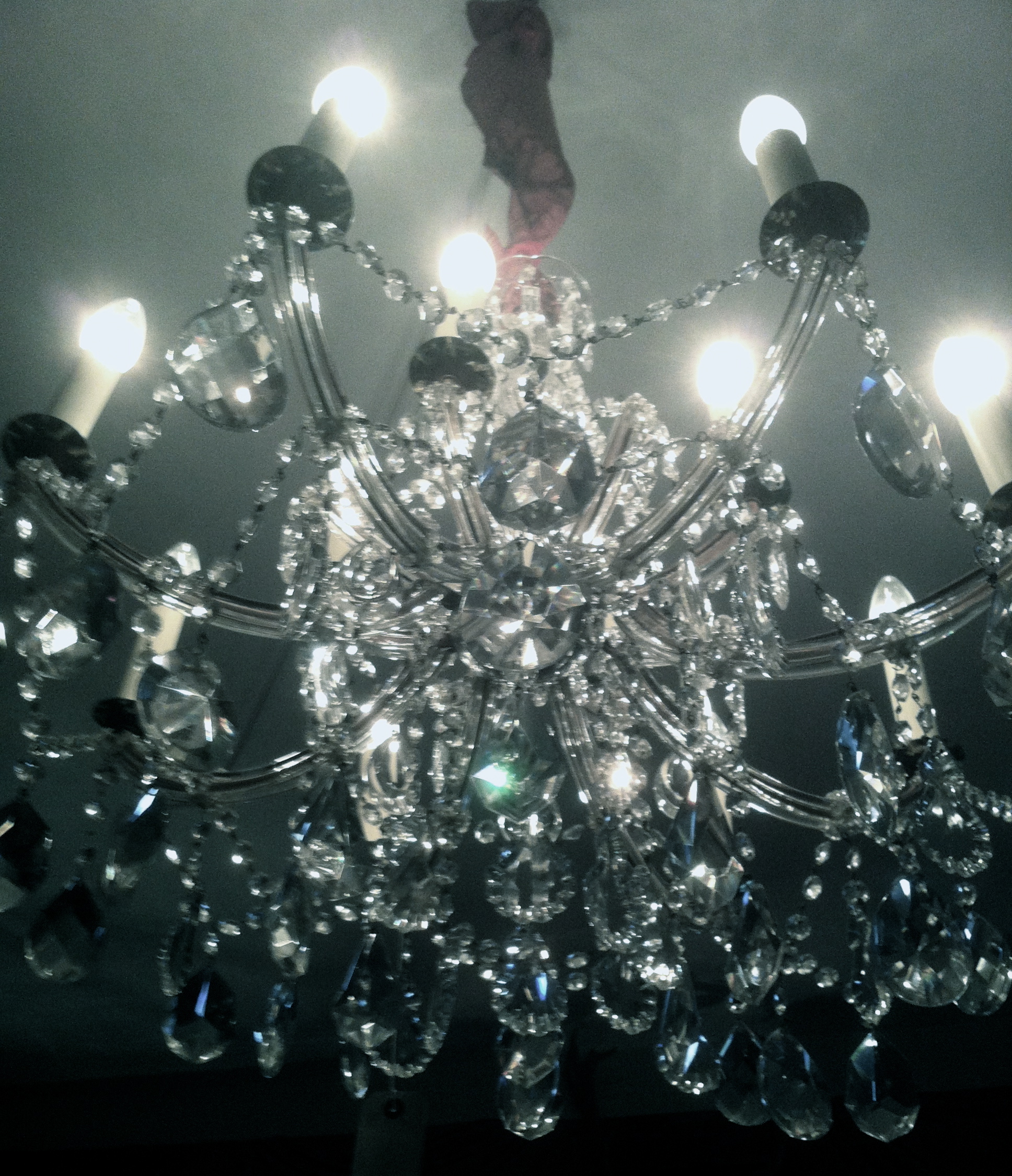
ChandelierBut what an appealing setting and pleasurable event it turned out to be. Downstairs is a cosy bar and lively restaurant, lit and furnished with scene-setting antiques that are – so far as I could tell from the tags – all for sale. For your starter you could order Mussels, Kale & Parsnip plus a Venetian chandelier; with perhaps Roast Lamb Leg and a sideboard to follow. Not bad going for the time-poor, multi-tasking city worker, en route home.

DSC_4092But it was upstairs that the salon vibe really took hold. The private concert room, the opulent Saloon with its belle epoque Bechstein grand piano, heavily swagged stained glass windows, old-fashioned school room-style chairs set in neat rows, lamps, lanterns, chandeliers and ephemera, was a genuinely atmospheric space. The very height of old-world decorous gentility, slap bang in the middle of one of London’s busiest junctions (better known for its gay clubs and pubs). Who’d have thought? It even smelt old-fashioned – a sort of pleasantly musty, sandalwood tang.

Once the concert kicked off, after a short introduction from Fran – dressed to the nines in a floor-length slinky red and mauve gown – the evening progressed apace. The concert included the ‘world premiere’ of a new piece by composer and guitarist Matthew Sear, as well as preludes, fugues, sonatas and impromptus from the likes of Debussy, Shostakovich, Menotti, Rachmaninoff, Scarlatti, Schubert and Satie – all favourite pieces of the artists performing that night. There was even a piece by the incongruously named Bryan Kelly (who sounds more like an Irish builder than an Australian composer to me), and a somewhat ‘difficult’ discordant work by Olivier Messiaen – apparently taken from ‘one of the greatest works for piano of the 20th century’ (the Vingt regards sur l’enfant Jésus) expertly played by Fran, who I think fancied challenging her audience into hearing something unusual at the end of the night.

The South London Concert series typically combines performances by talented amateur musicians with a special “guest spot” featuring professional and semi-professional players. On the evening I attended we enjoyed performances by José Luis Gutiérrez Sacristán, Petra Chong, Lorraine Womack-Banning, Rob Foster and of course our genial hostess Frances Wilson herself. They all looked and sounded amazing to my untutored ears and I would heartily recommend the South London Concert Series to anyone who fancies a very reasonably-priced introduction to the world of glorious piano music in an intimate setting, followed by an opportunity to meet and talk to musicians who are as passionate about their piano music as you probably are about your food, wine and chandeliers. What’s not to love about such civilisation? The only jarring note was re-entering the real world and wintry fug of Vauxhall Cross when it was finally time to head home…


Lucy Butler Gillick is ex-chief sub editor of The Sunday Telegraph Magazine and Harpers & Queen. She has written for many magazines and supplements over the years, on a variety of topics, but mostly on issues related to parenting. She now works in education. 


The South London Concert Series returns to LASSCO Brunswick House on 21st May for a concert by Australian counter-tenor Glenn Kesby. Full details here

www.slconcerts.co.uk