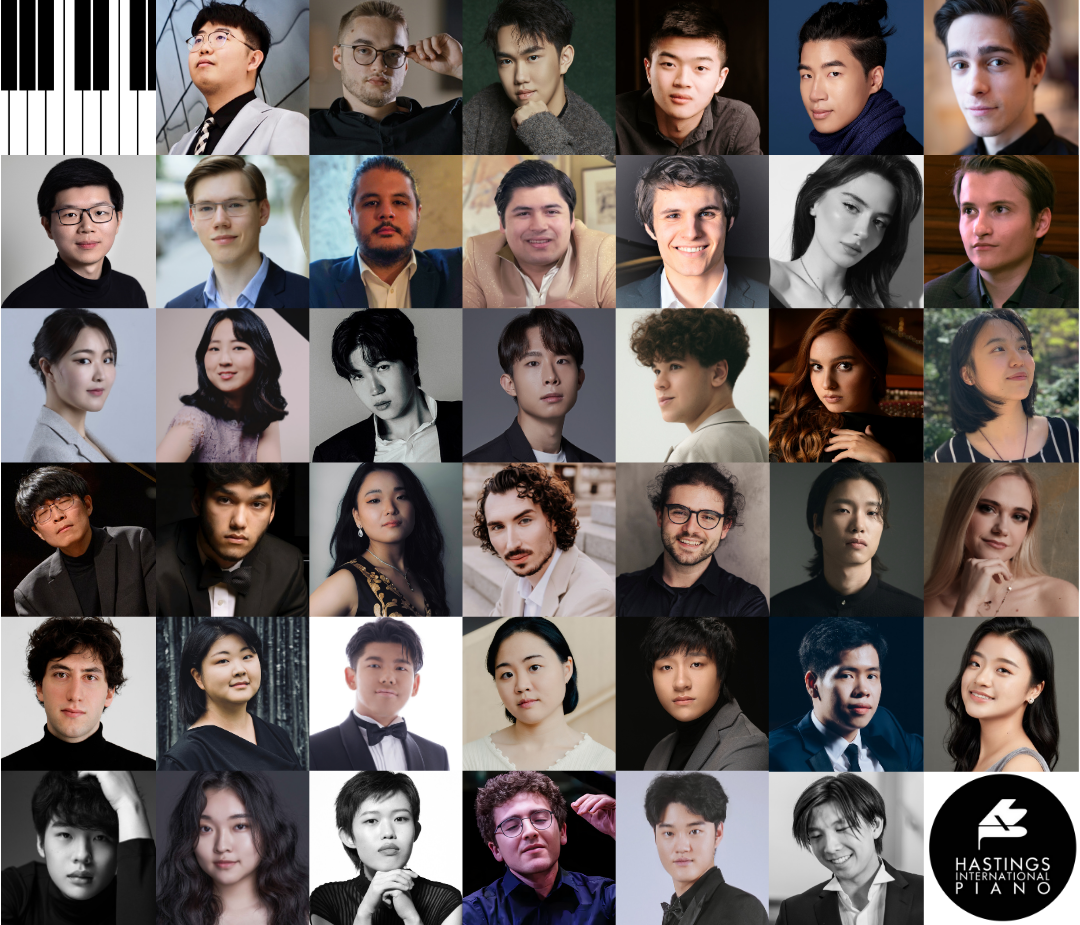
Hastings International Piano is thrilled to announce the 40 pianists who have been selected to take part in the 2026 Hastings International Piano Competition, which takes place from 26 February to 7 March 2026 at the White Rock Theatre, Hastings.
Chosen by an experienced pre-selection jury, who watched video auditions of 356 applicants from 46 countries, these 40 pianists – aged between 19 and 29 – will travel from 18 nations to compete in one of the world’s leading competitions for rising stars. This year marks the 18th competition since its revival in 2005, continuing a proud tradition that began over a century ago with the Hastings Musical Festival.
Under the artistic direction of Professor Vanessa Latarche since 2020, the competition is a highlight in the international music calendar. Renowned for its unique format , requiring competitors to perform concertos from the very first round; it offers a platform for young artists to perform with orchestras including the Sinfonia Smith Square and the Royal Philharmonic Orchestra.
The 2026 competitors represent a remarkable breadth of talent, with participants from countries including China, South Korea, Russia, Taiwan, the USA, Ukraine, Japan, and beyond. Full list here
● Competition rounds will run as follows: ➔ Round 1: 26–28 February – 40 competitors perform extracts from two concertos ➔ Round 2: 1–2 March – 20 competitors perform a solo recital including a new work by Sir Stephen Hough ➔ Semi-Finals: 4–5 March – 10 competitors perform a classical concerto with Sinfonia Smith Square ➔ Finals: 6–7 March – 5 finalists perform a Romantic or 20th-century concerto with the Royal Philharmonic Orchestra
All five competitors who reach the final will receive a prize, with first prize worth approximately £35,000.
Tickets for the first two rounds are free, and the public is encouraged to attend and experience world-class music in a seafront theatre.
Through its Learning & Participation programme, Hastings International Piano remains committed to bringing classical music to all – from school workshops and community concerts to pop-up pianos across the town – ensuring that the joy of music continues to inspire every generation.
The competition is generously supported by Steinway & Sons and numerous sponsors and benefactors, including the Kowitz Family Foundation, which has supported the competition since 2009.
Vanessa Latarche, Artistic Director, says: ‘We are thrilled to announce forty remarkable young pianists coming to Hastings in 2026. The standard of applications this year was exceptionally high, reflecting the competition’s growing stature. It’s no easy task picking from over 350 applications, but it is inspiring to see so many gifted musicians from around the world share their artistry and passion for piano performance. We look forward to hearing them bring their music to life on the White Rock Theatre stage.’
Social media, for all its faults, is also a force for good and can throw up unexpected encounters and delights. One such gem is Andy Lewis’s Proms blog, which I discovered via the music critic of The Spectator, Richard Bratby.
Andy Lewis is blogging about every single Prom of this year’s season, mostly via the broadcasts on BBC Radio 3. He hasn’t missed a single one and is now in the home straight, as it were – the final week, and the close of this year’s at the Last Night of the Proms.
What is so wonderful about Andy’s blog is that it’s not trying to be a serious critique or dry academic appraisal of each concert, but rather a personal reaction to and reflection on the music. He publishes his posts soon after each concert has taken place and as a consequence, his writing is fresh and spontaneous, entertaining, engaging and intelligent (and it reminds me of how and why I started blogging, back in 2010).
“And the Sibelius doesn't go wrong. At one point I'm transported to that spinning shed on the Wizard of Oz, and for that evocation alone he earns his stripes with me.”https://t.co/mfMuA5beI9pic.twitter.com/M2VHOTStzT
I caught up with Andy to find about more about his motivation for writing about the Proms and what he’s enjoyed in this season’s programme….
What made you decide to blog about every single Prom of the 2025 season?
It came about for a few different reasons. I was taken with the premise of the Proms; the fact that it is still possible to buy a ticket on the day for just a few pounds. I used to think to myself, ‘I’d be at the box office every morning if I lived around here.’ This triggered an ambition of one day attending every Prom at the Albert Hall, and this idea has laid dormant in my mind for years. I like to keep myself occupied, and this year my diary was nearly empty for the eight or so weeks when the Proms were happening. To fill my free time, I decided I would ‘attend’ every Prom, whether it be watching it on TV, listening on the radio, or actually getting down to the Royal Albert Hall in person. To make it more meaningful, I decided to create a record of it – hence the idea of the blog. As the weeks have progressed, the blog has also evolved into including little diary snippets from my daily life. If I’m still alive and well in thirty years, it will hopefully be interesting (for me) to read it back. Maybe my opinions on things will have changed by that time. Maybe I’ll be living a completely different life.
Have you attended/followed the Proms before this year?
I had only ever attended one Prom before, and I can tell you exactly which one it was!
It was Prom 48, Sunday 21st August 2016. The programme was Reflections on Narcissus by Matthias Pintscher to start, and then the second half was Mendelssohn’s theme to A Midsummer Night’s Dream. As I remember it, the music was blended with pop-up dramatic performances in different areas of the hall. Going to this Prom was what initiated my desire to see all the acts in one given year, but I had not gotten round to it until now.
What have been the challenges and pleasures of this project?
The pleasure has been discovering new composers, and getting a deeper understanding of composers I only half-knew before. Additionally, looking up the history and origins of the Promenade concerts themselves has been fascinating. In terms of challenges, it has often been exhausting to keep up with the schedule on a daily basis. Early in the run, I was having doubts as to whether I would be able to keep up with it all. If I miss a Prom one day, the momentum will very quickly snowball against me, so I need to make sure I am on top of blogging every day; trying to keep my writing fresh, avoiding repetition where possible, and keeping my grammar in reasonable check against a tight schedule.
And what have been the stand-out moments/performances for you?
It has honestly all been great and varied, but if you really tortured me I think I would say that the best Proms, for me, have been the ones that took me by surprise – those Proms that I thought were going to be boring and difficult to document, but turned out to be the exact opposite. Who would have thought that ‘100 Years of the Shipping Forecast’ would turn out to be so contemporary and engaging? There were packets of surprises hidden in the ‘Bruce Liu plays Tchaikovsky’ Prom – I was gleeful at the inclusion of Maple Leaf Rag amongst others. And Joe Hisaishi’s Proms debut introduced me to music I already knew. Music in the Studio Ghibli productions such as My Neighbour Totoro offer something gorgeously meditative.
Why do you think the Proms is “the world’s greatest classical music festival”?
I think it’s a combination of accessibility, variety, diversity, and longevity. The fundamental idea of the festival is that it opens up classical music to your ‘average Joe’ like me. I can grab a ticket for £8 (in 2025) and enjoy an evening of world-class entertainment. The variety of the performances across the summer weeks makes sure there is something for everyone. The diversity on the stage has ensured the Proms have kept up-to-date with the world around us, and this in turn has kept the Proms running for as long, and successfully, as they have been.
What would you say to people who are unsure about classical music or who have never attended a Prom before?
I would say, ‘don’t be afraid of getting classical music wrong’. If you enjoy what you hear, go and see it played live, just like you would a pop or rock act. Even pass comment on it if you dare to do so. There may well be a bunch of Oxbridge academics looking back at you like that Leonardo DiCaprio meme, but the truth is that music is subjective and – when offering an opinion on it – they are as clueless as the rest of us.
Would you do it all again in the same way for next year’s Proms?
Right at this moment I would say absolutely not! However, I do think I have opened a new relationship with the Proms, and in future years I will be more liable to be looking through the catalogue, choosing which Proms I would like to watch, listen to, or attend.
With regard to my writing, this is likely to be a one-off. But I would never say never. It would be nice to do something with a similar twist. For example, another one of my cultural challenges has been to watch every Shakespeare play, performed live. At time of writing I am on thirty-one plays, seen at different venues around the country. Given the number of operas based on Shakespeare and his characters, it could be an idea to review them with an amusing twist, comparing a production at the Royal Opera House to, say, the time I saw the same play at Gordale Garden Centre.
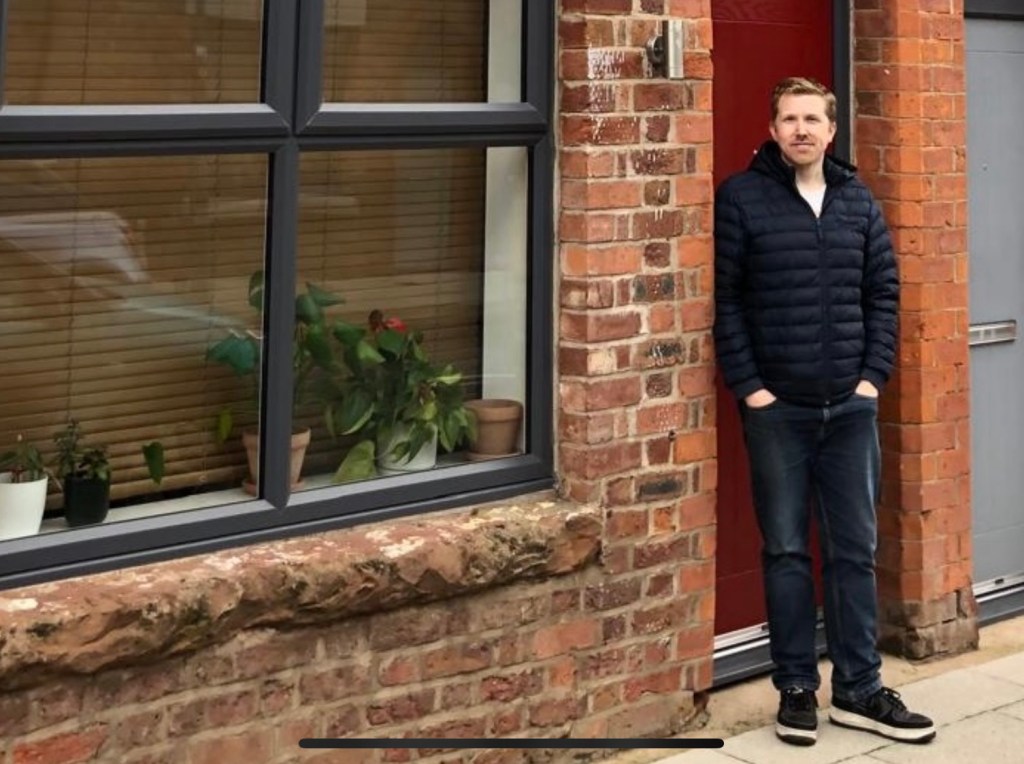
My name is Andy Lewis, I am thirty six years old. From the Wirral but living and working in Runcorn. I work in Medical Information for a multinational healthcare company, and in my spare time I like to attend rock concerts and theatre. I also play guitar, piano and harmonica. I am a music lover with my main genre being blues-rock, but I do also love classical and orchestral music.
VIVUM MUSIC RELEASES CHORAL SINGLE TO CELEBRATE LINDSAY GRAY AND HIS CHORAL MUSIC LEGACY
‘May the Spirit Sing in Your Heart’ by Thomas Hewitt Jones is a choral single, originally composed for the 70th birthday of Lindsay Gray on 22 July 2023. This release marks the retirement of Lindsay from his role as founder and conductor of Caritas Consort, and celebrates his choral music legacy. The anthem is in the rich key of A-flat major, and sets a new text by Gordon Giles, which celebrates spirituality and the value of music. The piece was commissioned by Lindsay’s daughter Susanna, who sings soprano on the recording, and the music is published by Encore Publications.
Lindsay Gray says, ‘I feel very honoured indeed to have been the recipient of such a fine piece of music written for my 70th birthday by such a highly regarded composer!It has been fabulous to work with Tommy [Hewitt Jones] over the years, and we have greatly enjoyed performing his music in Caritas ever since the choir’s very first ever concert in March 2013, which Tommy so kindly attended.Warmest thanks; this is massively appreciated by me, by Caritas and by the Nepal charity which has also benefited so much!’
Thomas Hewitt Jones says, ‘Lindsay’s wonderful legacy in choral music needs to be celebrated, as does his tireless work raising money for good causes. As well as an esteemed musician. Lindsay has championed countless young musicians over the years (including me, when I started out). I am delighted to call him both a friend and colleague and very pleased we could release this recording to help celebrate the legend that is Lindsay Gray!’
Lindsay GrayCaritas Consort
MAY THE SPIRIT SING IN YOUR HEART
Music by Thomas Hewitt Jones, words by Canon Gordon Giles
Caritas Consortconducted byLindsay Gray
Recorded in St German’s Church, Cardiff, by Thomas Hewitt Jones for Vivum Music
Available now on all major streaming platforms
ABOUT LINDSAY GRAY AND CARITAS CONSORT
Lindsay Gray has had a distinguished career as singer, conductor, musical director and educator. He served as Director of the Royal School of Church Music (RSCM) from his appointment in 2007 through to 2012, having previously been a school headmaster for sixteen years, including fourteen at The Cathedral School, Llandaff. After his tenure at the RSCM, he continued to promote choral excellence through initiatives such as the Caritas Consort, embodying his lifelong commitment as an educator, enabler and supporter of sacred music and charities.
In 2013, Lindsay founded the Caritas Consort, a chamber choir that performs concerts to raise funds for charities and other good causes, directing it with a focus on high-quality sacred and classical music. Under his leadership, the ensemble has supported a wide range of causes, with over £80,000 raised from performances and donated to over 70 charitable organisations working in areas such as health, community support and education; in the case of this recording, £500 was raised for a project which supports disadvantaged families in Nepal.
In September 2025 Lindsay hands over the reins of Caritas Consort to focus on his other charitable work, in particular as Director of the Cardiff and District Branch of Samaritans, a leadership rôle in which he oversees 140 volunteers; this release helps celebrate his musical legacy.
The Collection (2015-25) by Fly On The Wall is a landmark 10-year documentary project by musician and filmmaker Stewart French. This unique online exhibition offers an unfiltered glimpse behind the scenes with some of the world’s finest classical musicians – including Angela Hewitt and Marc-André Hamelin – captured raw and uncut.
The Collection presents 56 curated films drawn from more than 300 behind-the-scenes shoots, including never-before-seen footage from the project’s extensive archives. The final project presents a compelling collection of video portraits, documenting musicians doing what they do best – performing live – up close and under a microscope.
From early music ensembles to cabaret trios, classical guitar quartets to percussion collectives, the exhibition showcases over 40 artists across a broad stylistic spectrum. It’s a vivid portrait of classical music in the UK and Europe today, authentic, contemporary, and alive. Featured names include The King’s Singers, Steven Isserlis, Alina Ibragimova, Richard Goode, The Choir of Clare College Cambridge, La Nuova Musica, Colin Currie, and Boris Giltburg.
Filmed in a signature single-camera, handheld style, French’s approach brings viewers inside rarely seen spaces — iconic concert halls after dark, locked recording studios, and private rehearsal rooms. Locations such as Wigmore Hall, Royal Festival Hall, Henry Wood Hall, and Ehrbar Saal emerge as characters in their own right, where inspiration, discipline, vulnerability and genius converge.
Accompanying each film is a written narrative offering behind-the-scenes insight and context, untold stories from deep within the creative process.
Blending cinematic long-take storytelling (think Sam Mendes’ 1917) with the intimacy of portrait photography, Stewart French’s films reject flashy edits in favour of immersive, emotionally charged moments. With over 20 years’ experience as a classical musician, producer, filmmaker and writer, his goal is to create a deeper connection between digital audiences and the visceral experience of live music.
French explains: “As a performer myself, I’ve always been drawn to the raw, unfiltered magic that happens behind closed doors — moments of focus, anticipation, creative flow. With The Collection, I wanted to capture those flashes of vitality that sit at the very heart of music-making.”
Originally launched as a Classic FM series in 2016, Fly On The Wall has grown into one of the UK’s leading classical film producers. Its work has been featured by BBC Newsnight, The Times, Gramophone, and BBC Music Magazine, with recordings featured in Apple Music’s front-page editorial.
The Cross-Eyed Pianist is free to access and ad-free, and takes many hours every month to research, write, and maintain.
If you find joy and value in what I do, please consider making a donation to support the continuance of the site