Head over to my sister site ArtMuseLondon.com for reviews of new releases of piano music, and more….

Head over to my sister site ArtMuseLondon.com for reviews of new releases of piano music, and more….
Schubert Lieder: Love’s Lasting Power – Harriet Burns, soprano, and Ian Tindale, piano
This is the first joint recording from longtime musical partners Harriet Burns and Ian Tindale, and it celebrates not only the last ing power of love, in its many guises, but also the lasting appeal of Schubert’s lieder. Harriet Burns’ voice is wonderfully expressive and operatic, with a golden tone and clear diction. This is complemented by Ian Tindale’s sensitive, supple playing. Together they highlight all the contrasting colours, nuances and moods of Schubert’s lyrical writing. Recorded at St Mary’s church in Haddington, near Edinburgh, the overall sound is at once resonant and intimate – perfect for this music.
This has been a thrilling opportunity to curate and record a powerful sequence of songs that speak strongly to some of the relationships Schubert held dearest in his life. It is also deeply meaningful music with which we have a close affinity as a duo, and it is a world of repertoire in which we have come to feel at home over the years.
Ian Tindale, pianist
Harriet and Ian are giving the album’s launch recital at Oxford International Song Festival on Tuesday 30th January at Wolfson College, Oxford. Further information
Released on the Delphian label and via streaming

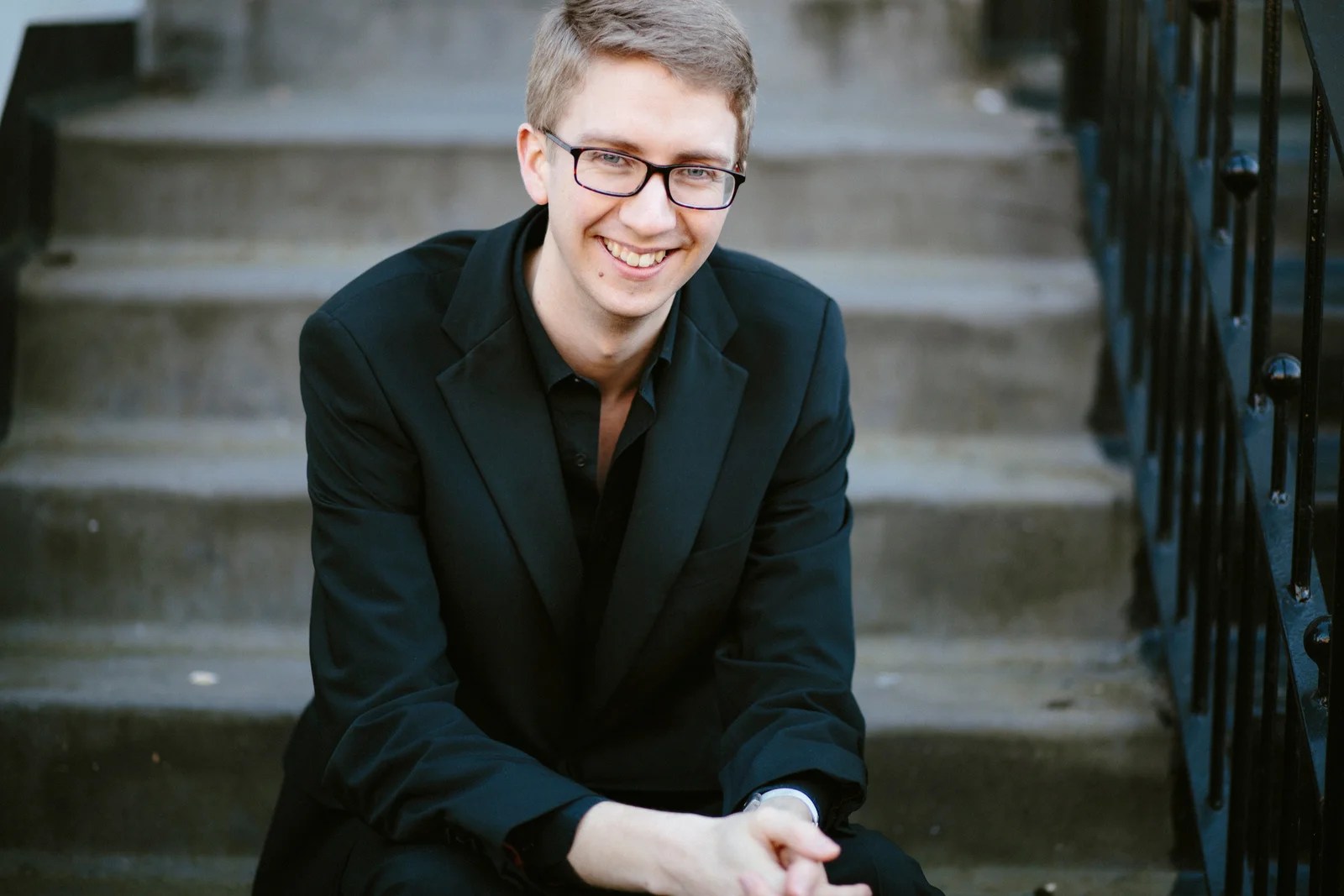
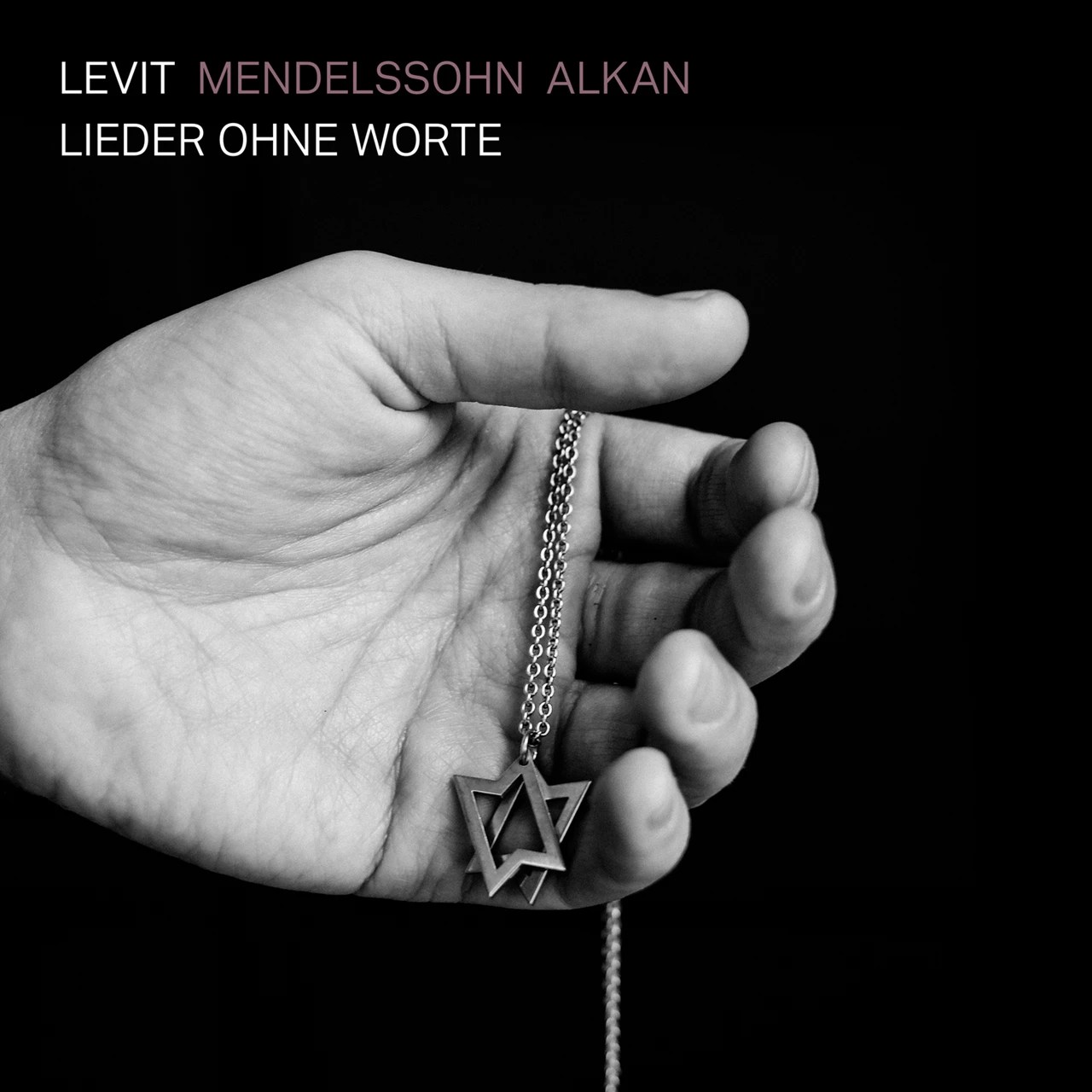
Mendelssohn: Lieder Ohne Worte (Songs Without Words) – Igor Levit, piano
More lieder, this time without words, and another set of romantic music which has a lasting appeal. Released digitally before Christmas, the CD is released today. This is a very personal project for Levit: the album is his own artistic response to the 7th October atrocities in Israel and the current rise of anti-semitism worldwide.
I made this recording out of a very, very strong inner necessity. I spent the first four or five weeks after the attack on October 7th in a mixture of speechlessness and total paralysis. And at some point, it became clear that I had no other tools than to react as an artist. I have the piano. I have my music. And so, the idea came to me to record these works, the “Songs without Words
Igor Levit
Levit and his team gave their time pro bono for this recording and proceeds from CD/download sales will be donated to to two German organisations fighting anti-Semitism – OFEK Advice Center for Anti-Semitic Violence and Discrimination and the Kreuzberg Initiative Against Anti-Semitism.
Perhaps it is the context in which this recording was created which gives it so much depth and poignancy. There’s strength and passion too, often in the more intimate or tender pieces.
Available on the Sony Classics label and via streaming

HEAVEN TO EARTH
Joanna Forbes L’Estrange, composer
London Voices
Ben Parry, conductor
Andreana Chan, organist
This is simply beautiful choral writing by someone who knows, from a singer’s perspective, how to compose music which every choir will want to sing.
John Rutter CBE
Heaven to Earth is a collection of singable, accessible, sacred choral music by the best-selling choral composer and multi-faceted musician Joanna Forbes L’Estrange.
The album comprises introits, anthems, canticles, a set of Preces and Responses, and a congregational mass setting, and the 17 pieces display a range of styles, from traditional, church choral music to gospel- and jazz-influenced. Each piece sits comfortably within the SATB vocal ranges, the organ accompaniments are designed to support the choir, there is minimal division within the parts, and the harmonies are attractive and approachable. The texts are drawn from the Bible, the Psalms, The Book of Common Prayer, Holy Communion, writers including St Richard of Chichester, Phineas Fletcher, Jane Austen, and the composer herself, and all of the pieces are suitable for church services: Eucharist, Choral Evensong, weddings and funerals. The settings are written with the intention of enhancing the meaning of the words, both for those who sing them and for those who hear them.
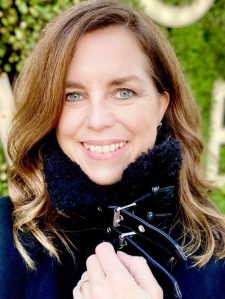 I caught up with Joanna to find out more about her influences and inspirations in creating this album:
Your new album is called Heaven to Earth. Why this title and how does the music on the album reflect the title?
Anyone who’s ever sat in a beautiful church or cathedral in witnessed the evening sunlight streaming in through a stained glass window will know the sensation of a hint of Heaven coming to Earth. When my sons were choristers in the Choir of St John’s College in Cambridge, I would go to evensong as many times a week as I could just to experience that extraordinary, other-worldly atmosphere. It was like a wonderful reset and I would emerge, less than an hour later, feeling completely different from how I felt walking in. By listening to or singing church choral music, we can sometimes get that feeling of recreating the songs of the angelic hosts in Heaven down here on Earth.
The title for this album came to me during one such service. I remember reciting The Lord’s Prayer along with the rest of the congregation and, during the line ‘Thy will be done in Earth as it is in Heaven’, being struck by the notion of praying for things on Earth to be as they are in Heaven. In our busy lives, we can easily be caught up in the endless day-to-day tasks and minutiae of life and the constant news of conflicts, famine and natural disasters. Evensong services allow us respite from this busyness and to be at one with God, whatever we each perceive God to be, with each other and with ourselves; when the music moves you, it can feel as if Heaven has come to Earth. We’re so fortunate that, wherever in the country you find yourself you can pretty much guarantee that there will be a choral evensong happening not too far away.
Almost every piece on this album mentions or alludes to Heaven and Earth. There are those which create strong visual imagery such as in Let My Prayer Rise Up (track 1), where our Earthly prayers rise like incense to Heaven, and High As The Heavens (track 13) which likens the greatness of God’s love to the expanse between Heaven and Earth. Then there are the pieces which remind us that God’s glory can be found on Earth and not just in Heaven, such as For The Beauty Of The Earth (track 10) – ‘For each perfect gift of Thine, to our Earth so freely given, Graces human and divine, Flowers of Earth and buds of Heaven’ – and in my setting of Jane Austen’s prayer Give Us Grace (track 8) in which she writes ‘thou art everywhere present’. Similarly, the words of Holy, Holy, Holy (track 16) includes the line ‘Heaven and Earth are full of your glory’. Elsewhere on the album, there are reminders that Jesus came from Heaven to Earth, such as in the Magnificat (track 3), Mary’s response to the news that she will be the mother of God, and in Drop, Drop, Slow Tears (track 12) which speaks of Mary Magdalene’s tears bathing the ‘beauteous feet which brought from Heaven the news and Prince of Peace’. In Words From The Cross (track 7) we see Jesus communing from the cross on Earth to his Father in Heaven. Finally, there are the pieces such as The Lord’s Prayer (track 18), The Chorister’s Prayer (tracks 5 and 11) and the Preces and Responses (track 6) which long for Heaven’s blessings to be bestowed on us here on Earth, for example this line from one of the Collects in track 6: ‘mercifully grant that, as thy Holy angels alway do thee service in Heaven, so by thy appointment they may succour and defend us here on Earth’.
You have dedicated the album to your foster father, Rev. Richard Abbott. Tell us more about his influence on your musical life and career.
It’s impossible to overstate Richard’s influence on my musical life and my career. Interviewers sometimes assume that, since I’m the daughter and the granddaughter of professional composers and arrangers, this must have been the reason I became a composer myself. In actual fact, it was my foster father, who brought me up from the age of 4 to 11, who encouraged me to start writing music. He and my sister and I had sung together in our local parish church choir; a humble little choir with just one rehearsal and one service a week, but it got me hooked on church choral music. When Richard became ordained in 2007, he asked me to write a piece for the choir to sing as his ordination. I’d been a professional singer for over ten years by that point and, although I’d written a handful of arrangements in my capacity as Musical Director of The Swingle Singers, I hadn’t composed anything original since my GCSE Music coursework! I remember saying to Richard “but I’m not a composer” and him replying “well, I think you might be.” It was a turning point for me; I wrote a setting of Go Forth In Peace (track 21) which the Royal School of Church Music published. Choirs started singing it and sending me nice messages via my website. Not long after that, I was commissioned to write a congregational setting of the mass (The St Helen’s Service tracks 14-17) which again the RSCM published and which many choirs have since adopted as their weekly setting. I find that my experiences as a chorister, as a choir director and as a life-long church-goer all influence me as a composer. I definitely write music from the perspective of a singer more than of a composer, if that makes sense. It’s got to feel nice to sing.
After I left the foster home, Richard and I remained in touch. Once I’d started composing, he would begin every phone conversation in the following way: “Hello darling, how are you and what are you writing at the moment?” He commissioned Saint Richard’s Prayer (track 19) too and cried when I showed him the dedication at the top of the published music. We all need someone like him in our lives to believe in us and to encourage us to believe in ourselves. I was so lucky that Social Services happened to place my sister and me with Richard and his wife Gillian. Perhaps it wasn’t luck at all but part of a bigger plan. In any case, he was my guardian angel just when I needed one most. When Richard died of cancer in October 2022, I knew I wanted to record an album in his memory. I only wish he could have heard the wonderful London Voices singing my music; he’d have been over the moon.
What do you hope listeners will take from the music on your album?
More than anything, it is my hope that people who hear my album will want to sing the pieces themselves. I’m excited about choir directors listening to a track and thinking “Ooh, that would work well with my choir. I’m going to get hold of the sheet music!” The tracks comprise a mix of introits, anthems, Preces and Responses, Canticles, prayer settings, a Mass setting – some are for SATB choir, with or without organ, some have a unison lower line, some are for upper voices – but what all the pieces have in common is that they are singable. Can you tell how hard I’m trying not to use the word accessible?! I find it can have negative and possibly even patronising overtones. What I mean is that I want people to listen to these tracks and have confidence that, however little experience or musical training they may have, they will be able to sing my music. What’s more, they will hopefully find it enjoyable and pleasurable to sing. My husband and I record all of our compositions: I sing the soprano and alto lines and Alexander sings the tenor and bass. There are two reasons for doing this. It’s by recording every line of a piece that you find out how it feels to sing, whether you’ve got the breath markings, note-lengths, dynamics correct and so on. I always make adjustments as a result of this process. The other advantage is that we can create part-learning tracks which we then make available to choirs who find it beneficial to hear their vocal line sung before they learn it.
When I’m composing music intended for use in church services, my overriding motivation is to set the words in such a way that those who hear them are drawn closer to them. Church choral music doesn’t need to be challenging or ground-breaking, in my opinion. There is such beauty to be found in simplicity, something I learned by singing the music of the Taizé community in France; through musical repetition and familiarity, the words come to the fore and the whole experience becomes almost meditative. The same is true of the familiar Gregorian chants of the Medieval music. I like to write music which every choir can sing, not just the professionals. When I found out that over 600 choirs across the world had sung my coronation anthem The Mountains Shall Bring Peace (track 20) it made me so happy.
Singing in a choir is so completely life-affirming. We are so fortunate to have such a rich heritage of church buildings and church music but, sadly, not all churches and their choirs are thriving. The Royal School of Church Music and other organisations such as the Friends of Cathedral Music are doing wonderful work to keep this heritage alive and I want to do my bit to help. People are sometimes put off joining a choir because they think they’re not good enough or don’t have the right background or musical training but my belief is that if everyone sang in a choir, the world would be a better place. And if I can encourage people to do this by composing tuneful pieces which everyone can enjoy singing, I will.
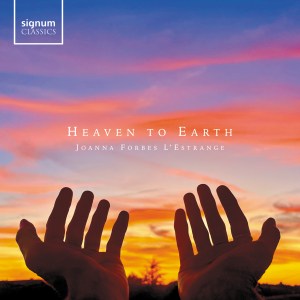 Heaven to Earth is released on 12 January 2024 on the Signum Classics label on CD and via all major streaming platforms. Links to the sheet music and digital downloads for all of the pieces on Heaven To Earth can be found at www.joannaforbeslestrange.com/heaven-to-earth-sheet-music
This music is simply heavenly, and no choir, church or performance venue should miss out on the blessing this music brings. Through beautifully crafted accessible melodies, glorious harmonies, and a real ability to convey the sense of meaning of the text, this richly varied repertoire goes straight to the heart.
Ken Burton, conductor, composer, arranger & performer
Two contrasting new releases today
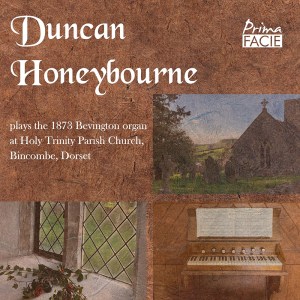 Duncan Honeybourne plays the 1873 Bevington organ at Holy Trinity parish church, Bincombe, Dorset (Prima Facie records PFCD220)
Bincombe is “a tiny place, comprising a few cottages, fields, farms and an ancient church nestled against a verdant hillside in sight of the sea. The lush meadows provide an inviting backdrop whilst, on the sightline, the English channel sparkles in the summer sunshine and shimmers mysteriously at night.” (Duncan Honeybourne). Part of the church dates from the twelfth century, with most of the remainder having been constructed in the fifteenth. The single manual organ was built by the London firm of Bevington and Sons in 1873 and supplied at a cost of £105 to the neighbouring parish of Broadwey. It was moved to Bincombe in 1903. (Bincombe is famous for its “bumps”, a cluster of round barrows which are visible from the Weymouth Relief Road.)
I was lucky enough to have a little preview of this album when Duncan gave a concert on the organ at All Saints’ church, Wyke Regis, in September. This album includes works by those masters of organ writing, Buxtehude and J S Bach, together with works by John Bull, William Byrd and Maurice Durufflé, as well as a nod to Wesssex composers, with works by Exeter-born Kate Boundy and Kate Loder of Bath. There is also a Dorset connection with Greville Cooke’s tranquil Threnody, recorded here for the first time. Cooke, a pianist, composer, poet, priest and professor at the Royal Academy, lived in north Dorset in his last years, although this piece was written during his time as Rector of Buxted, East Sussex. The album closes with John Joubert’s Short Preludes on English Hymn Tunes, composed for the new chamber organ at Peterborough Cathedral in 1990.
An enjoyable and highly varied disc which reveals the myriad colours, moods and warmth of the Bincombe organ. As a Dorset resident myself, I am particularly taken with the album’s connection to the local area near to where I live.
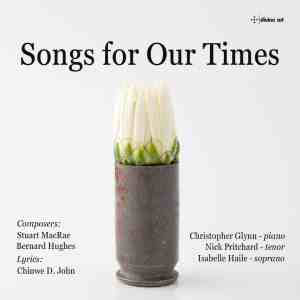 Songs for Our Times
Christopher Glynn (piano), Isabelle Haile (soprano), Nick Pritchard (tenor)
Settings of lyrics by Chinwe D. John by Bernard Hughes and Stuart MacRae
(Divine Art Records DDX 21113)
I first encountered poet and lyricist Chinwe D John in spring 2022 when she contacted me about an EP of settings of her poetry (read my interview with her here).
This new release, like the previous EP, is an affirmation of Chinwe’s belief that in order to keep classical music thriving and to bring in a new audience, the work of present day composers needs to be supported. Commissioning contemporary day composers, to set music to lyrics directly reflective of our current times, is one way of accomplishing this. Chinwe herself sought out composers who shared her vision to set her words to music.
The album features two premiere recordings Kingdoms and Metropolis, whose stories will be familiar to many with their universal subjects, including the need for wisdom within the halls of power; transcendent love; an immigrant’s homesickness; the search for inner peace; all flow through the album evoking the spirit of our day and age. Despite our current turmoil, the overall tone of the album is a hopeful one, making it a welcome balm during our turbulent times.
With music by leading British composers Stuart McRae and Bernard Hughes, this is an intimate and ultimately uplifting album, with a wonderfully varied selection of very beautiful, arresting music.
Both albums are available on CD and via streaming




 The Cross-Eyed Pianist