I Musicanti, an ensemble formed in 2013 by double bass player Leon Bosch (formerly principal double bass with the Academy of St Martin-in-the-Fields Orchestra), launched their triptych of concerts at St John’s Smith Square with an afternoon recital featuring the world premiere of a new work by South African composer Matthijs van Dijk as the centrepiece. This arresting piece was bookended by Mozart’s Piano Quartet No. 2 in E flat, K493 and Schubert’s evergreen Quintet in A D667, the ‘Trout’.

I Musicanti includes artists who are all distinguished performers, who play in and with the best orchestras in the world, as soloists and chamber musicians. Sunday’s line up featured pianist Peter Donohoe, cellist Richard Harwood, violinist Tamás András and violist Robert Smissen, with Leon Bosch on double bass.

cw-14719-medium
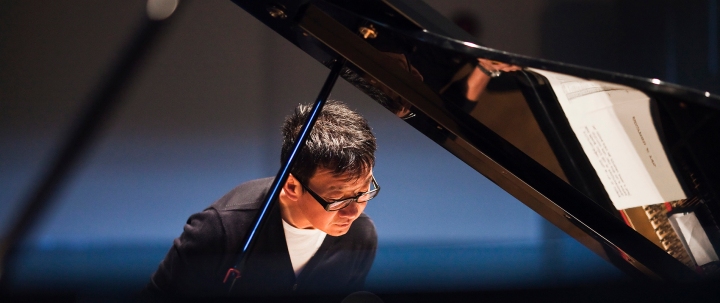
Leon Bosch (photo: Hyatt Studios)

St John’s Smith Square (SJSS) is now my favourite London venue, alongside Wigmore Hall, and while I and my concert companion were waiting for the recital to begin (there was a slight hiatus due to some mysteriously missing piano music, which was, luckily, found!) we perused the SJSS programme of forthcoming concerts and decided what we would like to hear next….. It really is a lovely venue, with a fine acoustic for chamber music, solo piano, choral and orchestral music, and its staff are friendly and helpful.

This elegant programme was guaranteed to dispel any lingering post-Christmas blues. The Mozart was elegantly-turned, warm and affectionate, while the Schubert rippled along as cheerfully as the eponymous fish, all holiday melodies and sunlit rhythms, with some charming interplay between the piano and the other instrumentalists. Peter Donohoe’s touch was bright and joyful, as befits the character of the music. Throughout the concert, there was a very palpable sense of all the musicians thoroughly enjoying both the music and the act of performing together, creating a lovely atmosphere in the venue. When I commented on this to Leon Bosch after the concert, he declared “I can choose who I work with” and he must be applauded for selecting musicians who display not only equal talent but also a shared sense of purpose and musical friendship.

The new work by Matthijs van Dijk, But All I Wanna Do Is Dance, was composed as a response to the extraordinary and unsettling events of 2016 which seem, in the composer’s own words, to have unleashed “a never-ending wave of anger, frustration, hate and bigotry in all shapes and sizes – all issues that need to be addressed, of course, and, once one is aware of them, unable to ignore”. The work is not intended as “a joyous declaration”, but rather a plea against the enormity of world events, an elegy to our inner child, and a wish to be allowed to forget what is going on, if only momentarily.

A haunting solo on the viola begins the work before it begins to open up with the addition of the piano and the rest of the ensemble. This meditative section is interrupted by febrile rhythms, suggesting lively dancing but always tempered with a sense of frustration and a yearning for the innocence of childhood, a time when one didn’t really know or understand what was happening in the world…..

I Musicanti returns to St John’s Smith Square on 5 March with an afternoon concert featuring another world premiere by South African composer Werner Bosch. Further details here

dantobinsmith-432-h1100-q90-rz3-b75Xenakis

Iannis Xenakis (1922-2001) – composer, architect, boffin. Fearsomely experimental, he linked his disciplines by writing and designing co-dependent music and listening spaces. He arguably laid the foundations for modern electronica. And he was one of the first composers to use mathematical theory in creating music.

iannis-xenakis-008
(photo: Ulf Andersen/Getty Images)

Why does Xenakis belong in a pianist’s alphabet? Because his first longer-form work for the instrument has been called ‘the most difficult piano piece ever written’. Clearly seeing this as underperformance of some sort, 12 years later he produced a second piece for solo piano that is, strictly speaking, ‘impossible’. What’s not to like?

In both pieces, Xenakis uses certain mathematical techniques or theories to shape and generate the music. When I heard about this kind of composition in my teenage years, I was suspicious in my ignorance. 1: If it was all down to maths, was it really composition at all, or just some kind of automated exercise? And contrarily, 2: Surely all music – including the really tuneful, harmonious stuff – has mathematical perfection at its root… so why does THIS have to sound so deranged?

I recently decided to go back to Xenakis’s piano music, purely as a listener. I wanted to satisfy myself that without considering ANY of the scientific background – deploying my ear over my brain – it still worked for me, had something non-clinical to offer.

Here is the earlier piece, ‘Herma’:


and the later one, ‘Evryali’:


I was genuinely surprised by some of my reactions.

* I found both pieces enjoyable and invigorating – but I wasn’t expecting to hear such a world of difference between the two. I think in ‘Herma’ you hear the maths, and in ‘Evryali’ you hear the music.

* The unpredictable dance to the extremes of the keyboard in ‘Herma’ make it feel like performance art – raindrops one minute, rubble the next. As a result, the piece attains a kind of spiky ambience.

* In ‘Evryali’, however, I think the sweeping curves in the structure are audible, the notes – however dissonant – seem to belong together, journey with each other. The images it conjures up in my head are geometric, symmetrical – spirals, waves.

There’s a twist in the tale, however. ‘Evryali’ is ‘impossible’ partly because in places it’s written using more than two staves (as you can see on the YouTube video). The pianist must create their own version based on which notes they want to cover and which they can live with leaving out.

Of all things, this reminds me of jazz. Jazz has very little to do with mayhem; rather it is (as the critic Whitney Balliett put it) ‘the sound of surprise’ – the unexpected choices players make within the established parameters. With ‘Evryali’, we seem to have a truly original hybrid: a composed framework through which the pianist can follow their own unique path. I love the idea that from mathematical principles, Xenakis has created a piece dependent, like so much other music, on flexibility, spontaneity and feel.

Adrian Ainsworth

Adrian Ainsworth writes for a living, but mostly about things like finance, tax and benefits. For light relief, then, he covers his obsessions – overwhelmingly music, but with sprinklings of photography and art – on the ‘Specs’ blog, which you can find at

Twitter:


(letter picture Dan Tobin Smith)

Photo: Christian Hartlmeier

Who or what inspired you to take up composing, and pursue a career in music? 

I was taken by surprise – I had always enjoyed music and played the piano for quite a while, without becoming truly excellent. Then I was asked to play keyboards in a school band and suddenly found I enjoyed both playing and composing much more than I had thought. Soon I became absolutely obsessed, practicing 10 hours a day to make up for the lazy time before. And then I became increasingly frustrated with the limitations of band playing and veered more towards contemporary and classical music. I think that impressing the girls was also an extremely strong motivation. I was 15.

Who or what were the most significant influences on your musical life and career as a composer? 

I listened to a lot of classical music LP’s when I was a kid, also to more progressive pop music like Emerson, Lake and Palmer (which impressed the hell out of me back then). My mother is a theatre photographer, so I was confronted with long and boring operas from a very early age on. I guess I like them more now. My favourite record for 5 years was a recording of “Pictures at an Exhibition” played by Svjatoslav Richter, I played that record so often it completely wore out. I was distinctly aware that composing music was something magical and important, and I constantly heard my own music in my head but didn’t really know what to do about it. Later Erik Satie was the first composer I fanatically loved. I was always – and I still am – especially interested in the outsiders and eccentrics of music. Charles Ives was also very important. I was also lucky to have teachers who showed me interesting music and widened my horizon.

What have been the greatest challenges of your career so far? 

Realizing that not everyone will love what you do, regardless of how hard you try. And then having the constant courage to give a damn about it, to follow your own instincts, to follow your own intuition. Dealing with envy, your own and that of others. All of this is a constant challenge. Every morning I wake up and try to handle it a little better.

What are the special challenges/pleasures of working on a commissioned piece? 

I only work on commissioned pieces, so I don’t really know the difference anymore. But of course I remember a time when I didn’t have commissions at all, and back then it was much more difficult to focus and to work with discipline, as there was no real goal, no performance ahead. Dealing with deadlines is harsh, but it has made me a better composer. The secret is to not accept commissions for which you cannot find inspiration, or even better: to have ideas that actually create the commissions you want.

What are the special challenges/pleasures of working with particular musicians, singers, ensembles and orchestras? 

It is always an advantage knowing who will perform your music, especially in the case of singers. But then you should always write in a way that everybody can perform your music, at least in theory, so I try not to get too carried away if great virtuosos perform my music. Of course that doesn’t always work. An orchestra too can be like a person, either you get along well or you don’t. I write easier for an orchestra that I already know, that has already played my work. But it is not essential, I also had very positive experiences with performers who I didn’t know before at all.

Which works are you most proud of?

I try to not give anything to anybody that I am not proud of in a way. And then I actually also try to not be too proud, to not constantly look at what I have done. I never listen to old pieces and bask in my glory. But in general the things I am the most “proud” of are my operas, my songs, my orchestra music, my chamber music. Which is already a lot of different things. It would feel strange to single out something, which does of course not mean that everything is equally good. But I really do not contemplate my work, I’m too busy writing it.

Who are your favourite musicians/composers? 

Too many to list here. This is not a cop-out – I truly feel that music history (including the present) is so diverse and rich that singling out anybody feels strange. All the names we know from the past usually deserve to be known, which still doesn’t mean I’m a big admirer of Richard Wagner. But I also respect his work of course. I constantly discover new things, and I also change my mind about composers. I used to loathe Feldman, now I like him. I used to like Prokoffieff, now I find him a bit dull. I felt nothing for Mahler, now he is extremely dear to my heart. I loved the first piano sonata from Kabalevsky, now I feel it’s a horrible, vacuous piece. If there is one composer who I always greatly admired and have never felt any different about it is Schumann. But there are more like him!

What is your most memorable concert experience? 

Playing a mixed program of contemporary and classical music to an audience coming from a slum in Lomé, Togo (West Africa). They had been lured into the concert hall by free food and had never heard any piano music in their life. I think they were the most open-minded and enthusiastic audience I ever had. But there were other memorable experiences – like failing to play a concert in Tijuana, Mexico, because there was no piano chair to be found…anywhere. True story, but I’ll tell it another time.

What do you consider to be the most important ideas and concepts to impart to aspiring musicians? 

To never make the mistake to believe that anybody actually really knows what they are doing. To not listen to people who think they know what they are doing. To instead listen to people who are honest in their constant curiosity. To not listen if somebody says you shouldn’t do something, because then you should do it. In art – other than in life – it is really important to do the things that people do not expect from you. And this might also mean breaking rules that everybody thinks are set in stone. To realize that nothing is set in stone. To realize that all the music world is nothing but a big meaningless circus of vanities and to find the strength to believe in the musical truth that many don’t dare to confront because they take the easy way, because they are too scared. To acknowledge that the wonderful thing about music is that a lot of it is coming from a great unknown that we can (luckily) not map or fathom in its entirety. To be generous, to your friends and also to your colleagues. To absolutely believe in your own inspiration, no matter where it will take you. To take example in musicians and composers that you admire. To love. To write about what you love, not about what you think others might love.

Where would you like to be in 10 years’ time? 

At home with my family, working on a new opera.

What is your idea of perfect happiness? 

Being at home with my family, working on a new opera.

What is your most treasured possession? 

Sadly I have a collector’s heart and have many treasured possessions, among them a collection of 1500 board games, single malt whiskies, comics, films, books…sometimes it becomes too much. So I would probably answer that my single most treasured possession is my firm belief in the freedom and necessity of imagination.

What do you enjoy doing most?

Living and learning.

What is your present state of mind? 

Hoping that the idiots don’t succeed.

Moritz Eggert’s new CD was released on 13th April 2018 by NEOS. It features two new works, “Muzak” and “Number Nine VII: Masse”, premiered and recorded by the Bavarian Radio Symphony Orchestra, conducted by David Robertson (Muzak) and Peter Rundel (Number Nine VII: Masse)


Moritz Eggert was born 1965 in Heidelberg, Germany. After early piano studies he began his music education at Dr.Hoch’s Konservatorium in Frankfurt, first in piano (with Wolfgang Wagenhäuser) and theory, then in composition (with Claus Kuehnl). After finishing school he studied piano with Leonard Hokanson at the Musikhochschule Frankfurt. 1986 he moved to Munich to study composition with Wilhelm Killmayer at the Musikhochschule Muenchen. Later he continued his piano studies with Raymund Havenith in Frankfurt, and his composition studies with Hans-Jürgen von Bose in Munich.

In 1992 he spent a year in London as a post-graduate composition student with Robert Saxton at the Guildhall School for Music and Drama. His main duo partner is the cellist Sebastian Hess. In 1996 he presented the complete works for piano solo by Hans Werner Henze for the first time in one concert, a programme that he continues to play with great success. In 1989 he was a prizewinner at the International Gaudeamus Competition for Performers of Contemporary Music.

As a composer Moritz Eggert has been awarded with prizes like the composition prize of the Salzburger Osterfestspiele, the Schneider/Schott-prize, the “Ad Referendum”-prize in Montréal, the Siemens Förderpreis for young composers, and the Zemlinsky Prize. 1991 he founded – together with Sandeep Bhagwati – the A*Devantgarde festival for new music, which has taken place for the 6th time in June 2001. His concert-length cycle for piano solo, Haemmerklavier, has been a great international success with reviewers and audiences alike. Moritz Eggert has covered all genres in his work his oeuvre includes 5 large-scale operas, ballets, and works for dance and music theatre, often with unusual performance elements. 1997 German TV produced a feature-length film portrait about his music.

Among his more recent important works are the concert-length cycle for voice and piano Neue Dichter Lieben featuring 20 love poems by contemporary german authors, and the orchestra piece Scapa Flow. His next projects include the children’s opera Dr. Booger’s Scary Scheme for the opera Frankfurt (with Andrea Heuser) and the ongoing internet project Variations IV.XX for 21 composers and live musicians.

www.moritzeggert.de

(Photo: Christian Hartlmeier)

My first visit to Spitalfields Music and the first time I’ve heard pianist Melvyn Tan live. More importantly, the concert included three premieres, by Rolf Hind, Judith Weir and Jonathan Dove, including a new addition to the ‘Variations for Judith’ which opened the evening.

Composed as a special gift for Judith Serota when she left the Spitalfields Festival in 2007 after nearly twenty years at the helm, the Variations comprise 11 short reflections on ‘Bist du bei mir’ (G H Stölzel arr. JS Bach, realised by David Titterington), composed by other Spitalfields Festival Artistic Directors, all people with whom Judith worked. An initial collection of seven variations was presented to Judith and a further four were added, all by composers associated with the Spitalfields Festival. The Variations hark back to a precedent probably set by J S Bach – a collection of short pieces of varying difficulty – and rather like Anna Magdalena’s Notebook, which Bach presented to his wife, the Variations for Judith were presented to Judith Serota to encourage and inspire her own piano studies.

The pieces which make up ‘Variations for Judith’ are often described as “music for amateur pianists”, and while they may be short and mostly roughly Grade 4-7 level, I would refute the suggestion that these pieces are exclusively the preserve of the amateur pianist. Nor should they be: the suite works very well as a complete concert piece. Each work is unique, portraying its composer’s distinctive compositional style and soundworld, yet they are all connected by the opening theme. In some variations the theme is obvious, in others it is fragmented or subtly veiled. The works are varied in their individual characters, some displaying sparkling wit and humour (those by Anthony Payne and Judith Weir, for example), while others are fragile, tender or lyrical (Thea Musgrave, Jonathan Dove).

home-page-title-image-final
Melvyn Tan

Pianist Melvyn Tan originally premiered the ‘Variations for Judith’ in June 2012 and he is evidently very at home with this music, adept at drawing out each variation’s individual character and alert to the swiftly changing moods of the pieces. In addition to a creating an appealingly translucent sound (helped by a beautiful Steinway D and the acoustic of the venue, St Leonard’s Church), his playing was gestural and sensitive: each miniature was elegantly shaped and coloured. The newest variation by Rolf Hind, premiered at this concert, began with a fleeting sound in the bass and stamping feet, before the main theme emerged. There were chiming bells and plangent bass chords, utilising the timbre and decay of the piano.

The Variations were followed by two more premieres of works by Judith Weir and Jonathan Dove. ‘I’ve turned the page….’ by Judith Weir was a witty musical take on the phrase “I’ve turned the page”, implying that one is start afresh, and each turn of the page in the score brought fresh ideas, from a boisterous dance (page 2) to a haunting twirling melody, then a frenetic rising figure, culminating in treble flourishes and clusters redolent of a Chopin Etude.

Jonathan Dove’s ‘Catching Fire’ was written as a birthday gift for Melvyn Tan (who turned 60 this year), a work which combines elements drawn from the toccata and perpetuum mobile genres, with passages which flicker and shimmer at the far reaches of the keyboard. At times the insistent throb of the music was almost industrial in its sound, while the clever use of repetition and pedal effects called to mind other instruments such as drums and horns rather in the manner of Somei Satoh’s atmospheric ‘Incarnation II’. Tan’s sensitive pacing, dynamic shading and colouristic nuancing ensured the work remained “musical” at all times, and the piece provided an interest complement to Liszt’s three Concert Etudes, which Tan executed with understated bravura.

(picture of Melvyn Tan by Eoin Carey)