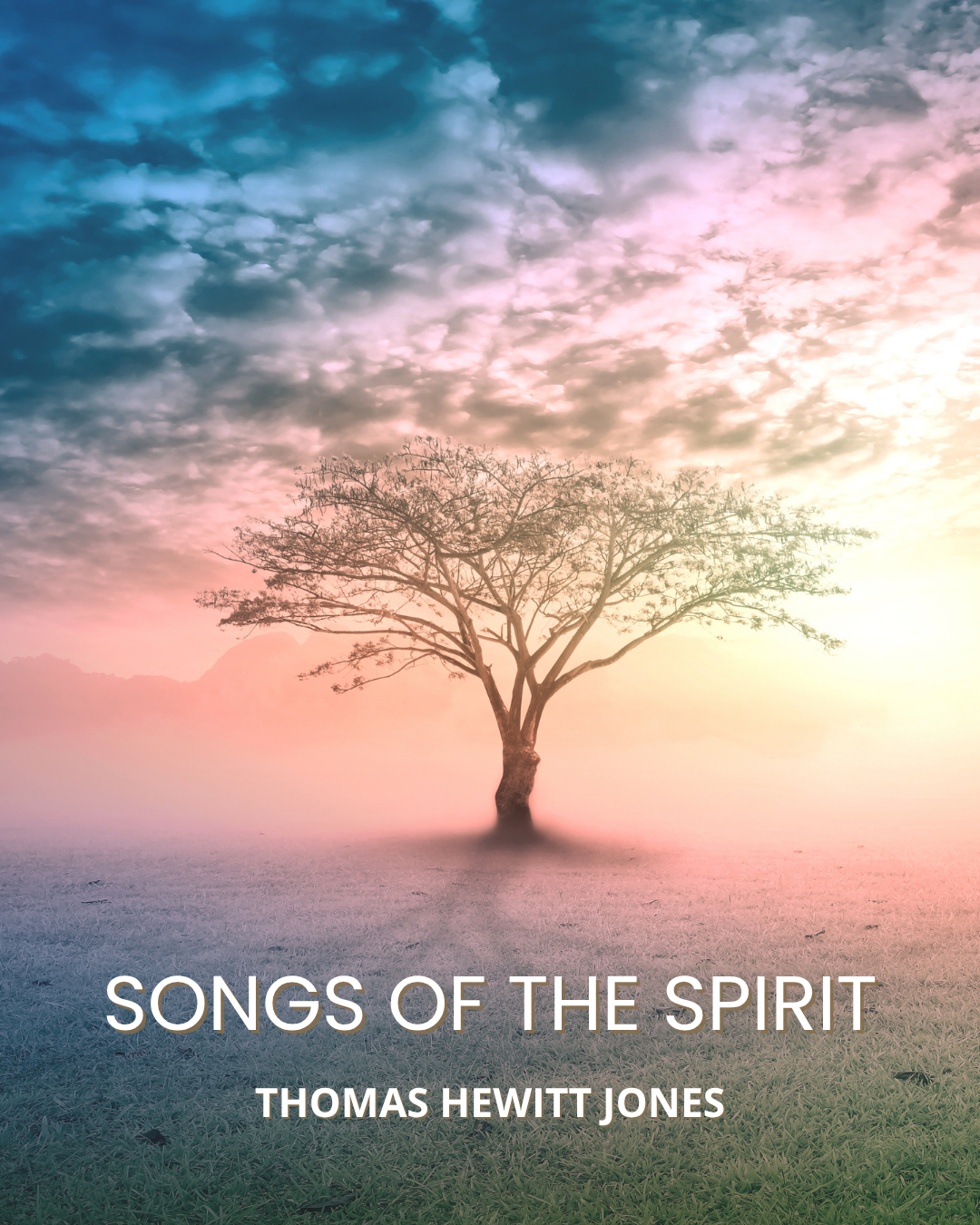
SONGS OF THE SPIRIT Music & words by Thomas Hewitt Jones

The Royal School of Church Music launches a major new choral commission as part of its centenary celebrations in 2027.

Songs of the Spirit is an exciting new suite of songs by award-winning British composer Thomas Hewitt Jones, created to uplift and inspire singers of all ages and backgrounds. With accessible yet impactful music, this 40-minute piece is perfect for community choirs, youth ensembles, chamber choirs, church choirs and can be performed in a wide range of settings. 
At its heart, the work explores a deeply human theme – the longing for safety and belonging in an increasingly complex world. Rooted in Christian values, the piece offers a message of kindness and hope, whilst inviting reflection on profound questions about identity, purpose and the human spirit in 2026 and beyond.

Unforgettable melodies, lyrical clarity, and radiant harmonies will all weave into a musical tapestry expressing the emotional weight and beauty of the themes at play. 

The piece is scored for SATB but is flexible and will include movements suitable for children’s choir alone, and a rousing final hymn-like movement with the option of audience participation. It will be suitable for performance either as a whole, or as standalone movements, with scoring options for piano, organ and strings. 

Listen to an excerpt here:

Following the success of A Season to Sing, the RSCM’s previous co-commissioning project with composer Joanna Forbes L’Estrange and over 50 choirs worldwide, the RSCM now invites choirs to be part of its centenary celebrations. In exchange for a donation of £300, co-commissioning choirs will have the exclusive right to perform Songs of the Spirit during its first year, and also receive the following benefits: 

  • A commemorative, hard-bound signed score 
  • Your choir’s name in the list of commissioners in the printed score 
  • 30% off all scores purchased for your choir within the first year of publication. 
  • Access to full support resources to aid learning 
  • Media promotion of your choir and its performance of the piece 
  • A personalised video message from Thomas Hewitt Jones for your choir 

This is an exciting opportunity to bring a powerful, appealing and uplifting new work to the contemporary choral music repertoire while allowing choirs to share their journey with the RSCM to ensure choral music stays accessible and widespread.

Songs of the Spirit will be available from September 2026

The success of a previous jointly commissioned work, A Season to Sing by Joanna Forbes L’Estrange (premiered in Spring 2025, with over 50 performances world wide to date), demonstrates the value of this model, with co-commissioning choirs praising the excellent resources provided, efficiency, and feeling valued throughout the process.
Tuesday 24 June at 1.15pm St Bride’s Church, Fleet Street, London EC4Y 8AU

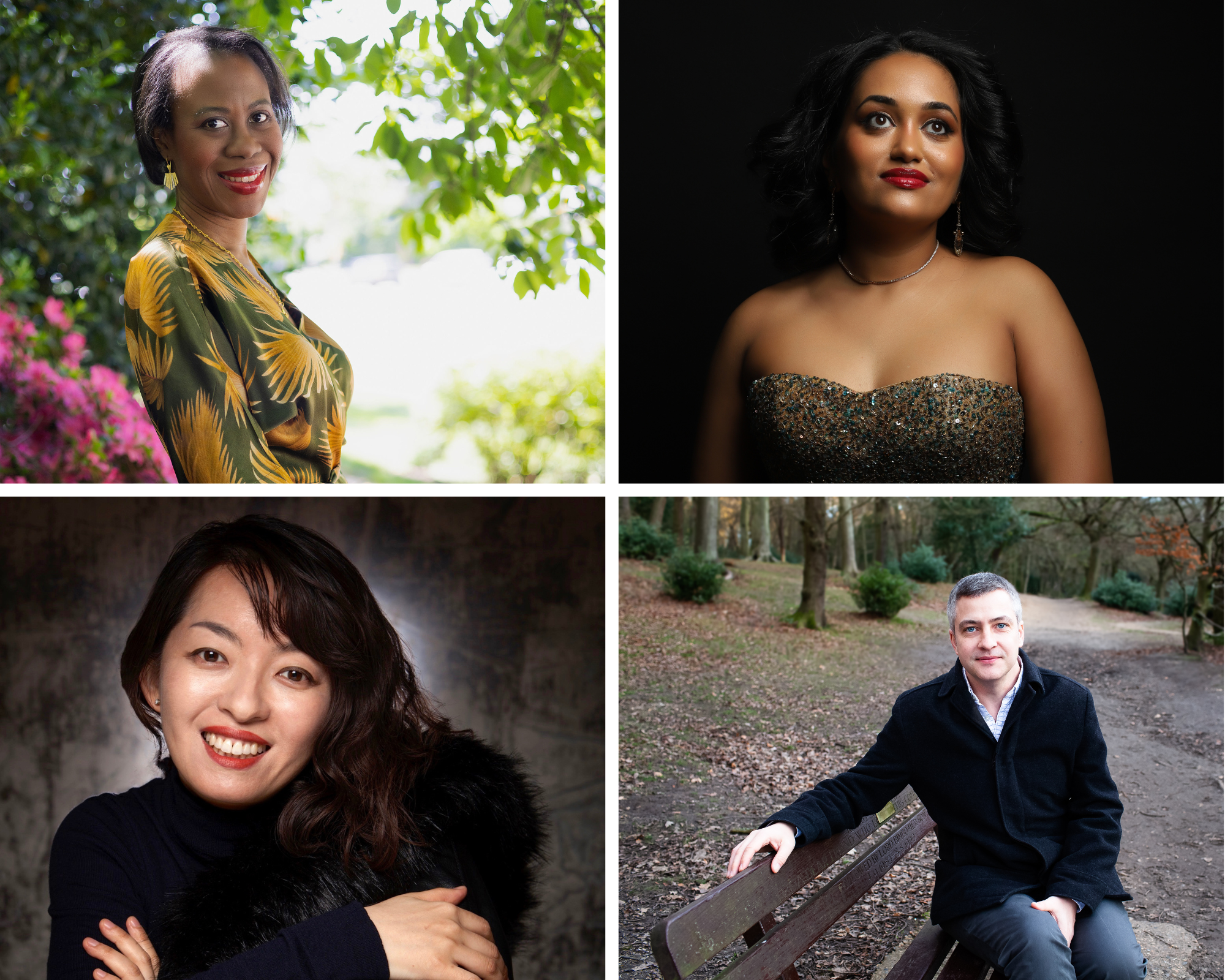
World premiere performance of ‘Metropolis’, six songs by British composer Bernard Hughes and lyricist Chinwe D John that capture the pulse of a modern metropolis. These songs, which explore aspects of urban life, romantic love, and resilience, bring the emotional essence of our shared experience into stark and beautiful view. Soprano Isabelle Haile and pianist Asako Ogawa infuse their sublime artistry through the songs, creating an unforgettable musical experience.

This free lunchtime concert also includes music by Francis Poulenc, chosen to complement the songs. Find out more here

Metropolis appears on the album ‘Songs for Our Times’, released to critical acclaim in 2023 on the Divine Art label. ‘Songs for Our Times’ features composers Bernard Hughes and Staurt MacRae, lyricist Chinwe D John, pianist Christopher Glynn, soprano Isabelle Haile and tenor Nick Pritchard. The project, from its conception by Chinwe D John to the enthusiastic participation of the artists, exemplified by the premiere organised by soprano Isabelle Haile and pianist Asako Ogawa, speaks to the spirit of collaboration and shared interest in engaging current and future listeners.

Composer Bernard Hughes says, ‘I hadn’t written any solo songs when the opportunity to work with Chinwe came up. It was really interesting to work with lyrics by someone from such a different background to me. She pointed me towards some music styles I wouldn’t have otherwise encountered, and these formed the inspiration for the piano parts of several of the songs. It was a very collaborative process…I liked working on the songs as a cycle: there is a definite thread running through them. It was a delight working with Isabelle Haile on the recording. She is an exceptional talent and I’m so pleased she is giving the live UK premiere of Metropolis.’

Praise for Songs for Our Times – Metropolis

‘As a poet writing texts for songs, John has a very clear, direct voice, with the ability to craft memorable, evocative phrases and use short bursts of lyricism. Rarely do her texts feel too wordy or too over-written, there is space for the music….. Haile sings with a lovely bright, focused soprano tone’ – Robert Hugill

‘Here is music to enjoy but to make you think as well!’ – British Music Society

This is a capable and sensitive player who is intelligently inside the music, and quite capable of drawing us into it.’ – Early Music Review on Asako Ogawa

‘The World of Yesterday’ – written & performed by Sir Stephen Hough with the Bournemouth Syphony Orchestra, conducted by Mark Wigglesworth. Wednesday 26th February, Lighthouse, Poole

British pianist Sir Stephen Hough hadn’t intended to write a piano concerto. But during the dark days of the COVID pandemic, he was approached to write a score for a film about a concert pianist writing a piano concerto… With little to do but take Zoom calls, “it seemed like a wonderful way to keep me busy”, and, intrigued by the film’s plot, he began jotting down ideas.

As the world emerged from the pandemic, the film project stalled and Stephen’s concert diary began to fill up again, but he still had the sketches for the film score and, with the support of four orchestras (the Utah, Singapore and Adelaide symphonies, and the Hallé) he wrote his piano concerto ‘The World of Yesterday’. It received its world premiere with the Utah Symphony Orchestra in January 2024 and a recording made with the Hallé and Sir Mark Elder is available on the Hyperion label.

I had the pleasure of hearing Hough perform his concerto with the Bournemouth Symphony Orchestra in a well-conceived programme called Notes of Nostalgia. Given its theme, the concerto sat perfectly between Brahms’ Third Symphony and Elgar’s Enigma Variations – all three works infused with a certain wistfulness interposed with personal reflection, warmth and wit.

Hough’s concerto takes its inspiration, in part, from Austrian author Stefan Zweig’s atmospheric memoir of the same name, which depicts Vienna and Viennese culture in the last golden days of the Habsburg Empire before Europe was torn apart by war. You can almost smell the aroma of Viennese coffee and taste the Sacher-Torte in the quieter passages of the piece.

The music is rich in nostalgia, but without the heart-tugging poignancy of Chopin, for instance: it’s a more reflective yet positive reminiscence of another time. Scored in a single movement but with distinct sections, ‘The World of Yesterday’ has a filmic quality (“something from the 1940s”, my husband commented as we left the concert hall) – you certainly hear nods to Korngold’s film scores, and it shares Korngold’s romantic sweep, but there are also references to Rachmaninov (particularly in the very glittery virtuosic solo sections), Copland, the Warsaw Concerto…but at no point do these references feel like pastiche. And if you’re familiar with Hough’s wonderful transcriptions of Rodgers and Hammerstein, you’ll find similar idioms here (I half-expected Hough to segue into the Carousel Waltz at one point). And yes, there is a waltz too – not so much a Viennese waltz but something more sultry, redolent of Bill Evans and a smoky, late-night jazz club.

Hearing the composer play his own work was like a bridge across time to another world of yesterday, a time when composers wrote piano concertos which they performed themselves: Mozart, Beethoven, Mendelssohn, Chopin, Liszt, Rachmaninov and Prokofiev all performed their own concertos. Showcasing their prowess and personality as both performer and composer, these works becoming their “calling cards” as they toured to give concerts.

The music has an almost “vintage” quality: surprisingly traditional in its direct communication with orchestra and audience, and its idioms, motifs and references to other composers (there’s not a hint of that “squeaky gate” atonality one often associates with contemporary classical music). The piano enjoys Brahmsian interactions with the orchestra and Rachmaninov-esque cadenzas, but Hough’s does break with tradition in a few significant ways. First, the concerto has a narrative title, rather than just an opus number or key, which undoubtedly guides the audience, even without a programme note. Additionally, the cadenza, traditionally heard at the end of a movement, comes very early, after an orchestral ‘prelude’. Here the piano is solo, notes and motifs sparkling in the upper register (later mirrored by the piccolo).

Above all, The World of Yesterday is a richly textured, virtuosic and joyful celebration of past influences, rather than a poignant glance back to a better time. It’s full of warmth and wit, affection and humour: it made me smile, it thoroughly uplifted.

After all, isn’t that what music should do?

The World of Yesterday’ is released on 28 February on the Hyperion label

Cecily Beer & the Chamber Orchestra of London, arranged and produced by Thomas Hewitt Jones. Conducted by Rupert Gough

SUSSEX CAROL, SILENT NIGHT, BELL CAROL

Thomas Hewitt Jones says, ‘It was a pleasure to arrange and produce these three new Christmas arrangements for the talented Cecily Beer. To accompany Cecily, I brought in players from the Chamber Orchestra of London with whom I have recorded many media projects, and Rupert Gough conducted the session at the chapel of Royal Holloway, University of London in September 2024. We are delighted that Vivum Music Ltd. is releasing this EP which we hope will showcase Cecily’s beautiful harp playing as well as offering a new take on these famous seasonal tunes.’

Cecily Beer says, ‘This new music from Thomas Hewitt-Jones has been the biggest joy to learn and record. We had both agreed we wanted something that sparkled but with familiar melodies which people know and love. For me, the upbeat tracks, Sussex Carol and Bell Carol, are exactly what I want to be listening to while dancing around my kitchen making Christmas lunch; while the final track, Silent Night, has the perfect balance of joy that comes with this sublime new string arrangement, and nostalgia for a melody we all know and love so well.’

Sussex Carol

A rippling harp introduces the famous Christmas tune with a ‘spinning wheel’ of broken chords with forward motion and delicate emotion. The intensity builds with interplay between harp soloist and strings during thematic development which propels the piece towards a satisfying conclusion.

Silent Night

This slow, reflective setting features a rippling version of the melody in the harp underpinned by warm, expressive strings. As the track unfolds a relaxed calmness expands to a quietly emotional feel as we modulate up a tone, leading us gently yet optimistically forward as we approach Christmas.

Bell Carol

The melody of Bell Carol comes from the song “Shchedryk” written by the Ukrainian composer Mylola Leontovych in 1914. We hope this new arrangement for harp and strings can be enjoyed by a wide audience during this challenging time globally.

Released 10 November on the Vivum Music Label. Available on AppleMusic, Spotify and other streaming platforms

(Image credit: A P Wilding)