The piano music of Olivier Messiaen is not performed enough for my taste, partly because there aren’t that many pianists around who are willing to tackle it. One notable exception is British pianist Peter Donohoe, who studied with Messiaen’s second wife Yvonne Loriod, and who played the composer’s music to the composer himself during his studies in Paris in the 1970s.
The concert at London’s Institut Français, part of the three-day It’s All About Piano Festival, was originally to include the London première of La Fauvette Passerinette, a work fully sketched by Messiaen in 1961 which was discovered by Peter Hill, who worked with Messiaen between 1986 and 1991, and which Hill completed in 2012. Sadly, Peter Hill was unwell, and so the work was introduced by Elaine Gould from Faber Music and Peter Donohoe, who played brief, appetite-whetting extracts, and relayed some interesting and entertaining anecdotes of his studies with Monsieur and Madame Messiaen, and his experiences of performing Messiaen’s music. Benjamin Frith stepped in at the last minute to perform Messiaen’s Visions de l’Amen with Peter Donohoe
The fascinating Rest is Noise festival at the Southbank Centre has now reached its mid-point, with the focus on music created out of oppression and war. In Friday night’s chamber concert at Queen Elizabeth Hall two pieces written in the most straitened circumstances during the Second World War were presented: Shostakovich’s Second Piano Trio, a haunting lament for the tragic victims of the war and conflict in general, and Messiaen’s extraordinary Quatuor pour la fin du temps (“Quartet for the End of Time”), composed and premièred in a German prisoner of war camp. The works were performed by world-renowned musicians – French brothers Renaud and Gautier Capuçon (violin and cello respectively), Denis Kozhukhin (piano) and Jörg Widmann (clarinet). They offered a highly emotional, profound and concentrated performance which demonstrated their commitment to and understanding of this difficult, meaningful repertoire.
“My music is like a garden – and I am the gardener”
Toru Takemitsu (1930-1996)
It was rather wonderful to wake to the sounds of the music of Toru Takemitsu on BBC Radio 4’s ‘Today’ programme on Friday morning. An unexpected pleasure, as such music is usually reserved for the wilder shores of Radio 3.
Takemitsu was a composer, but he was also a writer on aesthetics and musical theory. His music is delicate and refined, as beautiful as Hokusai print or a carved jade netsuke. Largely self-taught, his music combines elements of Japanese and western philosophy with the subtle manipulation of instrumental and orchestral timbre, using both western and traditional Japanese instruments, and the use of defined silences to create a unique and extraordinary soundworld.
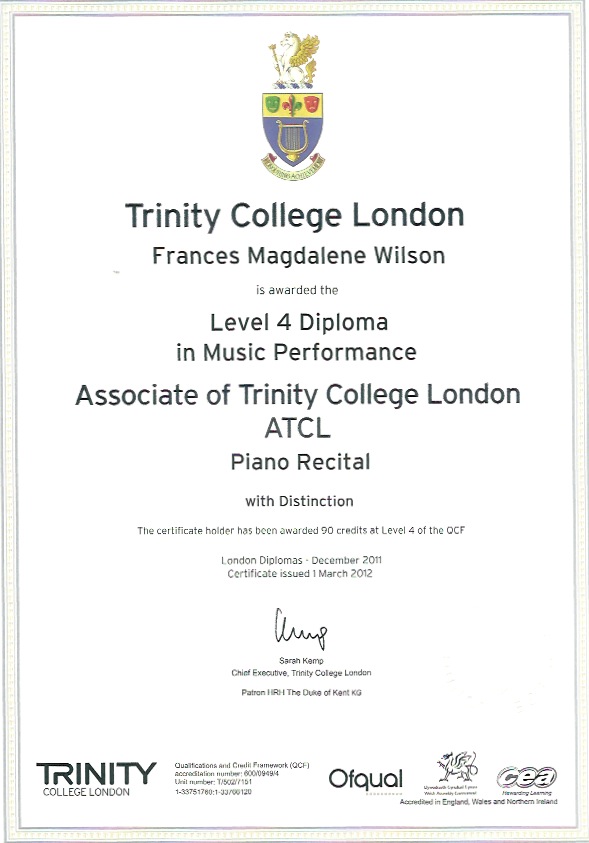
Takemitsu admired Debussy and Messiaen, as is evident in his piano music, and was drawn to composers who were themselves deeply influenced by the musical and philosophical culture of Asia, including John Cage. After my very positive experience with Messiaen for my ATCL Diploma programme, and my love of the piano music of Debussy, the desire to explore the piano music of Takemitsu seemed a natural one.
Takemitsu composed his Rain Tree Sketch II in 1992 in memory of Oliver Messiaen (1908-1992), the French composer who had a strong influence on Takemitsu. The work was composed for a concert “Hommage à Olivier Messiaen” at Les Semaines Musicales Internationales d’Orleans, France, and was premiered by Alain Neveux on 24 October 1992. The name of the work was probably inspired by a quotation from a novel by Kenzaburo Oe about the miraculous rain tree, whose tiny leaves store up moisture and continue to let fall raindrops long after the rain has ceased. The work is also a dreamy meditation on the flow of life, and was the last piano piece Takemitsu wrote (his first Rain Tree Sketch was written in 1982). It is in a clear ABA (ternary) form, with a rhythmic opening which is reprised, in shortened form, after the melodic middle section. Its tonal language is redolent of Debussy and Messiaen, with chords used for colour and timbre rather than strict harmonic progressions, and, like its dedicatee, Takemitsu employs recurring motifs (such as an ascending three-note broken chord figure) and well-placed silences to create a carefully nuanced atmosphere and colouristic shadings. Directions such as “celestially light” and “joyful” contribute to the metaphysical nature of this work.
There are some written in pedal markings, and these should be adhered to as the composer directs. Elsewhere, use of the pedal is at the discretion of the pianist. I tend on the side of restraint and use half or one-third pedal to avoid obscuring the clarity of the chords and melodic figures. Regarding the bars of silence, these should sound expectant and anticipatory, rather than dead; using the pedal to allow sounds to “ring” will help achieve this.
The metronome markings in the piece are somewhat ambiguous. On the dedication page of the score, the duration is given at 5 minutes, but if one adheres to the metronome markings exactly, the piece comes in at around 3 minutes. I have opted for a calm moderato, a sense of the music moving forward, but without pressing ahead. In my Diploma programme, this piece comes between the Bach D minor concerto BWV 974 and Mozart’s Rondo in A minor K511. The contrast is, to me, rather special, and I feel it works well.
While researching the programme notes on this piece for my Diploma, I came across an interesting piece of research in which the author discusses the suggestion of traditional Japanese instruments in this work, and other piano works by Takemitsu, specifically the Taiko drum (the low D pedal point at the opening of page 2), and the long zither koto and the short-necked lute biwa (the ascending arpeggio figure suggests the plucked sound of these instruments). The article contains many interesting thoughts about Takemitsu’s piano music, and is definitely worth exploring further.
As for performances of this work, when I heard Noriko Ogawa perform it at the Wigmore last autumn, I was struck by the incredible soundworld she managed to achieve, producing “droplets” of notes and really evoking the miraculous rain tree (my review here). The recording I have been using for reference in my study of this piece is by Ichiro Nodaira: I particularly like the relaxed tempo of the opening melody.
The pianist Paul Crossley has recorded Takemitsu’s complete piano music, sadly, now out of print, though available via some music streaming services and Spotify.
Going back over old territory here, but by chance I found a film I made when I was rehearsing for my ATCL Diploma recital last winter with my page turner (who also happens to be a very good friend of mine, and one of my piano students). I’ve edited it into a more watchable programme. The pieces are played in the order in which I performed them in the exam recital on 14th December 2011
The Cross-Eyed Pianist is free to access and ad-free, and takes many hours every month to research, write, and maintain.
If you find joy and value in what I do, please consider making a donation to support the continuance of the site

 The piano music of Olivier Messiaen is not performed enough for my taste, partly because there aren’t that many pianists around who are willing to tackle it. One notable exception is British pianist Peter Donohoe, who studied with Messiaen’s second wife Yvonne Loriod, and who played the composer’s music to the composer himself during his studies in Paris in the 1970s.






 The Cross-Eyed Pianist