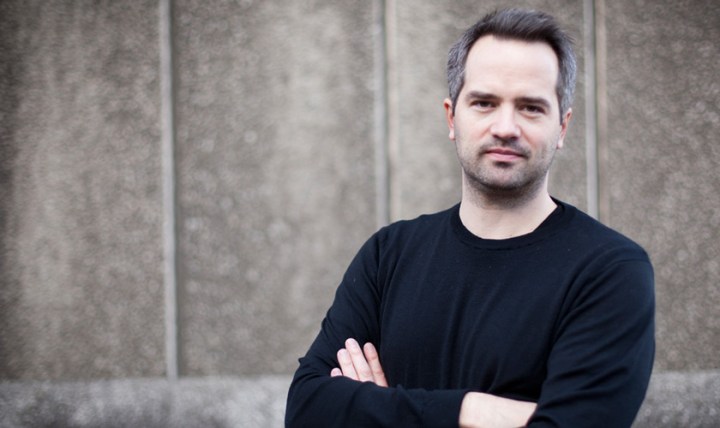
peter_jablonski

©Peter Jablonski

Who or what inspired you to take up the piano and pursue a career in music?

I never took a conscious decision to have a “career in music”. Music was all around me when I was little. I was interested in sport, but my father was a musician, classically trained, from Poland. He came to Sweden in late 60s as the leader of his own jazz quintet, so there was a lot of music at home – jazz and also classical. I grew up with music. I started playing drums early on and that was what I was going to do. I toured and played drums.

At 6 I started having piano lessons with my dad, and then I discovered this amazing instrument and its possibilities, and that got a hold of me. At 11 I went to a Polish piano teacher at the college of music in Malmo. The way he spoke about music – about the smell, sense, colours, pictures of the music – it just opened my mind. And after 4 years study with him I was a pianist.

In my last year at the Royal College of Music, I got a record contract. I had good people around me but I never took a conscious decision to pursue a career in music. It was a need – I couldn’t be without it

When I started on the professional circuit I felt uncomfortable with the “business” side of it – i.e not to cancel, not to use music if one wants to. Things that felt to be anti-artistic to me as a young musician …. I love music, I love being with it, practising, playing. You get into this groove on the professional circuit which can be difficult for a young artist

Who or what were the most important influences on your musical life and career?

In a purely practical sense it was Vladimir Ashkenazy. In a way he “spotted” me, and he is the reason I didn’t have to go down the competition route (I and some colleagues applied for the Tchaikovsky competition in our final year at college). My first recordings with Decca were with Ashkenazy. I encountered him by chance through my Swiss manager who lived in the same village as him. My manager took him a tape and he listened and said he wanted to hear me. It was pure luck.

I did a few local competitions, but I was spared that world. I was lucky enough not to have to go down that route. And I came out of college at the time when recordings still mattered in your career.

What have been the greatest challenges of your career so far?

From a practical standpoint, when you are younger and thrust in to the limelight, the challenge is finding the time to get the repertoire learn and to be a human being. I have a rebel in me that didn’t like being on the road. I loved playing and I liked the solitude. I have a family, a daughter, I basically missed the first 2 years of her life. I struggled with that. I want to live with the music, enjoy it, chew on it, be with it, but the modern career does not allow it. But I think most young performers find this. I wanted other things in my life – family, friends, freedom, I wanted to enjoy the music.

But of course there is an adrenaline high connected with that life. I have colleagues who play 100 concerts a year, but that would just kill me and my love of the music. Some people are at odds with the “career” side of being a pianist.  When you’re on the road and you play a lot, you get to a state of readiness and you’re ready always – but you cannot make it any easier. The requirement of the repertoire is keeping the love for it, it’s difficult when it gets busy. Many different concertos, practising non-stop – sometimes I didn’t even like the piano very much because of the concert schedule.

Which particular works do you think you perform best?

I don’t know…..a very difficult question. That’s for other people to say. Because of my drumming side, I’ve had an affinity for the more rhythmical music (Bartok, Barber for example) but that also applies to Beethoven. I’m feeling more and more comfortable playing Beethoven now. I’m programming Schubert sonatas and Scarlatti – such fresh air! And I’m getting quite heavily into Brahms now

How do you make your repertoire choices from season to season?

I have always loved the nooks and crannies of the repertoire – Szymanowski, Scriabin, Barber, Copland. Incredible music. But of course I have played most of the standard concertos. The only one I’ve stayed away from is Brahms 2 from pure respect and love.

How long does it take you to bring a concerto back into the fingers ready for a concert?

It depends on which one it is. Some I have played so many times (100 times each)  I can play them tonight. I could go and play the Grieg tonight – I have about 10 concertos like that. Then there are a few concertos which are a few days away, then a week, and some I have lost completely.

Are there certain composers/works which always remains difficult?

Beethoven 4 – because I love it too much!

Chopin 2 is immensely difficult. There’s a simplicity/naturalness/ delicacy which is bordering on impossible on a modern piano. You have to over-articulate and then it doesn’t feel like Chopin. It becomes “Panzer Chopin”. It shouldn’t be forceful. Very often today the pianos are voiced quite aggressively so that they carry to the back of the hall over the orchestra. Trying to playing Chopin 2 or Beethoven 4 on those pianos is not easy, it kind of grates.

Do you have a favourite concert venue to perform in and why?

Concertgebouw in Amsterdam is amazing, and the Musikverein in Vienna, but it’s also the history of those places, knowing who played there, who stood on the stage.

In general halls in Asia, in Japan, are wonderful, not least because of the incredible choice of pianos: 5 or 6 pianos to choose from at Suntory Hall. But it’s also incredible difficult. The audiences in Japan are scary. I’ve been to Japan 21 times. At my first recital in Tokyo, there was lots of applause and then the second I sat down they stopped clapping, and it’s almost like you’re alone. It’s spooky. Even in the big halls, it’s the same. They don’t cough, no speaking, no rustling programmes, no one shaking their foot in the front row….. That’s both wonderful and scary. You can literally play to 2000 people without knowing anyone is there. And there is something quite unnatural playing this music to 2000 people. It’s a strange thing to do – to play the piano in public!

For me the music is the most important, it’s not about not me, what I wear…. The only thing you can do is really focus and draw people in. The ideal is when you play in a way which brings people to the music

What is your most memorable concert experience?

There are many for different reasons. For strange reasons, playing Tchaikovsky 1 with the Philadelphia Orchestra outdoors, with Charles Dutoit. And they were going to end with the ‘1812 Overture’ and the canon went off in the slow movement of the piano concerto. It was a like a real bomb! The nerves disappeared after that!

I can’t remember all my concerts, but if someone mentions one to me, the memory of it comes back and I can remember how it went, how it felt sitting on the stage.

On recording

It’s very difficult. I’d much prefer a live concert, the sense of purpose, the adrenaline, which can get lost in the studio. It’s very artificial, it’s a tricky process.

What do you consider to be the most important ideas and concepts to impart to aspiring musicians?

First of all you have to be crazy about music. It starts there. You have to be obsessed without it otherwise don’t do it. You have to have to do it, otherwise the cost is too high.

For young pianists they have to be careful with their repertoire choices. Most people have their strengths, but somehow young prizewinners have to play ‘Feux Follets’, ‘Petrushka’ and late Beethoven sonatas. They are often influenced by teachers and the market. This a big mistake which many pianists make. One needs to have a strong sense of self, which can’t be taught. You have to have a sense yourself of what you feel you can say, you have to live with the music, love it, be with it.

This is the transcription of an interview recorded on 19th April 2016

Peter Jablonski performs music by Chopin, Szymanowski, Bartok and Liszt at Manchester’s Bridgewater Hall on Thursday 20th October. Further information here

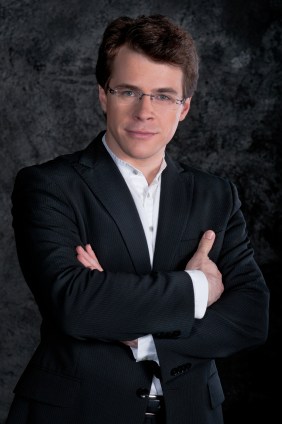
Born in the south of Sweden to Swedish and Polish parents, Peter showed an early talent for music when he started playing the drums at the age of five and piano at six. Rapid development on the drums led to performances at some major festivals and venues including the `Village Vanguard` in New York aged nine and with musicians such as Buddy Rich and Thad Jones. Peter even received praise from the legendary Miles Davis.
 
Meanwhile, Peter’s interest developed in the classical piano repertoire which led to his first solo performance aged eleven and his debut with orchestra, playing Mozart’s piano concerto in G, K.453 the following year. At this time he was accepted to the Malmo Academy of Music to pursue studies in piano and percussion and by the time of his graduation he was invited to perform Beethoven’s Concerto No.1 with the Swedish, Danish and Polish radio orchestras.
 
Further studies in piano and conducting followed at the Royal College of Music in London when, in his final year, Peter was heard by Vladimir Ashkenazy who invited him to record his debut disc for Decca with Ashkenazy conducting the Royal Philharmonic Orchestra in London.


Established in 2012, the weekly Meet the Artist interview slot, in which musicians and composers reflect on various aspects of their creative lives, has gone from strength to strength and is now an integral and very popular part of The Cross-Eyed Pianist’s content. To celebrate this, Meet the Artist now has its own dedicated website.

Meet the Artist interviews will continue to appear on this site every Thursday, while the new site will act as a supplement with a growing catalogue of interviews with both well-known classical musicians and composers and young and up-and-coming artists. Do consider following the site in order to receive updates every time a new interview is released. In addition to interviews there will also be news, reviews and other articles relating to the artists featured on the site.

I feel very privileged to have the opportunity to share so many fascinating and often unexpected insights from such a wonderful range of musicians and composers, and I would like to take this opportunity to thank everyone who has taken part in the Meet the Artist project so far for their contributions to the series.

header


jakubhr_852420ar20-20please20credit20zbynek20maderyc20-20resized
(photo credit: Zbynek Maderyc)

Who or what inspired you to take up conducting and pursue a career in music?

There were lots of influences. Examples of many famous and less famous conductors. Among all, I’d mention the American Leonard Bernstein and in my own country Jiří Bělohlávek, whose conducting I could observe personally. It happened when I was a teenager. I found out for myself then that I wanted MUSIC to be a central point of my life. My psyche and specific talents somehow indicated conducting would be the best path, although at that time I could imagine to go into many other professions.

Who or what were the most important influences on your musical life and career?

Definitely my parents and grandparents at first (even though no one in my family is a professional musician), then my music teachers (especially my trombone and other brass instruments teacher at a primary art school Jiří Vrtek who was also a very skilled and passionate leader of many sorts of wind bands in which I played already as a kid), then the conductor of my student symphony orchestra in Brno Tomáš Krejčí who gave me my first, highly desired conducting opportunities and found me a conducting teacher – and finally aforementioned Jiří Bělohlávek with whom I studied at the Academy of Performing Arts in Prague after I had graduated from what we call “gymnasium” (a grammar school in English). And obviously a lot of splendid (and less splendid) recordings – LPs, cassettes, later CDs.

What have been the greatest challenges of your career so far?

There is a lot of details which I cannot mention. Difficult to choose. Some of my “jump-in” experiences (Carmen or La bohème without rehearsals), some of the difficult operas, even if rehearsed (Mihalovici’s Krapp or The Last Tape, for example), some of the contemporary premieres (lately Olga Neuwirth’s percussion concerto Zero-Zone, for instance), first Le Sacre also wasn’t as easy. These particularities shouldn’t cover the substantial challenge, though: to find the most direct and inspirational way how to communicate with every orchestra one leads so that both the players and the audiences are enriched and happy…

Which performance/recordings are you most proud of? 

I think both Má vlast recordings I’ve made so far – the first with The Prague Philharmonia, taken live in 2010 at the Prague Spring Festival, and the second the brand new now with the Bamberg Symphony – are both quite representative. That’s as for recordings. I cannot say about the performances. There were too many (and too many details!) which I really loved. I was rather proud as I graduated ambitiously from the Academy in 2004, performing my beloved Asrael Symphony by Suk by heart. I kind of tasted where my abilities could go.

Which particular works do you think you perform best?

Works with great intelligence and highly emotional contents.

How do you make your repertoire choices from season to season?

It’s always a complex decision. I’m personally putting a great deal of new pieces for me to learn each season, to make progress in my knowledge (and enjoyment) of a wide repertoire. “My” orchestras (such as Bamberg now) have their own portfolios with which I’m working closely and sensibly. As soon as the main focuses are clear, I’m also trying to enable myself (and my orchestra[s]) to get deeper in the pieces – and that means repeating them, also at various places. And I have been trying to find the right balance for years now between orchestral stuff and opera. Some seasons are more operatic, some less. (I think my programmes are very well balanced in terms of Czech/Slavic/European/international music now. The same for all possible styles, even if, roughly put, years 1750–1950 prevail.)

Do you have a favourite concert venue to perform in and why?

Several of them. I would definitely mention some of the older halls in Europe and America, above all my national “home” at Rudolfinum in Prague, Musikverein in Vienna, Concertgebouw in Amsterdam or Severance Hall in Cleveland. And then some of the newer marvels: Suntory Hall in Tokyo and the Symphony Hall in Osaka, Philharmonie in Berlin, Gewandhaus in Leipzig, the new Helsinki Music Centre, the Los Angeles Walt Disney Concert Hall… I like my professional home in Bamberg, too. And I’m looking forward to performing at the Philharmonie in Paris where I haven’t been on stage yet. I liked it in the audience a lot.

Who are your favourite musicians?

So many that it wouldn’t fit on one page.

What do you consider to be the most important ideas and concepts to impart to aspiring musicians?

Never to stop working hard – but in a relaxed manner. And to be personal – without wilfulness.

What about your new position at Bamberg excites you the most?

The amazing and open-minded musicality of the players there – combined with great characters (in playing/music and in psychology). And the city’s devotion to culture.

What is your idea of perfect happiness?

A complete balance – of mind (brain), emotions and spiritual connections, of work and doing nothing, of pleasing myself meaningfully and serving others, of Dionysian and Apollonian……And that also accompanied by sounds of blissful music.

Born in the Czech Republic and described by Gramophone as ‘on the verge of greatness’, Jakub Hrůša is Chief Conductor of Bamberg Symphony, Permanent Guest Conductor of the Czech Philharmonic, Principal Guest Conductor of Tokyo Metropolitan Symphony Orchestra (TMSO), and served as Music Director and Chief Conductor of PKF–Prague Philharmonia from 2009 to 2015.

He is a regular guest with many of the world’s greatest orchestras. Recent highlights have included Bohemian Legends and The Mighty Five – two major series specially devised for the Philharmonia Orchestra; a two-week focus on Martinů and Roussel for Orchestra Philharmonique de Radio France; and performances with the Leipzig Gewandhaus Orchestra, The Cleveland Orchestra, Vienna Symphony, DSO Berlin, The Philadelphia Orchestra, and Los Angeles Philharmonic. Last season, he made his débuts with the Royal Concertgebouw Orchestra and Filarmonica della Scala.

www.jakubhrusa.com


sophie_duner_buenos-aires3

Who or what inspired you to take up singing and pursue a career in music?

Elvis Presley – for his dynamics. However, my very first instrument was the piano and I wanted to be a `cocktail bar pianist´. Then I changed to voice. I had a short introductory period singing pop though, pretty soon coming to the realization that my artistic `mood´ was far too `serious´ and complicated for the task. I was looking for something more complex, artistically. That led me to enroll in jazz studies at Berklee College of Music (vocal performance & composition). Apart from the jazz studies, I also attended classes in classical singing as well as in contemporary classical composition.

Who or what were the most important influences on your musical life and career?

Igor Stravinsky, Charles Mingus, Kurt Weill, Paco de Lucía, Cathy Barberian, Björk. I was also very fond of all types of ethnic and dynamic singing, which was a big influence on my expression in jazz. When it comes to composers, I listened to a variety, spanning from jazz, world music to contemporary classical – I always needed all of them to feed my ears.

What have been the greatest challenges of your career so far?

To explain what type of music I do, finding the right people to work with and finding the right venues to perform at. Making my music sound the way it should. Achieving consistency in work opportunities & controlling and combining it with my mood.

Which performance/recordings are you most proud of?

My latest string quartet CD ‘The City of My Soul’ (produced by Michael Haas) and a track called “La Finadita” from the album ‘The Outsider’ by F. Tarrés and The Arida Conta Group. I am also very pleased with a performance I did with electric cello last year as well as some tracks from an upcoming vox & acoustic bass (jazz) CD. I also enjoyed a gig I did at `Festival O/Modernt’ in Stockholm (with a string orchestra among other combos.) A gig at `Festival de Música Cotemporánea de La Plata´ in Buenos Aires was also great – it was audiovisual as well.

Which particular works do you think you play best?

I love to sing music with angular melodies. With extreme highs and lows! That way, I can express varied vocal colours in my different vocal registers and vocal `placements´. I also love music with interesting rhythms and change of meter, and with a lot of energy and groove. I also like dissonance. And space, with dynamic attacks! Basically, anything that is vocally challenging is fun and stimulating.

How do you make your repertoire choices from season to season?

My choices are related to what type of gigs I have at the moment.  It´s also dependent on for whom I write and who I collaborate with. And where I am offered concerts and work – it’s all interrelated.

Do you have a favourite concert venue to perform in and why?

I like theatres. And I loved `Confidencen´at Ulriksdals Slott (where I recently performed) Another interesting venue to perform in was an ecological farm outside Zürich. Or a dusky jazz club. Circulo de Bellas Artes in Madrid. Basically, I like venues with a soul and which have their own personality.

Favourite pieces to perform? Listen to?

At the moment: to perform, `Caravan´ by Juan Tizol, `Weird Nightmare´ by Charles Mingus, `Addicted to Love´ by Sophie Dunér. To listen to:  the last part of `Petrushka by Stravinskij and track n° 2 from the CD “Bach por Flamenco” by Miriam Méndez, “Un amour de Swan” by Hans Werner Henze , “Weird Nightmare” by Mingus with singer Lorraine Cusson + “Cubana Be Cubana Bop” by Dizzy Gillespie.

Who are your favourite musicians?

Igor Stravinsky, Charles Mingus, George Antheil, Louis Andriessen, Thelonious Monk, Alberto Ginastera, Concha Buika, Paco de Lucía, Hans Werner Henze, Dizzy Gillespie, Heitor Villa-Lobos, Astor Piazzola, Bill Frisell, Erik Friedlander (to mention a few!)

What is your most memorable concert experience?

On a jazz jam session when the audience screamed after my solo and the one I did recently at Festival O/Modernt and PARMA Music Festival last summer.

What do you consider to be the most important ideas and concepts to impart to aspiring musicians?

Take risks – better to fall and then rise more interesting afterwards than to stay safe.

What are you working on at the moment?

My own new original (jazz), angular pieces with extreme highs and lows as well as with lots of energy, rhythm and time meter changes. I will record with the electric cellist Jeremy Harman in July in Boston (with whom I performed at the PARMA Music Festival last year.) 

Where would you like to be in 10 years’ time?

In a place where both mind and heart are combined and satisfied. What is your idea of perfect happiness?

What is your most treasured possession?

My imagination.

What do you enjoy doing most?

Composing, singing, painting, drawing, biking, hiking, photography, animals, cooking, comedy and have kids comment on my art and music.

What is your present state of mind?

Eager and unquiet.

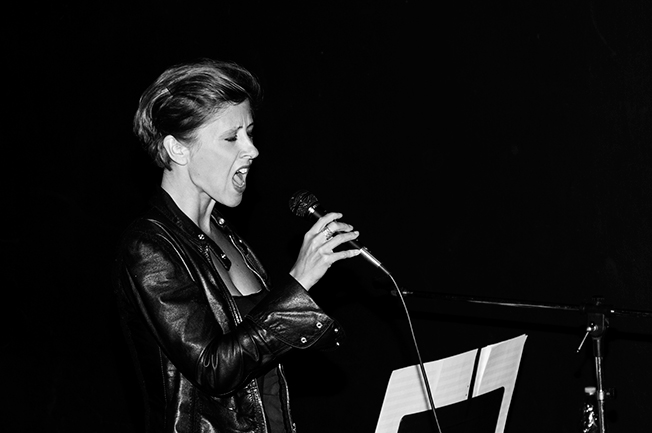
Sophie Dunér is a singer, songwriter, composer, arranger and visual artist from Sweden who has lived and performed in the United States and Spain. Originally a jazz singer, her writing and performing have evolved into a unique style of wild, risky, passionate and exhilarating music for vocals and string quartet.

www.sophieduner.com