richardbarnardhvrehside

Who or what inspired you to take up composing, and pursue a career in music?

Probably many things. I remember sitting at home at the piano, playing (I use the term loosely) Bach’s Preludes and Fugues, trying to work out how the hell he did it. Also my parents, teachers at sixth form and university: Martin Read, Michael Zev Gordon, Vic Hoyland and then Diana Burrell at GSMD.

What have been the greatest challenges/frustrations of your career so far?

Unfavourably comparing myself to other composers and artists. It’s so easy to descend into a Facebook-style Scroll of Shame where every successful and sparkly new thing makes you panic and think ‘I should be doing that!’ It is challenging to learn how to be influenced by other people’s ideas and techniques without feeling you have to follow their path.

What are the special challenges/pleasures of working on a commissioned piece?

First of all, commissions are fantastic. Everyone should commission composers AS MUCH AS POSSIBLE! Pieces often take ages to write and there won’t be much decent new music that defines and enriches our time and culture if people don’t commission it.

It is also incredibly motivating to have that deadline and the vision of a future audience at the first performance anticipating your new work.

What are the special challenges/pleasures of working with particular musicians, singers, ensembles and orchestras?

I write for a variety of people and situations, from professional singers and ensembles to school or community groups who have to learn things quickly and have fun doing so. Learning what works in what context is a tough skill. It takes a long time to master. I love writing for voice and I’ve been working a lot with solo singers recently. It’s great to have their voice in your head as you write and to think about the shape of the text, the breathing, the pacing and the drama of it.

Of which works are you most proud? My two recently commissioned song cycles, ‘Woolf Letters’ and ‘Early Stroll Songs’, which set Virginia Woolf’s letters to her sister and Ian McMillan’s Early Stroll tweets. I’m also very proud to have produced three performances of my opera ‘The Hidden Valley’ at St George’s Bristol this year, working with an incredible team of artists – I did, however, need a very long lie down in a darkened room afterwards.

How would you characterise your compositional language?

I like to think it’s an English sound, rooted in nature, often starting from melody and the voice.

How do you work?

I work best early. I have a lot of ideas doing other activities (gardening, showering etc.) as it gives space and time for the brain to process ideas. When I was writing ‘Early Stroll Songs’ I got into a routine of starting composing first thing (6.30-ish) for a few hours: At the keyboard, with pencil, Manuscript paper, black tea. I could usually complete 1 short song each day or two. My wife often acts as an editor, offering a second pair of ears to help me hear the music from an audience’s perspective. Later in the day, if not teaching, I would do computer / admin-type work: Typesetting, emails, checking twitter too much, grappling with a labyrinthine funding application etc.

Who are your favourite musicians/composers?

Starting out, my heroes were Bach, Stravinsky, Messiaen, Britten and Steve Reich, but I’ve recently been more drawn to the vocal music of Purcell and Handel, Mozart’s Symphonies, Schubert’s song cycles and the music of David Lang and Laurence Crane. I’m always interested in opera composers and I enjoyed Tansy Davies’ Between Worlds at ENO and Fairy Queen at Iford recently.

What is your most memorable concert experience?

When I was 16 or 17, I went to a performance of Britten’s War Requiem in Southampton. We sat right at the back. After the concert, walking out into the car park, I couldn’t speak. It was such a visceral experience.

What do you consider to be the most important ideas and concepts to impart to aspiring musicians?

Listen to and interrogate lots of good music. Like what you write. Befriend performers. Don’t follow advice too much.

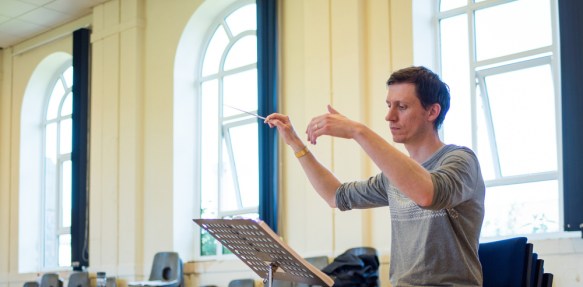
Richard Barnard is a composer based in Bristol. He studied at Guildhall School of Music and Drama and University of Birmingham. He has written operas, song cycles and choral works for Welsh National Opera, Opera North, BBC Singers, Bristol Ensemble, Juice Vocal Ensemble, Siân Cameron and others. He has composed music for dance and theatre, and his chamber pieces have been performed internationally by groups including Delta Saxophone Ensemble, Juice Vocal Ensemble and Kungsbacka Trio.

Richard curated the acclaimed new music series Elektrostatic at Bristol’s Colston Hall and Arnolfini for five years. He has taught orchestration and composition at University of Bristol and is one of the UK’s foremost composition workshop leaders, working with WNO, CBSO, London Sinfonietta, Sir Peter Maxwell Davies, Philharmonia Orchestra and Eighth Blackbird.

Richard Barnard on YouTube

Twitter@richardmbarnard

richardbarnard.com

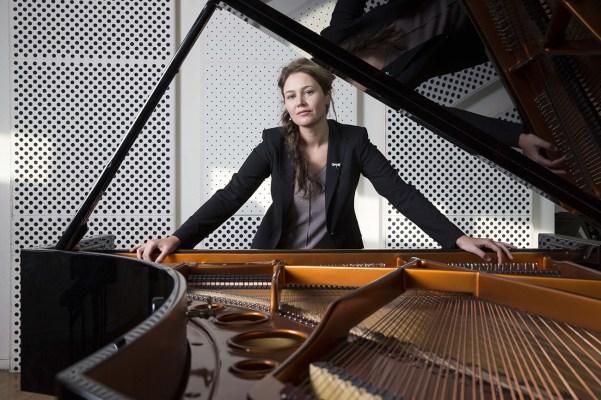
© Gerard Uferas Olga Jegunova 12_02_15

Who or what inspired you to take up the piano and pursue a career in music?

My grandfather who had a natural musical talent and could not imagine his life without his violin. He was played it passionately at every family gathering. He also bought our piano. Later, my mother taught me how to play a C major scale. Since then, I am still learning how to play it….

Who or what were the most important influences on your musical life and career?

Musically, it is J.S.Bach. He has always moved me, paralyzed any fear or disbelief. Later, recordings of great Rubinstein, Horowitz, Gilels, Gould, Richter, Michelangeli, Karajan, Callas, Oistrakh, Rostropovich. Then live concerts of Zacharias, Zimerman, Schiff, Argerich, Perahia, Maazel, Bartoli, Rattle and many others. They all form my musical taste and repertoire.

As per career, I should be influenced by the PR company of Lang Lang but sadly I am not!

What have been the greatest challenges of your career so far?

To actually have a career.

Which performance/recordings are you most proud of?

Ibert – Le petit ane (avalable on YouTube) when I was 10 years old because it made my mum proud.

Which particular works do you think you perform best?

4’33” by John Cage.

How do you make your repertoire choices from season to season?

Concert promoters always want a Moonlight sonata but I try to spice it up with some Bach & Ligeti (this season).

Do you have a favourite concert venue to perform in and why?

There are so many of them. I am not so obsessed with venue what worries me is no audience, empty hall or just a few people with ringing mobile phones.

Favourite pieces to perform? Listen to?

It is great to share great music with good audience. Yet the most non-judgemental experience was when I was playing “Peter and the wolf” to the 5-year old kids.

I like to listen to all sorts of music, I have my Ramstein moments, yet I listen to a lot of classical music, often jazz and some good pop/rock.

Who are your favourite musicians?

Elvis

What is your most memorable concert experience?

My very first concert at the age of 5 or 6 – very scary but I loved the applause.

What do you consider to be the most important ideas and concepts to impart to aspiring musicians?

Being a musician is a life-long service. It is hard, non-profitable and lonely. But it is a very important input into people’s minds and hearts. It gives another dimension to our being. And without this dimension it would be too miserable and too technical.

Where would you like to be in 10 years’ time?

At the piano, safe, warm and loved.

What is your idea of perfect happiness?

See above.

What do you enjoy doing most?

Being happily quiet.

Olga Jegunova’s disc ‘Poetic Piano Sonatas’ is available now

www.olgajegunova.com

(photo © Gerard Uferas)

12-january-miriam-kitchener-e1479482811548

Who or what inspired you to take up percussion, and pursue a career in music?

I was introduced to music at a very early age and so it was instilled in me right from the start. I began with piano lessons, however at the age of 9 I decided that the drum kit was my true calling, and the rest is history!

Who or what have been the most important influences on your musical life and career?

I have had many inspirational teachers throughout my education who have nurtured my musical learning in many different ways and have all influenced me in my musical life and career.

What have been the greatest challenges of your career so far?

The greatest challenge for me is becoming accomplished on as many different percussion instruments as I can – there are so many to choose from!

Which performance/recordings are you most proud of?

As part of a percussion quartet, we spent a day recording three pieces in November 2016 in preparation for a competition in May. We encountered many unusual setbacks in the lead up to the recording and on the recording day itself including a power cut, despite this I feel that we did a really great job and I’m really looking forward to hearing the results.

Which particular works do you think you play best?

I really enjoy the performance aspect of being a soloist and find that the more unusual the piece of the music, the more I enjoy it and therefore the better I play it! At the moment, I’m working on a piece for body percussion and mime called Ceci n’est pas une Balle. It’s a really energetic piece that requires a lot of audience interaction and is really exciting to perform.

How do you make your repertoire choices from season to season?

I choose repertoire based on what I appreciate listening to and what I feel will work best with my musical personality. Above all, I choose pieces that I know I will enjoy playing and performing to an audience.

Do you have a favourite concert venue to perform in and why?

For orchestral playing, I really enjoy the atmosphere of Birmingham’s Symphony Hall, the vast space is thrilling to perform in. Small solo venues can also have the same thrilling effect, with much more intimacy between performer and audience.

Favourite pieces to perform? Listen to?

I’ve recently been introduced to an array of traditional Irish folk music and am enjoying both listening to and playing along to (with the aid of my bodhran) some awesome tunes. There are lots of great bands/artists on the Irish scene who mix traditional tunes with contemporary beats, some great ones to listen to are: Donal Lunny, Flook, Kila, and Planxty.

Who are your favourite musicians?

My favourite musicians are the percussionists and educators who I have had the chance to meet and work with during my education. These are the people who I can consolidate about my career and who will give honest and accountable opinions. They are the musicians who work tirelessly day in day out to make a success of their own careers, they are exceptional players and can give some of the best advice a fellow musician could ask for.

What is your most memorable concert experience?

This would probably have to be my very first visit to the proms when I was a younger. The vastness of The Royal Albert Hall was mesmerising and I can remember being particularly in awe when the orchestra played The Storm from Britten’s Four Sea Interludes.

What do you consider to be the most important ideas and concepts to impart to aspiring musicians?

Make yourself as versatile a musician as you possibly can. There are so many opportunities out there for musicians to take, not just as a performer. Immerse yourself in all aspects of music, from community work to concert organising, from being a session musician to creating your own folk band. Do as much as you can and experience as much as you can, while you can. Above all, make sure that you continue to enjoy all that you do!

What do you enjoy doing most?

Aside from all things musical, I enjoy going rock climbing and bouldering as often as I can. It’s great fun and important to occasionally take myself away from the musical world.
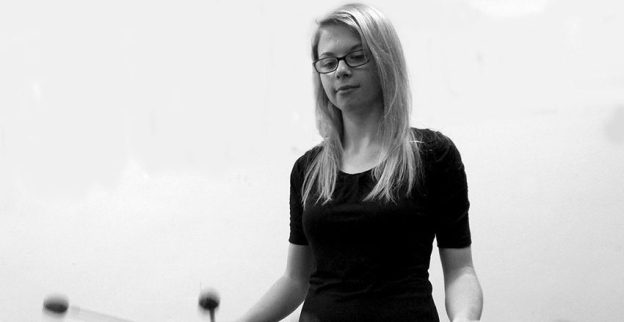
Miriam graduated from Birmingham Conservatoire in June 2016 with a First Class Honours degree in Music Performance; she is now studying for her Master’s degree at the same establishment. Miriam has worked with many percussion teachers and educators from around the world including Adrian Spillett, Alexej Gerassimez, Ney Rosauro and Colin Currie to name but a few. Miriam is a versatile percussionist with interests stretching from the Irish Bodhrán to the music of Latin America; from orchestral playing to solo repertoire. Miriam also has keen interests in learning and participation projects within the wider community and the arts management that surrounds them.


shiva-feshareki-8-e1466601768353

Who or what inspired you to take up composing, and pursue a career in music?

I’ve always been obsessed with making music. I was improvising with pots and pans when I was a toddler and a small child. I had set-up a station in the corner of the kitchen that I would use to experiment with sounds. Since then, it’s simply been the same idea but in different contexts.

Who or what were the most significant influences on your musical life and career as a composer?

My everyday surroundings, the spaces I occupy, and my friends and family are my biggest influences. My idols are Eliane Radigue and James Tenney.

What have been the greatest challenges/frustrations of your career so far?

I constantly re-shape and re-think the way I compose and the contexts and people I work with. All in all it is hugely rewarding, but it also feels like I am starting from scratch all the time.

What are the special challenges/pleasures of working on a commissioned piece?

Challenges on working on commissions are making sure that the organisers and funders trust and respect your vision and don’t try to compromise it (although I do pick commissions carefully). The pleasure is having the space and time to be able to be truly creative on a daily basis and make a living out of it.

What are the special challenges/pleasures of working with particular musicians, singers, ensembles and orchestras?

I have this new rule now that I only work with people who are down to earth and easy to get on with, so that the creative process feels free and not rigid. I don’t really mind if they’re musicians or not, or what their background is, as long as they’re nice and we can form a bond. Only then can creativity flow and can we utilise each other’s strengths.

Of which works are you most proud?

I don’t really have a singular work that I am most proud of, but I am proud of the way I have grown immensely as a person and composer in the past year especially. I feel like I understand things more clearly and what things are truly important in life and art.

How would you characterise your compositional language?

Physical.

How do you work?

I try to change-up the way I compose constantly, so that nothing is ever on autopilot. Sometimes it’s with a manuscript, or at my turntables, or maybe I’m in a club dancing and composing at the same time. But my music is experiential, so I try to really mix-up my processes.

Who are your favourite musicians/composers?

I think my favourite artists are the people I have recently collaborated with such as Haroon Mirza. I am forever grateful for how he has transformed my attitude on art and experience.

What is your most memorable concert experience?

Probably performing my composition for turntables and orchestra at the Roundhouse in front of the LCO way back in 2010. We were all so young and relatively inexperienced then, yet so much drive, commitment and a unanimous want between us all to take risks. It was incredible. I didn’t know it was going to be such a big gig. People were queuing up literally round the roundhouse to try and get returns when I was arriving.

What do you consider to be the most important ideas and concepts to impart to aspiring musicians?

To stick to your ideas, have faith in them, and commit. Don’t waste your time getting frustrated. Go with the flow. Enjoy.


Shiva Feshareki (b. 1987) is a composer and turntablist working closely with the physicality of sound. With electronics, she focuses on sampling, as well as analogue and bespoke electrics that generate ‘real’ and pure sounds of electricity, over computer products. With acoustic instruments, she is concerned with the interaction of tone, orchestration, texture, movement and space. Since 2013, Shiva works mainly as a collaborative composer, and uses deep improvisation, explorations into different worlds, or chance events, to create her collaborative teams. She also works with children and young people in a variety of creative environments, and does seminars and projects at universities and music/art colleges.

A scholar and graduate of the Royal College of Music under Mark-Anthony Turnage, Shiva has awards ranging from the Royal Philharmonic Society Composition Prize, to British Composer Award shortlisted works. She has had performances at major UK venues such as the Royal Festival Hall, Royal Albert Hall, Institute of Contemporary Art, Barbican, Roundhouse, and has had working relationships with the London Philharmonic Orchestra, London Philharmonia, London Sinfonietta and London Contemporary Orchestra. She also works in and around a variety of contexts and bespoke environments to create spatialised site-specific works. Additionally, Shiva has worked and toured with musicians ranging from cellists Natalie Clein, Oliver Coates and Colin Alexander, to video-gamer/youtuber Freddie Wong, jazz organist Kit Downes and artists Simon Fisher-Turner and Haroon Mirza. She sometimes DJs, and presents experimental classical music on NTS Radio in Dalston.

Future projects include a realisation of Daphne Oram’s groundbreaking work ‘Still Point’ for Double Orchestra, 78 rpm vinyl discs and microphones in collaboration with composer and Oram-specialist James Bulley. ‘Still Point’ predates the work of an entire generation of composers and artists in its radical use of live electronics (including turntable manipulation and sampling with live orchestra) and is one of the earliest known examples of a work for turntables and orchestra.

London Music Masters