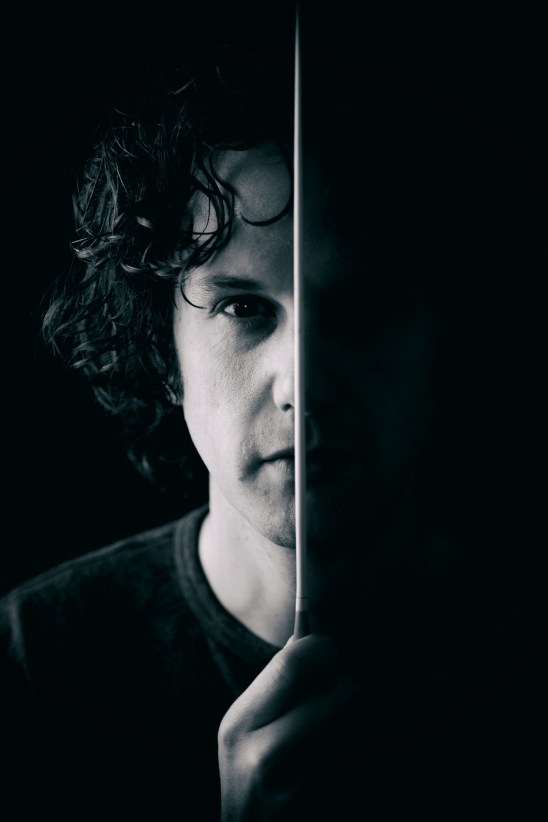
A special Meet the Artist interview on the occasion of the 90th birthday of composer John Joubert


Who or what inspired you to take up composing, and pursue a career in music?

As far back as I can remember I’ve always wanted to do something creative. At first it was painting. I got quite far in this, partly because we had a marvellous art teacher at my preparatory school but also because my father was an accomplished draughtsman. In my early teens music began to take a more central part in my life largely because my mother, who had studied piano in London with Harriet Cohen, saw to it that music was integral to our domestic and educational background.

Who or what were the most significant influences on your musical life and career as a composer?

Two names occur to me – W.H. Bell and Claude Brown. Bell was a distinguished composer who had emigrated to South Africa in 1912 to become Head of the newly-formed Faculty of Music in the University of Cape Town. Having played an influential role in South Africa’s musical life he was living in retirement when I was first introduced to him by my mother. She had taken it upon herself to show him some of my first juvenile attempts at composition. What he saw in them I can’t imagine, but he must have recognised some potential as he offered there and then to take me on as a pupil. For the next three or four years until his sad death in 1946 we would meet as and when we could. During that time he gave me a thorough grounding in compositional technique which was to stand me in good stead as a basis for further development towards my then fixed goal to become a professional composer.

Claude Brown, my other main musical influence was the music master at my school. He came from an Anglican Cathedral background, having previously been Sir Ivor Atkins’s assistant at Worcester. The school had a strong musical tradition and it was here that I absorbed the influence of both Elgar and the the Anglican musical repertoire which Brown had experienced in England. Here again my mother played a part, as during a period of ‘straightened circumstances’ in our family, she insisted on keeping my brother and me at school despite strong pressure from other family sources for us to leave and get jobs to ease our financial situation.

Following my entry to the Royal Academy of Music in 1946 my ‘significant influences’ became the three composers I studied with there, namely Theodore Holland, Howard Ferguson and Alan Bush. Each had their own contribution to make on my development as a composer.

What have been the greatest challenges/frustrations of your career so far?

A big challenge was getting acclimatised to a new country (the terrible winter of 1947 was my first winter in England). I had no English relatives to turn to and for a long time my closest social contacts were the fellow South African students I had travelled over with on my 3-week voyage aboard the Winchester Castle (then still in its war-time adaptation as a troopship).

What are the special challenges/pleasures of working on a commissioned piece?

The pleasure of receiving a commission is having the sign that somebody out there likes your music and wants more of it. The pressure of meeting a deadline is of course a challenge, but challenges can be a stimulus that keeps you on your toes.

What are the special challenges/pleasures of working with particular musicians, singers, ensembles and orchestras?

As a practising musician my principal activity apart from composing has been conducting whether choral or instrumental, professional or amateur. One of my most congenial tasks as a University Lecturer was to conduct the University of Birmingham Motet Choir. With such a group one could tackle quite demanding music, and we quite frequently did so, including some of my own.

Of which works are you most proud?

It is difficult from a catalogue of over 180 works to pick personal favourites but I think I would have to include the following: my Octet, the opera ‘Jane Eyr’e, song-cycle ‘Six Poems of Emily Bronte’, oratorio ‘The Raising of Lazarus’, Second Symphony, Sonata No 2 for piano, Pro Pace motets, String Quartet No 2, Temps Perdu (string orchestra), ‘South of the Line’, Piano Trio, ‘Landscapes’ (song cycle), oratorio ‘Wings of Faith’, ‘An English Requiem’, St Mark Passion and Concerto for Cello and Chamber Orchestra.

How would you characterise your compositional language?

I try to achieve a personal voice based on traditional classical principles and carrying as lucidly as possible a strong emotional message.

How do you work?

Most mornings I am at my desk – which doesn’t mean I compose only in the mornings. I compose most of the time away from my desk whether consciously or unconsciously. I don’t compose at the piano, but I need a piano in order to try out different ways of seeking the clarity of expression I always strive for.

Who are your favourite musicians/composers?

I love all the great classics up to and including Wagner. After him I love Mahler, Strauss and Elgar and after them, Stravinsky, Bartok, Walton, Britten and Shostakovich.

What is your most memorable concert experience?

Seeing (and hearing) Richard Strauss conducting his Sinfonia Domestica (a greatly underrated work) at the Albert Hall during the Strauss Festival of 1947.

What do you consider to be the most important ideas and concepts to impart to aspiring musicians?

I think it was Eliot who advised aspiring writers to ‘work out your salvation with diligence’. I reckon the same goes for composers too!

www.johnjoubert.org.uk


John Joubert was born in Cape Town in 1927. Aged 19 he won a scholarship to study at the Royal Academy of Music in London and has lived and worked in England ever since. Joubert’s long composing career encompasses all genres from symphonic, operatic and chamber works to the ever-popular choral miniatures, Torches and There is no rose. The two Symphonies, three String Quartets, Oboe Concerto and Cello Concerto are recent additions to a growing catalogue of recordings from across his work list. Commissions of the last few years include An English Requiem for the 2010 Three Choirs Festival and Concerto for Cello and Chamber Orchestra for Raphael Wallfisch as part of the 2012 Cultural Olympiad. Joubert was featured composer at the new music wells 73-13 festival in June 2013 which included a new mass setting and anthem for the choir of Wells Cathedral. 2016 saw two major premieres: Joubert’s substantial St Mark Passion at Wells Cathedral and his opera ‘Jane Eyre’ – recorded live for Somm as one of several new releases to mark his 90th birthday in 2017.



trio34

Who or what inspired you to take up the ‘cello, and pursue a career in music?

Genetic predisposition! My dad was a cellist in the WDR Symphony Orchestra in Cologne. I didn’t however start playing the cello until I was 12 years old. When I was younger I always had a natural interest in the piano and at about 7 or 8 we got an electronic keyboard which quickly became my favourite toy. However for some reason still unbeknown to me, my parents never arranged formal piano lessons for me so I was almost entirely self-taught and didn’t have a proper piano lesson until I got to the RCM, by which time I was playing Beethoven Sonatas and all sorts of repertoire with far more enthusiasm than proper training!

At around 10 or 11 my parents suggested I should take up another instrument and I distinctly remember not thinking very much at all of the idea at the time (I just wanted to play the piano!), so I didn’t really get going on the cello for quite some time. Gradually the interest grew, but it wasn’t really until I started having lessons with Raphael Wallfisch at 15 that something clicked and I decided that this was what I wanted to do. Of course by that point I was so far behind everyone else that I had to do what other people would do in 10 years in 2! I worked incredibly hard and got into music college at 17, first in Hannover and then in London at the RCM.

Who or what have been the most important influences on your musical life and career?

I think my time at the RCM was hugely influential in terms of opening my eyes to the huge range of possibilities one has as a musician. Growing up and studying in Germany that wasn’t high on the agenda – you were expected to get an orchestral job and that was certainly the done thing in my own family! (My dad worked in the same orchestra for 43 years!) I think I am temperamentally wholly unsuited to knowing my schedule 12 months in advance, so discovering that your career can encompass many different aspects of performing and teaching was great and I ran with it. There is certainly no lack of diversity in my career now and I rarely know my full schedule even one week in advance!

As a cellist I think I always have soaked up influences not only from my teachers but also from many fantastic players (of all instruments) I have had the privilege of working with and that’s very much an ongoing process. I think it’s hugely important to be able to look at any piece of music you play not just through the prism of your own instrument, but to have a much wider base of knowledge and inspiration to drawn upon.

What have been the greatest challenges of your career so far?

At the moment my greatest challenge is trying to find the perfect cello. This is hugely complicated by the fact that I am quite tall, but have absolutely tiny hands! Trying to find an instrument with the right proportions that also has the power and the quality to project in a large hall and keep up with the amazing instruments I am regularly surrounded by, is like trying to find a needle in a haystack. So far I found one perfect match – regrettably about £200,000 above budget!

Apart from that, the never-ending challenge is trying to keep on top of all my commitments (concerts, rehearsals, practice, travelling, students, managing a concert series etc…) and still have some sort of home life and down-time. Especially when your partner leads exactly the same life, trying to arrange going out for lunch or dinner, let alone a proper holiday, becomes a major logistical task! (And the laundry basket is constantly overflowing…)

Which performance/recordings are you most proud of?

Hmmm…tricky! I think playing Shostakovich’s second Piano Trio at the Purcell Room a few years ago would have to be up there. It’s such a scary piece for any cellist, so to do it well in a very pressurised environment was a huge relief.

Which particular works do you think you play best?

I think whatever I really get my teeth into, but very often that happens to be 20th century music.

How do you make your repertoire choices from season to season?

Unfortunately I have found the choice to be less and less mine! In more than 10 years of touring the UK chamber music scene with my trio I found that, no matter what pieces we offered – and there were many, what promoters asked for remained largely unchanged. The repertoire favourites, sure to bring in a capacity audience, with only occasional forays into anything more adventurous.

So last year I took matters into my own hands and founded ChamberMusicBox, a London concert series where people only find out what’s on the programme as the concert unfolds! This year we have a pool of 25 fantastic players and each and every concert is a completely mixed bag of music for strings, woodwind, piano and occasionally even voice. I have had to learn phenomenal amounts of notes since the series began, but it is so satisfying!

Do you have a favourite concert venue to perform in and why?

I have been fortunate to perform in so many fantastic halls around the world, including some amazing brand new ones in Asia, but I think one of my favourite halls to play in would have to be Zurich’s Tonhalle. Both the small as well as the large hall have wonderful acoustics.

Favourite pieces to perform? Listen to?

One piece I never get tired of playing is Schnittke’s Piano Trio. It was actually the first trio I played at the RCM, and what was supposed to be a one-off concert actually started off my chamber music career path. We were incredibly fortunate to work on the piece with the late Alexander Ivashkin, Schnittke’s close friend and biographer, who brought the story behind the piece to live so vividly that it has ever since remained one of my very favourite works to perform. Sadly Sasha Ivashkin died three years ago, but everything he shared with us goes on stage with me every time I get to play it. It’s the most emotionally draining piece, but I just love it.

As a listener I am absolutely addicted to opera and singing in general.

Who are your favourite musicians?

Again, singers feature very heavily in that list: Placido Domingo, Jessye Norman, the great Italian bass Ferruccio Furlanetto, and many great singers of the 20th century such as Mirella Freni.

As a cellist growing up I have always had huge admiration for Leonard Rose. His playing was everything cello playing should be. But there are so many other players I love, too many to mention.

What is your most memorable concert experience?

I think I would have to go with the most comical one of my career to date here! Several years ago I played at a festival in Sussex on a hot July day. At the time I was (yet again!) trying out a very nice Italian cello which I considered buying and this cello happened to be fitted with a certain type of mechanical metal pegs (they have largely gone out of fashion – thankfully!) which really didn’t seem to like going from a hot car into a cold church. Less than an hour before the concert the first peg started to slip. And the next. And another. No amount of tuning, pushing or shoving would keep these pegs in place and half an hour before the concert I had to admit my predicament to the organiser. He calmly told me not to worry and that he’d quickly nip home to fetch a cello he had. Fifteen minutes later he returned with a cello rather peculiar in colour and even more peculiar in sound. I had no choice but to play the concert on this cello. Only afterwards was I told its history: bought for £2 in an antique shop in Plymouth, it was completely stripped of its original varnish and repainted in a different colour – with fence paint!

What do you consider to be the most important ideas and concepts to impart to aspiring musicians?

Being a great player isn’t enough to guarantee you a great career! Today’s music profession demands so much more of those who enter it and I think as teachers we have a responsibility to be very open and honest about that. I would encourage aspiring musicians to be incredibly proactive and open-minded as to where their career path as performers may lead as, quite frequently, it will be somewhere totally different from where you thought it would lead when you entered college. Of course the reality is that, especially in London, you are eventually likely to be combining numerous different types of work, from chamber music to sessions, orchestral freelancing, teaching etc… You need to be extremely adaptable.

What do you enjoy doing most?

Cooking for those around me! I can regularly be found in the kitchen late at night after a concert cooking for whoever happens to be sat around our dining table at the time.


Since graduating with honours from the Royal College of Music in 2007, Julia Morneweg has quickly established a remarkably versatile career as a soloist, chamber musician and orchestral player.

The recipient of an EMI Music Foundation Award, she made her London concerto debut in 2006 performing the Elgar Concerto at St John’s Smith Square which immediately led to further engagements including a performance of Haydn’s C major Concerto with the International Mahler Orchestra at the same venue as well as Elgar with the Ternopol Philharmonic Orchestra in the Ukraine. Other concerto performances have included Lalo in London and Vivaldi in Cologne. As a recitalist she has appeared around the UK, Belgium, Italy, Germany and at venues such as the Purcell Room, Oxford’s Holywell Music Rooms, Trieste Opera House, St. Martin in the Fields, the National Gallery, the Victoria and Albert Museum as well as the 2007 Charterhouse Festival (by invitation of renowned flautist Susan Milan) and the Tacoma International Music Festival, USA when she was only 16. Most recent festival appearances have included the Leamington, Lower Machen, Uckfield and Shipley Arts Festivals. Julia has collaborated with many renowned artists including Shlomo Mintz, Anna Kandinskaya, Mikhail Bereznitsky, Joan Enric Lluna, Sergei Podobedov, Kathron Sturrock, and Oleg Poliansky to name a few.

Julia Morneweg’s full biography

vhoyland-ii

Who or what inspired you to take up composing, and pursue a career in music?

Myself. But then Bernard Rands my tutor and Bill Colleran at Universal Edition (London/Vienna).

Who or what were the most significant influences on your musical life and career as a composer?

Bruno Maderna, Luciano Berio, Messiaen. Historically: J.S. Bach, Webern, and late Mahler.

What have been the greatest challenges/frustrations of your career so far?

They were the 4 major works written for the BBC Symphony Orchestra. I have at least 4 new works still waiting on first performances. But I remain patient.

What are the special challenges/pleasures of working on a commissioned piece?

Time. I work slowly and with painstaking care. My music is sometimes complex and it is crucial that performers receive as near perfect copy of performance materials as is possible. I do my best and I have a fine copyist. UE taught me this, way back in 1972.

What are the special challenges/pleasures of working with particular musicians, singers, ensembles and orchestras?

The pleasures are being there for rehearsals. Some conductors are exceptional (Sir Andrew Davis), some work seriously hard (Martyn Brabbins), others you may never wish to see again. New Music Ensembles, string quartets and solo performers have been the most satisfying to work with. Lifelong friendships are made.

Of which works are you most proud?

“WULF” for 24 voices (amplified) and 24 instrumentalists – yet to receive a first performance; “The Attraction of Opposites” for 2 pianos; the orchestral trilogy, “Vixen”, “Qibti” and Phoenix”; “Hey Presto!” written for BCMG conducted by Diego Masson, happiest of all.

How would you characterise your compositional language?

Proudly European but, like Bartok, drawing on cultures further afield and from the distant past.

How do you work?

In my music barn, composing, still, on manuscript paper. However, most work has been carried out in Sicily. The climate, the food and wines kept me going, and going well, so producing the goods. I also found plenty of time to read, to feed my imagination.

Who are your favourite musicians/composers?

Musicians such as Melinda Maxwell – oboe, Simon Limbrick – percussion, Rolf Hind – piano, BCMG, The Arditti Quartet. Composers I already listed as influential on my work. Still living? The works of Birtwistle, Ferneyhough, Tom Ades, David Sawer, Julian Anderson and Sam Hayden interest me.

What is your most memorable concert experience?

Experiences: Simon Rattle conducting all Mahler and some Messiaen with the CBSO, Symphony Hall, Birmingham.

What do you consider to be the most important ideas and concepts to impart to aspiring musicians?

Feed your imagination and let it run. I always ask myself the question “What if?” Be your own best critic and bin a lot.

Where would you like to be in 10 years’ time?

Where I am now.

What is your idea of perfect happiness?

Being with the right person and being amongst friends.

What is your most treasured possession?

It is my 40-year-old Pavoni, brass and copper, coffee machine.

What do you enjoy doing most?

Walking the hills.

What is your present state of mind?

Pensive.


Born in Yorkshire in 1945, Vic Hoyland’s earliest interests were in painting, calligraphy and architecture, but after completing an Arts degree at Hull University and a prize winning work was submitted to the BBC, he decided to concentrate on music. Wilfrid Mellers invited Vic to undertake a doctorate at the then new music department at York University where his tutors were Robert Sherlaw Johnson and Bernard Rands. From 1980-1984 he was Haywood Fellow at the Barber Institute, then after two years at York University he returned to Birmingham as a full-time lecturer responsible for MDD, an interdisciplinary programme between music, drama and dance. He was subsequently Professor in Composition at Birmingham until his retirement in 2011. In 2015 he was made Emeritus Professor, in recognition of his longstanding and valued contribution to the University of Birmingham.

Commissions have come from many festivals – Aldeburgh, Almeida, Bath, Cheltenham, Warwick and Stratford, Huddersfield, South Bank and York – from organisations such as the BBC Symphony Orchestra and ensembles such as Lontano, the Arditti Quartet, Lindsay Quartet, BCMG, Endymion and Vocem. Works prior to 1994 are held by Universal Edition (Vienna). Works after 1994 are held by Composers Edition. Works include In transit for large orchestra which, together with Vixen, was recorded by the BBC Symphony Orchestra for NMC records. Most of Vic’s music has been broadcast on BBC Radio 3. The Other Side of the Air and Token are also available on NMC records. The second work in his orchestral triptych, Qibti was premiered at the Barbican on 18 December 2003 and conducted superbly by Sir Andrew Davis.

Read more at Vic Hoyland’s website

nc_bw_1_credit-jim-hinson

Who or what inspired you to pursue a career in music?

I suppose my family – I was surrounded by music form a young age and never considered anything else really!

Who or what were the most important influences on your musical life and career?

My teachers (including my grandmother on piano and mother on violin!), youth orchestra and choir conductors such as Adrian Brown and Ralph Allwood, and of course a host of colleagues and conductors who I have had the privilege to assist or work with, from Mark Elder to Vladimir Jurowski.

What have been the greatest challenges of your career so far?

Keeping up with learning all the repertoire! Juggling family….

Which performance are you most proud of? 

I feel that our recent memorised performances with Aurora Orchestra have genuinely broken new ground. Some of the Proms with these have been quite special.

Which particular works do you think you perform best?

Ask me in 40 years

How do you make your repertoire choices from season to season?

With difficulty! A mixture of repertoire I know, to alleviate the burden on learning, plus taking the right repertoire to new orchestra.

Do you have a favourite concert venue to perform in and why?

Nothing beats a Prom at the Royal Albert Hall

What is your most memorable concert experience?

Playing the violin in the National Youth Orchestra with Berlioz’ Symphonie Fantastique under the baton of Sir Roger Norrington – I had an out-of-body experience!

What do you consider to be the most important ideas and concepts to impart to aspiring musicians?

Relax – it’s an obsession, a career, an ambition, yet it’s also a way of life!

Nicholas Collon and Aurora Orchestra continue an extraordinary once-in-a-lifetime journey through the complete cycle of Mozart’s piano concertos. Staged over five years (2016–20) and featuring a host of stellar guest pianists and other collaborators, Mozart’s Piano presents all 27 concertos as part of a single series for the first time in the UK.   

The concerts uses the piano concertos as a starting point for a kaleidoscopic journey across centuries and contrasting repertoire.  The result is a virtuosic, vibrant and playful series which illuminates Mozart’s life, music and legacy in new and unexpected ways. 

Further information

Nicholas Collon is founder and Principal Conductor of Aurora Orchestra and Principal Conductor of the Residentie Orkest in The Hague, a position he takes up in 16/17. His skill as a communicator and innovator has been recognised by both critics and audiences alike – he was the recipient of the 2012 Critics’ Circle Award for Exceptional Young Talent – and he is known as an imaginative programmer encompassing an exceptionally wide range of music.

Under Nicholas Collon’s artistic direction, Aurora Orchestra have an enviable reputation in the UK and increasingly abroad and are recognised for their creative programming and concert presentation. 2016 will see the launch of two major series in London; as Resident Orchestra at Kings Place they will begin a 5-year cycle of the complete Mozart Piano Concertos, and as Associate Orchestra at the South Bank Centre they will present a new series ‘The Orchestral Theatre.’ They have appeared at the BBC Proms every year since 2010, including performances of Mozart’s 40th symphony and Beethoven’s 6th, in which the entire orchestra performed from memory.

For Warner Classics Nicholas and Aurora have released two critically acclaimed recordings: ‘Road Trip’featuring music by Ives, Copland, Adams and Nico Muhly (winning the prestigious 2015 Echo Klassik Award for ‘Klassik Ohne Grenzen’) and ‘Insomnia’ with music by Britten, Brett Dean, Ligeti, Gurney and Lennon & McCartney.

In addition to his work with Aurora, Nicholas is in demand as a guest conductor with other ensembles in the UK and abroad. A regular guest with the Philharmonia, City of Birmingham Symphony Orchestra and BBC Philharmonic, in recent seasons he has also worked with the London Philharmonic; BBC Symphony; Zurich Tonhalle; Brussels Philharmonic; BBC National Orchestra of Wales; Spanish National Orchestra; Hallé Orchestra; Orchestre national du Capitole de Toulouse; Trondheim Symphony; Danish National Symphony Orchestra; Orchestre National de Lyon; Bamberg Symphony Orchestra; Les Violons du Roy; Scottish Chamber Orchestra; Warsaw Philharmonic; Academy of Ancient Music; London Sinfonietta; Royal Northern Sinfonia and Ensemble Intercontemporain and collaborated with artists such as Ian Bostridge, Angelika Kirchschlager, Vilde Frang, Pekka Kuusisto, Francesco Piemontesi, Steven Isserlis and Jean-Efflam Bavouzet.

Future engagements include returns to the Philharmonia Orchestra, Orchestre national du Capitole de Toulouse, BBC Philharmonic, City of Birmingham Symphony Orchestra, Trondheim Symphony, Danish National Symphony Orchestra, the Hallé and Academy of Ancient Music and debuts with Deutsches Symphonie-Orchester Berlin; Gurzenich Orchestra; Finnish Radio Symphony Orchestra; Mozarteum Orchester Salzburg; Les Siècles; National Youth Orchestra of Great Britain and Orquesta Sinfónica de Galicia.

In opera Nicholas has worked with English National Opera The Magic Flute, Welsh National Opera Jonathan Harvey’s Wagner Dream and Glyndebourne on Tour Rape of Lucretia. Future projects includeTurn of the Screw at Aldeburgh and LSO St Luke’s with Aurora Orchestra.  A champion of new music Nicholas has conducted over 200 new works including the UK or world premieres of works by Unsuk Chin, Phillip Glass, Colin Matthews, Nico Muhly, Olivier Messiaen, Krzysztof Penderecki and Judith Weir.


(Photo: Jim Hinson)