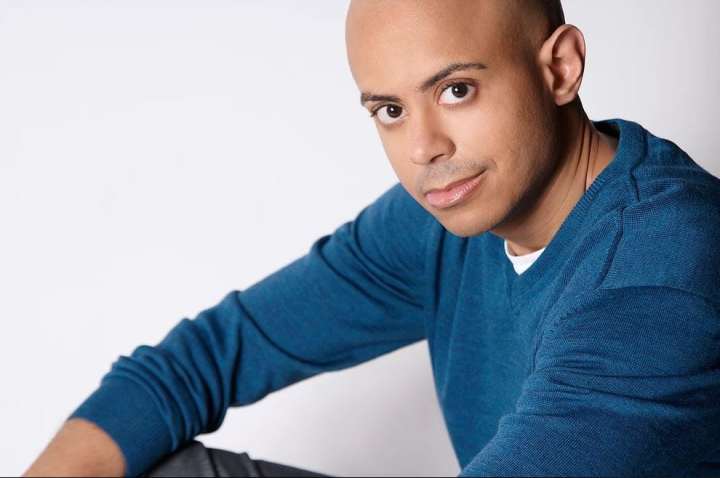
stewart-goodyear-photo-by-anita-zvonar

Who or what inspired you to take up piano and pursue a career in music?

Love and happiness inspired me to take up the piano and pursue a career in music. When I was 3, I was a painfully shy kid, but I wanted very much to communicate to people. Every time I heard music, I would open up…It was the language that spoke to me deeply from the very beginning, the first language that I spoke. Playing the piano was my way of opening my heart to people…and pursuing a career in music was my way of opening my heart to the world.

My first concert was seeing Andre Watts perform in Toronto at Roy Thomson Hall…I will always remember every second of that concert because that experience sealed it for me; I told my mother “This is what I want to do”.

Who or what have been the most important influences on your musical life and career?

The most important influences on my musical life and career have been the support of my friends and family. Their words of encouragement and their unending support inspire me every day.

What have been the greatest challenges of your career so far?

To me, challenges push me to be better…a better musician, and hopefully a better human being. Every chapter of my life shaped the course of my musical journey, and I am thankful for each challenge life throws my way.

Which performances/recordings are you most proud of?

Each performance and recording has been very meaningful to me, from the complete Beethoven sonatas to my latest recording. Each work I have recorded I have lived with almost all my life, and sharing my love of this music to my listeners is a great gift.

Which particular works do you think you play best?

I have tried very hard not to be a specialist in one composer or one genre. For me, each composer demands my complete devotion, attention and understanding.

How do you make your repertoire choices from season to season?

I wish I could say that each season is devoted to a particular repertoire! So far, my concerts are a combination of collaborations with orchestras and chamber musicians, and solo recitals.

Do you have a favourite concert venue to perform in and why?

My favorite venues are those that not only have amazing acoustics, but designed in a way that is an intimacy between myself and the audience. Two of my favorite halls I have performed in are Koerner Hall in Toronto, the Berlin Philharmonie, and the Gewandhaus in Leipzig.

Who are your favourite musicians?

My favorite musicians are those that broke the mould and brought the listeners with them. One of them is Maurice Ravel!

What do you consider to be the most important ideas and concepts to impart to aspiring musicians?

I can sum it up in a few words: Trust your heart and your gut.


Proclaimed “a phenomenon” by the Los Angeles Times and “one of the best pianists of his generation” by the Philadelphia Inquirer, Stewart Goodyear is an accomplished young pianist as a concerto soloist, chamber musician, recitalist and composer. Mr. Goodyear has performed with major orchestras of the world , including the Philadelphia Orchestra, New York Philharmonic, Chicago Symphony, Pittsburgh Symphony, San Francisco Symphony, Los Angeles Philharmonic, Cleveland Orchestra, Academy of St Martin in the Fields, Bournemouth Symphony, Frankfurt Radio Symphony, MDR Symphony Orchestra (Leipzig),  Montreal Symphony, Toronto Symphony Orchestra, Dallas Symphony , Atlanta Symphony, Baltimore Symphony, Detroit Symphony, Seattle Symphony, Mostly Mozart Festival Orchestra, Royal Liverpool Philharmonic, and NHK Symphony Orchestra.

Read more

Who or what inspired you to take up the organ and pursue a career in music?

When I was ten years old, my best friend at school asked whether I wanted to come and join the local church choir. I said that I wasn’t interested until he said that I would be paid for my services! When I went along to my first choir practice he showed me the organ and from that moment on I was determined to learn. It was a real Eureka moment.

You’re also the CEO of Dubai Airports, how does your musical background influence your work life?

I believe that the ability to think through complex problems and break them down into small pieces, then reassemble them is the same process as learning a challenging piece of repertoire; having the patience to learn an instrument that demands the coordination of so many different events has so many applications in business. Running the world’s largest international airport is certainly demanding, so the application and discipline that I have learnt from music is very helpful.

Who or what have been the most important influences on your musical life and career?

When I was eighteen I was introduced to Malcolm Hicks, who has had a long and distinguished career as an organist and conductor. He took me under his wing and enabled me to appreciate a whole different level of musicianship. I had some notable successes in competitions and diplomas with him and have accompanied many choral performances under Malcolm’s baton.

What have been the greatest challenges of your career so far?

Undoubtedly taking eighteen months to learn and perform the three-movement Suite, Opus 5, by Maurice Duruflé. It is a tour de force of the organ repertoire and many professional organists shy away from it. Inspired by Alan Rusbridger’s book ‘Play it Again’ which a pianist friend gave me, the book describes how it was possible to learn Chopin’s fearsome Ballade No 1 in G minor whilst being the editor of a major international newspaper. I decided I could learn the Duruflé Suite whilst running the world’s largest international airport. The most heart-warming part of the whole experience was the willingness of many professional musicians to give their time to help me prepare for my first performance.

Which performance/recordings are you most proud of?

In 2004 I was the soloist in Poulenc’s Concerto for Organ and Strings at Birmingham Symphony Hall, under the baton of Lionel Friend. It’s a great piece and when I was in my teens I listened tirelessly to the recording made by Maurice Duruflé in 1961 in the presence of Poulenc himself, so being able to perform the work was a great thrill.

Which particular works do you think you play best?

As a student I used to tackle the standard repertoire of Bach and Buxtehude but then ventured into the world of Paul Hindemith, particularly enjoying his three Sonatas for organ. However, romantic music has always enabled me to really express my deepest emotions and latterly I became hooked on the French romantic output from the 19th and 20th centuries, such as Louis Vierne and Cesar Franck.

How do you make your repertoire choices from season to season?

I always set myself the goal of learning new repertoire to expand the possibilities and contrast of performance. I enjoy creating connections and setting strong context in my programming as the organ can be rather dull to those who don’t encounter its repertoire outside of a sacred context.

Do you have a favourite concert venue to perform in and why?

The organ loft at Westminster Abbey is a very special place. Late at night when you are alone in the building you are very aware of more than 1,000 years of history all around you and the magnificence of the architecture and grand acoustic add so much to the performance of any major work.

What is your most memorable concert experience?

I used to play for the Waverley Singers, an accomplished choral society based in Farnham, Surrey, which was conducted by Malcolm Hicks. We undertook several concert tours and accompanying the choir in the splendour of the Cathedral of St Bavo in Haarlem in Holland was a very memorable experience. Malcolm recently found a photograph of me at the organ during our tour in 1999 which he gave me.

As a musician, what is your definition of success?

I lead a very diverse life so I am not sure that I can give the answer purely from a musician’s perspective. However, the ability to express one’s inner soul and communicate on a completely different level through the power of music is unparalleled in any other form of human communication and having the ability and determination to achieve this is immensely rewarding.

What do you consider to be the most important ideas and concepts to impart to aspiring musicians?

The subtlety of artistic impression goes so deep that there can never be an end to the attention to interpretative detail; grasping this at a young age and applying it through hours of preparation can really set an artist on a whole different level of musical awareness and appreciation.

Where would you like to be in 10 years’ time?

At home in East Sussex, at the console of the three-manual Aubertin organ which was installed in 2015.

What is your idea of perfect happiness?

Having spent my whole life wondering whether I should have become a full-time musician, becoming a full-time musician when I decide to relinquish my role running Dubai Airports

What is your most treasured possession?

My battered black briefcase which has been around the world with me countless times

What do you enjoy doing most?

Trying to befriend one of my three cats, called Kitty. She loves attention but then snaps into a tiger. Knowing exactly when to quit can become a near-death experience

What is your present state of mind?

I currently have the complexity of Durufle’s Toccata coursing through my head whilst sleeping and awake. It’s amazing how the human brain can absorb an idea, develop it and then create a whole new level of understanding without any apparent intervention.


Paul Griffiths performs at Westminster Abbey on 13th August at 17.45. Details here

Paul Griffiths began playing the organ at the age of ten and won first prize in the London Musical Competition Festival at the age of 13.  Whilst studying with renowned organist and conductor Malcolm Hicks, he gained the ARCO, ARCM and LRAM within a six-month period and the FRCO two years later.  In 1981, he was placed second in the Trianon Organ Competition.

Having been Organist and Choirmaster at St Mary’s Welwyn from 1980, he moved to Hong Kong in 1986, where he became Assistant Organist at St John’s Cathedral and Head of Organ at the Hong Kong Academy for Performing Arts.  He also featured in broadcasts with the Hong Kong Philharmonic Orchestra and has also given recitals at the English Cathedrals of Ely, Peterborough, Wells, St Paul’s and at Westminster Abbey.  Paul also features regularly as an organist and continuo player in concerts and recordings in the UK and overseas and in May 2002, made a guest appearance at Birmingham Symphony Hall with Dame Gillian Weir.  He has also given recitals at St Mary Redcliffe, Bristol, St John’s Smith Square and London’s Temple Church.  In 2003, Paul was appointed organist to the voluntary choir at Guildford Cathedral, where he studied the organ with Stephen Farr. In October 2004, Paul returned to Birmingham Symphony Hall to appear as the soloist in Poulenc’s Organ Concerto with the Birmingham Conservatoire Orchestra, conducted by Lionel Friend.
 
Outside of musical life, following 14 years as an Executive Director of Virgin Atlantic and the Virgin Rail Group, in January 2005 he was appointed Managing Director of London Gatwick Airport and, in 2007, moved to Dubai to become the first Chief Executive Officer of Dubai Airports, the owner and operator of the world’s largest international airport.  He is regularly requested for interviews on the BBC to contribute towards aviation-related issues, including the debate on Heathrow’s 3rd runway. 

Paul was appointed as a Companion of the Order of St Michael and St George in the Queen’s Birthday Honour List in 2015, for services to British prosperity overseas and to music.


Who or what inspired you to take up the piano and pursue a career in music?

I picked out tunes on our piano at home, then my grandfather showed me how to play showtunes by ear on his Hammond organ. My first professional jobs were as a church organist (including an inspiring year at Lincoln Cathedral), a jazz pianist in bars all over the Midlands, and a one-man backing-group for a Patsy Cline tribute act! I came to accompanying when singers at university started asked me to play for them in their recitals. I immediately loved the experience of playing in a duo and was fascinated the idea that it is possible to ‘play words’ as well as notes. I’m still fascinated by it now…

Who or what have been the most important influences on your musical life and career?

David Whittle (a music teacher at school), John Streets and Malcolm Martineau could hardly be more different, but were inspirational and incredibly generous teachers. I’ve also been influenced and inspired by many of the singers and musicians I’ve worked with. One of the first was Anthony Rolfe Johnson, whose straight-from-the-heart singing I will never forget.

What have been the greatest challenges of your career so far?

The biggest challenge for a piano accompanist is also the most interesting part of the job: to reinvent constantly the way you play pieces you know well and have played many times to reflect new ideas brought to the table by different partners.

Which performance/recordings are you most proud of?

I’m excited about two I’ve just finished making, both of which will come out early next year. I’ve always loved his music of Percy Grainger and was thrilled when Claire Booth asked me to collaborate on a disc of his folksong arrangements. I also really enjoyed unearthing the little-known songs of Donald Swann (of Flanders and Swann fame, but also a ‘serious’ composer) for a recording with Felicity Lott, Kathryn Rudge, John Mark Ainsley and Roderick Williams.

Which particular works do you think you play best?

I find that very hard to answer and will have to leave it for others to judge!

How do you make your repertoire choices from season to season?

A lot depends on what I’m invited to do by the singers and instrumentalists I work with – and it’s nice to be surprised. My own projects are often motivated by an interest in finding new ways to present old music, such as a recent venture to present the Schubert song cycles in new English translations by Jeremy Sams.

Do you have a favourite concert venue to perform in and why?

I love the Wigmore Hall for its unique atmosphere and audience. There is a special excitement to playing in Carnegie Hall, but I also love the modesty and intimacy of the Holywell Music Room in Oxford. I also really enjoy the wonderfully varied venues of the

Ryedale Festival that I’ve got to know so well – from Castle Howard to remote country churches.

Favourite pieces to listen to?

I love early English music, especially Tallis, Byrd, Gibbons and Purcell. Anything and everything by Bach, Mozart, Haydn and Schubert. Operas by Verdi and Janacek, string quartets by Bartok and Shostakovich, piano music by Chopin, Liszt, Mussorgsky, Debussy, Fauré and Ravel. Orchestral music by Elgar, Tchaikovsky, Sibelius, Bruckner, Mahler and anything recorded by Harry Christophers’ choir The Sixteen. Favourite albums by Leonard Cohen, Edith Piaf, The Smiths and Joni Mitchell. I also love musicals, my new favourite being Tim Minchin’s amazing Groundhog Day.

Who are your favourite musicians?

My musical heroes include Sviatoslav Richter, Alfred Cortot, Martha Argerich, Gerald Moore, Clara Haskil, Benjamin Brittten, Andras Schiff, Daniil Trifonov, Bernard Haitink, Trevor Pinnock, Jacqueline du Pre, Peter Schreier, Janet Baker, Maria Callas and Victoria de los Angeles.

What is your most memorable concert experience?

The experience of taking part in the Passion project with Streetwise Opera and The Sixteen was unforgettable. We staged Bach’s St Matthew Passion with professionals performing alongside people with experience of homelessness – the results were moving and inspiring.

What do you consider to be the most important ideas and concepts to impart to aspiring musicians?

‘Beauty is truth, truth beauty’. Learn how to read a score and acquire the technique you need. Then feel like you are improvising. Tell stories and paint pictures in music. Distrust anyone who thinks they have all the answers. Stay curious.

Where would you like to be in 10 years’ time?

Still playing – and able to say I’ve done something to bring classical music to a wider audience. Also to have written my book and a hit musical (some way to go on both those last two!)

What is your idea of perfect happiness?

The sort that appears when you least expect it and aren’t looking for it.

What is your most treasured possession?

A first edition of Schubert’s Schwanengesang.

What do you enjoy doing most?

Spending time with my children and those closest to me. A pint in a good pub with a friend.

What is your present state of mind?

Excited, as I’m deep in planning for my festival – the Ryedale Festival – next year.


Christopher Glynn is a Grammy award-winning pianist and accompanist, working with leading singers, instrumentalists and ensembles in concerts, broadcasts and recordings throughout the world. He is also Artistic Director of the Ryedale Festival, programming around 60 events each year in the many beautiful and historic venues of Ryedale, North Yorkshire.

Described by The Times as having ‘beauties and insights aplenty’ and praised in Gramophone for his ‘breathtaking sensitivity’, Chris has performed with singers including Sir Thomas Allen, John Mark Ainsley, Sophie Bevan, Claire Booth, Susan Bullock, Allan Clayton, Lucy Crowe, Sophie Daneman, Bernarda Fink, Michael George, Anthony Rolfe Johnson, Christiane Karg, Jonas Kaufmann, Andrew Kennedy, Yvonne Kenny, Dame Felicity Lott, Christopher Maltman, Mark Padmore, Joan Rodgers, Kate Royal, Kathryn Rudge, Toby Spence, Bryn Terfel, Sir John Tomlinson, Robin Tritschler, Ailish Tynan, Roderick Williams, Catherine Wyn Rogers, Elizabeth Watts and many others.

He has also performed with instrumentalists including Julian Bliss, Andrej Bielow, Adrian Brendel, Michael Collins, Nicholas Daniel, David Garrett, Tine Thing Helseth, Daniel Hope and Steven Isserlis; with ensembles including the Elias, Heath, Fitzwilliam and Szymanowski Quartets, London Winds, Britten Sinfonia and Scottish Chamber Orchestra; and with choirs including The Sixteen.

Chris was born in Leicester and read music an organ scholar at New College, Oxford, before studying piano with John Streets in France and Malcolm Martineau at the Royal Academy of Music. His many awards include a Grammy, the accompaniment prize in the 2001 Kathleen Ferrier competition, the 2003 Gerald Moore award and the 2002 Geoffrey Parsons award.

Since making his debut at Wigmore Hall in 2001, Chris has performed in major concert venues and festivals throughout Europe and North America, and toured to Japan, China, Brazil, Sri Lanka, Russia and Canada. He has made over 20 recordings on labels including Hyperion, Decca, Erato, DG, Coro and Signum. He has also made many studio recordings and live broadcasts for BBC Radio 3.

Chris enjoys working with young musicians and is a Professor at the Royal College of Music, an Associate of the Royal Academy of Music, a coach for the Jette Parker Young Artist Programme at the Royal Opera House, and a course leader for the Samling Foundation. He has been an adjudicator for many international competitions.

Recent highlights include recording the piano soundtrack for the forthcoming film ‘Altamira’ (starring Antonio Banderas), the world premiere of a newly-discovered work by Mendelssohn on BBC Radio 4, performances at the BBC Proms, collaborations with the Richard Alston Dance Company and Rufus Wainwright, rediscovering the ‘serious’ songs of Donald Swann for a forthcoming CD, and ‘The Passion’ with The Sixteen and Streetwise Opera.

Future plans include a series of concerts entitled ‘Songbooks’ that he will curate for Wigmore Hall, Winterreise with Mark Padmore at the Endellion Festival, and a forthcoming CD of Grainger songs and piano pieces with Claire Booth. Chris will also join Toby Spence, Roderick Williams and Sir John Tomlinson for the first performances of new English translations he has commissioned from Jeremy Sams of Schubert’s song cycles.

 
(interview date: November 2016)

Who or what inspired you to take up composing, and pursue a career in music?

I came to composing by a rather unusual route. I was studying cello at Birmingham Conservatoire and during a musicianship course was asked to compose a piece in the style of Bartok. I quickly realised how much I had enjoyed doing this and within a few weeks had an interview to change onto the composition course. In the following couple of years I became familiar with Mark-Anthony Turnage’s music and this inspired me to keep going and find my own voice. Two years later, after accepting to teach me for my Masters Degree at the Royal College of Music, Mark continued to inspire me, this time in person.

Who or what were the most significant influences on your musical life and career as a composer?

My family have been the most significant influence. Without their continual support and understanding I am sure I would not have a career as a composer.

What have been the greatest challenges/frustrations of your career so far?

I find the greatest challenge to be balancing my time between composing and all the other things a composer must do to maintain one’s career. Being able to do this successfully whilst still finding the concentration and imaginative space one needs should not be underestimated.

What are the special challenges/pleasures of working on a commissioned piece?

Imagining the sound of the musicians and the process of working together with them on a new piece is something that I find incredibly motivating since this is a highlight of the whole process. When the ideas are flowing, I find the working process of composing very pleasurable.

What are the special challenges/pleasures of working with particular musicians, singers, ensembles and orchestras?

Building a long relationship with a particular ensembles make the experiences of working together all the more pleasurable. Birmingham Contemporary Music Group stands out for me in this regard. I got to know the ensemble and organisation as a student, received opportunities to develop my compositional voice through working with them, and continue to have a strong relationship now in my career as a professional composer. Their virtuosity and brilliance makes every encounter special.

Of which works are you most proud?

When I achieve something in a piece that is ‘new’, adventurous or challenging for me, that is when I am most proud.

How do you work?

I start composing first thing and work through until I feel my concentration diminishing. I work with pencil on paper for much of the process, moving to Sibelius when I feel I have enough of an idea about the piece. I use a keyboard and sometimes my cello too, especially to try things out later on.

Who are your favourite musicians/composers?

My friends. I find nothing more enjoyable that hearing and watching a friend perform or a friends’ music being performed; feeling their sound, expression and interpretation, each time knowing them a little deeper.

What is your most memorable concert experience?

My Proms debut in 2012 with ‘At the Speed of Stillness’. I’ll never forget the feeling of standing on that stage for the first time to take a bow.

What do you consider to be the most important ideas and concepts to impart to aspiring composers?

Write the music that you want to hear.

And performers?

Play music that is being written now, before it is too late.

Where would you like to be in 10 years’ time?

Somewhere unexpected.

The composer Charlotte Bray has emerged as a distinctive and outstanding talent of her generation. Exhibiting uninhibited ambition and desire to communicate, her music is exhilarating, inherently vivid, and richly expressive with lyrical intensity. Charlotte studied under Mark Anthony Turnage at the Royal College of Music and previously under Joe Cutler at the Birmingham Conservatoire. She participated in the Britten-Pears Contemporary Composition Course with Oliver Knussen, Colin Matthews and Magnus Lindberg, and at the Tanglewood Music Centre with John Harbison, Michael Gandolfi, Shulamit Ran and Augusta Read-Thomas.

Read Charlotte’s full biography

(picture © Michael Wickham)