Who or what inspired you to take up singing and pursue a career in music?

I grew up with a passion for singing, and when I got to grade school, I met my music teacher who encouraged me to sing in school performances and consider pursuing it as a career. At age 7, my parents took me to my first opera (Britten’s A Midsummer Night’s Dream) at San Francisco Opera and I was absolutely hooked. At age 10 I joined a local community theater and began performing musical theater while I waited to grow into my “opera voice.” It was during a summer program after my junior year in high school where I met my undergrad teacher and mentor, Edith Bers. She encouraged me to come to New York City to get my Bachelor of Music in Vocal Performance at Manhattan School of Music. I have had the unique experience of being encouraged at every turning point in my journey towards becoming a professional singer, and for that I am grateful to many people.

Who or what have been the most important influences on your musical life and career?

The community theater that I joined as a kid had a profound influence on my passion for performing. It was at The Western Stage that I forged my deepest friendships and became completely hooked on the “theater” lifestyle and experience. The environment of professionalism, acceptance and community still shapes what I seek out and what fulfills me in my career journey.

What have been the greatest challenges of your career so far?

For a long time, I thought there was one way to be a classical singer… go to a prestigious conservatory, immediately start performing in Young Artist Programs, then sit back and watch as your career blossomed. I realized as an undergrad at MSM that I didn’t fit into the “standard” mold of the classical opera singer. Despite everyone being impressed with my talent and performances, I never seemed to book the roles in the Mozart operas, and I didn’t know why. I felt out of place for a long time, unsure of where I fit, and where I would find my community within the classical world. After my senior recital at MSM, my teacher Edith Bers told me and my mother, “Maggie will find her place in this career… I don’t know what it is yet, but there is a place for her, and she will find it.” I have replayed this statement in my head many times and I’ve kept my trust in her vision for me. With perseverance and an open mind, I have finally found my place in this world.

Which performance/recordings are you most proud of?

I performed O Zittre Nicht at the Washington Award Gala last Spring in Washington DC, and the video from that performance is one of my favorites. It was the first time I’d performed the aria, and I had a great time singing it, and I believe the video reflects that joy.

Which particular works do you think you play best?

Hands down my favorite thing to sing, and the thing I think I sing the best, is a song by composer Lembit Beecher called “A Paradoxical Thing.” It is from his song cycle Looking at Spring for soprano, violin, viola, cello, double bass and piano. The song is for solo soprano and is virtuosic, charming, thoughtful and through it I can express everything that makes me unique as a performer.

How do you make your repertoire choices from season to season?

My repertoire is driven largely by the composers that I meet or work with throughout the year. I concentrate on new opera and art song and feature this repertoire when I design my own programs. I also peruse social media to see what my favorite artists are performing and go down the youtube rabbit hole looking for new and exciting musical adventures.

Do you have a favourite concert venue to perform in and why?

I don’t have a specific favorite venue, but my favorite type of venue is hands down the black box theater. While the acoustics often leave something to be desired, I love being close to my audience and I feel that the blank canvas of an empty room has great dramatic potential. A black box theater can become anything the artists want and allows them to take the audience on a dramatic and musical journey. I also believe that because often the actors and audience members are on the same plane (the stage is not raised), the black box can be an equalizer, knocking down the artificial barriers that often separate the performers from the ‘non performers.’ This helps me feel like my audience is with me and not just passively witnessing the action on stage.

Who are your favourite musicians?

My favorite musicians are people who create straight from their truth with joy in their heart. I am fortunate to work with a group called The Broken Consort.As a group we devise and create new programs using music spanning from medieval to contemporary. Using improvisation, discussion and trial and error, we hone in on the truest expression we can make, and through this process we have produced amazing music as well as lasting and deep friendships. I have so much respect and I highly value anyone who inspires me to live and create from my true self.

Some of my other favorite classical musicians are Stephanie Blythe, Frederica Von Stade, Anthony Roth Constanzo, Joyce DiDonato, Dawn Upshaw and John Shirley-Quirk.

My current favorite non-classical musician is Janelle Monáe. Her incredible music and performances coupled with her message of self-love, acceptance, inclusivity and perseverance absolutely transport me to a place of bliss (and fierceness!)

What is your most memorable concert experience?

This past spring I performed the workshop of part of a piece I am creating entitled Reassemble With Care. Members of The Broken Consort and I devised the music around a text that I wrote, which is based on my personal experience with sexual assault. Performing Movement 12 was a deeply moving experience, and embodies everything I am searching for as a performer. While on stage I felt completely connected with and supported by my fellow musicians. Using the words I wrote as my guide, I fearlessly improvised the music, subconsciously accessing all the technique I have honed over my 20 years of study, and the result was magical. I felt my body deeply grounded on the stage and felt my voice reach high and out into the room. It felt like true freedom, and is a moment I will never forget. Next fall we’re going to premiere the entire work, which consists of written music by composer Dominick DiOrio and devised music by myself and The Broken Consort.

As a musician, what is your definition of success?

For me, success is achieved when I am able to support myself financially by performing in a way that fulfills me artistically. Performing in this way means that I am free to access my own creativity, call upon my vocal technique, and explore new ways to express myself.

I think it is entirely possible for people to be successful performers while working other jobs to supplement their income, but for me this element is part of my own personal goal in my career path.

What do you consider to be the most important ideas and concepts to impart to aspiring musicians?

Find out exactly how you want to use your talent and create opportunities to make that vision come true. It’s very easy to get caught up into trying to fit into a “mold” as a classical artist, and I believe that true fulfillment comes from creating straight from individual truth. While you’re taking the time to hone your skills and perfect your craft, take as many diverse opportunities as possible to broaden your knowledge of what is out there. Then when you’ve figured out what you want to do, go create something uniquely yours.

Where would you like to be in 10 years’ time?

I would like to be living with my partner (it doesn’t matter where) and still traveling for work. I would like to be performing at least 3 large-scale operas a year in major houses and pursuing my own projects the rest of the time. My own projects could include cabarets, art song recitals, salons, and anything else I come up with!

What is your idea of perfect happiness?

Perfect happiness is being in the moment and fully experiencing the abundance around me.

What is your most treasured possession?

Okay, moment of vanity here… My most treasured possession is probably the hair paste I use to style my hair. My haircut is a very big part of my personal identity, and the paste makes this image possible. It seems silly, but my hair feels like a talisman that helps me to take the world on with strength and well… style 🙂


Hailed by The Washington Post for her ‘silvery, pitch-perfect voice’ and by Opera News for her ‘noteworthy acting prowess,’ Maggie Finnegan is a versatile soprano, singing repertoire spanning from medieval to contemporary. Awards include the S&R Foundation’s 2017 Washington Award,  First Place in the Washington International Competition for Voice and second place in The American Prize Competition. Specializing in new opera, she performed the world premiere of Lembit Beecher’s opera Sophia’s Forest , Beth Morrison Projects: Next Generation and Rachel Portman’s The Little Prince with Opera Parallele.  She made her Handel and Haydn Society solo debut at Jordan Hall, singing the soprano arias in Bach Cantatas 36 and 147.  Past seasons included premiers with Vital Opera, The American Chamber Opera Company in New York City and the Center for Contemporary Opera in Louis Andriessen’s Odysseus’ Women/Anais Nin.  Other career highlights include The Sound of Music  with Paper Mill Playhouse, the Metropolitan Opera Guild’s School Touring Program of The Magic Flute and Boris Godunov with The Metropolitan Opera Chorus. Her recent concert appearances include performances with the Avanti Orchestra, the New Dominion Chorale, The Camerata Singers of Monterey County, The City Choir of Washington, the Handel and Haydn Society and the PyeongChang Winter Music Festival in South Korea. She was featured as a soloist in the revival of the play Extraordinary Measures, in which she worked with Tony award winning playwright/activist Eve Ensler.

An avid chamber music performer and recitalist, concert highlights include the U.S. Premiere of Jacob TV‘s Van Grote en Kleine Vogels (for soprano and soundtrack) at the 2018 {Re}Happening Festival at Black Mountain College, Paola Prestini’s Body Maps with Fresh Squeezed Opera  and studying American art song with Stephanie Blythe as a Fall Island Fellowship Artist.  She is a core member of the critically acclaimed ensemble The Broken Consort, which recently presented the world premiere of Movement 12 of her new project Reassemble With Care.   Maggie honed her improvisation skills at the Opera Works Advanced Artist Program and has since then made improv a regular practice.

Maggie earned her Bachelor of Music degree from Manhattan School of Music and her Master of Music degree from Peabody Conservatory. She currently splits her time between New York City and Boston, where she shares a home with her partner and three step-kids. 
maggiefinnegansoprano.com

Who or what inspired you to take up the piano and composing, and pursue a career in music?

I first discovered the piano at a friend’s birthday party when I was six years old. They had an upright piano in the living room, and that interesting large object immediately caught my attention as something that looked very interesting. Later, when most people were outside playing football, I remember climbing onto the piano stool and started just tinkering some notes, and realised that there was a connection between each note, and a kind of weird relationship I couldn’t quite describe – I started to slowly pick out tunes that were stored in my head from my even earlier years at nursery (tunes such as ‘Mary had a Little Lamb’, ‘Twinkle Twinkle Little Star’). It took me a while to pick out full tunes, but I was immediately aware that some of the notes fitted in the tune as the ‘right’ notes in the right order, and some notes which didn’t, and thus were ‘wrong’. I also could somehow differentiate each note in terms of pitch by an instinct – later, I was told that this was perfect pitch. My friend’s mum was impressed, and later phoned up my own mother and told her that she didn’t know I was taking piano lessons, and wanted to know who my piano teacher was. My mother was shocked at all this, and was in confusion with pianos and piano teachers, since it’s something that never really cropped up into her life until that point! A few months later, my mum bought me my first piano (a new upright), and after playing around with the instrument, I began taking lessons.

My passion for composing music came around the same time when I picked up the piano, but it started out as improvisation – I always loved to sit at the piano and make up my own pieces and remembered having tremendous fun! When I was about eight, someone told me that it might be a good idea to start learning to write ideas and improvisations down. A music student, who was a friend of my dad’s, came round to our house and recommended we get a music notation software. I began to play around with that, and would spend hours playing on there and experimenting with different instruments, sounds and styles. I would sometimes perform them to friends and family, and got great fulfilment out of that. However, I didn’t have formal tuition until secondary school, which was a place where I had the chance to open myself up to even more kinds of styles, and refine my composition techniques as well as learning new ones – there was the beginning of my life-long search to find my own compositional voice, integrity, and individuality

Who or what have been the most important influences on your musical life and career?

My parents and my teachers – they have been very supportive with my musical passion ever since the beginning, and have always been there for me. I feel very lucky indeed.

What have been the greatest challenges of your career so far?

For me, the most difficult thing about playing music is not technique – rather, it’s finding the most musical, communicative, faithful, fresh, authentic way of interpreting music, that is true to yourself and to the composer. One of my old piano teachers always emphasised about making the music sound as natural as possible. The process of learning and performing a piece is a deeply fulfilling, but never-ending journey to find the real spirit, character, depth, and true understanding of the piece in terms of its theme and stylistic context, and then, it’s the question of how to convey all that into the interpretation, bearing in mind that, if you’re practicing the right way, every time you work on a piece, you discover something new. The greatest pianists all manage to somehow achieve this – it’s this very essence on how they express and communicate the music that can give audiences goosebumps, move them to tears, or drop their jaws and think ‘wow’. Music is one of the few things in the world that, when unleashed to its full potential, has the power to do just that – to summarise, the biggest challenge for me in music is making music! I am somewhat relieved that this process is never leisurely for me – it’s what motivates me to carry on, and is one of the soul reasons why I love music so much.

As for composition, it’s always a flow of inspiration which leads to many good ideas forming a piece to be written down – the challenge for me, however, is overcoming the self-doubt that usually follows immediately after this. I’m always questioning myself about every minuscule idea I put to paper, and then forgetting about it and continue to do what I’m currently doing. The end result has mainly been positive and gratifying for me. Of course, there’s always the challenge of rehearsing the piece with the player(s), but it’s always the feeling that you want your next piece you write to be somewhat even better than your previous piece that drives me forward, and makes me continue!

Which performances/recordings are you most proud of?

I always try to put in the same effort and concentration into each performance and recording I do. I am however, pleased with my debut album for Orchid Classics, which will be released in September this year!

Which particular works do you think you perform best?

I always strive to try and bring the same amount of justice to whatever it is I’m playing – I try to convince myself that I’m fully versatile with all kinds of works and styles.

How do you make your repertoire choices from season to season?

It always varies, and usually depends on my mood and my taste at that particularly time. I strive for a kind of variety, and try to include at least one of my own compositions.

Do you have a favourite concert venue to perform in and why?

For me, every single venue, be it large or small, has its own uniqueness and story. I try to look for the best in every venue I play, and what matters for me is how to convey the music in the best way that suits whatever venue I’m in at the time. Also, the warm receptive and enthusiastic audience matters to me more than the venue. I do, however, love venues that are architecturally stimulating.

You are also a composer…. Which musicians/composers have had a significant influence on your composing?

Practically everyone! I’m influenced by such a wide range of genres, styles and composers, that I can think of very few composers and styles I don’t like. But sometimes, I even LIKE listening to a piece just because I DON’T like it, as I find it challenging to digest in someway, which leaves me wanting more. Music that I don’t like is like a puzzle for me – I would spend time listening to it in secret to try and ‘decipher its puzzle’. I’m a big like a vacuum cleaner – everything somehow makes their way into me creative thought-process. This is also why I sometimes find it dangerous to ‘open my doors’ too wide – sometimes I get an ‘influence overload’, which can then lead to the self-doubt I was talking about earlier on. But yet, that’s also a good thing, as it expands my knowledge and makes a mark on the inspiration in my subconscious – it’s a bit of a paradox!

How would you characterise your compositional language?

I’ve always had a natural affinity to write in any style/genre required or thrown at me. I’ve enjoyed writing filmic music, pop songs, folk music pastiches, and hope to write musicals and film scores as well in the future. I have done lots of arrangements of Chinese folk songs and other well-known tunes – usually all through improvisation.

Although, for my concert music, I don’t think my style has settled down firmly yet – it’s continuing to evolve. I’ve always been more fascinated by the inspiration and concept behind a piece, and the musical ideas and how they are used, and that’s why I infrequently think about my music as being ‘tonal’ or ‘atonal’ or not. Having said that, a few years ago, I was enjoying writing music that ended up being almost inadvertently atonal or mixed tonal music, but now it’s starting to edge towards the more tonal side. I’m starting to think there is so much I can experiment and play around new ways to use tonality, and combining them both. Some may say that this is unfortunate, but I personally feel very lucky to be living in a time with so many musical languages at our disposal, and we can write whatever we want – like a painter having lots of different types of paintbrush. I feel lucky to be fluent in so many ‘musical languages’

How do you work (as a composer)?

I’m always improvising and recording myself to help generate ideas. I usually compose with pen and paper, and then put it into a notation programme. I now have several good ideas for pieces I want to write, but haven’t started yet, because I’m currently writing another piece. I try not to write several pieces at once, as I feel it clogs up my mind.

Who are your favourite musicians/composers?

Again too many to list here! I’d feel guilty mentioning someone with the worry of missing someone else out! Although there’s never really been a pianist or composer that I love 100% of everything he/she plays/writes – it’s always a few or more pieces that are my favourite interpretation, or a particular piece by a particular composer that I really love, but it doesn’t necessarily mean I love all other pieces written/played by him/her.

That said, pianists include Argerich, Sokolov, Zimmerman, Horowitz, Hoffman and Cortot to name just a very few. Apart from the great composers of the past eras, such as Bach, Mozart, Beethoven, Chopin, Schumann, Liszt, Ravel, Debussy, Rachmaninoff, Prokofiev, Bartok, Szymanowski, Stravinsky etc., more recent composers include Arvo Part, Gorecki, Oliver Knussen, James MacMillan, John Adams and many more. Film and musical composers include John Williams, Hans Zimmer, Stephen Sondheim, Andrew Lloyd-Webber and many more

What is your most memorable concert experience?

I have a few, but from the recent period, I won’t forget performing a solo piano tour in Portland, USA, and as an encore, I offered to do an improvisation on the spot – I’d ask for any member of audience to either come onstage to the piano and play any random notes (which I will base the improvisation on) and any style/composer – this rather intellectual member in the audience shouted ‘how about a piece using only notes G and F#, in the style of Weber and Oscar Peterson’! I accepted the challenge – turns out the audience liked it very much, and they gave me a very warm reception.

Here is an improvisation I did on a famous musical motif from ‘The Hunger Games’ in an Impressionist style: http://sg.abrsm.org/en/about-abrsm/abrsm-blog/article/my-musical-journey/791/

What do you consider to be the most important ideas and concepts to impart to aspiring musicians?

For me, as clichéd is it might sound, it’s about being able to see between the notes of what the composer wrote to really convey a performance that is special, memorable, moving and deeply musical. For aspiring composers, it’s important to open up your mind to as many different kinds of music as possible. Always strive to do everything in music to the very best of your ability and not to compromise your quality. Above all, enjoy it, cherish it, and allow music to take over your life!

What is your present state of mind?

Happy and contemplative.


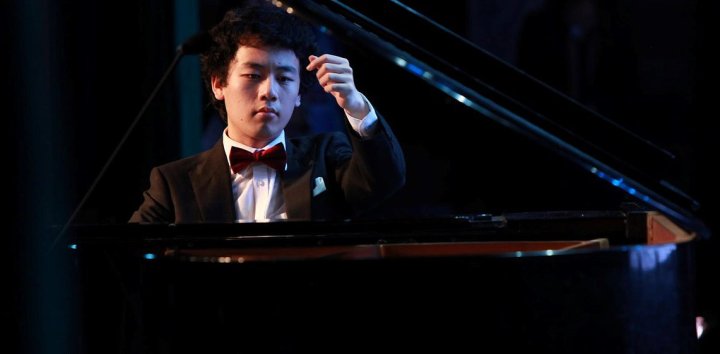
Yuanfan Yang’s debut disc of music by Schubert, Chopin, Liszt, Philip Cashian and his own compositions is available now on the Orchid Classics label


Born in Edinburgh, Yuanfan began learning the piano when he was 6, passed Grade 8 with Distinction at the age of 8 and achieved a Diploma of the Associated Board of the Royal Schools of Music (DipABRSM) when he was 10. He was awarded the AMusTCL Diploma in Music Theory with Distinction in 2015, and is a Scholar of the Drake Calleja Trust.

Yuanfan has won numerous piano competitions. He has won 1st Prize at the Cleveland International Young Artists Piano Competition in the USA in 2015, and 1st Prize of the 4th International Franz Liszt Piano Competition in Weimar, Germany in 2014, with which he was awarded the Special Prize for Best Interpretation of a Classical Sonata, the Special Prize for Best Interpretation of Works by Liszt, the Special Prize for Best Composition and Improvisation, the Junior Jury Prize, and the European Union of Music Competitions for Youth (EMCY) Prize for Most Outstanding Contestant. In 2013 he won the 3rd Prize in the Minnesota International E-Piano Competition. He has also won 1st Prizes in the 2010 RNCM James Mottram International Piano Competition (under 19), and the 2009 Manchester International Piano Concerto Competition for Young Pianists (age 16 and under). Yuanfan is also a fluent sight-reader, having been the champion of the ongoing Michael Abraham Sight-Reading Award six years in a row, ever since he joined Chetham’s. He has also won 1st Prizes in the UK Liszt Society International Piano Prize 2015, the Royal Academy of Music’s Sterndale Bennett Prize 2015, and the 9th Grand Prix Interlaken Classics International Piano Competition 2016. He was the Keyboard Category Winner and a Grand Finalist of the BBC Young Musician of the Year Competition 2012, and won both category and overall prizes at the European Piano Teachers Association (EPTA) UK Piano Competition 2010. Most recently, as the youngest participant and top eight semi-finalist in the Cleveland International Piano Competition 2016, Yuanfan’s performances earned him the Special AAF (Alink Argerich Foundation) Prize.

Yuanfan has performed for many eminent music societies, festivals and key events throughout Britain, China, Denmark, France, Germany, Italy, Romania, Spain, Switzerland and the US, and has performed concertos by Beethoven, Chopin, Gershwin, Grieg, Mozart, Prokofiev, Rachmaninoff and Tchaikovsky with many eminent conductors and leading orchestras including the Northern Sinfonia, the Royal Liverpool Philharmonic Orchestra, the Romanian Radio National Symphony Orchestra, the Wuhan Philharmonic Orchestra, the Canton Symphony Orchestra in Cleveland, the Minnesota Orchestra, the Leeds Sinfonia, and the Manchester Camerata.

Yuanfan is also a versatile composer and an accomplished improviser. His ‘Fantasy in G’ for piano was broadcast on BBC Two in 2007 and 2008, and his arrangement of ‘Scarborough Fair’ was shown on BBC Four in 2010. His piano composition ‘Waves’ won the Overall Award in the European Piano Teachers Association UK Composition Competition 2011. This piece also won Highly-Commended in the BBC Proms Young Composers Competition 2011. His ‘Haunted Bell’ won first prize in the Junior Group of the Golden Key International Piano Composition Competition in 2012, and it was broadcast on BBC Four and BBC Radio Three. He was a finalist in the National Centre for Early Music Composers’ Award 2013, where his piece ‘Crushed Suites’ was premiered and recorded by the leading early music ensemble Florilegium. In September 2014, Yuanfan’s new Piano Concerto – ‘The Wilderness’, scored for solo piano and full symphony orchestra, was premiered in Qianjiang, China; the concerto was performed again at Wuhan University as part of his China tour in November 2014, and it had its UK premiere with the Chetham’s Symphony Orchestra in June 2015 – all the performances were enthusiastically received with critical acclaim from the press and audience. This concerto will be performed in 2017 at the Beijing Concert Hall with the Beijing National Theatre and Dance Orchestra.

Yuanfan has recently recorded his debut album for Orchid Classics, which is due for international release in mid-2017.

www.yuanfanyang.com


Who or what inspired you to take up composing, and pursue a career in music?

I have a musical family and so my brother and I would hear music every day. I guess the music got into my soul and I started writing when I was at school from the age of about 12.

That said, I only started composing professionally in my mid-thirties. At that time I found that I really started to get satisfaction from creating music and particularly music that other people enjoy playing.

Who or what were the most significant influences on your musical life and career as a composer?

My parents warned me that the musician’s life is not easy! However, I’ve always enjoyed performing whether on piano, singing or on trumpet. It was a natural step for me to form, run and conduct a swing band at my school, and then two more bands when I went to Cambridge University.

What have been the greatest challenges/frustrations of your career so far?

I think, probably like many people, I find the marketing aspect of writing (i.e. blowing one’s own trumpet!) to be a challenge. I guess it is constantly having to judge the best use of time and money in how to reach the right people with my music.

What are the special challenges/pleasures of working on a commissioned piece?

It’s always a pleasure to write a new piece of music – and especially so as a special request. Coming up with an original, catchy and visual title can take time though.

What are the special challenges/pleasures of working with particular musicians, singers, ensembles and orchestras?

I perform regularly with very talented UK jazz musicians in a variety of ensembles. It’s highly satisfying to try and play up to their standard and I always get ideas for new pieces after my gigs.

Of which works are you most proud?

Gosh – that’s a tricky question! I’m particularly proud of my JukeBox book series which has taken a great deal of work and seems to be popular so far. If it comes down to a particular piece, then at the moment the duet ‘Little Green Men’ makes me smile.

How would you characterise your compositional language?

I would say that it is a blend of jazz and other popular styles. As long as there is a melody and nice chord progressions, then I’m happy.

How do you work?

Ideally, I start with a title, perhaps from my growing list of potential candidates. Then I consult my spreadsheet of current compositions so that I try and avoid repeating the same combination of style, grade, key etc. I guess that’s my engineering background coming into play!

In reality, what tends to happen is that I get a melodic idea or rhythmic groove (often in the shower) and then try to find a title that works with it.

Either way, I’ll then sit down at the piano and experiment. Sometimes it works… sometimes it doesn’t!

Who are your favourite musicians/composers?

Al Jarreau, Oscar Peterson, Prince, Jamie Cullum, Stevie Wonder, Ella Fitzgerald, Dizzy Gillespie, Paul Simon, James Taylor…

As a musician, what is your definition of success?

If I can write and record a piece of music, then listen to it weeks or months later and think, “that sounds good!”, then that to me is a success. It doesn’t always happen, but it’s nice when it does.

Also, if I write a piece and someone, somewhere in the world plays that piece and enjoys it – then that is a success.

What do you consider to be the most important ideas and concepts to impart to aspiring musicians?

I think it is essential to love the music you’re writing or performing right now at this moment. We all have hopes and dreams of what might be in the future, but it’s probably best not to cling to those too tightly.

Where would you like to be in 10 years’ time?

Still gigging and writing most likely in the UK.

What is your idea of perfect happiness?

Being aware of the present moment – for example, during a gig and being in ‘the flow’.

What is your most treasured possession?

Materially, my piano.

What do you enjoy doing most?

Reading, watching and learning.

What is your present state of mind?

It varies, but mostly happy!


Olly Wedgwood has been playing the piano, singing, composing and performing in public since he was knee-high to a grasshopper. It all kicked off at school, many years ago in 1986 when he won a music scholarship to Hampton School and started to write for his favourite instrument – the piano

After four years of formal music training, Olly discovered Jazz and formed, conducted and managed the Hampton School 15-piece ‘Big Jazz and Blues Band’, also recruiting from the girls’ school next door ;). Hooked on jazz, he began to study jazz piano under top UK jazz pianist Roger Munns.

At Cambridge University, Olly performed in and directed ensembles ranging from pop and rock ‘n’ roll outfits, to jazz trios and big bands. He formed ‘Selwyn Jazz’ big band with his partner-in-crime, Jon Hooper, in 1993 and the band is still gigging to this day.

(Editors note: actually Olly studied an Engineering Degree, but he and his partner in crime, Jon Hooper, probably spent more time on the gig circuit than they did in the engineering lab…).

After University, Olly worked as an engineer and physics teacher by day, also conducting the Magdalen College School big band. By night, he gigged with various jazz and soul ensembles, both as a wedding pianist-vocalist and as a ‘front man’ wedding entertainer.

In 2004, he handed in his notice for his day job and went pro, playing frequently with the Oxford Jazz Quintet (one of Jamie Cullum’s previous ensembles). Olly now runs his Jazz Soul Boogie Band – an awesome wedding entertainment band on the professional gig circuit in the UK, performing a variety of music styles from jazz swing, Latin to funky 70s soul. Wherever Olly is playing, you’re guaranteed a great night’s music and dancing!

Also in 2004, Olly co-wrote ‘Wedgwood Blue’, a landmark piano collection which brings together the extraordinary talents of the Wedgwood family. Olly’s younger brother Sam Wedgwood is a talented singer/songwriter and their mother Pam Wedgwood is recognised around the world as one the UK’s most prolific and successful composers of popular repertoire for young instrumentalists.

95e3b5_65c5b215787c4d3d9eb4d405329d650e.jpg_srz_588_410_85_22_0.50_1.20_0

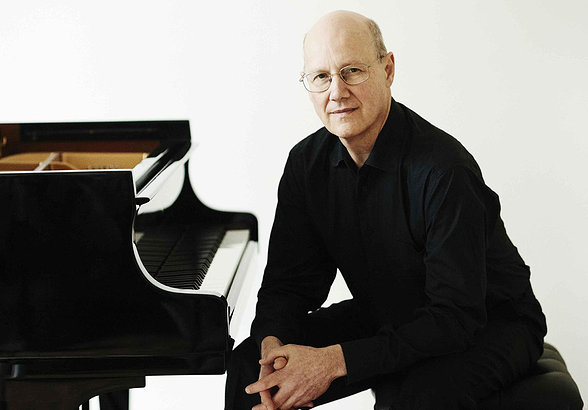
Who or what inspired you to take up piano and pursue a career in music?

I remember being drawn to the piano as a very young child. I had a French aunt who was a superb pianist. When she came to visit and sat to play at the old Bechstein grand that we had at home, a kind of magic descended on the household. I naturally enjoyed starting lessons at the age of seven. It was only quite late in my life that my mother confessed to me that she had listened to gramophone records incessantly while she was pregnant with me, with the express intention of producing a musical child (my older brothers had not shown great interest in music…). I was a bit taken aback to think that I had been brainwashed in the womb, but, on reflection, I am quite grateful!

Who or what have been the most important influences on your musical life and career?

I could make a long list of people who have been important in shaping my musical life, amongst whom would be many composers and colleagues, not least my fellow players in the Schubert Ensemble (which has remained unchanged for 22 years). But three teachers stand out above all others. My greatest debt of gratitude goes to Rosemary Hammond, a local schoolteacher and choir director, who took me under her wing when I was eleven years old and floundering at an unmusical boarding school. She was no great performer, but had an infectious love of music and was an inspirational teacher. She introduced me to playing on clavichord and fortepiano as well as modern piano, taught me to compose and encouraged me with astonishing warmth and generosity. In my twenties I was lucky enough to study with Vlado Perlemuter, whose honest and unmannered musicality is still an inspiration to me, and also with Peter Feuchtwanger, a maverick and unorthodox teacher who taught me to open my eyes and ears in unexpected ways and gave me the courage to shape my career by following my enthusiasms.

What have been the greatest challenges of your career so far?

It may sound simplistic to say this, but the biggest challenges of my career have been developing that career in the first place and then sustaining it. I can honestly say that I have loved my professional life, but for years it involved a huge amount of hard work and uncertainty about the future, together with the constant battle of trying to juggle travelling and working at unsociable hours with bringing up a family. These pressures are common to many freelance professions, but we pianists inhabit a world overcrowded with dazzling talent and I can’t think of a single moment over the years when I have felt I could take my career for granted. The musical challenges (of which there have been many!) have felt easy by comparison.

Which performance/recordings are you most proud of?

Without any hesitation, I would hold up my recording of Pavel Zemek Novák’s 24 Preludes and Fugues, which came out on Champs Hill Records in 2011. It is a monumental work lasting around 75 minutes, which was written for me over a 17-year period from 1989 to 2006. I found the pieces incredibly difficult to play (and to read – they were written in manuscript and almost every page was covered in dozens of corrections!) and the recording took a huge amount of preparation. It was a labour of love, but massively rewarding. The Preludes and Fugues comprise some of the most important and original piano music that I have ever played. Pavel is not hugely well known outside the Czech Republic, but I am convinced that his music will become better and better known. Of the 45 or so CD recordings that I have made over the years, I think this is the one most likely to outlive me.

Which particular works do you think you play best?

I am probably the last person who should try to judge what I play best, but I feel especially at home playing Schubert, Chopin, Fauré and Janáček, and if I had to single out one work of each composer, they would be the Wanderer: Fantasie, the First Ballade, the Sixth Nocturne and In the Mists.

How do you make your repertoire choices from season to season?

I like to introduce new works into my repertoire each season and to return to works I have not played for a while. Recording plans and new commissions also affect the make-up of programmes, and large-scale projects too at times. At the moment my programmes are built around love songs for solo piano, both romantic pieces and a large collection of newly commissioned works.

Do you have a favourite concert venue to perform in and why?

I tend to judge venues as much by the pianos they offer as well as their acoustic. The Wigmore Hall ticks all boxes for me. While I love performing in its acoustic, it also has one of the best-maintained Steinways in the country. Next year will be the fortieth anniversary of my first concert there, so I can add familiarity and decades of happy memories to its attractions! Competing with the Wigmore is the medieval Great Hall at Dartington, which is a beautiful space to perform in, and is also full of memories for me. I heard many of the most memorable concerts of my life there as a student at the Summer School in the late 60s and 70s and it always gives me a huge thrill to be playing there myself.

Favourite pieces to perform? Listen to?

It would be too difficult to choose my favourite pieces to perform – they tend anyway to be what I am working on at any given time. Naming my favourite pieces to listen to is easier. They would be Mozart’s G minor String Quintet and Janáček’s Second String Quartet.

Who are your favourite musicians?

I have too many favourite musicians in the present who I could list – composers, instrumentalists and fellow pianists who are friends and many others who I admire from afar – so I will stick to those from the past who I heard play live and whose recordings I still love to listen to Artur Rubinstein, Vlado Perlemuter, Shura Cherkassy, and Rudolf Serkin.

What is your most memorable concert experience?

Nearly 20 years ago the Schubert Ensemble launched a project called Chamber Music 2000, in which we commissioned several dozen new chamber works for young pianists and string players. We put on over twenty public concerts in venues all over the UK, including the Wigmore Hall and South Bank Centre, in which young musicians, mainly teenagers, performed whole concerts of works by living composers. These concerts had a wonderful spirit of engagement and adventure and were some of the most memorable I have attended as a listener.

What do you consider to be the most important ideas and concepts to impart to aspiring musicians?

It is the privilege of older musicians to specialise (if they want to!), but I think for younger and aspiring musicians a broad experience of music is essential. It is important to hear lots of live performances and to study as wide a repertoire as possible, and, very particularly, repertoire beyond that written for your own instrument. And I firmly believe that working with living composers can teach us an enormous amount about how to approach interpreting music from the past.

What is your present state of mind?

I feel very positive about life at the moment! I am enjoying playing the piano more than ever right now and I have a number of projects on the go that I am finding fascinating and challenging.


William Howard is established as one of Britain’s leading pianists, enjoying a career that has taken him to over 40 different countries. His performing life consists of solo recitals, concerto performances, guest appearances with chamber ensembles and instrumentalists, and regular touring with the Schubert Ensemble of London, Britain’s leading group for piano and strings and winners of the Royal Philharmonic Society Award for Best Chamber Ensemble. He can be heard on around 40 CDs, released by Chandos, Hyperion, ASV, NMC, Collins Classics, Black Box, Champs Hill, Nimbus and Orchid Classics.

His solo career has taken him to many of Britain’s most important festivals, including Bath, Brighton and Cheltenham, and he has been artist in residence at several others. He has performed many times in the Wigmore Hall and the South Bank in London and has broadcast regularly for BBC Radio 3. For many years he has been invited to perform and teach at the Dartington International Summer School. His recording of Dvořák Piano Works was selected in the Gramophone Critics’ Choice, and his recording of Fibich’s ‘Moods, Impressions and Souvenirs’ won a Diapason D’Or award in France.

Recent solo engagements have included a performance at the 2015 Bermuda Festival, the premiere of David Matthews’s Four Portraits at the Spitalfields Festival in London and performances at the Cheltenham, Deal, Leamington, Petworth and Paxton Festivals, at Kings Place in London, in Brno (Czech Republic), Italy and Oregon, USA. In 2011 he made a recording of Pavel Zemek Novák’s extraordinary 75-minute cycle of 24 Preludes and Fugues. A double five-star review in the BBC Music Magazine described the performance as “superb” and the music “a real discovery”. His most recent album, Sixteen Love Songs, released in June 2016 on Orchid Classics was selected as ‘Drive Discovery of the Week’ on Classic FM.

He is passionate about 19th century piano repertoire, especially Schubert, Chopin, Schumann and Fauré. He also has a strong interest in Czech piano music, and has been particularly acclaimed for his performance of Janáček, for which he received a medal from the Czech Minister of Culture in 1986. Many leading composers of the present day have written for him, including, Sally Beamish, Petr Eben, Piers Hellawell, David Matthews, Pavel Novák, Anthony Powers, Howard Skempton and Judith Weir. In 2016 he launched a project to commission sixteen love songs for solo piano from leading composers in the UK and abroad, including Elena Kats-Chernin, Nico Muhly, Richard Reed Parry and Judith Weir. He also set up an international composing competition for writing piano love songs that attracted over 500 entries from 61 countries.