Do Not Mistake Activity for Progress: A Lesson for Musicians

The phrase “Do not mistake activity for progress” serves as a powerful reminder that being busy is not the same as being effective. Nowhere is this more relevant than in the life of a musician, where countless hours are spent practicing, refining technique, and mastering pieces. A romantic misconception persists, amongst musicians themselves as well as the general public, that musicians must spend hours and hours in the practice room to achieve perfection.
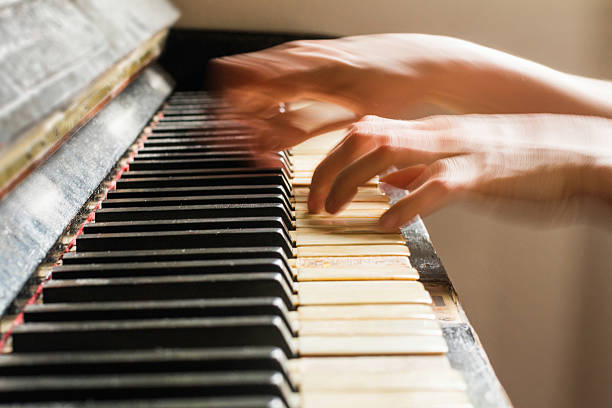
This article explores how the distinction between mere activity and genuine progress is particularly important for musicians, and how understanding this difference by employing focussed, thoughtful practice – quality rather than quantity – can lead to more productive and meaningful practice and results.

For many musicians, the act of practicing can become habitual. Sitting down you’re your instrument, playing through scales, or repeating pieces from memory may feel productive because it takes time and effort. But if these routines are executed without thoughtful engagement, they may offer little return in terms of technical and artistic development. In other words, you can be very active without actually improving. This is where the warning not to conflate activity with progress becomes critical. Just because a musician is practicing does not mean they are practicing well.

Effective practice requires focus, intention, and feedback. It’s not just about the quantity of time spent, but the quality of that time. For example, a violinist who practices a difficult passage for thirty minutes without addressing the underlying technical issues – such as bowing technique, intonation, or rhythm – is likely to repeat and reinforce mistakes. This is, in effect, simply “going through the motions” rather than engaging in deep, thoughtful, considered practicing. In contrast, a musician who spends just ten minutes isolating and correcting these problems may make far more progress. Thus, mindful, goal-oriented practice can achieve more in less time than mindless repetition.

The concept of deliberate practice, popularised by psychologist Anders Ericsson, is particularly useful in this context. Deliberate practice involves working just beyond one’s current abilities, identifying weaknesses, setting specific goals, and seeking constructive feedback. For musicians, this might mean slowing down a difficult section, using a metronome, recording oneself for critique, or working with a teacher, mentor or even a trusted colleague or friend to identify areas for improvement. Each of these activities is targeted and purposeful, aimed at achieving real growth rather than simply filling practice hours.

In addition, mistaking activity for progress can lead to frustration, burnout and even injury. (‘over-practicing’ is a real issue!). Musicians may feel that despite spending many hours practicing, they are not advancing, which can be discouraging and demotivating. Understanding that not all practice is equal allows you to assess the effectiveness of your practice routines and make the necessary adjustments. It encourages reflection, a crucial aspect of productive practicing: What am I trying to achieve? Is this exercise helping me reach that goal? What could I change to improve my results?

By focusing on the quality rather than the quantity of practice, musicians can ensure that their activity translates into meaningful progress. Ultimately, it is not how much one practices, but how one practices, that leads to mastery.


The internet is full of articles promising to help you learn to play the piano

  • Learn to play in just 4 weeks!
  • Play piano in 10 easy steps
  • 5 ways to become a great pianist

And so on….

The British pianist James Rhodes entered this busy, lucrative market a few years ago with his book ‘How to Play The Piano’, in which he promises to get the complete novice playing a Bach Prelude in just six weeks. It’s an admirable attempt which may provide inspiration and support to some aspiring pianists, but I am sure Mr Rhodes would agree that to master the piano, whether a professional or amateur player, takes many hours of commitment and graft. As one of my teachers, the wonderful Graham Fitch, observed, “If it was easy, everyone would be doing it!”.

Those of us who choose to embark seriously on this crazy, fulfilling, life-enhancing, frustrating and fascinating path do so with the understanding that the acquisition of skill, improvement and development are hard won (and for the professional, there is the added burden of the cut-throat competitiveness of the profession).

It doesn’t matter at what level you play – you can be a serious beginner or an advanced player; what matters is the commitment, made in the knowledge that this is ongoing process. For many of us (and I find this attitude is common amongst amateur pianists), it is the journey not the destination that makes learning and playing the piano so satisfying and absorbing.

If you don’t enjoy practicing – the process – forget it. You’ll never achieve mastery of your Grade 2 pieces or Rachmaninoff’s Third Piano Concerto. Practicing is the bedrock of the musician’s “work”. For the professional, this usually has an end point – or rather a string of end points – concerts; but alongside that, there is the need to learn new repertoire, keep existing repertoire alive and fresh, to revive previously-learnt pieces, and to continually reflect on and review one’s skills, technical, musical and artistic.

But there’s more. Because practicing isn’t just about sitting at the piano, turning the dots and squiggles on the score into sounds. Practicing – productive, thoughtful, deep practicing – involves the head and the heart as well as the body. Each phrase, each chord, each scalic run or passage of arpeggios must be considered and reviewed. Listen as you play (and you’d be amazed how many musicians don’t actually listen to themselves!). Reflect, review, play again. And again, and again….and make each of those repetitions meaningful.

Come to each practice session with an open mind and a willingness to fully engage with the music all the time. I’ve read accounts of great pianists practicing technique while reading a book propped on the music desk. This kind of mechanical practice is not helpful – and can even be harmful. Even when practicing the dullest exercises, or scales and arpeggios, find the music within, and bring expression and artistry to every note you play.

Approach your music with a clear internal vision of how you want it to sound. For less experienced players, this can be confusing, the fear of entering unknown territory. How do I know how it should sound? you might ask. But this marks your first forays into interpretation, into taking ownership of the music and making it yours. Our interpretative decisions about our music are shaped by our own experience – playing or listening to repertoire by the same composer, or from the same period, reading around the music, going to concerts, conversations with teachers and other musicians, and harnessing the power of our imagination to bring the music to life.

Don’t feel constrained by the notion that there is a “right way”, but rather forge you own way, and be committed to it. We take ownership of the music by recognising and committing to the value of what we have to say.

Mastery comes not from 10,000 hours of piano practice, but from 10,000 hours of deliberate, intelligent, thoughtful, self-questioning practice. During this process, basic skills are acquired, which allow us to take on new challenges and make connections which were previously elusive. Gradually, we gain confidence in our ability to problem-solve or overcome weaknesses, make more profound interpretative or artistic decisions about our music making, and at a certain point we move from student/apprentice to practitioner.

Now we have the confidence to try out our own ideas while gaining valuable feedback in the process, and our growing knowledge and skill allows us to become increasingly creative, and bring our own individuality and personal style or flair to the task.

When we practice we should do so actively and creatively with joy, playfulness and spontaneity, appreciating every note, every sound, the feel of the keys beneath the fingers, the way the body responds to the music, the nuances of dynamics (both indicated and psychological, as the music demands), articulation, expression, and so forth.

In short, our music making should be an ongoing, responsive process of discovery and refinement, rather than one of predictability, averageness or “good enough”.Such dedicated craft takes inordinate amounts of work – concentrating on very short sections of the score, seeking feedback from intense self-monitoring, at all times remaining curious and open-minded – but this approach provides us with accountable pianistic tools (interpretative, technical, artistic, and psychological) and validation methods that put us on the path to mastery. From a practical perspective, such pianistic tools are a virtuous circle of intense self-evaluation, analysis, reflection and adjustment, and the ability to always see errors as pointers to improvement. It’s a kind of “apprenticeship of incremental gains” informed by continual reflection, adjustment and refinement.

Learn the piano in 6 weeks? Bah! It’s a lifetime’s work.


The Cross-Eyed Pianist is free to access and ad-free, and takes many hours every month to research, write, and maintain. If you find joy and value in what I do, please consider making a donation to support the continuance of this site Make A Donation

