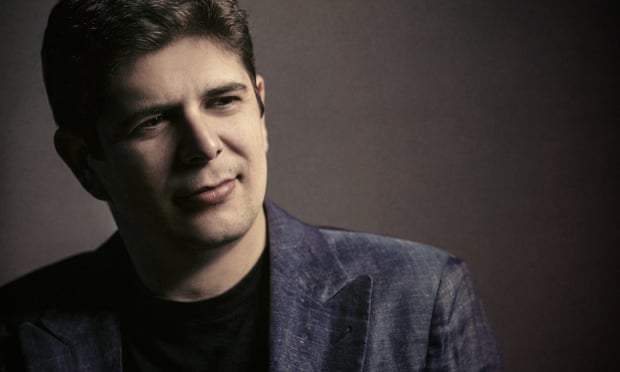
(Photograph: Josep Molina/PR)

Who or what inspired you to take up the piano, and pursue a career in music? 

I actually took my first musical steps playing the clarinet in the marching band of Nerva, the village where I grew up.  This was the first instrument I ever learned, and I could see myself taking it further.  But then an aunt introduced me to the incredible sound world of the piano and from the beginning. I was absolutely fascinated .  As for the second part of the question, I feel that things have always progressed very naturally: I never had to make any decision as to whether or not to pursue a career in music.

Who or what have been the most important influences on your musical life and career? 

I’m really lucky in that I’ve always had extraordinary teachers: Julia Hierro (my first teacher), María Ramblado, Ana Guijarro, and Josep Colom have been a source of wisdom and inspiration throughout my student years. I’ve also had the chance to get great advice from Daniel Barenboim, Richard Goode, or Alicia de Larrocha, all of whom I deeply admire.

What have been the greatest challenges of your career so far? 

Every new piece I learn – I like to think of that as the greatest challenge!

Which performance/recordings are you most proud of?  

It is quite hard to pick a particular concert or recording, but perhaps for its special significance maybe I’d pick having taken part in one of the last concerts of the Tokyo Quartet during their farewell season, doing the Brahms and Schumann Quintets. It was a highly emotional experience and unforgettable for me as I was a long-time admirer of the Quartet.

Which particular works do you think you play best?

I prefer to leave that to audiences, but I also like to think that what I should play best is what I’m performing or working on at the moment.

How do you make your repertoire choices from season to season? 

One consideration is to link recording plans with the launching of recordings with Harmonia Mundi and, on the other, to consider particular requests from promoters as well as any lines of programming that orchestras and conductors might have. In any case, when I work on devising a recital program I like to find some unifying principle and/or connections amongst the works being presented.

Do you have a favourite concert venue to perform in and why? 

It’s difficult to choose just one among so many extraordinary concert halls where I’ve had the great pleasure to perform. Suntory Hall in Tokyo presents a very special combination between its admirable acoustics and great audience capacity; another wonderful hall that is a favourite for its forward-looking conception is the New World Center in Miami. And how to forget the magic and tradition one can feel in temples of music like London’s Wigmore Hall, Amsterdam’s Concertgebouw or New York’s Carnegie Hall.

Favourite pieces to perform? Listen to? 

I hesitate to even begin answering the first question: the repertoire is so vast, rich and varied! Like I said before, perhaps whatever piece I’m working on or performing at the moment becomes my favourite. As to my listening habits, let me just give you a small glimpse through my iPod playlist: Granados’ Goyescas with Alicia de Larrocha, Tchaikovsky Symphonies with St. Petersburg Philharmonic and E. Mravinsky, Brahms Symphonies with N. Harnoncourt, Chopin Nocturnes with MJ Pires, the last Schubert Sonatas with Radu Lupu, Beethoven Sonatas with Daniel Barenboim, Mozart piano concertos with Mitusko Uchida, Schubert Trios by the Beaux Arts, Debussy by Michelangeli and a very long etcetera.

Who are your favourite musicians? 

As a pianist I’m such an admirer of many of today’s musicians such as Barenboim, Pires, Lupu or Sokolov. At the same time, I must also say that I’m fascinated by past musicians like Schnabel, Lipatti, Michelangeli, Rubinstein, Myra Hess, Hoffman, Cortot, etc. If we add to the list other instrumentalists, singers, and conductors the list would prove to be endless!

What is your most memorable concert experience? 

In addition to my collaboration with the Tokyo Quartet during their farewell season I should single out my debut in Lucerne with Zubin Mehta, my recent collaborations with Tabea Zimmermann, Beethoven’s Emperor with Daniel Barenboim, Ravel’s G Major with Daniel Harding and the London Syphony, the Schumann with Michael Tilson Thomas, and my debuts with Yuri Temirkanov and Maazel, among many others. I greatly cherish those memories.

What do you consider to be the most important ideas and concepts to impart to aspiring musicians? 

Honesty, dedication, personality, work and passion.

Where would you like to be in 10 years’ time? 

I’d like to be exactly the same but of course with the maturity, experience and depth ten years will bring!

What is your present state of mind? 

Searching, exploring, discovering and delving deeper!
 

www.javierperianes.com

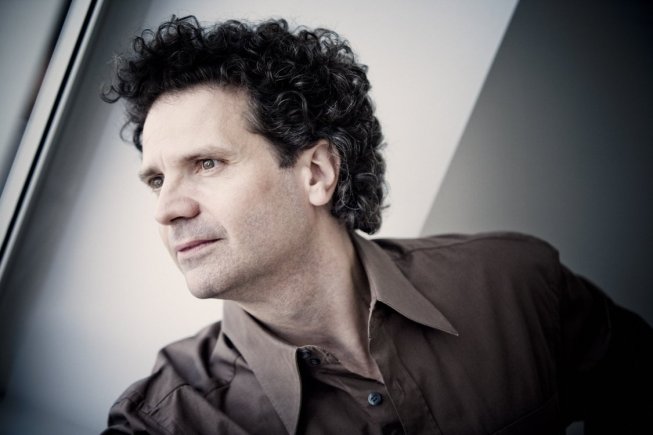
haefliger-andreas-065bmarco_borggreve5d
(Photo: Marco Borggreve)

Who or what inspired you to take up the piano, and pursue a career in music

I was born into a musical family. My father Ernst (a tenor) was the preeminent Evangelist (in the Bach Passions) of his time and also a wonderful Liedersinger.

Under these circumstances it is difficult to describe when the passion for music arose. It was simply always there and, maybe as the smell of leather permeates the childhood of the son of a shoemaker, the smell of music permeated mine.

My mother talked about me always being drawn to the piano – at three years of age I would walk over and start playing, my arms reaching up to the keyboard.

The conscious decision to pursue the career was thus more like an acceptance of the inevitable.

Who or what have been the most important influences on your musical career and life?

Again I must start with the earliest and biggest influence – my father.

From the earliest age I was immersed into going to operas, oratorios and lieder recitals. Wonderful musicians like Karl Richter, Erich Werba, Dietrich Fischer-Dieskau came to our house to make music and as soon as I was able to I had to accompany for pupils who came to the house for lessons. What better training could a child wish for.

In early adulthood my dreamy childhood fantasies were quickly adjusted to the reality of music-making through my studies at the Mozarteum in Salzburg with Hans Leygraf and then through my Juilliard studies with Herbert Stessin and the iconic William Masselos.

At age 17 the towering presence of Alfred Brendel came into my life and studies and dialogue continued for many years for which I am thankful to this day.

What have been the greatest challenges to your career so far?

The pianist’s life is one of constant growth.

As an interpreter you have to find just the right mix of ego and humility and this requires tremendous investment not just in the art of music, but also in the growth as a human being. Therefore challenges are omnipresent in your daily life as you walk through this growth.

Which performances/recordings are you most proud of?

I am still very pleased with my early recordings of Mozart, Schumann and Gubaidulina for Sony. Later I challenged myself with the Perspectives Recordings of which the Beethoven op 106 was a milestone of sorts. The human growth I talked about in the last question is audible however in the last recording of Schumann Fantasy and op 109- so may be I could say this one is the one that has reached an intermediate goal. My public perfomances have always been mirrored by the CDs so therefore I am also at a new level of expression in this medium.

Which particular works do you think you play best?

I do believe that my talent lies mostly in the interpretation of the central european repertoire. I also very much however enjoy commissioning new music from all over the world.

How do you make your repertoire choices from season to season?

I am a strong believer in the importance of programming. The piano recital offers to the pianist an opportunity to combine pieces  and lead the audience from work to work much as a curator would in a museum. In the past six seasons I have made the Beethoven Piano Sonatas the central part of this exhibition and I combine them with works that intuitively or intellectually  share or juxtapose ideas, keys or moods.

Do you have a favorite concert venue to perform in?

I love the famous halls in this world- each one has something particular and stunning to offer. All share the component of facilitating densely concentrated moments in time, thus making the creation of great art possible.

I also sense however that there will be evermore a branching away from these platforms of high culture  and that music in less formal settings will become more and more popular. In the best circumstances this can aid the art form tremendously as it will create an atmosphere of accessibility without watering down the content.

Favourite pieces to perform? Listen to?

I always enjoy the pieces that I am working on at the moment. In listening  I like to be surprised by repertoire I don’t know.

Who are your favorite musicians?

Edwin Fischer,  Wilhelm Kempf, Bruno Walter

Edwin Fischer once said that the perfect interpretation is to enliven a work without violating it. These three performers all shared this ability.

What is your most memorable concert experience

May be in an odd turnaround from my previous answer this still remains Leonard Bernstein with New York Philharmonic performing Mahler 2nd symphony. A wildly involved performance that was stirring to attend- oddly I am much less fond of the recording of this very concert.

What do you consider the most important ideas and concepts to impart to aspiring musicians?

Where does work begin and inspiration end?

We find ourselves in a very strange profession. Ultimately we are the flag bearers of a great achievement of human civilization. Ideally we go on stage in front of thousands of other human beings and transport them to never before experienced emotional heights. Years of study in matters both musical and philosophical have brought us to the point where we find ourselves capable of presenting phrases with such intensity and knowledge that they reach the listeners ear without distraction. Great art is made.

At the same time we live in an age of crippling competition and ability. Worldwide travel and immediate availability are a matter of course in a world where the other one will go and play if you don’t. Quick fix artistry is rampant in a selfie culture that looks to propagate the own achievement through any means possible. The music world is a confusing place.

At some point the student today has to make a decision to involve herself in the slow process of musical growth. At the same time modern aspects of musical performance cannot be ignored but must be incorporated in order for artistic intensity to be realized.

The young student must address this dichotomy early on in order to be able to successfully navigate the art form.


Coming from a rich tradition, the pianist Andreas Haefliger is: “consummately lyrical. Exhibitionism and pretence are antithetical to his musical personality”; he has “a vision of musical architecture second to none and a tender, profoundly cultivated sensibility, from which music flows unimpeded” ( International record review, September 2014). He has won many plaudits for his Beethoven Perspectivesrecitals on disc (Avie) and at major halls and festivals. He is also much sought-after as a chamber musician – past highlights include Mostly Mozart New York with the Takacs Quartet, and Salzburg Festival with Mathias Goerne. In 2014 he gave the premiere at the BBC Proms of a new concerto written for him by Chinese-American composer Zhou Long.

Haefliger was born into a distinguished Swiss musical family and grew up in Germany, going on to study at the Juilliard School in New York. He was quickly recognised as a pianist of the first rank, and engagements with major US orchestras followed swiftly – the New York Philharmonic, Cleveland Orchestra, Los Angeles Philharmonic, Boston Symphony, Pittsburgh, Chicago and the San Francisco Symphony Orchestras among them. In his native Europe too, Haefliger was invited to the great orchestras and festivals – such as the Royal Concertgebouw, Rotterdam Philharmonic, Munich Philharmonic, Budapest Festival Orchestra, Deutsche Symphonie-Orchester Berlin, Orchestre de Paris, London Symphony Orchestra and Vienna Symphony. He also established himself as a superb recitalist, making his New York debut in 1988, and has since performed regularly at major venues in Europe such as the Lucerne, Salzburg and Edinburgh Festivals and the Vienna Konzerthaus, as well as at major halls across North America and Asia.

Haefliger is a regular visitor to London’s Wigmore Hall, where he appears in December 2015 for the next instalment of his Perspectives series, in which he performs the complete piano works of Beethoven alongside works by other composers from Mozart to Ligeti. This series has formed the focus of Haefliger’s solo recital appearances and CD recordings in recent years. His latest chamber music project gathers friends Benjamin Schmid and Karen Gomyo (violins), Lise Berthaud (viola) and Christian Poltera (cello) for intensive rehearsal periods and concerts every year at the Louisiana Museum in Copenhagen, which the group will then take further afield. In spring 2016 he performs with his wife, the distinguished flautist Marina Piccinini, on an extensive tour of the USA.


6c67ebf49b
(photo Susie Knoll)

The Croatian pianist Dejan Lazić first came to my attention, perhaps for the wrong reasons, when I read about his 2014 fracas with The Washington Post over the “right to be forgotten” in Google searches. He asked for a review from 2010, which he felt was unfair, to be removed. The incident sparked a lively debate across the networks about whether artists should respond to negative reviews or make such requests, and whether critics and reviewers need to be more careful about what they say. To me, it was a rather neat example of “there’s no such thing as bad publicity”: I read about Lazić, my curiosity was piqued and I wanted to hear him live.

I missed his Queen Elizabeth Hall concert in winter 2014 so I was pleased to see him on the roster of the Wigmore Hall’s lunchtime concerts. And how glad I am that I decided to go to the concert, for he presented an imaginative programme of music: two greats of German music – Haydn and Schumann – were juxtaposed with dances by Shostakovich and Lazić himself, all of which revealed his strengths.

Anyone who makes me smile in Haydn gets my applause……

Read my full review

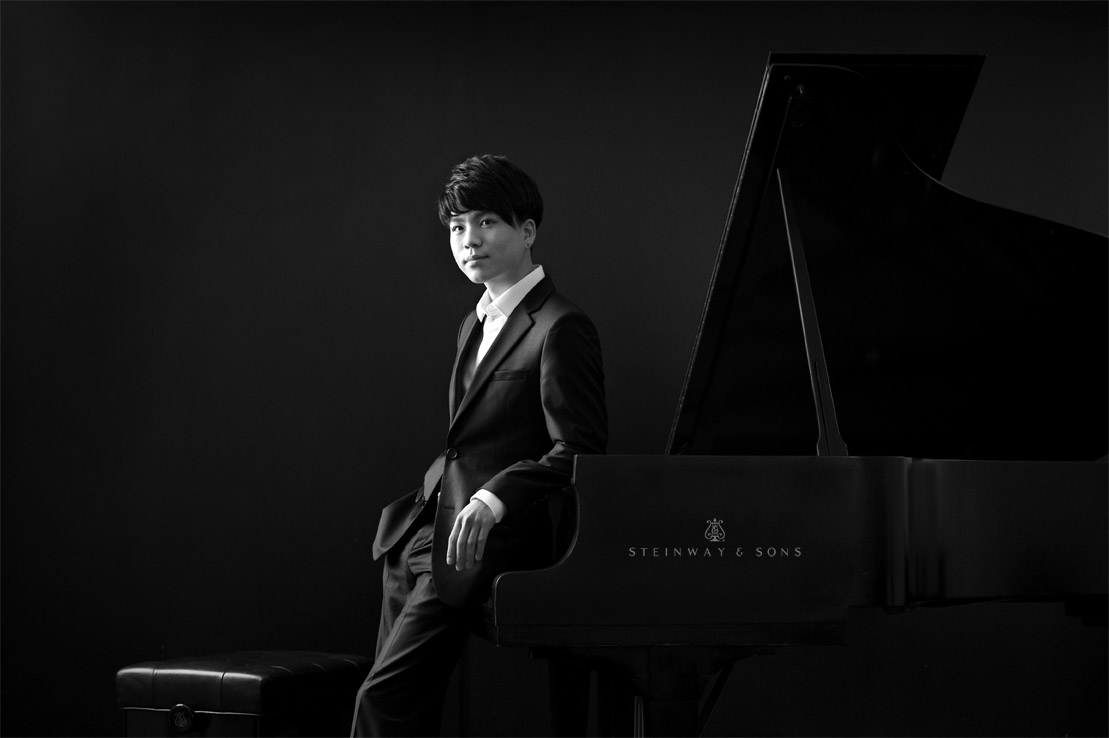
J_Bae-140_LR_BW
(photo: Kelley Eady Loveridge)
Who or what inspired you to take up the piano and pursue a career in music?

My dear teacher and mentor, Dr. Rae de Lisle, senior lecturer at School of Music, University of Auckland, who has taught me for 12 years. Maestro Chung Myung-Hoon who was the first South Korean pianist who became the Silver Medalist (no Gold-Medalist awarded) at 1974 Tchaikovsky International Piano Competition, who is now an internationally sought-after conductor.

Who or what were the most important influences on your musical life and career?

My mentor, Dr. Rae de Lisle who has taught me since I was 9 years old until I graduated from University of Auckland with First Class Honours. She has seen me grow up and has guided me to where I am right now.

What have been the greatest challenges of your career so far?

I grew up in New Zealand until I came to London last year. London life is completely different to New Zealand life where its population is only 4 million people. Studying at the Royal Academy of Music and living in London, the metropolitan city has been very challenging since I didn’t know anyone and I didn’t have anyone who supported me. I had to completely depend on myself and this was great challenge.

Which performance/recordings are you most proud of? 

2009 my performance of Rachmaninov Piano Concerto No.2 when I was 17 years old. 2012 My debut recital at Auckland Town Hall, Chopin Preludes Complete, Bach/Busoni Chaconne. Recent performances of 2013 New Zealand Wallace Piano National Piano Competition of my Liszt Piano Sonata, Ravel Gaspard de la Nuit, Rachmaninov Piano Sonata No.2 and 2014 New Zealand Wallace Piano Festival my complete recital programme of J.S. Bach Partita No.6, Rachmaninov Moments Musicaux complete.

Which particular works do you think you perform best?

Rachmaninov Piano Sonata No.2 Op.36 (Original version), Rachmaninov Piano Concerto No. 2 and Rachmaninov Moments Musicaux Op.16 complete.

How do you make your repertoire choices from season to season? 

First of all, I have to know which venue I would be playing in and also what kind of audience, and this depends on the country, suburbs (whether it is a small town or big city). In small towns, I have to play relatively well-known works or well-known composers. In the big cities, I can introduce more contemporary works and new composers.

Do you have a favourite concert venue to perform in and why?

Auckland Town Hall Great Hall and Concert Chamber. Auckland is where I grew up and I went to almost every single concert in this venue where I received inspiration and motivation.

Favourite pieces to perform? Listen to?

Rachmaninov Piano Concerto No.2 Op.16. I have worked so hard to prepare this work and performed it so well. Now, I like listening to Rachmaninov Piano Concerto No. 3 which I am currently working on.

Who are your favourite musicians?

Stephen Hough, Leif Ove Andsnes, Arcadi Volodos, Gil Shaham, Joshua Bell, Hilary Hahn, Maxim Vengerov, Vasily Petrenko and Vladmir Ashkenazy.

What is your most memorable concert experience?

2012 Auckland Town Hall Concert Chamber Debut – Sold out. 2009 Lev Vlassenko International Piano Competition 2nd Prize – Brisbane, Australia. 2013 Tchaikovsky Piano Concerto No.1 with Auckland Philharmonia – Auckland Town Hall Great Hall, New Zealand.

What do you consider to be the most important ideas and concepts to impart to aspiring musicians?

Always have to remember that I am making music in order to solely share with audience. It’s never about showing off my talent but inspiring audience making them to appreciate the beauty of the classical music. Always aiming at making audience to feel that their couple of hours of listening to my performance was life-changing experience.

What are you working on at the moment? 

Chopin 4 Ballades, Rachmaninov Piano Concerto No. 3.

Where would you like to be in 10 years’ time?

Becoming an artist in residence for Wigmore Hall, London, Seoul Arts Centre, South Korea. Regular concerto soloist with Philharmonia Orchestra, London Symphony Orchestra, Seoul Philharmonic Orchestra, New Zealand Symphony Orchestra and Sydney Symphony Orchestra.

What is your idea of perfect happiness?

Continuing to enjoy making music even though it is difficult journey and lonely life in order to share the music with many people around the world (not just in major concert halls, big cities but small rural towns as well). I would like to have a good family who can continuously support me to achieve my vision of sharing classical music to as many people as possible.

What is your most treasured possession? 

My experiences of travelling to many countries for my performances.

What do you enjoy doing most?

Meeting with my best friends for a good catch-up and conversation.

What is your present state of mind?

I am looking forward to preparing new works for 2015.

Jason Bae was born in Daejeon, South Korea in 1991 where he began studying piano at the age of five. At age 12, he has made his concerto debut with Auckland Symphony Orchestra performing Grieg Piano Concerto Op. 16. A year later, he became the youngest concerto soloist to perform with Auckland Philharmonia Orchestra for the ‘SkyCity Starlight Symphony Concert in the Park’ at the Auckland Domain in front of 200,000 people. Under the baton of Rossen Milanov, Jason performed Stravinsky’s Concerto for Piano and Winds as a soloist with New Zealand National Youth Symphony Orchestra in 2010. He has also appeared as a concerto soloist with the Queensland Symphony Orchestra of Australia, Auckland Youth Symphony Orchestra, Christchurch Symphony Orchestra and Bach Musica. 

Jason’s full biography is on his website