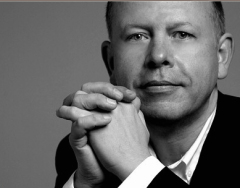
(photo credit: Benjamin Ealovega 2013)

Who or what inspired you to take up the piano and make it your career? 

I don’t remember the inspiration per se; just remember that I liked it from the beginning!

Who or what were the most important influences on your musical life and career? 

Leaving Japan at the age of 18 and coming to the UK.  For a long time I was undecided about whether to stay in Japan to study or to emigrate to see the “wider” world.  I feel the choice I made was the right one and I’m still here.

What have been the greatest challenges of your career so far? 

It often feels like extra work, having to learn pieces that are really hard and that I know I won’t play again for a while, if ever.  Then again, I do this all the time, as I love the so-called rarities so I can’t exactly complain…

On a slightly different note, I had a period when I seriously considered a career-change in the middle of my undergraduate studies.  My confidence level was at a record low then. In the end I came through to the other side and I am glad I didn’t change career only to escape the negative feelings I suffered from.

Which performance/recordings are you most proud of? 

For my latest Haydn disc from Artalinna, I intentionally chose his middle-period sonatas for harpsichord and fortepiano and recorded on a huge Steinway. I think it worked out pretty well.  I’ve been in love with these sonatas ever since I found out about them when I was a teenager and there’s a talk of doing Vol.2.  Please help us to make this happen!

The two great piano concerti (Catoire and Sherwood) I recorded with the RNSO for Dutton back in 2011 are both world-première recordings and I am rather proud of it too.

Which particular works do you think you play best? 

Beethoven: Piano Sonata Op.111

Boulez: 12 Notations

Chopin: Sonata No.3 Op.58

Elgar: Enigma Variations

Grieg: Ballade in G minor

Medtner Sonata minacciosa Op.53 No.2

Parry: “Hands Across the Centuries” Suite

Schumann: Concerto

How do you make your repertoire choices from season to season? 

I love exploring the lesser-known repertoire, both new and old, so if it is appropriate, I like putting together a whole programme with my recent discoveries.  That’s why I love playing in places like the Husum “Rarities of Piano Music” Festival in Germany.  At other times, I tend to recycle my old mainstream pieces as the framework of a programme and insert a few curios.

I am becoming more and more aware that I don’t have forever to learn everything I love, so I try to digest a few pieces from my “Learn by 40” list every season.

Do you have a favourite concert venue to perform in and why? 

Not in particular.

Favourite pieces to perform? Listen to?

I keep finding new favourite pieces.  My pattern is that I obsess over a piece for a while then move onto another obsession.  I remember my first real obsession was Ravel’s La Valse: I would listen to it numerous times day after day when I was 13.  Most recently, I’ve just graduated from Poulenc’s Dialogues des carmélites.

When I want to relax, I might listen to Nancarrow’s player-piano studies: they never fail to make me have a good laugh. Songs by Miyuki Nakajima are also on the list.  She is a singer/songwriter who has an iconic status in Japan.

Who are your favourite musicians? 

In no particular order and just off the top of my head – I’m bound to be missing many more.

Nelson Freire

Roger Muraro

Krystian Zimerman

Oleg Boshnyakovich

Rudolf Serkin

Wilhelm Furtwängler

Glenn Gould

Pierre Boulez

What is your most memorable concert experience? 

This is more to do with the state of mind I would love to be in before each performance: I was preparing to go on stage in Salzburg. My mental conditioning was as best as I could imagine. I was not nervous but felt calm yet so sharp, I could feel I was going to play really well.  Then I went to the bathroom.  The lock in the cubicle was a kind which I was not used to.  And because I was so concentrated on my imminent performance, I couldn’t work out how to open the door and panicked thinking I got locked in.

What do you consider to be the most important ideas and concepts to impart to aspiring musicians? 

I mostly find musicians who have serious non-musical interests inherently more interesting, not only as people but also as musicians.

What are you working on at the moment? 

I’m always trying to raise funds for the next recording projects, which I have so many!  Also just starting to push my new CD of Haydn CD mentioned above.

To coincide with this release, I will be presenting a programme including two of the Haydn sonatas, Nancarrow & Prokofiev in a new festival in Paris Festival Piano-Oxygene on 3 October 2014.


Where would you like to be in 10 years’ time? 

In a South American jungle looking for butterflies and orchids.

What is your idea of perfect happiness? 

I had a great cigar lesson with the great Cuban pianist Jorge Luis Prats recently (with his custom-made Havanas).  As a master of that art like him, one might get close, or at least I was made aware that that was the objective of the cigar culture.  For this knowledge, I thank you, Jorge!  My whole body stank of cigars for the next two days though.

What is your most treasured possession?
 

If music-related, it would be the first edition copy of Medtner’s book Muza i Moda (The Muse and the Fashion) signed by the composer.

Heralded by The Times as “just the sort of champion the newest of new music needs”, while being praised as “impeccable in his pianism and unfailing in his idiomatic grasp” by Gramophone, Takenouchi’s curiosity and a natural penchant for integrity makes his playing and vast repertoire unique amongst his generation of pianists: his love for the music of classical masters – particularly Haydn, Beethoven and Chopin – sits side by side with his passion for the music of Medtner and Rachmaninov, lesser-known British composers such as Sterndale Bennett and Parry, and the contemporary repertoire.

As a soloist, he has recently appeared on many concert platforms including the Wigmore Hall, Tokyo Opera City, the South Bank Centre.  He has also performed at festivals in Bath, Cheltenham and Salzburg and given recitals in the UK, Japan, Austria, Germany, Switzerland, Portugal, Italy and Canada.  His future engagements will take him even further to the Far East, including performances in Singapore and Vietnam.  His more unusual recent appearances include the Rarities of Piano Repertoire Festival in Husum (Germany) and the BBC Four documentary The Prince and the Composer on the life and music of Parry alongside HRH The Prince of Wales. Takenouchi’s discography includes Cosmos Haptic: Contemporary Piano Music from Japan (LORELT) as well as the world première recordings of works by James Dillon (NMC), Edwin Roxburgh (NMC) and Jeremy Dale Roberts (LORELT).  2012 saw two further releases: two piano arrangements of Delius’s orchestral works (SOMM with Simon Callaghan), and a highly acclaimed disc of piano concertos by Catoire and Sherwood (another world première recording) with the Royal Scottish National Orchestra (Dutton Epoch).

Since 2012 Takenouchi has been teaching piano at the Royal Conservatoire of Scotland (Glasgow).  He also returns every summer to give masterclasses at the Poros International Piano Academy (Greece) and Ingenium International Music Academy (UK).


Website:

http://hiroakitakenouchi.com

Facebook page

https://www.facebook.com/takenouchipianist

Twitter

https://twitter.com/giroaqui


(photo Marco Borggreve)

Who or what inspired you to take up the piano and make it your career?

I don’t remember not playing the piano. As my parents were also musicians, it was probably a rather obvious thing to do. I never thought of music as a career per se, but it was clear to me rather early (certainly before my teens) that music would consume my life.

Who or what were the most important influences on your musical life and career?

So many people! Obviously my teachers, Sulamita Aronovsky and the late Susan Bradshaw, have both been crucial. I learnt very different things from each of them. In a way they were very contradictory, but I have never felt confused, rather enriched by having multiple views on so many issues. I am hugely grateful to them both. Beyond that, clearly the influences on a musician who is even slightly inquisitive will be very wide-ranging.

Several pianists have been personally very important to me, most obviously perhaps David Tudor – who helped me most generously in my early 20s, as I was preparing a major Cage project – and Maurizio Pollini, whose work was influential on me in many ways from an early age, and who in recent years I’ve come to know personally. He invited me to share a concert with him at Suntory Hall last season, which was a huge pleasure – I played a work of Manzoni in the first half, and he played Beethoven Sonatas in the second.

I have had the honour of working with many living composers over the years and have learnt many things from them. When that honour has been dubious, I have learnt what to avoid rather than what to embrace. But in the case of a composer like Birtwistle, whose “Variations from the Golden Mountain” I am premiering at the Wigmore Hall on Sunday 14th September, the relationship has been only fruitful and enjoyable (for me at least).

Conductors, studying works in other genres (string quartets, orchestral works), visual arts – everything goes into the artistic pot and influences the flavour like herbs in a stew.

What have been the greatest challenges of your career so far?

Challenge in what sense? Every concert, every confrontation with a work of music, is a challenge. And practical life is a challenge. And bad conductors are a challenge.

Yes, that’s it: bad conductors are definitely the greatest challenge.

Which performance/recordings are you most proud of? 

A composer was once asked which piece he was most proud of, and said it’s always his most recent. I guess the same is true for me. I’m just seeing a disc of the concertos of Birtwistle through the press, and have also just finished a disc of the complete piano music of Brian Ferneyhough. So I guess they’re the ones I’m most proud of.

How do you make your repertoire choices from season to season?

There are many things I think about for ages but don’t programme for many years, and on the other hand sometimes I decide quite quickly that I want to do a particular work. One of the joys of my situation is collaborating, and bouncing ideas off a trusted promoter can be extremely stimulating.

You are performing a new commission by Sir Harrison Birtwistle at your Wigmore Hall concert on 14th September. What is especially exciting about working on new music such as this?

Working with great composers personally is something that can only happen with contemporary music. All the others are dead. I can’t work with Beethoven or Debussy, but I’m overjoyed to have the opportunity to work with Birtwistle, for example. So much is made clear in our personal meetings and discussions; at the same time one understands the freedom available with more precision.

Do you have a favourite concert venue to perform in and why? What is your most memorable concert experience?

Well there are many remarkable acoustics around the world, and many halls with intelligent and searching programming. But what makes a concert really memorable is the situation – the programme, the audience, my mood, my collaborators (dead or alive). When everything aligns the experience is unforgettable.

What do you consider to be the most important ideas and concepts to impart to aspiring musicians?

The most important starting point for young musicians is the score. Students sometimes seem to view it more as a hint, rather than as the least indirect link to the composers intentions, which is what it is. Understanding notation in the deepest manner is one of the most important things which can be taught.

What are you working on at the moment?

After the Wigmore, I have to prepare a new piano concerto by Simon Steen-Andersen, and will also be working on Brahms 2nd Concerto for a concert in Finland in November. And many other smaller things in between!

Where would you like to be in 10 years’ time?

No idea. I am sure though that I won’t be anywhere I could now guess.

What is your idea of perfect happiness?

I am still trying to work that out.

What is your most treasured possession?

My Steinway (which is beyond obvious).

What do you enjoy doing most?

Watching my children develop.

What is your present state of mind?

Expectant before the birth of a new work at the Wigmore tomorrow!


Nicolas Hodges performs music by Mozart/Busoni, Debussy and Sir Harrison Birtwistle in an 80th birthday tribute concert at London’s Wigmore Hall, Sunday 14th September. Further information here


Born and trained in London, and now based in Germany, where he is a professor at the Stuttgart Conservatory, Hodges approaches the works of Classical, Romantic, 20th century and contemporary composers with the same questing spirit, leading The Guardian to comment that: “Hodges’ recitals always boldly go where few other pianists dare … with an energy that sometimes defies belief.”

Full biography


(picture credit – operaomnia.co.uk)

British pianist Benjamin Grosvenor is no stranger to the Proms: in fact, since he made his Proms debut, performing with the BBC Symphony Orchestra at the First Night in 2011, he has become something of a Proms veteran. However, this concert marked his debut in the Chamber Proms, held at Cadogan Hall.

The popular and precocious pianist presented a programme of music by Chopin, Mompou, Ravel and Gounod/Liszt, together with the world premiere of a new commission by Judith Weir, the newly-appointed master of the Queen’s music. A dance theme pulsated through this interesting and varied programme as Grosvenor explored the waltz from the contrasting perspectives of Ravel and Liszt, with interjections from Mompou, and opening with Chopin.

Read my full review here:

http://bachtrack.com/review-benjamin-grosvenor-chamber-prom-september-2014

Date reviewed: 1st September 2014

grahamfitchWho or what inspired you to take up the piano and make it your career? 

I was destined to read modern languages at Oxbridge but my heart wasn’t really in it. The piano was an all-consuming passion by my mid teens, and I’m afraid once the blinkers went on I couldn’t see myself being happy doing anything else.

Who or what were the most important influences on your musical life and career? 

Apart from my wonderful teachers Stephen Savage, Peter Wallfisch and Nina Svetlanova (each of whom gave me different parts of the puzzle), I was very influenced by András Schiff. Not only his playing (which blew me away the first time I heard it) but having the privilege of studying with him at Dartington in 1982 and then privately afterwards. Another profound influence was Leon Fleisher’s weekly piano class during my Peabody year, studying Chopin with Ann Schein and having some marvelous lessons with Julian Martin. Playing chamber music with some amazing string players and also playing the song repertoire have made me a more rounded musician than if I had just played solo.

What have been the greatest challenges of your career so far? 

I think juggling the various elements of what I do – playing, teaching, writing, adjudicating and now in my role as a principal tutor on the Piano Teachers’ Course (EPTA) UK. There never seems to be enough time to practise!

Which particular works/composers do you think you play best? 

I have played a wide variety of styles in my time, from the French and German baroque through to contemporary music. If push comes to shove I would have to say I identify most with the mainstream Classical and Romantic repertoire. I can’t imagine a world without Bach, Haydn, Mozart, Beethoven, Schubert, Schumann, Chopin – to name but a few.

What is your most memorable concert experience? 

If you mean as a listener, it would have to be Schiff’s Goldbergs at Dartington in 1982. One of the most memorable of my own would probably be playing the same work in Perth, Australia in the late 90’s – in front of an audience of pianists.

What do you consider to be the most important ideas and concepts to impart to aspiring musicians? 

A love of music, an appreciation of how music is built and how to communicate this in your playing. Aspiring musicians need a heck of a lot of discipline if they are going to amount to anything, but so often they don’t really know how to work. Part of my mission seems to be helping them learn how to practise.

Your ‘Notes & Notes’ recital on 14th September includes works by J S Bach and Haydn. Tell us a little more about why you selected these particular composers and works? 

I chose to play these particular works because I think Bach and Haydn go very well together. The B flat Partita and the G major French Suite are very often played, and I find I often teach them. The Haydn C major is such an inventive work – I just love the humour in it.

Why perform and talk about the music? How do you think this approach illuminates the music and composers for the audience? 

There is a growing trend for performers to talk about music, and to engage with their audience on a more personal and intimate level. If the venue is small enough, it can be a great way of enhancing the listening by offering what are basically spoken programme notes – and maybe some personal observations and anecdotes.

Graham Fitch’s ‘Notes&Notes’ recital is on Sunday 14th September 2014 at 3pm at Craxton Studios, Hampstead, north London. After the concert, the audience is invited to join Graham for a cream tea and a chance to socialise with other music lovers. Further information and tickets here. This concert marks the launch of the 2014/15 season of the innovative and popular South London Concert Series.

Graham Fitch, now based in London, maintains an international career not only as a pianist, but also as a teacher, adjudicator and writer. He has been appointed to the piano staff at the Royal Welsh College of Music and Drama, and runs private teaching studios in South West London, and the West End of London.

A published author, Graham has written several articles on aspects of piano playing and musical style. He has also produced a generation of teachers through his influence as a teacher. He is a regular contributor to Pianist Magazine, and is the author of a very successful blog, http://practisingthepiano.com/

www.grahamfitch.com