paul

Who or what inspired you to take up composing, and pursue a career in music?

I always wanted to be a musician. My grandparents on my mother’s side were both opera singers – my grandmother was a soprano and my grandfather a tenor, both were principals in the D’Oyly Carte and sang with Carl Rosa. My mother was an artist, an outstanding painter. So I was brought up surrounded by music and art, a lot of it surrealist. I went to some dreadful prep schools, but my mum got me to a Rudolf Steiner School, and there, at Michael Hall, I met the inspiring Mr Masters – Brien Masters. He was a wonderful teacher, musician and poet. He urged me to compose seriously and taught me how to notate, so I have him and that beautiful school to thank especially.

Who or what were the most significant influences on your musical life and career as a composer?

Many people and things have influenced and inspired me and I have seriously eclectic taste. My childhood and grandmother’s stories about Gilbert and Sullivan productions no doubt triggered my passion for opera. Oscar Peterson inspired my teenage years. As a trumpeter, I initially wanted to be a jazz musician, then turned to the baroque natural trumpet and was hooked on Maurice Andre. My student years at the Royal College of Music were the best musical years of my life! Edwin Roxburgh had a profound impact on me, and every lesson was a masterclass in composition. So too did John Wallace, who was an utterly inspirational trumpet teacher and support. But I also learned much from Joseph Horovitz and Richard Blackford, and Michael Finnissy at Sussex – all very different composers. In my twenties I became obsessed with the art and architecture of South East Asia and spent a good twelve years writing pieces directly inspired by Angkor and Javanese temples. I could instil a clear design and adorn it with colourful fantasy – just as the temples are so direct in proportions yet so ornate in final result. In a curious way, that ties in with my love of jazz and spontaneous and effervescent lines. Symbolism too. I love saying things in music that I cannot dare to say in public.

What have been the greatest challenges/frustrations of your career so far?

I remember Ken Russell’s film about Delius. Towards the end, Delius grumbles that his music is only played on BBC radio once a fortnight when it had been on every day. It said at a stroke that composers/musicians/humans can often be unsatisfied with their lot – even lucky Delius! Personally, I have a hugely fulfilling creative life, which encompasses so many aspects of musical endeavour. However, I always wish for more time to compose. That is a general frustration. I would also say that the contemporary music scene can be too closed. When I ran Sounds New, I believe we broke the mould. We embraced contemporary music of a wide variety and were proud to do so. As a result we attracted ever-growing and increasingly engaged audiences. I think that in an attempt to appear ‘modern’ and ‘of the moment’, too many contemporary music platforms favour hard, gritty and sometimes ugly and dull music. Other more ‘mainstream’ organisations can choose the ‘soft focus’ and ‘easy listening’ approach, which achieves little in the long term. I don’t say that as a fuddy-duddy, traditionalist or dye-hard, just as an aficionado and devotee of all types of contemporary music who wishes to see it more widely appreciated, understood and regularly incorporated into concert life. I know very many who quietly agree with me.

What are the special challenges/pleasures of working on a commissioned piece?

I am impelled to compose, irrespective of whether or not a work is commissioned. And… Commissions are not always easy to fulfil. They can be for forces or subjects that doesn’t immediately get the creative juices flowing. So one has to ‘make’ inspiration out of that challenge. That said, my last serious commission, for the London Chamber Orchestra and around 150 young people (performed May 2017), was something I’d always dreamed of doing – a substantial piece of music that was uncompromising yet totally ‘educational’. That was exceptionally rewarding to do, but hugely challenging in that I had to be totally flexible and continually write a range of parts that embraced the easiest possible – a challenge for us ‘complex’ souls.

What are the special challenges/pleasures of working with particular musicians, singers, ensembles and orchestras?

Working with a special musician, artist or ensemble in mind can be deeply inspiring. To be able to take into account a specific human voice, for instance, understand its most special characteristics and incorporate those into the creative process, can be a beautiful thing. However, I would say that I think of particular musicians even when I am writing for personal pleasure. And when writing operas (my crazy passion) I do think of specific voices as I compose, indeed create a character or role. I think it’s fair to say that every mezzo-soprano part I have ever written has had Sarah Connolly in mind. Hers is the mezzo voice of perfection!

Of which works are you most proud?

At the time, I was very proud of my first opera, ‘The Fisherman’, which was (and I believe remains) the only full-length student opera that the RCM produced in many decades. I was told since Vaughan Williams. That said, VW’s first opera was written after he left the RCM, so I can’t work that out. Maybe it was someone else? However, I now see shortcomings in that early piece. Of other works, there are two specific operas: ‘Bayon’ (totally impractical, in five acts with an enormous cast and vast orchestra) and ‘La Belle et La Bête’ (just completed one act opera, for two voices and another foolishly large orchestra). Both are unperformed and may probably remain so, but I’m most proud of them. Of performed works, I’d cite ‘Three Old Gramophones’ (highly autobiographical, and not without humour) and ‘Don – a Cello Concerto’.

How would you characterise your compositional language?

People tell me that my music is strangely accessible. Often they say that in a surprised way, because it is often so complex, and they had anticipated it to be daunting. That pleases me. I like complex musical webs, yet I like music to be understood and to directly impact on people. Fundamentally, I believe that so-called hard-edged contemporary music can be beautiful and can beguile. I don’t ascribe to compromise, yet I do want the listener to be absorbed ‘within’ a musical voyage that has an effect on them and – for want of a better expression, ‘moves’ them.

How do you work?

In blocks of weeks – ideally uninterrupted, usually in the summer months as university work allows. I create in the morning, setting a rigorous routine. Then in the afternoon and often long into the night, I refine, orchestrate, develop the material I established at the start of the day. Ideas flow that way, and there is continuity to the creation. During the period of composition I am basically totally lost to all others! I write very quickly as a result.

Who are your favourite musicians/composers?

Mahler, Messiaen, Takemitsu, Strauss, Mozart and Bach are among the composers I most adore and whose sound worlds continually inspire me. Exceedingly close behind are Beethoven, Stravinsky, Debussy, Ravel and Xenakis. Oscar Peterson is at the top of the first list too. If a genie ever granted me one musical wish, I’d choose to be able to play the piano like that. ‘OP’ had a profound influence on my development in my early years and I never tire of listening to him.

As a musician, what is your definition of success?

Creative fulfilment and the ability to make a positive impact on others.

What do you consider to be the most important ideas and concepts to impart to aspiring musicians?

Be open minded, hard working, focussed, creatively ambitious and giving. We are all vessels through which art passes, and we have a duty to nurture it, support it, create it, foster it and develop it. In other words, be a full part of the creative cycle.


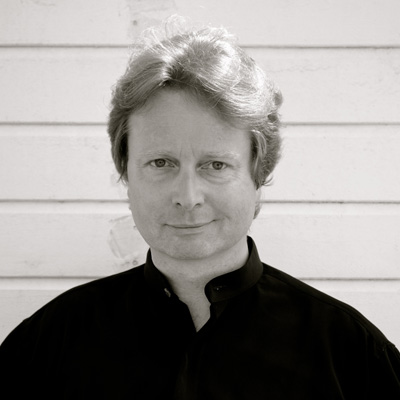
Paul Max Edlin has a career that combines composing, conducting, trumpet playing, lecturing and artistic direction.

His compositions have been performed both nationally and abroad by many leading artists, ensembles and orchestras. He has a particular interest in opera, and his first opera, The Fisherman, was premiered to wide critical acclaim in a production for the London International Opera Festival. Opera Magazine described Paul as ‘our latest operatic prodigy’. His most recent full-length opera is an adaptation of Federico Garcia Lorca’s Blood Wedding in the translation by Ted Hughes. In 2013 he completed an operatic monodrama, Frida, a setting of the diaries of the Mexican artist Frida Kahlo. Recent commissions include a new work for Sarah Connolly (Wigmore Hall, 2014), the UK Society of Recorder Players (Kings Lynn, 2015). In 2015 he completed a new work for orchestra, Five Illusions. In 2016 he succeeds Cheryl Frances Hoad as Composer in Residence for London Chamber Orchestra’s Music Junction programme.

Edlin’s works have received broadcasts on BBC 2, BBC Radio 3, as well as on Radio and Television abroad.

He was a founder member of the Artistic Group of Sounds New Contemporary Music Festival, of which he was Artistic Director from 2007 to 2013, a period in which it flourished. In 2005 he was asked to become Artistic Director of the Deal Festival of Music and the Arts, following on from the cellist Steven Isserlis and composer David Matthews. He stepped down in 2010, but was once again asked to return to this role in 2014.

He has many years of experience in university lecturing and teaching and is currently Director of Music at Queen Mary University of London, one of the country’s leading universities and in the Top World 100 (THE 2015). Formerly, he was Professor of Music at Canterbury Christ Church University from 2009 to 2012 having worked there in a series of roles for almost thirty years. In 2011 he was elected President of the Incorporated Society of Musicians.

As a conductor, Edlin tends to focus on contemporary repertoire. He has conducted many premieres of new works as well as UK premieres of such pieces as Beat Furrer’s Ensemble II and Ernst Krenek’s Sestina. In 2010 he conducted the National Philharmonic Orchestra of Malta, allowing him an opportunity to explore the more romantic repertoire of Puccini and Verdi. As a trumpet player, he particularly enjoys the ‘clarino’ repertoire of Bach, Handel and Purcell and has played in many performances of works such as the B Minor Mass, Christmas Oratorio, etc.

Paul Max Edlin studied at the Royal College of Music (composition with Edwin Roxburgh, Richard Blackford and Joseph Horovitz; trumpet with John Wallace and Richard Walton, and conducting with Christopher Adey). He has won many composition prizes including the IX Premio lnternazionale Ancona. He received a Leverhulme Studentship for further postgraduate study at the RCM. He continued his studies with Michael Finnissy at the University of Sussex where he took his doctorate.

A Fellow of the Royal Society of Arts and a Fellow of the Incorporated Society of Musicians, he has served on the boards of several music and music education organisations and charities, including Cantoris Charitable Trust, which supports Canterbury Cathedral choristers. He is Chair of the Board of Ora, one of the UK’s most prestigious vocal ensembles, and he sits on the board of the newly formed East London Music Group. Paul Max Edlin has two musical sons. Peter, an artist, photographer and designer, plays lead guitar in the progressive rock group The Boot Lagoon, while Timothy is a bass-baritone.

paulmaxedlin.com

573033393031_01Who or what inspired you to take up composing, and pursue a career in music?

My answer to this seems to change every time I answer it. My granddad was a massive influence on me musically. I come from a working class family. My granddad played jazz, and was mostly self-taught, but phenomenally gifted. He had an unbelievable ear. He regretted not being able to make more of his own talent, due to poverty and being drafted for WWII. So he was very encouraging of me in the early years, and remained so through my life. We sort of did our best to work things out together, by reading and listening together. But at the age of eight, I was dragged to Texas by a deranged father who had a fantasy of being a cowboy in the Wild West. He was an unemployed alcoholic almost the whole five years we were there, living his fantasy at the expense of his wife and kids. Apart from what we got at school, I was mostly self-taught until the age of 16. I taught myself the piano until that age.

Whilst in Texas I discovered classical music and Beethoven in particular. We had this percussion teacher at School who did these arrangements of classical music for the percussion group. It was very inspiring what he was doing, getting kids into listening to classical music that way. We played the arrangements, which would inspire us to go and listen to the originals – which many of us did. He sort of fostered this group of dedicated students around him, such that we would spend all our free periods hanging out in the music block. I heard Tchaikovsky’s Romeo and Juliet, Rimsky-Korsakov’s Scheherazade, and then I heard Beethoven and it was like – BAM!!! I’d previously been listening to the Beastie Boys and Iron Maiden. But when I heard Beethoven, all of that seemed so boring in comparison. So from then on, I just hoovered up classical music by looking for LPs in junk shops (there was nothing like BBC Radio 3 in Texas!). This music seemed all the more powerful at the time as my life was otherwise was so absolutely awful: I was being abused at home, bullied at School, we were living on food stamps and I thought nothing would save me. Then I heard Beethoven, and that was it! It seemed to contain the whole universe in it, and to speak to humanity at both its finest and most desperate. I get annoyed when I hear idiots these days saying classical music is elitist, and is only for the rich. That’s rubbish. I was a poor kid, in the most desperate of situations. And not only was that music speaking to me, it as the only thing speaking to me. Not only did it speak to me, it saved me. It saved my life…no two ways about it. From that moment on I discovered and that music had enormous potential to transform people in a way nothing else could, and decided that I would become a composer. Looking back that seems ludicrous: I had no access to proper musical education, and I was in the middle of a cultural void. But that didn’t matter. I decided that’s what I was going to do, so I did it. Moreover, I realized that if I was going to do it, I’d have to do it basically all on my own. And I think that was a good lesson because, to be a real composer, that’s basically what you do have to do anyway. Education can help you, but in the end you have to have something to say and be determined to see it through. I remember consciously thinking, ‘Right, I don’t have the access to the tuition those other kids have. So to be anywhere near as good as them, I’ll have to work twice as hard. But I want this to be my life…so I’ll work four times as hard as they do.’ And I did: I practised the piano at least seven hours a day, even on school days, by getting up very early. On weekends I practised the whole day. That in itself was hard, because the piano was from a charity shop that we got for free. Most of the strings were broken, so I would learn the fingering at home, and then take the music to school to play it on pianos with strings at lunchtime and break time. It sounds weird, but I think that did me good as it helped me to develop both an ear and an imagination. It helped me to hold pieces in my head, and to imagine what they might sound like rather than to hear what they did sound like. I may not have developed the composer’s imagination without that. I don’t know.

Who or what were the most significant influences on your musical life and career as a composer?

As I say above, my granddad, and my high school percussion teacher in Texas. The next piece of good fortune was ending up at the University of Exeter, and meeting the composer Philip Grange, who became my main teacher. I got in to university on a fluke, largely thanks to him seeing something in me in interview. I totally screwed up my A-levels. We were back in the UK then, and I did my A-levels whilst living in B&B emergency accommodation as registered homeless. I took my compositions to Phil in an interview, and he just saw what I was trying to do, so I got a silly low offer…so I just scraped in! Phil went on to become a life-long mentor and friend. He saw something in me, and was very inspiring, giving hours of his time. He also introduced me to Peter Maxwell Davies, who in turn became an advocate. At the same time at Exeter, there was the pianist James Clapperton and the musicologist Ken Gloag (both postgrads there). They similarly took me under their wings, and provided this combination of raw talent (James) and fierce intellect (Ken) such that they were the sort of musical Yin and Yang that shaped my approach. I think it also helped that they were both working class communists, and felt a need to protect me from all the Exeter posh kids. But that’s not fair on my fellow students: there was an inspiring crowd of undergrads around me there too: People like John Fosbrook, and James Mustard and Ellie Lane. Ken sadly passed away earlier this year. I miss Ken.

What have been the greatest challenges/frustrations of your career so far?

I have mostly found music inspiring and wonderful, rather than challenging or frustrating. The challenges and frustrations come with the stuff, and people, around music. I find the politics around classical music especially frustrating and, well ignorant, at present. But music is bigger and better than all that nonsense. I don’t really think of composition as a career: it’s a life choice: a decision to be part of something transcendent. If you want a career, become a banker or sell insurance. If you set out as a composer and expect it to be a career, you will be frustrated at every turn. If you think of it instead as being a process of having music in your head, a vision of what music can be, and writing it down and sharing that with people, it will work out better. There is nothing I abide more than ‘the professional composer’ – the sort of composer that swans around posing, more in love with the idea of *being* a composer than with actually composing. There is also the composer that is more interested in being talked about than listened to…but don’t get me on to that! Just watch Tony Hancock’s The Rebel if you want to get an idea of what I am talking about.

What are the special challenges/pleasures of working on a commissioned piece?

I don’t really care whether a piece is commissioned or not. I write what is in my head, irrespective of that. When I was younger, I used to think the worst thing you could do was miss a deadline. So I found that challenging. For me pieces need to grow for a long time inside me to be what I want them to be. I can see the reasoning in that way of thinking (not missing a deadline): no one wants to let people down. But as I have gotten older I realize there is something far worse than letting people down: letting music down (which ultimately amounts to a far worse form of letting people down). Music deserves the very best we can give it, no matter what. And if you compromise a piece by rushing to meet a deadline, no one remembers that you met the deadline or not, or at least they don’t remember that for very long. They do remember if you wrote a good piece or a crap one. And they remember that for a very long time. I only agree deadlines very far in the future. I write slowly; and I don’t take on many commissions.

What are the special challenges/pleasures of working with particular musicians, singers, ensembles and orchestras?

I like to work with people that I like – as people and as musicians. Finding a performer that you really really click with is a real joy, and once I find those people, I tend to want to work with them again and again, because in working with them I feel that I learn more about music itself and about life and humanity. I don’t understand this obsession with ‘the professional composers’ of being commissioned by every ensemble under the sun. What’s that about? Being a composer is not so different than being in a band. It can take years to find the right drummer, the right guitarist or whatever. Once you’ve found the right drummer, why would you keep changing for the sake of it? Robert Plant was interviewed in 1975 and was asked if he would ever consider leaving Led Zeppelin and go solo. His response was total incomprehension, ‘But if I did that, who else would I have for a drummer, or a guitarist or a bassist than these guys? No, that just wouldn’t feel right.’ Unfortunately Bonham died in 1980, and then Plant went solo because as far as he was concerned that was the end of Led Zeppelin. Okay, I am not in a rock band, so I don’t need to stick to just three collaborators! But if I work with someone, it is always with a view to forming a long-term relationship that allows us both to learn and grow. I’ve had some wonderful collaborators: the Quatuor Danel (for whom I’ve written three quartets), The Lawson Trio, Richard Casey, Ignacio Lara Romero, the BBC Philharmonic… Mostly, I see working with someone as just forming an intimate human relationship. And I have never been into one-night stands!

Of which works are you most proud?

‘Starlight Squid’ was written in 1998. It’s had dozens of performances. I could lament that I only have one hit. But I’m completely glass half full on that one. I just think, ‘at least I have one hit!’ I like that piece very much as it is so fun. I suppose my Third Quartet is the greatest artistic achievement: a single movement 50-minute work that is one single shape. That took a lot of technique to accomplish. I also like my little ‘Scordatura Squid’ violin pieces, and my piano work ‘Notturno dalle fiamme del’inferno’.

How would you characterise your compositional language?

Meticulous in detail whilst dramatic in structure. Music can have it all. I aim to write music that is optimistic, positive, direct and life affirming. When I was a student in the 1990s, I went to Huddersfield year after year and just seemed to be hearing this endless stream of dark, lugubrious, grey and pessimistic pieces; whilst on the other hand there was this facile post-minimalist thing going on that seemed like a timely shot of Prozac amidst all the depressiveness. I set out to reject all that: I wanted to create music that was direct, sincere, full of energy, made clear statements, and was not afraid to say what it wants to say – what I want to say.

How do you work?

In my head…almost entirely in my head. I used to make loads of sketches. With experience, and as my ear has improved, I have learnt to do most of that sketching in my head now. It had to happen as I was getting confused by all the paper, and losing stuff and getting all mixed up. It takes more time this way (in my head), but I think only because I am more thorough as a result. The advantage is the music is with me all the time, and I can work on it all the time – which is handy in boring meetings. I write everything down at the end in pencil sketch, and then go from there to Finale. I never ever do creative work at a computer, and discourage any student from doing that.

Who are your favourite musicians/composers?

Beethoven, Bach, Led Zeppelin, Ligeti and Bill Evans. There are hundreds of others, of course. But those are the ones I keep coming back to. My favourite songs are Somewhere Over the Rainbow and Dancing Queen – again, the optimism!

What is your most memorable concert experience?

That’s easy! James Clapperton playing the complete piano works of Xenakis in Exeter in 1992. It was such a powerful experience because it was so completely out-of-place and, well, just plain weird that it was happening there of all places. There we were, in the middle of nowhere, in a music department that was basically a cupboard, and James just played this concert of the most hard-edged music you’d ever heard in your life. I have *never* heard anything like it. Remember, at that time Xenakis was not the cannoized figure he is now. In those days, it was still completely shocking music. I didn’t know or understand what the hell I was hearing. I couldn’t decide whether it was rubbish or genius or what, but I loved the way it challenged me and made me think. And of course, James’s playing was at its absolute peak and the most exciting thing you could hear anywhere in the world.

What do you consider to be the most important ideas and concepts to impart to aspiring musicians?

Integrity is crucial. You must have core values and hold on to those no matter what. You also must be prepared to work extremely hard – good enough is not good enough – and realize that it is mostly down to you. You can have composition lessons. You can have excellent composition lessons. But in the end, all the work must be done by you. The world owes you nothing. No matter how talented you are, the world owes your talent nothing. That was the lesson I learnt from having nothing to start with. Having nothing to start with isn’t much of a hindrance really; as, if you want to be an artist, everything is down to you anyway. If you are a composer, you are not competing against the other composers in your class, your age or whatever. The competition is Bach. It’s Beethoven. It’s Stravinsky. That’s the standard, and music demands that you offer the best you can. I say ‘competition’, but ‘competition’ is the wrong word. It’s not competition. It’s more like these guys are your colleagues, and you owe it to them, and all the hard work they have put in to getting music to where it was when you came to it, to try to give it the best you can in return.However good a teacher you have, chances are you won’t find the equivalent of a Bach to teach you. And even if you did, he’s not going to download his genius into your brain. Someone can give you a kick start, but then you have to do everything else…which is most of it.

What is your most treasured possession?

I guess my piano. I dreamt of having a grand piano as a kid, but couldn’t afford one. Being able to buy my Bluthner was a life-long dream come true.


Camden Reeves is a composer of contemporary classical music based in Manchester, England. Meticulous in detail whilst dramatic in structure, Reeves’ output encompasses many genres, ranging from large orchestral scores to chamber, vocal and solo instrumental works. In recent years he has been particularly associated with the piano through a series of solo works (pub. Edition Peters) and the colossal Piano Concerto of 2009.

Reeves is Lecturer in Composition at the University of Manchester, where he has taught since 2002.

www.camdenreeves.com


Who or what inspired you to take up composing, and pursue a career in music?

Since my earliest years, I’ve had an impulse to make up pieces at the piano, and that hasn’t really changed – except that eventually I learned to write them down, and nowadays often play virtual instruments via a keyboard. When enough people started asking me to write them something, it turned into a career.

Who or what were the most significant influences on your musical life and career as a composer?

Musicians and theatre-makers who asked me to write music for them, including dancer/choreographer Clare Whistler and director Jonathan Kent; and who listened, encouraged and offered constructive criticism, notably composers Stephen Oliver and Julian Grant, conductors David Parry and Brad Cohen, opera-directors Graham Vick and Richard Jones. Probably the most significant of all were two people at Glyndebourne, Katie Tearle and Anthony Whitworth-Jones, who commissioned my first published piece (the wind serenade Figures in the Garden), three community operas, and my first main-stage (and most widely produced) opera – Flight.

What have been the greatest challenges/frustrations of your career so far?

Trying to get the current piece to be as good as I believe it can be.

What are the special challenges/pleasures of working on a commissioned piece?

With a commission comes a deadline, without which I never finish a piece. More exciting, there is a date when you know certain musicians will be performing your piece in a particular place. The idea of these wonderful singers or instrumentalists is, in itself, inspiring.

How would you characterise your compositional language?

Pandiatonic, rhythmically driven, singable.

How do you work?

Dreamily and fitfully at first, as vague initial ideas start to emerge; then more continuously, as they gradually turn into stronger, more potent ideas. Mostly I work out pieces at the keyboard, but walking and cycling are also an important part of the process.

Who are your favourite musicians/composers?

Mozart, Stravinsky, John Adams

What do you consider to be the most important ideas and concepts to impart to aspiring musicians?

Write the music you want to hear.


Born in 1959 to architect parents, Jonathan Dove’s early musical experience came from playing the piano, organ and viola. Later he studied composition with Robin Holloway at Cambridge and, after graduation, worked as a freelance accompanist, repetiteur, animateur and arranger. His early professional experience gave him a deep understanding of singers and the complex mechanics of the opera house. Opera and the voice have been the central priorities in Dove’s output throughout his subsequent career.

Read Jonathan Dove’s full biography here

vhoyland-ii

Who or what inspired you to take up composing, and pursue a career in music?

Myself. But then Bernard Rands my tutor and Bill Colleran at Universal Edition (London/Vienna).

Who or what were the most significant influences on your musical life and career as a composer?

Bruno Maderna, Luciano Berio, Messiaen. Historically: J.S. Bach, Webern, and late Mahler.

What have been the greatest challenges/frustrations of your career so far?

They were the 4 major works written for the BBC Symphony Orchestra. I have at least 4 new works still waiting on first performances. But I remain patient.

What are the special challenges/pleasures of working on a commissioned piece?

Time. I work slowly and with painstaking care. My music is sometimes complex and it is crucial that performers receive as near perfect copy of performance materials as is possible. I do my best and I have a fine copyist. UE taught me this, way back in 1972.

What are the special challenges/pleasures of working with particular musicians, singers, ensembles and orchestras?

The pleasures are being there for rehearsals. Some conductors are exceptional (Sir Andrew Davis), some work seriously hard (Martyn Brabbins), others you may never wish to see again. New Music Ensembles, string quartets and solo performers have been the most satisfying to work with. Lifelong friendships are made.

Of which works are you most proud?

“WULF” for 24 voices (amplified) and 24 instrumentalists – yet to receive a first performance; “The Attraction of Opposites” for 2 pianos; the orchestral trilogy, “Vixen”, “Qibti” and Phoenix”; “Hey Presto!” written for BCMG conducted by Diego Masson, happiest of all.

How would you characterise your compositional language?

Proudly European but, like Bartok, drawing on cultures further afield and from the distant past.

How do you work?

In my music barn, composing, still, on manuscript paper. However, most work has been carried out in Sicily. The climate, the food and wines kept me going, and going well, so producing the goods. I also found plenty of time to read, to feed my imagination.

Who are your favourite musicians/composers?

Musicians such as Melinda Maxwell – oboe, Simon Limbrick – percussion, Rolf Hind – piano, BCMG, The Arditti Quartet. Composers I already listed as influential on my work. Still living? The works of Birtwistle, Ferneyhough, Tom Ades, David Sawer, Julian Anderson and Sam Hayden interest me.

What is your most memorable concert experience?

Experiences: Simon Rattle conducting all Mahler and some Messiaen with the CBSO, Symphony Hall, Birmingham.

What do you consider to be the most important ideas and concepts to impart to aspiring musicians?

Feed your imagination and let it run. I always ask myself the question “What if?” Be your own best critic and bin a lot.

Where would you like to be in 10 years’ time?

Where I am now.

What is your idea of perfect happiness?

Being with the right person and being amongst friends.

What is your most treasured possession?

It is my 40-year-old Pavoni, brass and copper, coffee machine.

What do you enjoy doing most?

Walking the hills.

What is your present state of mind?

Pensive.


Born in Yorkshire in 1945, Vic Hoyland’s earliest interests were in painting, calligraphy and architecture, but after completing an Arts degree at Hull University and a prize winning work was submitted to the BBC, he decided to concentrate on music. Wilfrid Mellers invited Vic to undertake a doctorate at the then new music department at York University where his tutors were Robert Sherlaw Johnson and Bernard Rands. From 1980-1984 he was Haywood Fellow at the Barber Institute, then after two years at York University he returned to Birmingham as a full-time lecturer responsible for MDD, an interdisciplinary programme between music, drama and dance. He was subsequently Professor in Composition at Birmingham until his retirement in 2011. In 2015 he was made Emeritus Professor, in recognition of his longstanding and valued contribution to the University of Birmingham.

Commissions have come from many festivals – Aldeburgh, Almeida, Bath, Cheltenham, Warwick and Stratford, Huddersfield, South Bank and York – from organisations such as the BBC Symphony Orchestra and ensembles such as Lontano, the Arditti Quartet, Lindsay Quartet, BCMG, Endymion and Vocem. Works prior to 1994 are held by Universal Edition (Vienna). Works after 1994 are held by Composers Edition. Works include In transit for large orchestra which, together with Vixen, was recorded by the BBC Symphony Orchestra for NMC records. Most of Vic’s music has been broadcast on BBC Radio 3. The Other Side of the Air and Token are also available on NMC records. The second work in his orchestral triptych, Qibti was premiered at the Barbican on 18 December 2003 and conducted superbly by Sir Andrew Davis.

Read more at Vic Hoyland’s website