Tuesday 24 June at 1.15pm St Bride’s Church, Fleet Street, London EC4Y 8AU

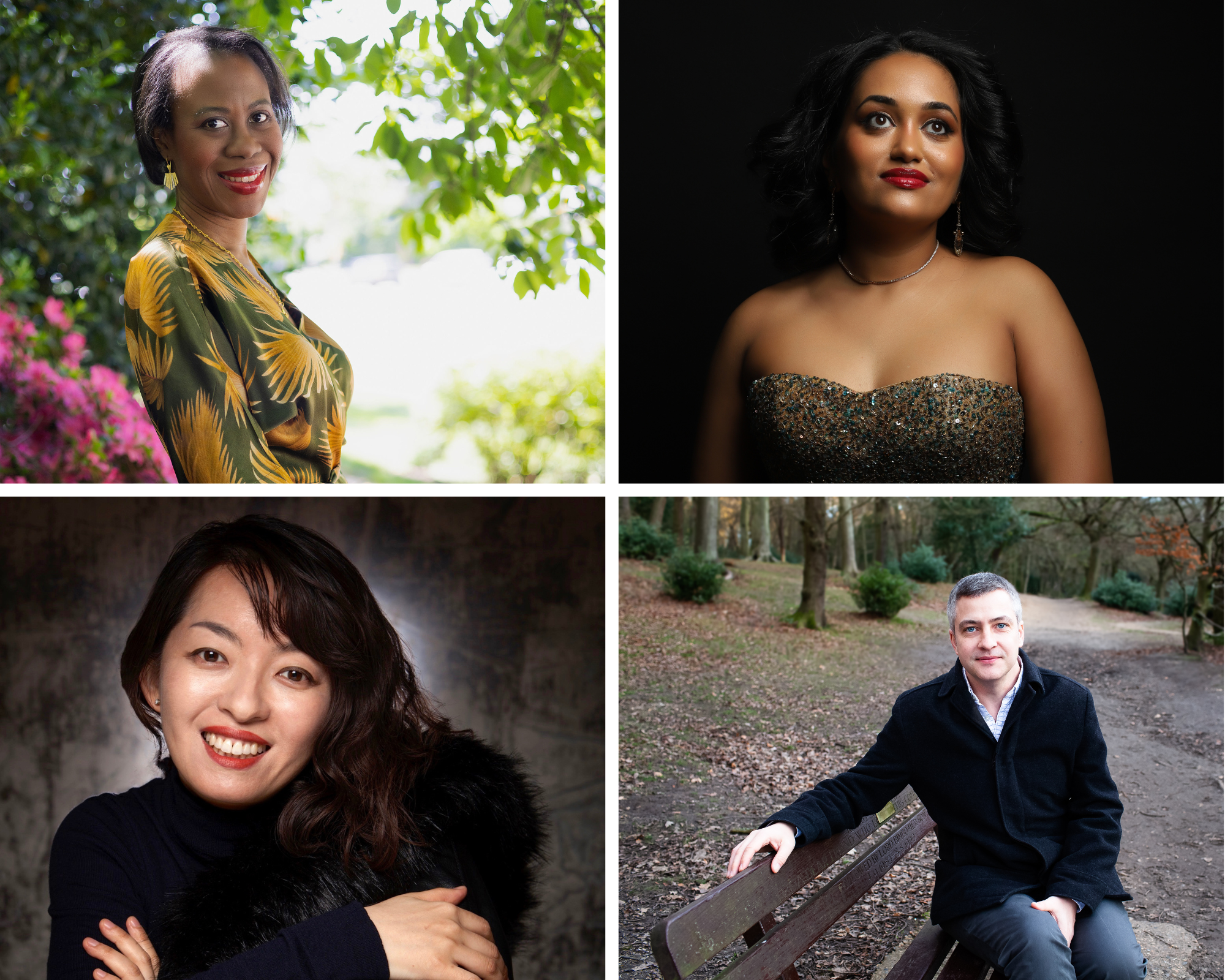
World premiere performance of ‘Metropolis’, six songs by British composer Bernard Hughes and lyricist Chinwe D John that capture the pulse of a modern metropolis. These songs, which explore aspects of urban life, romantic love, and resilience, bring the emotional essence of our shared experience into stark and beautiful view. Soprano Isabelle Haile and pianist Asako Ogawa infuse their sublime artistry through the songs, creating an unforgettable musical experience.

This free lunchtime concert also includes music by Francis Poulenc, chosen to complement the songs. Find out more here

Metropolis appears on the album ‘Songs for Our Times’, released to critical acclaim in 2023 on the Divine Art label. ‘Songs for Our Times’ features composers Bernard Hughes and Staurt MacRae, lyricist Chinwe D John, pianist Christopher Glynn, soprano Isabelle Haile and tenor Nick Pritchard. The project, from its conception by Chinwe D John to the enthusiastic participation of the artists, exemplified by the premiere organised by soprano Isabelle Haile and pianist Asako Ogawa, speaks to the spirit of collaboration and shared interest in engaging current and future listeners.

Composer Bernard Hughes says, ‘I hadn’t written any solo songs when the opportunity to work with Chinwe came up. It was really interesting to work with lyrics by someone from such a different background to me. She pointed me towards some music styles I wouldn’t have otherwise encountered, and these formed the inspiration for the piano parts of several of the songs. It was a very collaborative process…I liked working on the songs as a cycle: there is a definite thread running through them. It was a delight working with Isabelle Haile on the recording. She is an exceptional talent and I’m so pleased she is giving the live UK premiere of Metropolis.’

Praise for Songs for Our Times – Metropolis

‘As a poet writing texts for songs, John has a very clear, direct voice, with the ability to craft memorable, evocative phrases and use short bursts of lyricism. Rarely do her texts feel too wordy or too over-written, there is space for the music….. Haile sings with a lovely bright, focused soprano tone’ – Robert Hugill

‘Here is music to enjoy but to make you think as well!’ – British Music Society

This is a capable and sensitive player who is intelligently inside the music, and quite capable of drawing us into it.’ – Early Music Review on Asako Ogawa

Wigmore Hall/BBC Radio 3 Special Broadcast series

JS Bach, arr. Busoni Chaconne from Partita No 2 in D minor for solo violin, BWV 1004 Schumann Fantasie in C, Op 17

Charles‐François Gounod – Meditation sur le 1er prelude de Bach (encore)

Stephen Hough, piano

Monday 1 June 2020


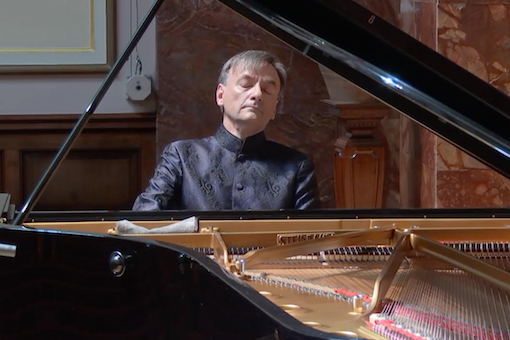
I admit I welled up as Stephen Hough played the opening measures of the Bach D minor Chaconne, transcribed for piano by Ferruccio Busoni. Yes, that opening has a spine-tingling authority, but the spontaneous tears were less for the music and more the effect of having beloved Wigmore Hall filled with music again – if not filled with an audience. Along with many other people, musicians and music lovers, I miss live music so much: I feel painfully bereft and in order to deal with this emptiness, I have avoided, until now, the many livestream performances and other music making which is going on online all the time now.

This was the first of a much-heralded and eagerly anticipated series of live concerts from Wigmore Hall, made possible by a collaboration with Radio 3, the hall and a generous benefactor. Why is this so significant, so tear-jerkingly meaningful? Because in the third week of March 2020, Wigmore Hall, along with the rest of London’s cultural life, closed its doors in the wake of the coronavirus pandemic. My last visit to WH was at the very end of February to hear, with a good friend, Jonathan Biss scorching his way through Beethoven, a concert which had an edge-of-the seat electricity and immediacy, and left us speechless. I didn’t know then that this would be my last visit to beloved Wigmore Hall for many months; I don’t know when I will be back there.

But, as Stephen Hough said in a conversation with Petroc Trelawny on Radio 3’s Breakfast show, the fact that live music has returned to WH, albeit bereft of an audience but for the Radio 3 presenter and hall director John Gilhooly, is a glimmer of hope, a sign that things may be making tiny, tentative steps to return to normal (I refuse to use phrases like “the new normal”!). Later, in an interview on Channel 4 News, Stephen said that not since the 16th century had we been “starved of” live music in this way; the concert halls remained open and the music played on even during wartime.
173441-bildschirmfoto-2020-06-01-um-13-35-56-kopie

The programme was, of course, exemplary in both its selection and execution. One can guarantee that Stephen Hough will always perform music which is so much more than notes on the page. Ferruccio Busoni was a regular performer at the Wigmore, then Bechstein Hall, in its early years, and indeed played at the hall’s inaugural concert. His transcription of the extraordinary Chaconne is a romantic tour de force, for both instrument and player, a fantasy of sorts, while remaining faithful to Bach’s original conception. Robert Schumann’s Fantasie in C, Op 17, is also a tour de force, of the myriad facets of love, originally conceived as a deep lament for his beloved Clara during a period of enforcement separation.

This music is profoundly moving at the best of times, and now, in what for the music industry is the worst of times, it had a special resonance, emotionally charged, brave yet never showy, authoritative and thoughtful and, in the Schumann, both extrovert and virtuosic and passionately tender. Inspiring, uplifting and painfully wonderful, there was Stephen Hough on stage, immaculate in his usual concert attire, playing beautifully to an empty hall.

As he said in his Channel 4 interview, the audience are a crucial part of the concert experience for the performer. Not only does a hall full of people have a different acoustic, but a living, breathing – and, yes, coughing – audience creates “a very active involvement in the music, and I think a performer senses this, the energy…and that quietness, when people are listening and attentive, and you feel an electricity there that you cannot replicate” (Stephen Hough).

An empty hall has a different kind of quietness, and in that strange solitude Busoni’s architecture seemed all the more monumental, while Schumann’s inner struggles had a greater poignancy.

Apparently, some 2000 people tuned in for the livestream performance, which was notable for the high quality of both sound and filming (for piano nerds like me, close ups of the pianist’s hands were a real treat – you just don’t get that close as an audience member). As a friend of mine, like me a regular at Wigmore Hall, remarked on Twitter:

Of course this makes us ache for performance with an audience again; but it’s also brought home to me that this is the only way some people can *ever* see/hear a Wigmore Hall concert. That so many of us are ‘together’ remotely for this adds something inexpressible to the stream. @Adrian_Specs

There was, via the social networks, indeed a shared experience. Not the same shared experience as one enjoys at a concert with friends, but nonetheless a very palpable togetherness. I knew I was listening with several of my regular concert companions, albeit remotely, and this brought a feeling of solidarity too. Because we will be back at Wigmore Hall. We will once again sink into its plush red velvet seats, open the programme to peruse the evening’s offering, enjoy conversation and wine during the interval, and experience the incomparable thrill of live music.

In the meantime, BBC Radio 3’s Special Broadcast series continues at Wigmore Hall every day until 19 June. Full details here

Watch Stephen Hough’s concert here


original

Thursday 11 January 2018

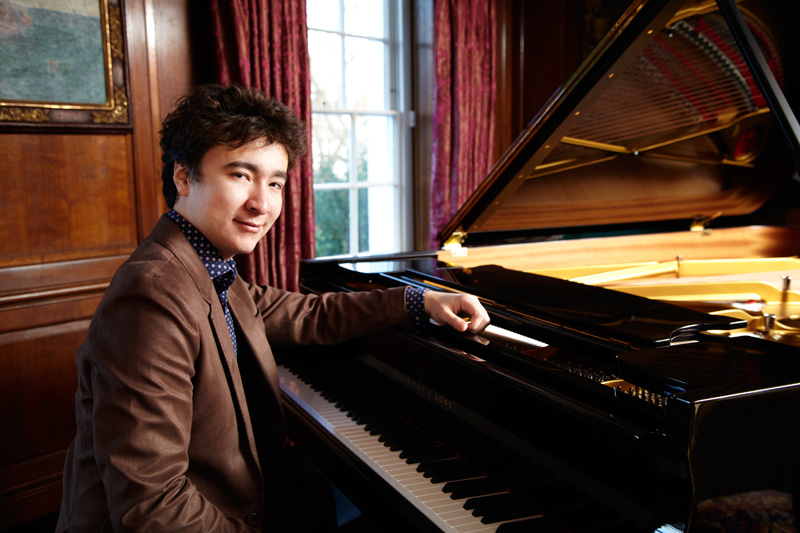
Samson Tsoy, piano

Schubert – Four Impromptus, Op 90

Rachmaninoff – Five Preludes Op 23

Two composers writing 75 years apart, both 30 and both entering significant periods of intense creativity in their compositional lives. By 1827 Schubert knew his life was drawing to a close. Ill with syphilis and the side-effects of its treatment since 1823, the year before his death, when his composed his Impromptus for piano, signalled a period of remarkable output. 75 years later in 1902 Rachmaninoff marries his cousin Natalia Satina and embarks on his Second Piano Concerto, the Cello Sonata, and Second Suite for Two Pianos, in addition to the Preludes Op 23.

Both sets of works are infused with their composer’s distinct psychology. Schubert’s bittersweet nostalgia, his markedly shifting moods, his long-spun melodies and the lilting rhythms of the ländler and the waltz run through the Four Impromptus Op 90, creating a unifying thread, and Samson Tsoy revealed these special qualities of Schubert’s writing with sensitivity and poise, from the desolate opening of the Impromptu in C minor, to the warm poetry of the fourth in A flat. This was refined and mature playing.

Rachmaninoff’s Op 23 Preludes are confident and exuberant, never more so than in the famous G minor, and Samson responded to with equal confidence and spirit, offering a rich palette of musical colours presented with stylish panache and an evident relish for this music. A special warmth and elegance was reserved for the D major Prelude.

A most enjoyable and rewarding lunchtime concert.


Guest review by Jennifer Mckerras 

One of the great joys of lunchtime recitals is having the opportunity to see young performers at the beginning of their professional careers. And two such were given a prime performance opportunity at St Martin-in-the-Fields on 24 October. Chanae Curtis (soprano) and Ella O’Neill (piano) garnered a large and appreciative audience for their recital, including a half-term crowd of families with children of all ages.

Curtis and O’Neill began their programme with Beethoven’s Ah! Perfido, Op.65. They continued with Three Poems of Fiona MacLeod by C.T. Griffes, and concluded with a selection of lieder by Strauss.

Chanae Curtis has a truly superb voice: velvety caramel in tone. She also has a tremendous range of colour and force, which this programme fully exploited. The very first item (Beethoven) is a long and complicated piece for both singer and accompanist, and requires several mood changes. Curtis and O’Neill guided the audience through all the twists and turns of the aria, and received justifiably rapturous applause at its end.

It was, however, in the American repertoire that Curtis really shone. She seemed to relax and connect with the audience in a way that had not been as present in the Beethoven. The Griffes songs are perhaps a little less well known by British audiences, and really deserve to be known better. Curtis’ handling of the texts was deft and well-nuanced, though sometimes the very full acoustic of the church building caused the text to be lost.

Ella O’Neill is currently undertaking postgraduate studies at Royal Welsh College of Music and Drama with Simon Lepper. In this recital she was a masterful accompanist, and I think has a tremendous future. She navigated the twists and turns of mood in the Beethoven with aplomb, and her handling of the Griffes and the Strauss lieder was delicate and assured. O’Neill has a great stage presence: calm and unfussed, she has developed the gift of allowing the music to speak for itself. This is a tremendous ability in a player at the beginning of her professional career! She is also adept in giving both soloist and audience total confidence in her playing; one feels that very little could shake her.

The Strauss lieder were delivered with great assurance from both performers, and were hugely enjoyed by the audience. The encore was a spiritual, He’s Got the Whole World in His Hands, in an arrangement by Margaret Bonds. Again, Curtis found a new level of connection with the audience and the text – she positively glowed as she sang. It is a pleasure to see a performer wholeheartedly inhabit the music in this way.

The reception for Curtis and O’Neill was overwhelmingly positive; even the half-term passers-by stayed captivated until the end. These performers are certainly a pair to watch for the future.